
Bespoke Engagement Rings
Create an engagement ring around the gemstone, style and details that matter to you, with the design refined and approved before your ring enters production.
How It Works
From the first idea to the finished engagement ring, we keep the bespoke process clear and simple.
Tell Us Your Idea
Share your preferred style, gemstone, metal, budget and any inspiration images.
Refine the Design
We develop the concept with you, refining the proportions, stones and overall appearance.
Receive Your Quote
Once the concept is agreed, we provide a clear quote based on the stones, metal and craftsmanship required.
3D CAD Design
Proceed with a detailed CAD for a $25 non-refundable design fee, deducted from your final bill if the piece goes ahead.
Approve Your Ring
Review the final CAD before production. Once approved, a 40% deposit confirms your order.
Made & Delivered
We show you the finished ring before the remaining 60% is paid and your jewellery is dispatched.
Some of Our Bespoke Creations
Explore a selection of pieces created by us, from the production-ready CAD design through to the finished jewellery.
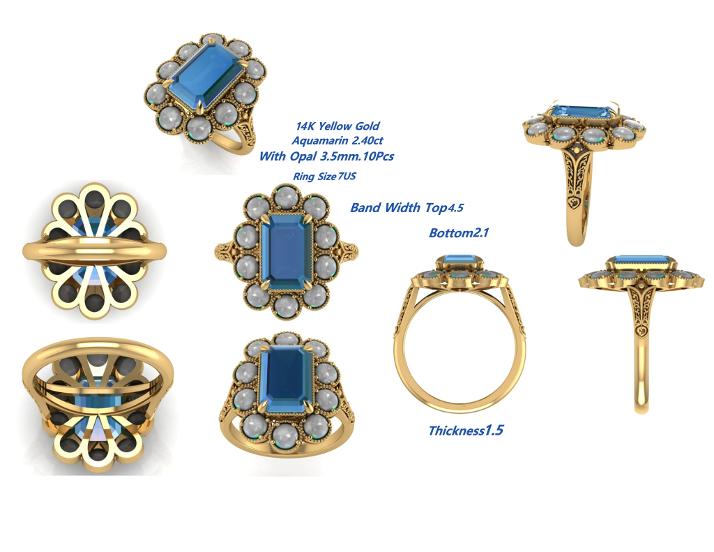 CAD Design
 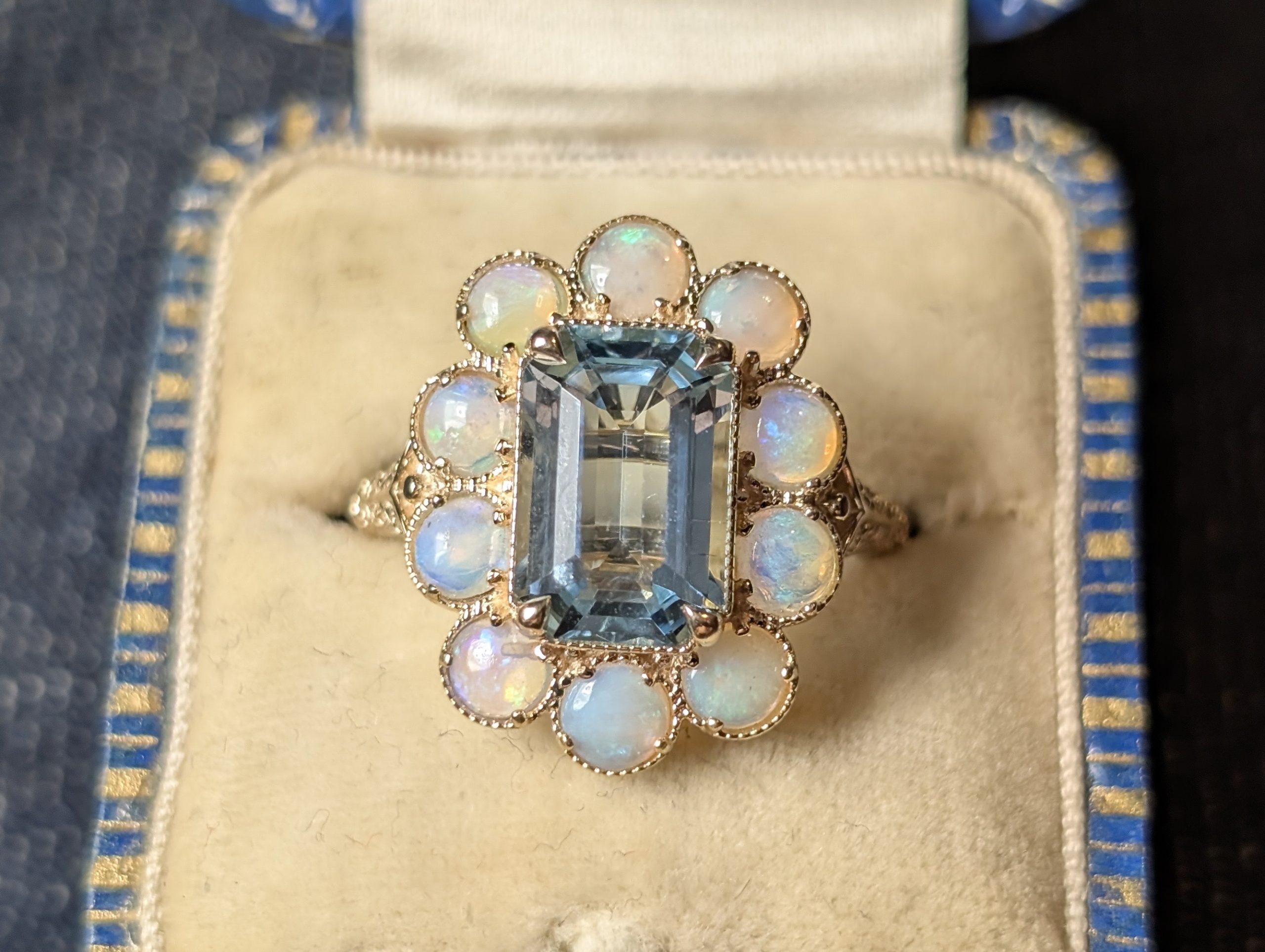 Finished Piece
 Aquamarine & Opal Ring
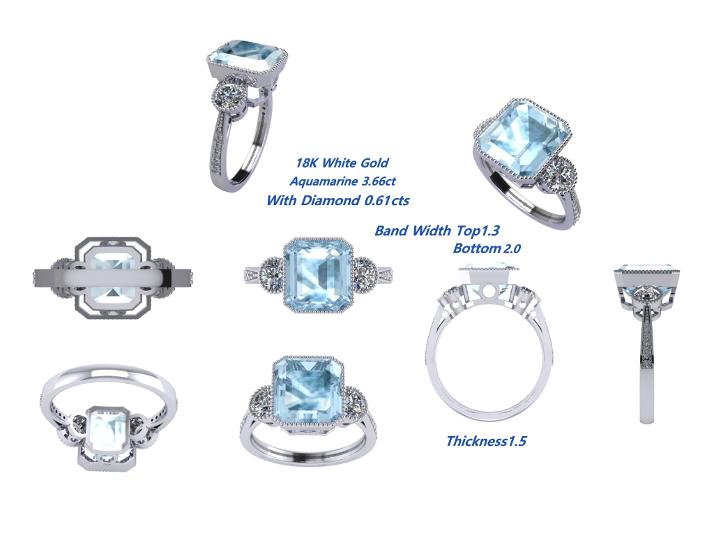 CAD Design
 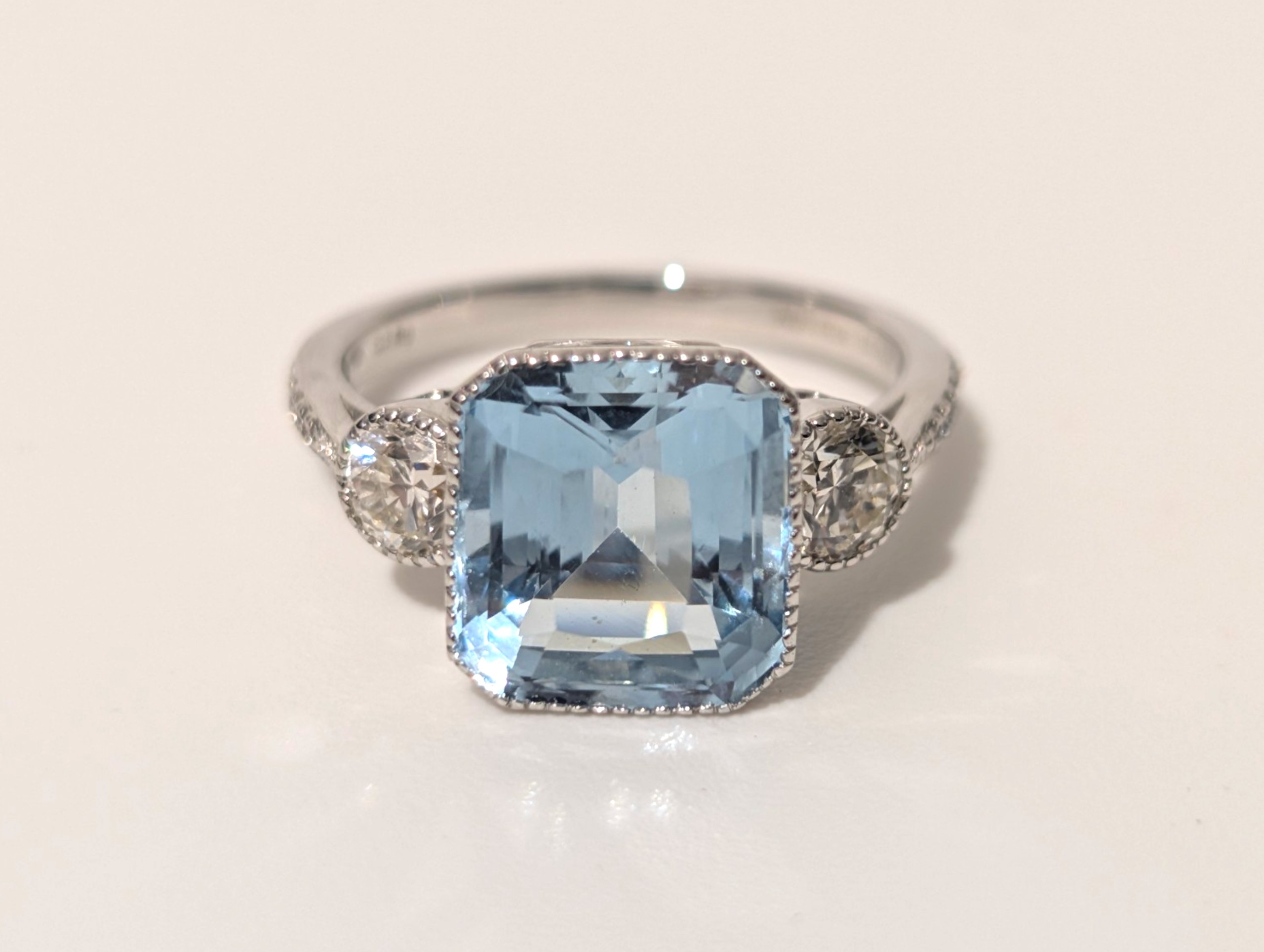 Finished Piece
 Aquamarine & Diamond Ring
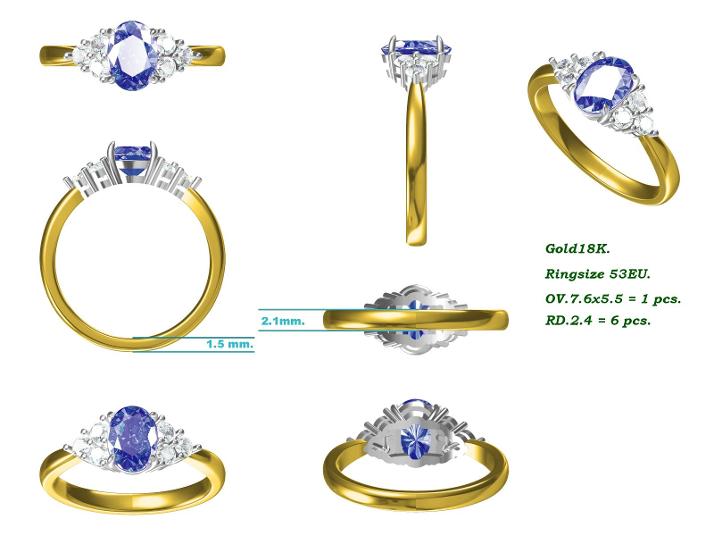 CAD Design
 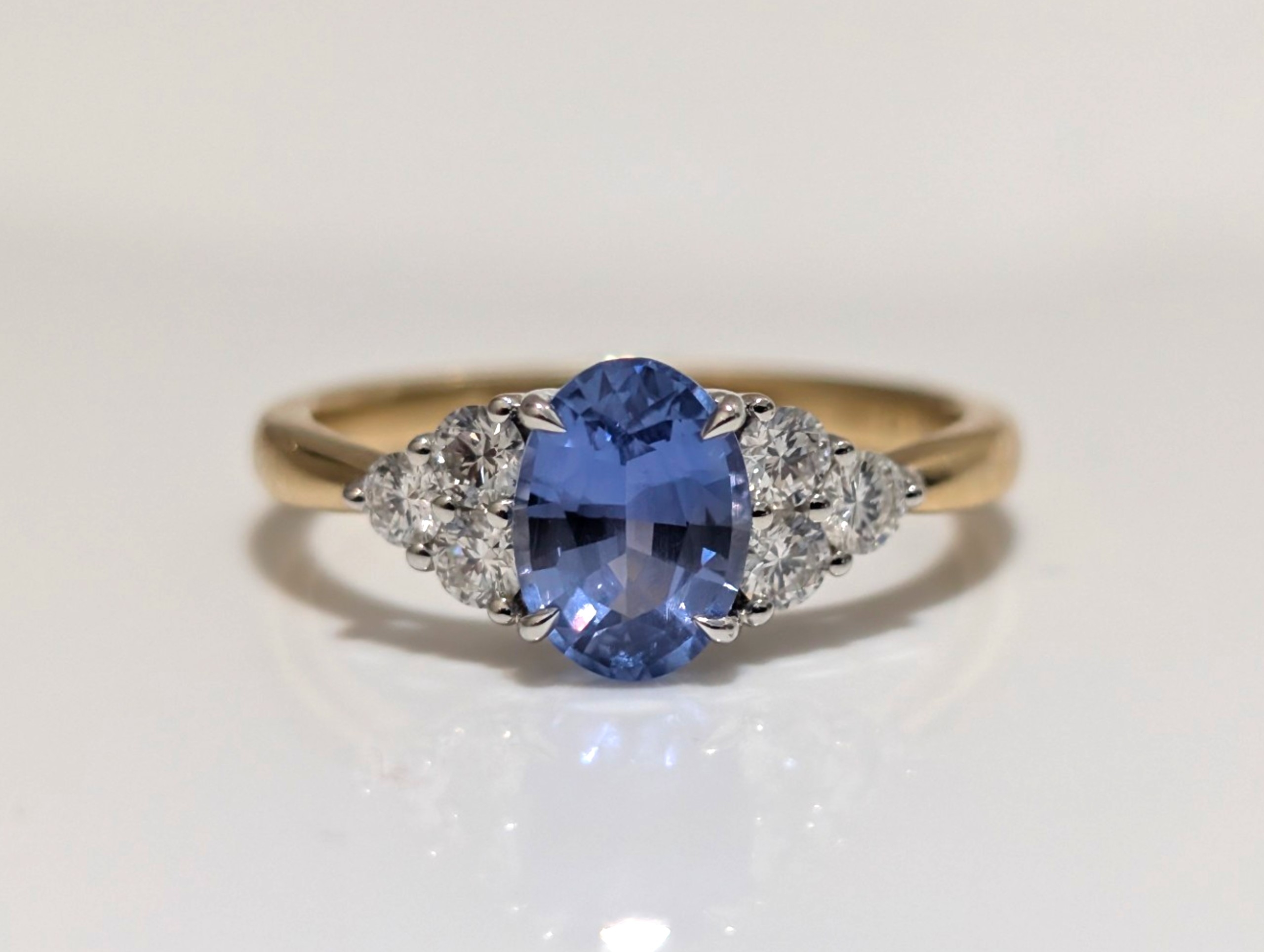 Finished Piece
 Sapphire & Diamond Ring
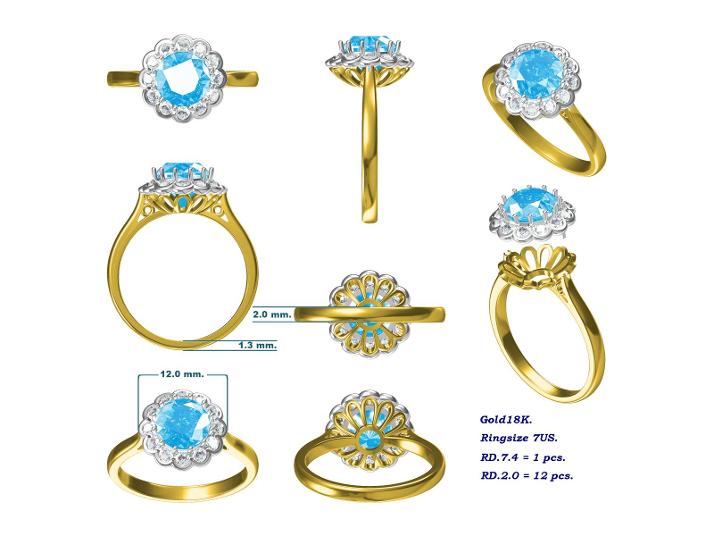 CAD Design
 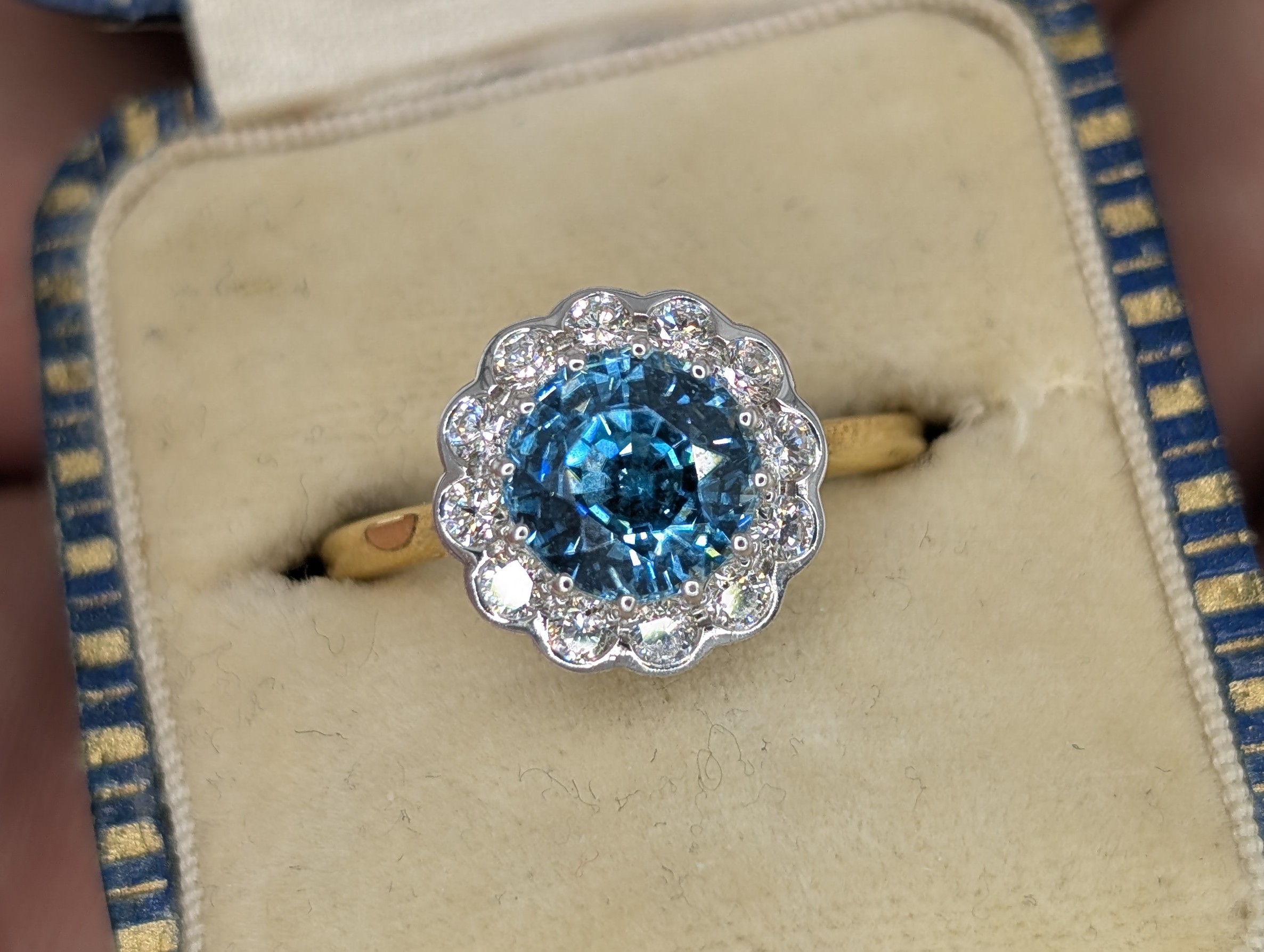 Finished Piece
 Blue Zircon & Diamond Ring
Tell Us About Your Custom Piece
Share your idea below and upload any useful inspiration. We will review your enquiry and contact you to discuss the design, materials, timescale and pricing.
Creating a Bespoke Engagement Ring
A bespoke engagement ring gives you control over the parts that actually matter: the centre stone, proportions, precious metal, setting style and small details that determine how the ring looks on the hand.
Why Choose a Bespoke Engagement Ring?
Buying an engagement ring from an existing collection means choosing between designs that have already been decided. Bespoke work starts differently. The ring is developed around your brief rather than asking you to adapt your preferences to a finished piece.
That does not mean a custom engagement ring needs to be unusual or elaborate. A beautifully proportioned solitaire can be completely bespoke. So can a simple three-stone ring, a sapphire and diamond cluster or an antique-inspired design.
The advantage is that the centre stone, setting, dimensions and details are considered together from the beginning.
Bespoke does not have to mean complicated. Often the best custom engagement rings are simply familiar designs with better proportions, the right stone and details chosen for the person wearing them.
Choosing the Centre Stone
For many engagement rings, the centre stone determines almost everything that follows. Its shape and physical dimensions influence the setting, width of the shoulders, overall proportions and how much space is available for side stones.
Diamond remains the traditional choice, but a bespoke commission also opens the door to coloured gemstones including sapphire, ruby, emerald, aquamarine and other suitable stones.
If a gemstone is intended for frequent wear, appearance should not be the only consideration. Its durability, setting style and how exposed the stone will be should also form part of the design process.
Diamond Engagement Rings
A custom diamond engagement ring allows the setting to be built around the actual diamond rather than selecting a stone to fit a standard mounting.
Round brilliant diamonds remain popular because they work across almost every style, but oval, emerald, cushion, pear, marquise and other cuts each create a different proportion on the finger.
Carat weight is only one part of the decision. Two diamonds of the same weight can have different dimensions, proportions and visual presence, so the actual stone matters when developing the ring.
Coloured Gemstone Engagement Rings
A coloured gemstone can become the focal point rather than an alternative version of a diamond ring. The setting can then be designed specifically to complement that colour and shape.
Sapphire
A strong choice for custom engagement rings, available in blue and a range of fancy colours and suitable for many classic and antique-inspired settings.
Ruby
Ruby creates a strong contrast with diamonds and can work in trilogy, cluster and more traditional period-inspired designs.
Emerald
Emerald offers a distinctive colour and character but requires thoughtful setting design because inclusions and relative brittleness make stone protection particularly important.
Aquamarine
Aquamarine can give an engagement ring a lighter blue appearance and is particularly effective in larger geometric or antique-inspired settings.
Solitaire Engagement Rings
A solitaire may look simple, but small design decisions become more noticeable when there are no surrounding stones to distract from them. Basket height, claw shape, shank width and how the setting meets the band all influence the finished result.
A bespoke solitaire is therefore less about adding decoration and more about getting the proportions right around the chosen centre stone.
Trilogy Engagement Rings
A three-stone or trilogy design can be adapted in numerous ways. All three stones can be diamonds, a coloured gemstone can sit between two diamonds, or different shapes can be combined to create a more distinctive outline.
Side stones should complement the centre rather than compete with it. Pear-shaped, round, tapered or geometric diamonds can all produce different transitions from the centre stone into the shoulders.
Cluster and Halo Engagement Rings
Cluster and halo settings allow smaller surrounding stones to become part of the overall shape of the ring. This can make them particularly useful for antique-inspired engagement rings where the outline of the entire setting matters.
The terms halo and cluster are often used loosely, but the visual result can vary enormously. A fine uniform border of diamonds has a different character from a broader cluster made from individually visible stones.
Antique Inspired Engagement Rings
Antique jewellery provides an enormous library of ideas for bespoke engagement rings. Victorian, Edwardian, Art Nouveau, Belle Époque and Art Deco pieces each offer different approaches to stone arrangement, metalwork and proportion.
A new ring does not need to copy an antique example exactly. Often the stronger approach is to identify the features you like and adapt them around the actual gemstone and practical requirements of the new ring.
Art Deco Engagement Rings
Art Deco inspired engagement rings usually place more emphasis on geometry, symmetry and the relationship between different stone shapes.
Emerald-cut centres, baguettes, stepped shoulders, target-style surrounds, milgrain and strongly defined outlines can all contribute to the look. White gold and platinum work particularly well where a crisp white-metal appearance is wanted.
This broad engagement-ring page is intended to cover the bespoke process generally. A dedicated Art Deco engagement ring page can go much deeper into those specific design choices without duplicating the same content.
Victorian and Edwardian Inspired Engagement Rings
Victorian-inspired rings may suit customers who prefer richer yellow gold, substantial clusters, old-cut inspired diamonds or more decorative shoulders.
Edwardian influence often produces a lighter appearance, with delicate diamond work, pale metal and finer detailing.
Neither style needs to become a reproduction. Period details can be selected and combined with a modern bespoke construction.
Choosing Your Precious Metal
Precious metal affects both appearance and construction. Platinum has a natural white colour and is widely used for fine diamond jewellery. White gold also provides a pale appearance, while yellow gold gives considerably more contrast against diamonds and coloured gemstones.
Rose gold is another option for certain designs, particularly where a warmer overall appearance is preferred.
Two-tone construction can also be useful. A yellow gold shank can, for example, be paired with a white setting around diamonds where appropriate.
Designing the Engagement Ring Around the Wedding Band
One detail that is easy to overlook is how the engagement ring will eventually sit next to a wedding band.
Some raised settings allow a straight wedding band to sit closely underneath them. Lower or wider designs may require a shaped or fitted band instead.
If wearing the two rings closely together is important, this should be discussed before the engagement ring is finalised rather than trying to solve the problem afterwards.
Low Profile vs Raised Settings
A low setting can feel compact and protected, while a raised setting may allow more light around the gemstone and make it easier for another band to sit alongside it.
Neither approach is automatically better. The stone, style and daily wear of the customer should determine which profile makes more sense.
Using Inspiration Images
You do not need to know jewellery terminology before making a bespoke enquiry. Photographs are often more useful.
You might like the shoulders of one ring, the centre stone of another and the proportions of a third. Those details can be used to understand the direction of the commission and develop something coherent rather than simply copying one existing design.
Designing a Ring as a Surprise
Many bespoke engagement rings are commissioned without the recipient being involved. In that situation, inspiration can come from jewellery they already wear, photographs they have saved, comments they have made or the styles they naturally gravitate toward.
Ring size is another consideration. If an exact size is uncertain, explain this during the enquiry so it can be taken into account before finalising the commission.
Can You Use an Existing Gemstone?
Potentially, yes. A gemstone you already own can form the starting point for a new engagement ring.
The stone should be considered individually because its exact dimensions, depth and condition affect what can safely and attractively be built around it.
Stones removed from old or inherited jewellery may show wear, chips or abrasion that should be taken into account before choosing a new setting.
Heirloom and Sentimental Stones
Reusing an inherited gemstone can give a bespoke engagement ring an entirely different meaning. The objective does not have to be to recreate the original ring.
A diamond or coloured gemstone can instead become the centre of a new design that suits the current wearer while retaining the sentimental connection to the original piece.
Setting a Budget for a Bespoke Engagement Ring
There is no required amount that needs to be spent on an engagement ring. A useful budget simply tells us how the overall commission needs to be balanced.
The centre stone is often the largest variable. After that come additional diamonds or gemstones, precious metal, complexity of construction and setting work.
Giving us a realistic budget at the beginning can actually improve the design process. Stone size, diamond coverage and complexity can be considered together rather than developing a concept that later needs substantial changes purely to reduce cost.
How Much Does a Bespoke Engagement Ring Cost?
There is no useful universal price because a bespoke engagement ring can range from a restrained gemstone solitaire to a platinum ring containing a significant centre stone and numerous diamonds.
The price is based on the actual materials and work involved: gemstone, precious metal, additional stones, complexity and craftsmanship.
Once the initial design concept is agreed, we provide a quote before moving on to the detailed CAD stage.
Why We Use CAD Before Production
A sketch or inspiration image can establish the idea, but CAD allows the actual proportions and construction to be reviewed more accurately before the piece is made.
This is especially useful for engagement rings because relatively small differences in setting height, shank width or stone spacing can have a noticeable effect on the finished piece.
The detailed 3D CAD carries a $25 non-refundable design fee. If the ring proceeds to production, that $25 is deducted from the final bill.
Approval Before Production
You review the CAD before committing to production. Once the final design is approved, a 40% deposit of the quoted price is required.
The ring is then made by our workshop. Once complete, we show you the finished jewellery and the remaining 60% is payable before secure dispatch.
Bespoke vs Made-to-Measure
The word bespoke is sometimes used for any ring where a customer chooses a metal or stone. Our approach is broader than simply altering an existing stock design.
The gemstone, dimensions, overall design and finer details can be developed as part of the commission, allowing the finished ring to be built around the individual brief.
Creating an Engagement Ring That Still Feels Like Fine Jewellery
Personalisation does not require covering a ring in obvious symbols or engraving. For us, the strongest bespoke details are often much quieter: a particular gemstone colour, an unusual diamond shape, a specific style of shoulder or proportions taken from an antique ring the customer loves.
Those decisions make the ring personal without overwhelming the jewellery itself.
How do I start designing a bespoke engagement ring?
Send us your preferred style, gemstone, precious metal, budget and any inspiration images. You do not need a finished design before making an enquiry.
Can you help if I do not know exactly what I want?
Yes. Even a few photographs or details about the styles, stones and colours you like can give us enough direction to begin developing the concept.
Can you make a sapphire engagement ring?
Yes. Sapphire can be used in solitaire, trilogy, cluster, diamond-surround and antique-inspired engagement ring designs.
Do bespoke engagement rings have to use diamonds?
No. Diamonds are one option, but suitable coloured gemstones can also be used as the main focus of the design.
Can you create an antique style engagement ring?
Yes. Victorian, Edwardian, Art Nouveau, Belle Époque and Art Deco jewellery can all provide inspiration for a new bespoke design.
Can I use a gemstone I already own?
Potentially, yes. Its dimensions and condition need to be considered first so the new setting can be designed around the actual stone.
How much is the CAD design?
The detailed 3D CAD design costs $25. The fee is non-refundable, but it is deducted from the final bill if the ring proceeds to production.
When do I pay for the ring?
After approving the final CAD, a 40% deposit is required before production. The remaining 60% is paid after you have seen the finished ring and before dispatch.
Can I see the design before the ring is made?
Yes. You review the detailed CAD before production begins, so you can see the proportions and construction much more clearly before committing to manufacture.
Can you design around a future wedding band?
Yes. If wearing a straight or closely fitted wedding band is important, tell us during the design stage so the engagement ring profile can be considered accordingly.
Ready to Create Your Engagement Ring?
Send us your ideas, gemstone preferences and inspiration images. We can use them as the starting point for your bespoke design.
Start Your Enquiry