
Custom Sapphire Rings
Create a sapphire ring around the stone, style and details you want — from classic sapphire and diamond designs to antique-inspired and completely bespoke settings.
How It Works
From choosing your sapphire to approving the finished design, we keep the bespoke process simple.
Tell Us Your Idea
Share your preferred sapphire, ring style, metal and any inspiration images.
Choose Your Sapphire
We develop the ring around your chosen stone or the sapphire colour, shape and size you prefer.
Receive Your Quote
Once the concept is agreed, we provide a clear quote based on the sapphire, metal, diamonds and design.
3D CAD Design
Proceed with a detailed CAD for a $25 non-refundable design fee, deducted from the final bill if the piece goes ahead.
Approve Your Ring
Review the final CAD. Once approved, a 40% deposit confirms production.
Made & Delivered
We show you the finished ring before the remaining 60% is paid and your jewellery is dispatched.
Some of Our Bespoke Creations
Explore a selection of pieces created by us, from the production-ready CAD design through to the finished jewellery.
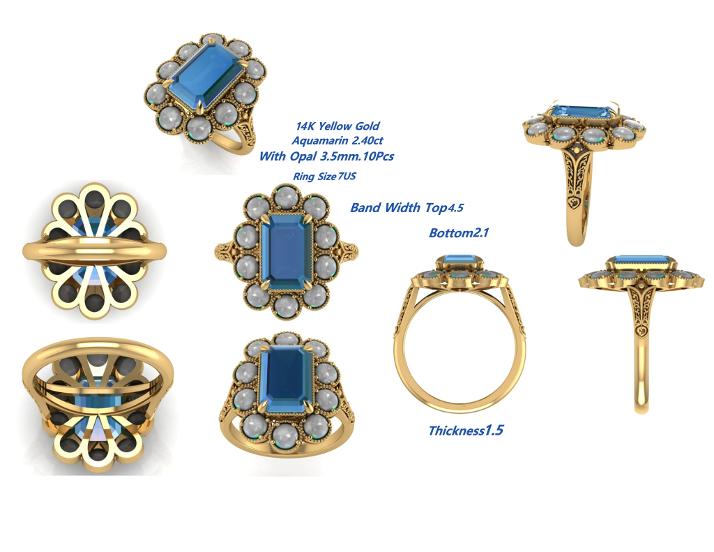 CAD Design
 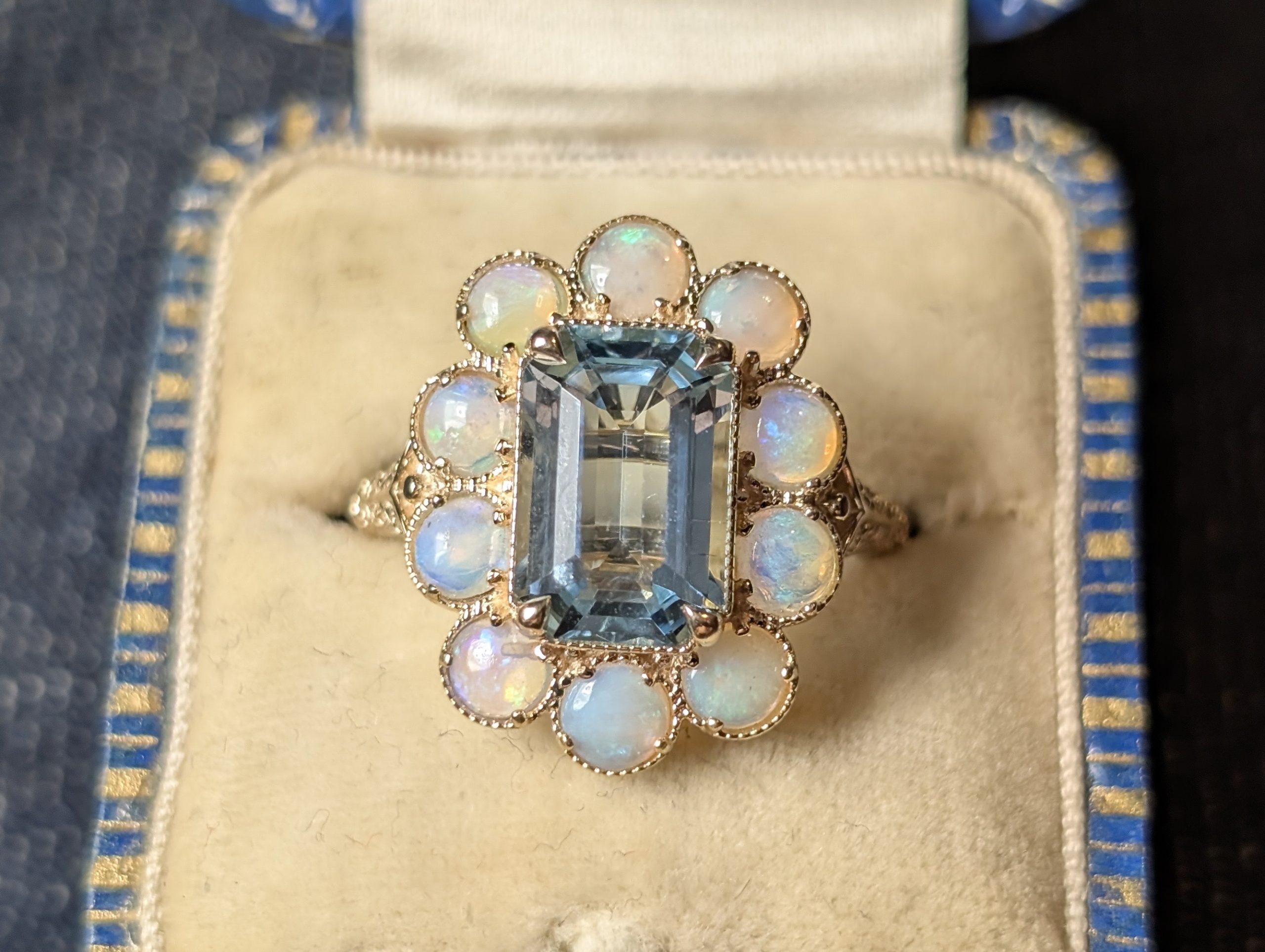 Finished Piece
 Aquamarine & Opal Ring
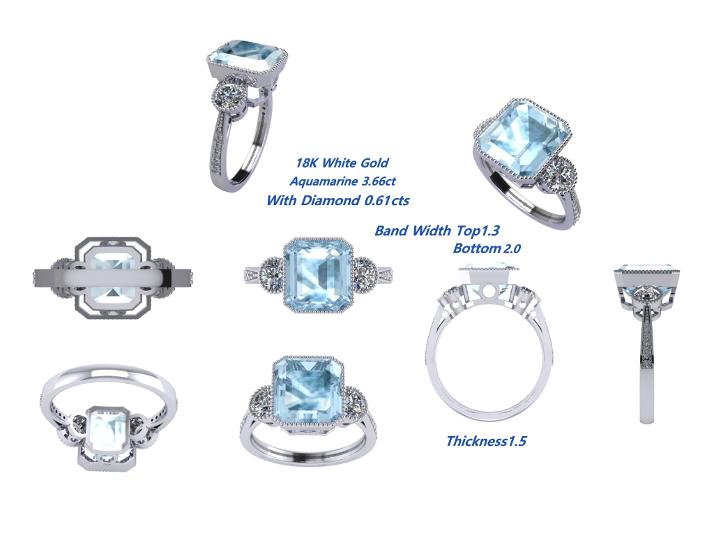 CAD Design
 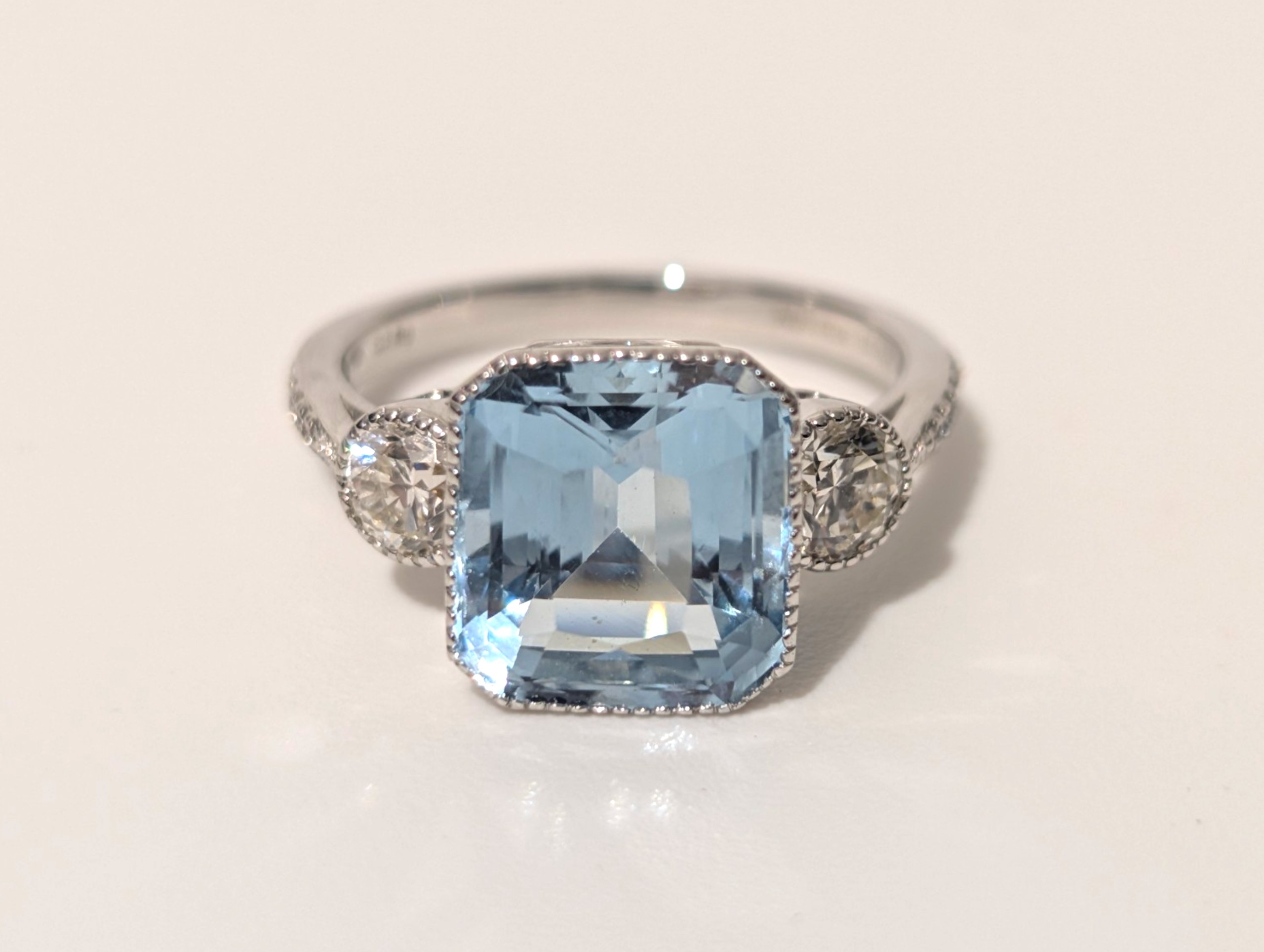 Finished Piece
 Aquamarine & Diamond Ring
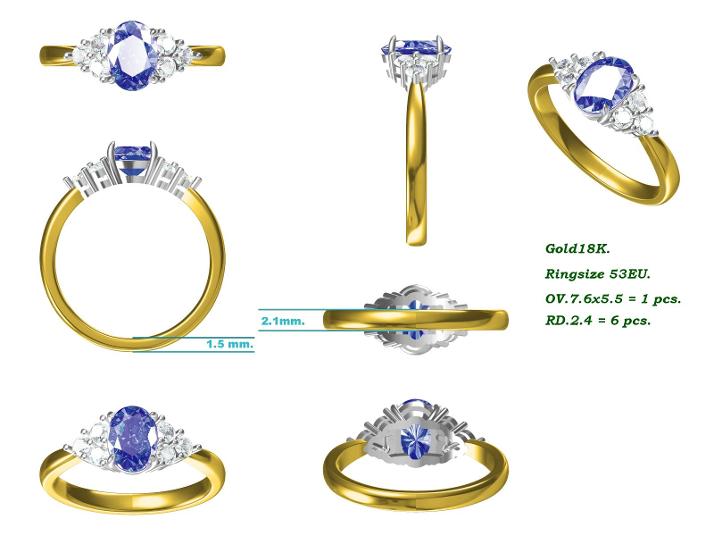 CAD Design
 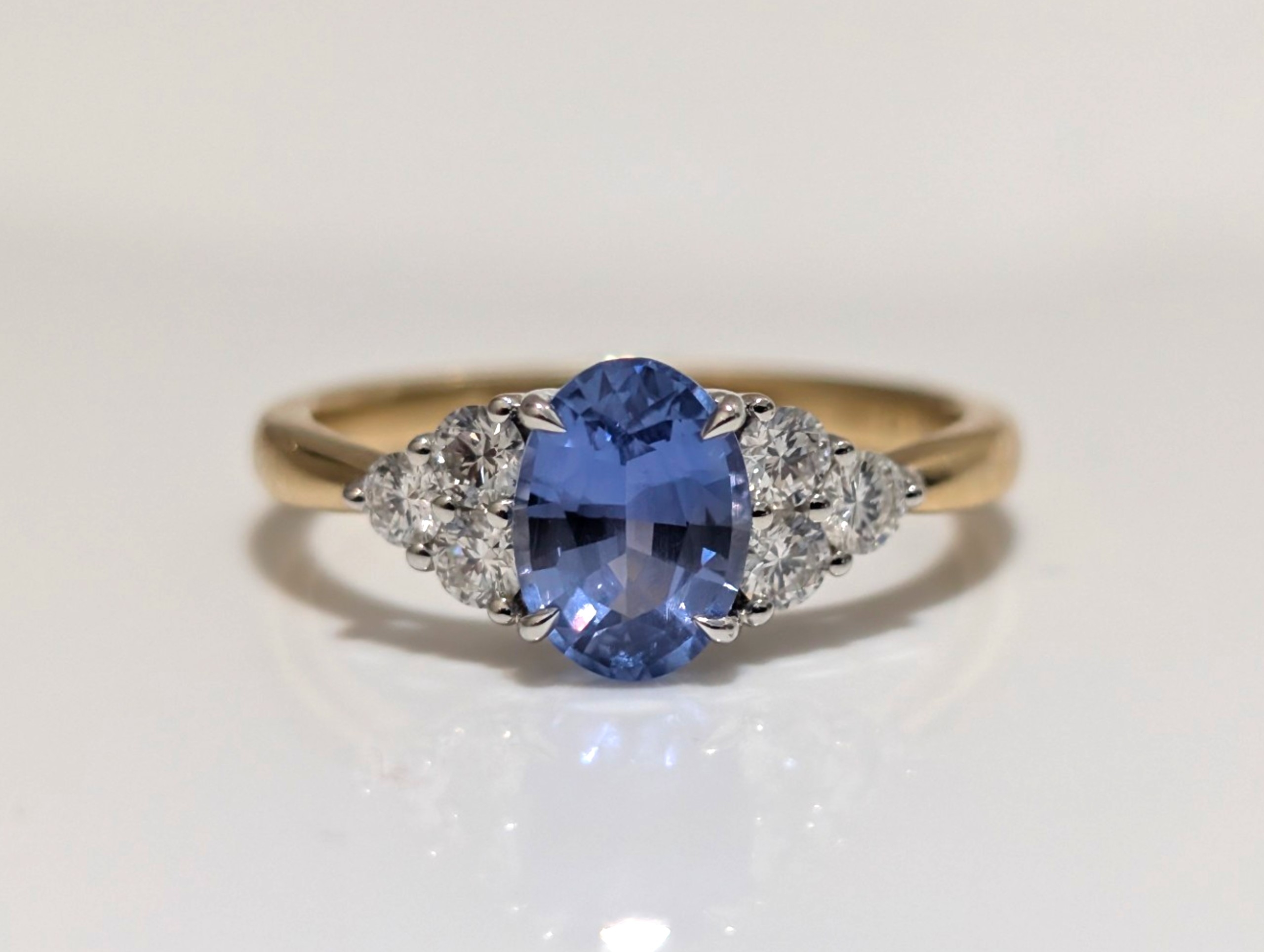 Finished Piece
 Sapphire & Diamond Ring
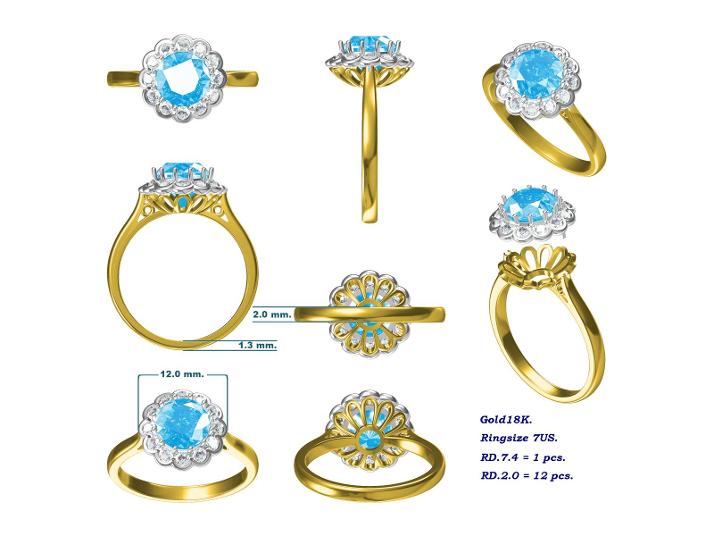 CAD Design
 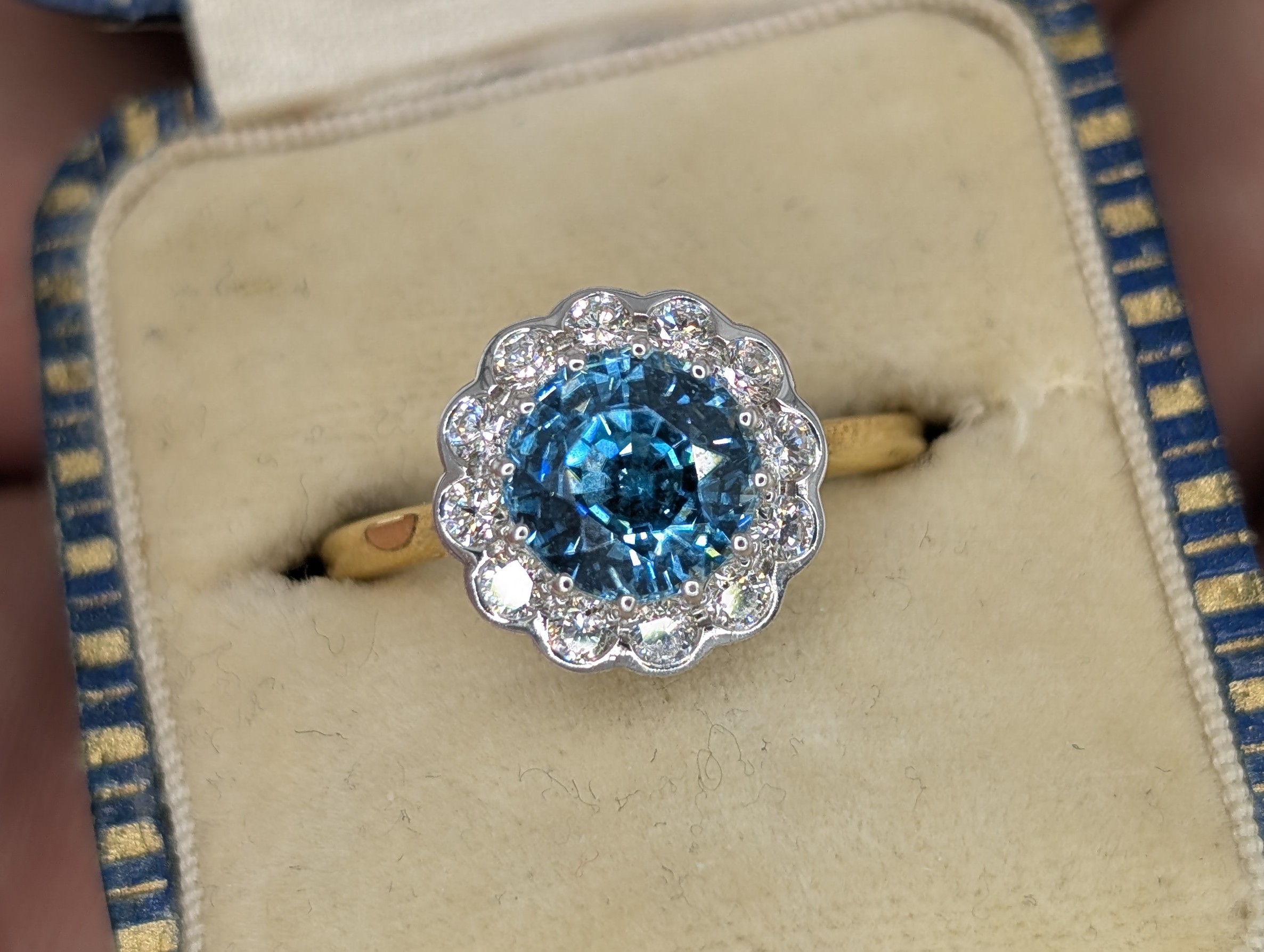 Finished Piece
 Blue Zircon & Diamond Ring
Tell Us About Your Custom Piece
Share your idea below and upload any useful inspiration. We will review your enquiry and contact you to discuss the design, materials, timescale and pricing.
Creating a Custom Sapphire Ring
With a sapphire ring, the gemstone should usually come first. Colour, shape, dimensions and character can all influence the finished design, which is why a bespoke setting can be particularly effective when you have a specific sapphire in mind.
Start With the Sapphire, Not the Setting
When creating a custom sapphire ring, we prefer to think about the centre stone before finalising the setting around it. Sapphire is available in a wide range of shapes, proportions and colours, and two stones with the same carat weight can look very different once viewed face-up.
A broad cushion-cut sapphire might suit a compact diamond cluster. A long oval could work beautifully in a trilogy design. An emerald-cut stone can give the ring a much more architectural character, while a round sapphire offers enormous flexibility for traditional and antique-inspired settings.
Designing around the actual stone means the proportions of the ring can be developed around what is physically there rather than around a generic gemstone measurement.
For a bespoke sapphire ring, the best design often begins with one question: what makes this particular sapphire worth building the ring around?
Choosing the Colour of a Blue Sapphire
Blue sapphire is not one single shade. Stones can vary from lighter and brighter blues through medium tones to much darker material. Saturation, tone, transparency and how the stone behaves in different lighting can all affect its appearance.
This is why choosing a sapphire purely from a carat weight is rarely the best way to approach a custom ring. A smaller stone with a colour you genuinely prefer may be far more appealing than a larger stone chosen only because of its size.
The setting can also change how the colour is perceived. White metal tends to give the overall ring a cooler appearance, while yellow gold creates a stronger contrast around a blue centre stone.
Does a Sapphire Have to Be Dark Blue?
No. The idea that a good sapphire must be very dark blue is far too simplistic. Personal preference is important, particularly when the stone is being selected for a bespoke ring that you intend to wear regularly.
Some customers prefer a vivid medium blue, while others are drawn to softer or lighter blue stones. What matters is understanding what the sapphire actually looks like rather than relying on a colour name alone.
Heated and Unheated Sapphires
Heat treatment is an important consideration when choosing a natural sapphire. Heating has long been used to improve aspects of colour or clarity in sapphire, and many sapphires in the jewellery market have undergone some form of heat treatment.
An unheated sapphire may command a premium when its lack of heat treatment has been established by a reputable gemmological laboratory, particularly when the stone also has desirable colour and quality. However, an unheated label by itself does not automatically make one sapphire more attractive than another.
If treatment status is important to your commission, it should be supported by appropriate testing rather than assumed from photographs or appearance.
What Does “Ceylon Sapphire” Mean?
Ceylon is the historic name commonly used in the jewellery trade when referring to sapphires associated with Sri Lanka. However, geographic origin cannot reliably be determined simply by looking at a gemstone.
If a sapphire is being sold specifically as Sri Lankan, Burmese, Kashmir or another claimed origin and that origin materially affects its price, appropriate laboratory evidence should be considered.
For a custom sapphire ring, we would rather describe a stone accurately than attach an unsupported origin to it because the colour happens to resemble sapphires associated with a particular location.
Choosing the Shape of Your Sapphire
Shape has a major influence on both the appearance of the sapphire and the ring that can be built around it.
Oval Sapphire
One of the most adaptable choices for clusters, trilogies, solitaires and antique-inspired sapphire rings.
Cushion Sapphire
Particularly suited to rings where a softer antique-inspired outline is preferred around the centre stone.
Emerald-Cut Sapphire
A strong option for cleaner geometric settings, baguette diamonds and Art Deco inspired designs.
Round Sapphire
Extremely versatile for traditional clusters, target rings, solitaires and diamond surrounds.
Sapphire and Diamond Rings
Sapphire and diamond is an enduring combination because the diamonds can frame the coloured centre without competing with it. The final appearance, however, depends heavily on how those diamonds are arranged.
A fine halo of small diamonds creates a very different ring from two substantial side stones. A cluster can make the design feel more antique-inspired, while tapered or baguette-shaped diamonds can give it a cleaner geometric appearance.
Diamond quantity should therefore follow the design rather than being treated simply as a way of adding more carat weight.
Custom Sapphire Cluster Rings
Cluster settings work especially well with sapphires because the surrounding stones can be used to emphasise the colour and shape of the centre.
A traditional oval sapphire surrounded by round diamonds has an established antique-inspired character, but a bespoke cluster does not have to follow that exact formula. Different diamond sizes, alternating shapes, scalloped edges or more geometric arrangements can completely alter the final effect.
The centre stone should remain the visual focus. If the surrounding diamonds become too large or the setting too wide, the sapphire can easily lose its dominance within the design.
Custom Sapphire Trilogy Rings
A sapphire trilogy ring offers a cleaner alternative to a full cluster. An oval or cushion sapphire can be flanked by two diamonds, or three coloured stones can be used if the design calls for something less traditional.
The side stones do not necessarily need to match the centre shape. Pear-shaped diamonds can create an elegant taper toward the shoulders, while round diamonds give a softer outline. More geometric side stones can push the ring toward an Art Deco inspired appearance.
Custom Sapphire Solitaire Rings
A sapphire does not need a large diamond surround to make an effective ring. A carefully proportioned solitaire can place almost all of the visual emphasis on the gemstone itself.
The setting can then be kept simple or developed with a more detailed basket, antique-style shoulders, engraving or subtle accent diamonds. This approach can be particularly attractive when the centre sapphire has a distinctive colour or unusually good proportions.
Art Deco Sapphire Rings
Sapphire works particularly well in Art Deco inspired jewellery because its colour provides a strong focal point within geometric white-metal and diamond settings.
Emerald-cut and oval sapphires can both work well, but the overall composition is more important than using one specific cut. Stepped shoulders, baguette diamonds, target-style borders, milgrain and controlled symmetry can all be incorporated depending on how strongly period-inspired the finished ring should be.
Victorian and Edwardian Inspired Sapphire Rings
A custom sapphire ring can also take its inspiration from earlier jewellery periods. Victorian influenced designs may use yellow gold, heavier shoulders, old-cut inspired diamonds or more substantial cluster settings.
Edwardian inspired pieces often lend themselves to a lighter appearance, with finer diamond work, delicate proportions and pale metal around the stones.
The design does not need to be a reproduction of an existing antique. Period details can be selected and adapted around the chosen sapphire.
Yellow Gold, White Gold or Platinum?
Metal choice can substantially change the character of a sapphire ring.
Yellow gold provides a warm contrast against blue sapphire and works particularly well for Victorian-inspired, classic and more colourful designs. White gold gives the ring a cooler appearance and allows surrounding diamonds to blend visually with the setting.
Platinum is another excellent option for many sapphire and diamond designs, particularly where a substantial white-metal setting or strongly antique-inspired appearance is wanted.
Two-tone construction can also be considered. For example, a yellow gold band might be combined with a white setting around the diamonds.
Custom Sapphire Engagement Rings
Sapphire is a practical choice for many engagement-ring designs because corundum is a hard gemstone and suitable for frequent wear when properly set and cared for. Like any gemstone, however, sapphire is not indestructible and exposed edges or points can still be damaged.
A bespoke sapphire engagement ring also gives us the opportunity to consider daily wear during the design process. Setting height, stone protection, band thickness and how the ring may sit alongside a future wedding band can all be taken into account before production.
Designing Around a Particular Sapphire
This is where custom work becomes particularly useful. A gemstone is three-dimensional, so its depth and exact measurements matter just as much as the length and width visible from above.
Once the actual dimensions of the sapphire are known, the surrounding design can be developed around them. Diamond sizes can be balanced against the centre stone, the width of the ring can be controlled and the basket can be designed to accommodate the gemstone securely.
The CAD stage then provides a much clearer view of those proportions before the ring is committed to production.
Do Carat Weight and Size Mean the Same Thing?
No. Carat is a measurement of weight rather than face-up dimensions. Two sapphires of identical carat weight can have noticeably different length, width and depth.
A deeper stone may carry more of its weight below the setting, while another may spread more broadly across the finger. This is one reason why buying purely according to carat weight can be misleading when planning a custom ring.
Should My Sapphire Have a Laboratory Report?
It depends on the sapphire and the claims being made about it. For more significant stones, or where treatment status and geographic origin materially affect value, a report from an appropriate gemmological laboratory can provide useful independent information.
A laboratory report is not the same as an appraisal and it does not automatically tell you whether you personally will like the stone. Colour, appearance and suitability for the design still matter.
Fancy Coloured Sapphires
Sapphire is not limited to blue. Natural corundum can occur in a range of colours, with non-blue varieties commonly described as fancy sapphires.
Pink, yellow, green and other sapphire colours can produce very different bespoke rings and may suit customers who like the durability of sapphire but do not want the traditional blue-and-diamond combination.
As with blue sapphire, treatment and origin claims should be handled accurately rather than inferred from appearance.
Can You Design Around a Sapphire I Already Own?
Potentially, yes. If you already have a loose sapphire, the ring can be developed around its actual measurements and proportions.
A sapphire removed from older jewellery may also be suitable, although its condition should be considered first. Existing chips, abrasion or other damage can influence whether a particular setting style is appropriate.
How Much Does a Custom Sapphire Ring Cost?
There is no single price because the centre sapphire can account for a significant part of the budget. A one-carat commercial-quality heated sapphire and a fine larger sapphire accompanied by specialist laboratory documentation are fundamentally different purchases.
The setting then adds another set of variables: metal choice, gold or platinum weight, diamond carat weight, number of stones, complexity, setting work and fine details such as milgrain.
If you already have a target budget, include it in your enquiry. It is often easier to create a successful ring by balancing the gemstone and setting from the beginning rather than designing an elaborate ring and attempting to reduce the cost afterwards.
The CAD Stage
Once the concept and quotation have been agreed, a detailed 3D CAD can be produced for a $25 non-refundable design fee. If you proceed with the piece, the $25 is deducted from the final bill.
The CAD allows you to review the overall proportions and construction before production. Once the final design is approved, the 40% production deposit is requested.
After the ring has been completed, we show you the finished piece. The remaining 60% balance is then payable before secure dispatch.
Can you source a sapphire for my ring?
The sapphire can form part of the bespoke process. Tell us the approximate colour, shape, size and budget you have in mind so the design can be developed around an appropriate centre stone.
Can I use my own sapphire?
Potentially, yes. The stone's exact dimensions and condition need to be considered so the setting can be designed around the gemstone rather than a generic size.
Do you only make blue sapphire rings?
No. Blue sapphire is the traditional choice, but custom rings can also be developed around suitable pink, yellow, green and other fancy-coloured sapphires.
Is an unheated sapphire always better?
Not automatically. Lack of heat treatment can be desirable and may affect value, but colour, clarity, cut, size and overall appearance still matter. Treatment claims should also be supported appropriately where important.
Can you make a custom sapphire engagement ring?
Yes. The setting can be designed with frequent wear in mind, including stone protection, profile, band dimensions and how the ring may sit alongside a wedding band.
Can I have diamonds around my sapphire?
Yes. Diamond clusters, halos, trilogy designs, baguette accents and more restrained side-stone arrangements can all be developed around the sapphire.
How much does the CAD design cost?
The detailed 3D CAD costs $25. This fee is non-refundable but is deducted from your final bill if the ring proceeds to production.
When do I pay for my bespoke sapphire ring?
After approving the final CAD, a 40% deposit is required before production. The remaining 60% is paid after you have seen the finished jewellery and before dispatch.
Have a Sapphire Ring in Mind?
Tell us the sapphire colour, shape, style and precious metal you prefer, or send inspiration images and we can begin developing your bespoke design.
Start Your Enquiry