
Custom Ruby Rings
Create a ruby ring around the colour, shape and style you prefer, from classic ruby and diamond designs to antique-inspired and completely bespoke settings.
How It Works
From choosing your ruby to approving the final design, we keep the bespoke process clear and simple.
Tell Us Your Idea
Share your preferred ruby, ring style, precious metal, budget and inspiration images.
Choose & Refine
We develop the ring around your ruby, refining the setting, diamonds and proportions.
Receive Your Quote
Once the concept is agreed, we provide a clear quote based on the ruby, metal, diamonds and design.
3D CAD Design
Proceed with a detailed CAD for a $25 non-refundable design fee, deducted from the final bill if the piece goes ahead.
Approve Your Ring
Review the final CAD before production. Once approved, a 40% deposit confirms your order.
Made & Delivered
We show you the finished ring before the remaining 60% is paid and your jewellery is dispatched.
Some of Our Bespoke Creations
Explore a selection of pieces created by us, from the production-ready CAD design through to the finished jewellery.
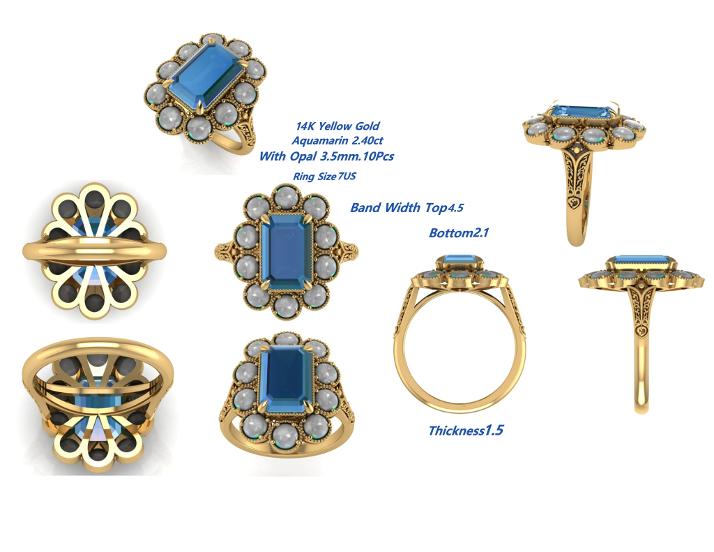 CAD Design
 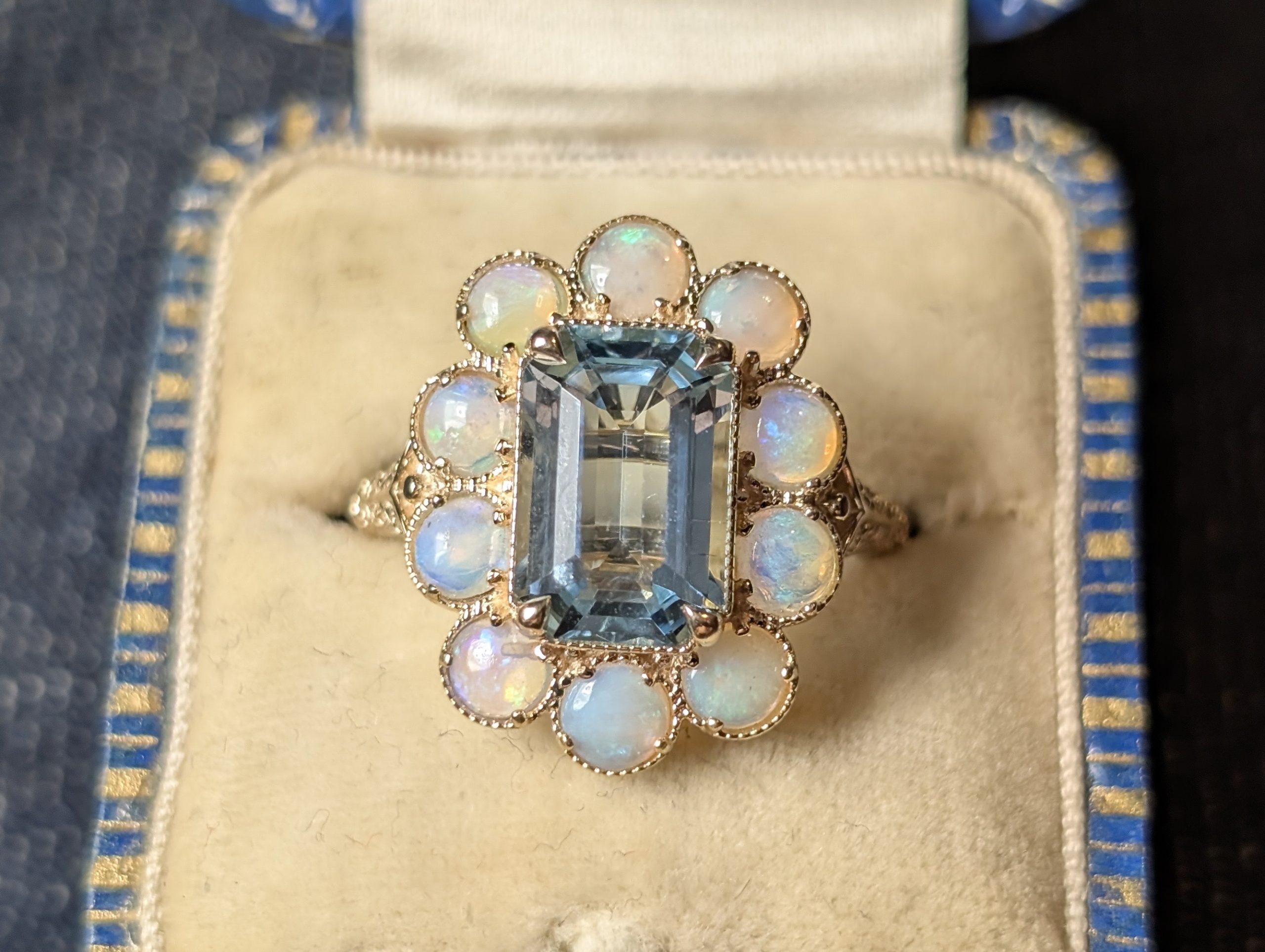 Finished Piece
 Aquamarine & Opal Ring
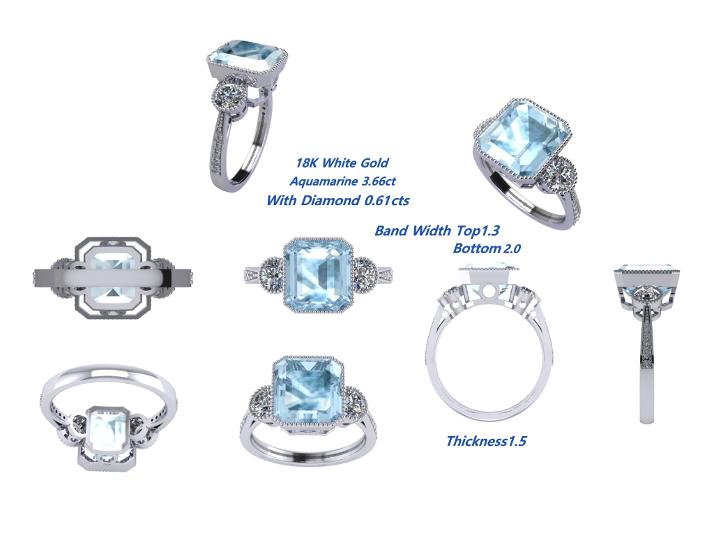 CAD Design
 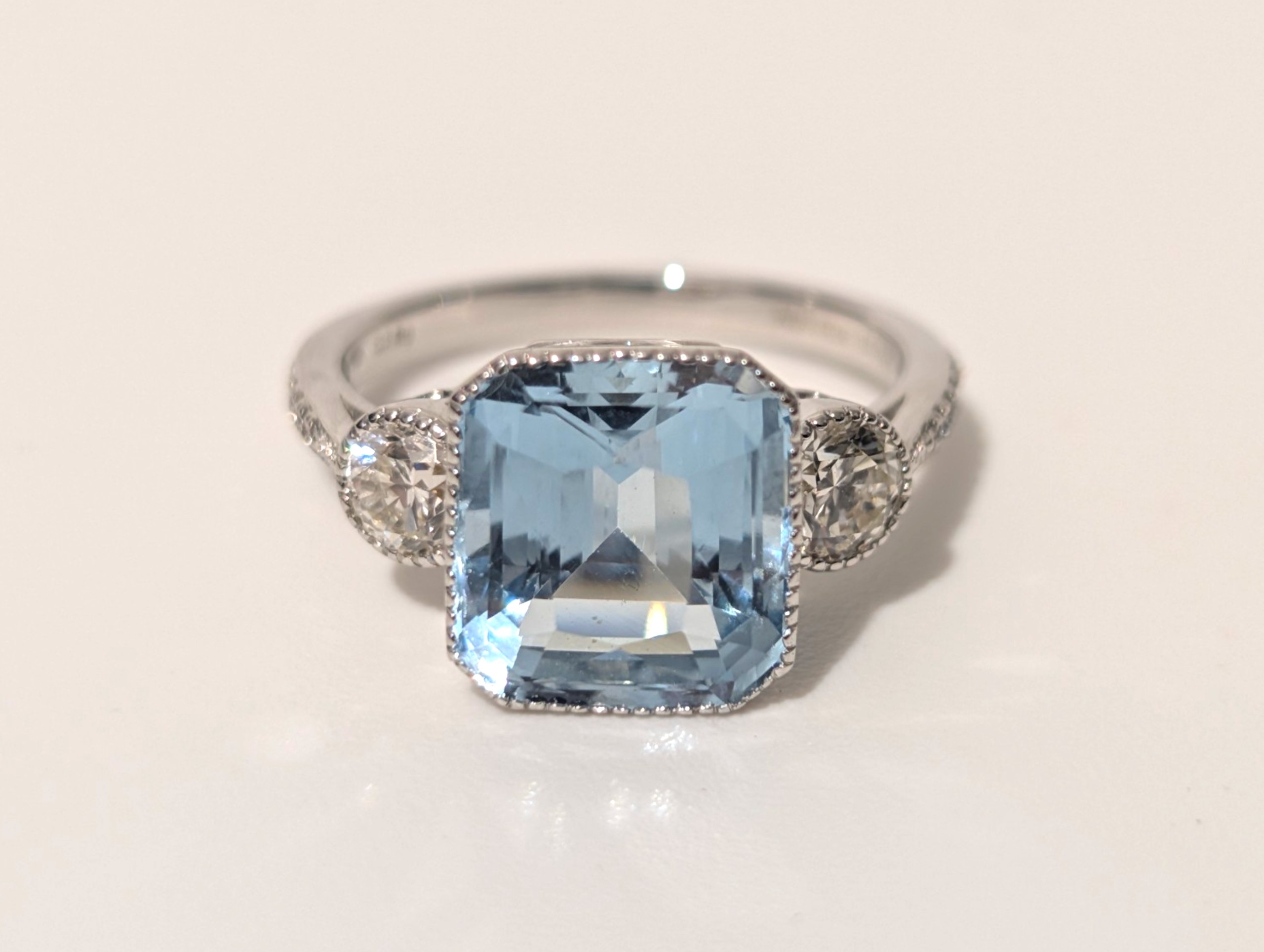 Finished Piece
 Aquamarine & Diamond Ring
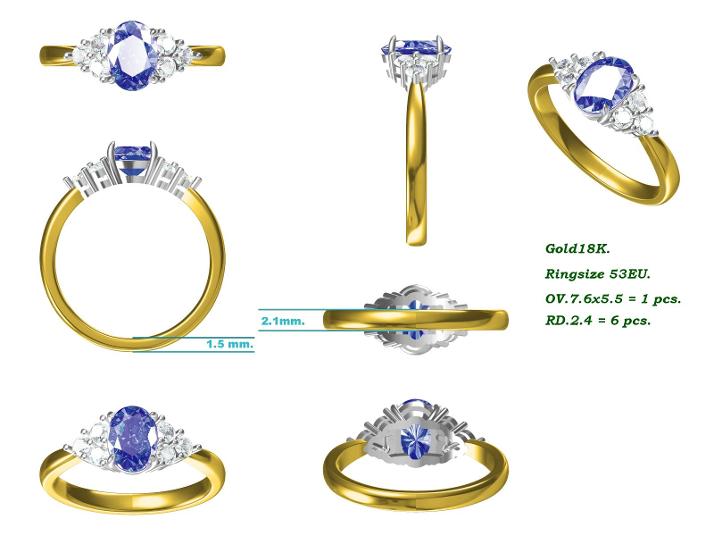 CAD Design
 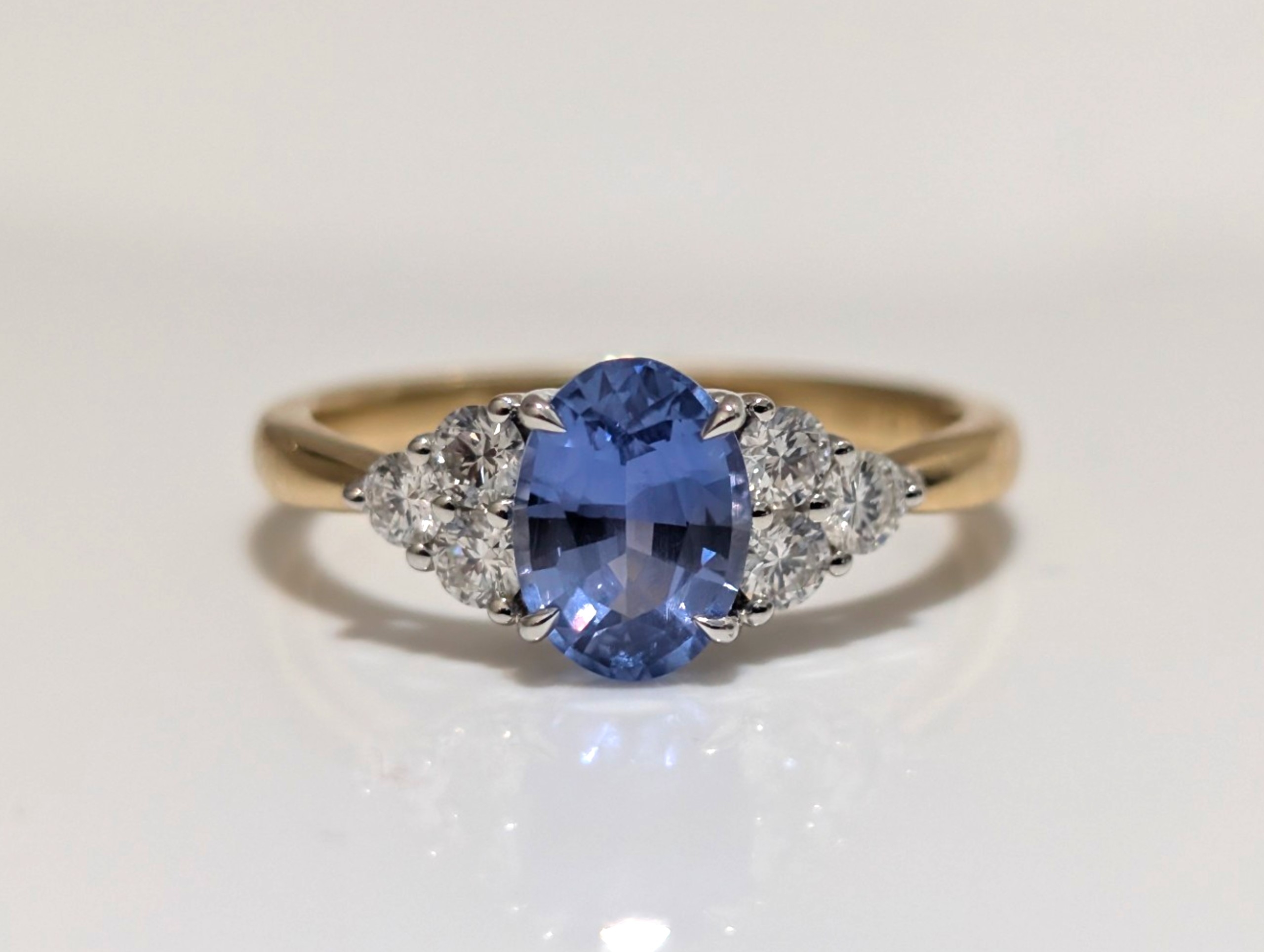 Finished Piece
 Sapphire & Diamond Ring
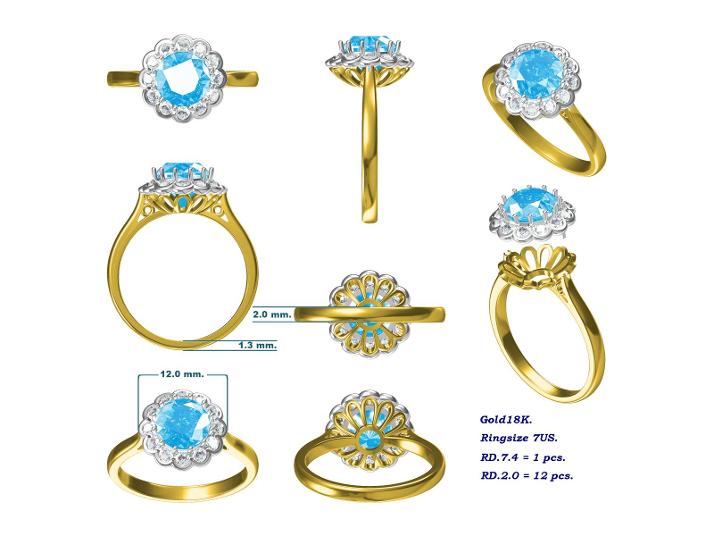 CAD Design
 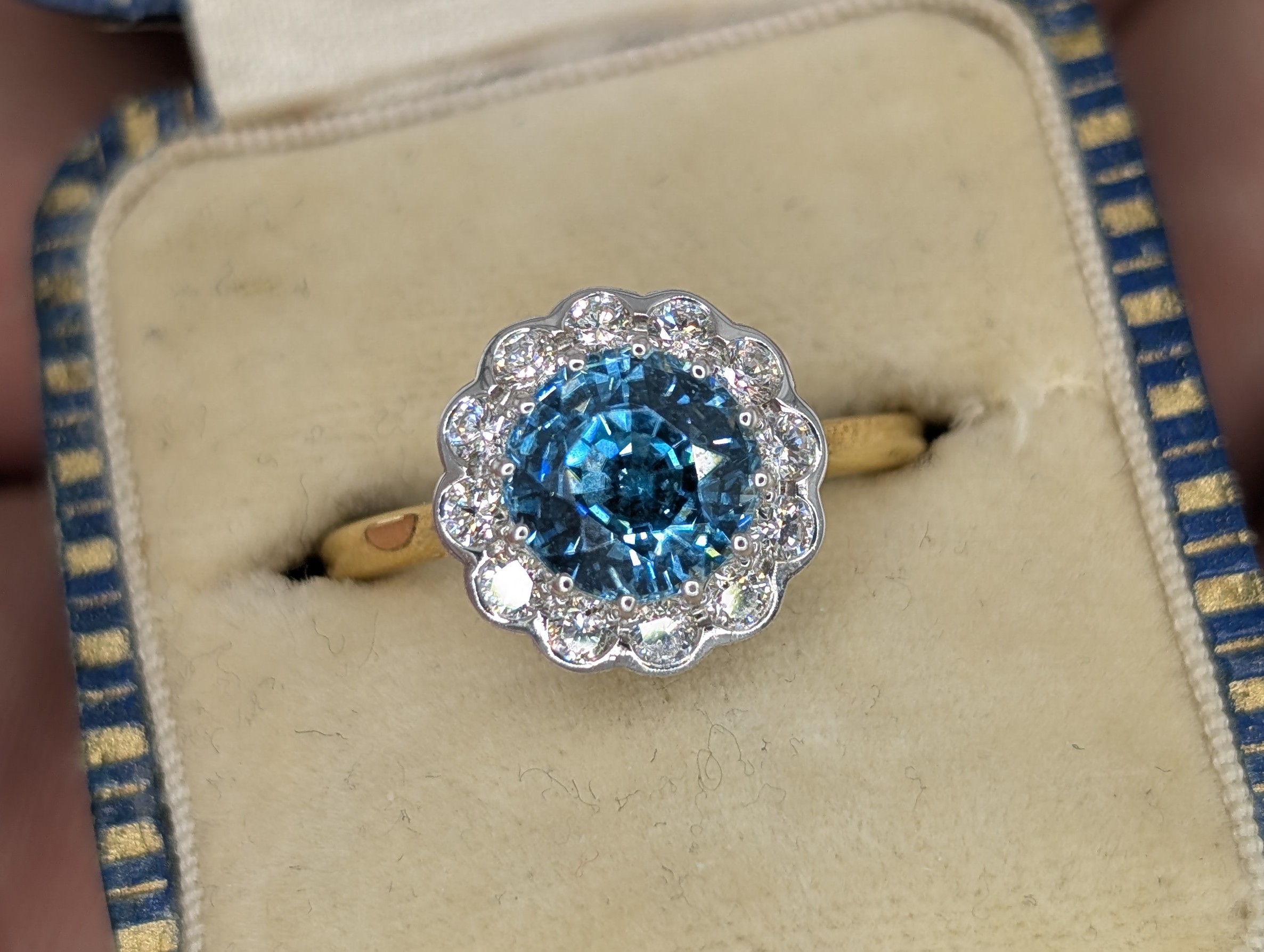 Finished Piece
 Blue Zircon & Diamond Ring
Tell Us About Your Custom Piece
Share your idea below and upload any useful inspiration. We will review your enquiry and contact you to discuss the design, materials, timescale and pricing.
Creating a Custom Ruby Ring
Ruby can produce a very different ring depending on the colour, proportions and character of the centre stone. Designing the setting around the actual ruby allows those qualities to lead the piece rather than forcing the gemstone into a standard mount.
Choosing the Ruby First
For most bespoke ruby rings, the centre stone should be considered before the setting is finalised. Its shape, dimensions and colour affect everything around it, from the width of a diamond surround to the proportions of the shoulders.
A broad cushion ruby may naturally suit an antique-inspired cluster, while an oval stone can work well in either a trilogy or halo design. An elongated ruby can give a ring a completely different presence across the finger.
This is why carat weight should not be viewed in isolation. Two rubies of the same weight can have noticeably different face-up dimensions and visual impact.
The best bespoke ruby ring is not necessarily built around the biggest ruby. Colour, proportions and the character of the stone usually matter far more than a single number on a certificate.
What Colour Should a Ruby Be?
Ruby belongs to the corundum family, the same mineral species as sapphire. Its red colour can vary considerably, from brighter reds through deeper tones and stones with purplish or slightly orangish secondary hues.
There is no one shade that every customer should prefer. A vivid medium-toned ruby can behave very differently in jewellery from a darker stone, particularly once surrounded by metal and diamonds.
The aim should be to choose a ruby whose colour appeals to you in realistic lighting rather than relying entirely on a descriptive trade term.
What Does “Pigeon Blood Ruby” Mean?
“Pigeon blood” is a trade description associated with particularly desirable ruby colour, but it is not a simple universal colour grade. Different laboratories and sellers may apply the terminology according to their own criteria.
It should therefore not be treated as a phrase that can safely be assigned to a ruby simply because a photograph looks strongly red.
If a significant ruby is being sold specifically with a laboratory colour designation that materially affects its price, the wording should be supported by the relevant report.
Heated and Unheated Rubies
Heat treatment is common in the ruby market and has long been used to improve the appearance of corundum. A heated natural ruby can still be an attractive and valuable gemstone.
Fine unheated rubies can command substantial premiums, particularly where their treatment status has been established by a reputable gemmological laboratory.
However, “unheated” is not automatically a guarantee that one stone is more beautiful than another. Colour, transparency, cut, size and overall appearance still matter.
Lead-Glass Filled Rubies
Not all ruby treatments are equivalent. Some heavily fractured material may be treated using lead-glass filling to improve apparent transparency.
This type of material requires particular care and is significantly different from a traditional heated natural ruby. Treatment disclosure is therefore very important when choosing a stone for a bespoke ring.
For an important commission, especially where the centre stone represents a substantial part of the budget, appropriate laboratory testing can provide useful independent information.
Burmese, Mozambique and Other Ruby Origins
Rubies are associated with several important producing regions, including Myanmar and Mozambique, as well as other sources around the world.
Geographic origin cannot reliably be established by looking at a photograph or simply judging the colour of the ruby.
If a stone is being sold specifically as Burmese, Mozambique or another named origin and that claim materially affects its value, appropriate laboratory evidence should support it.
Choosing the Shape of Your Ruby
Oval Ruby
Versatile for trilogy rings, diamond clusters and classic coloured-stone designs with balanced proportions.
Cushion Ruby
Particularly suited to antique-inspired rings and settings where a slightly softer, broader outline is preferred.
Round Ruby
Works well in compact clusters, target-style settings and traditional ruby and diamond designs.
Emerald & Rectangular Cuts
Straight-sided stones can give a ruby ring a cleaner, more architectural appearance and suit Art Deco influenced settings particularly well.
Ruby and Diamond Rings
Ruby and diamond is one of the strongest coloured-stone combinations. The diamonds provide a bright neutral contrast around the red centre, helping the ruby remain the visual focus.
The diamonds can be used subtly or become a major part of the design. A fine halo gives a very different result from two larger side stones, while a full cluster produces a broader and more antique-inspired appearance.
The best arrangement depends on the ruby. Surrounding stones should support the centre rather than overwhelm it.
Custom Ruby Trilogy Rings
A trilogy setting is an excellent option where the ruby should remain visually dominant without the width of a full cluster.
A centre ruby can be paired with round diamonds for a classic look, pear-shaped diamonds for a softer taper, or more geometric side stones for a stronger Art Deco influence.
The side stones do not need to be enormous. Carefully balanced proportions usually create a more convincing finished ring than simply maximising total diamond carat weight.
Custom Ruby Cluster Rings
Ruby cluster rings are particularly suited to customers who like antique and traditional jewellery. A border of diamonds creates strong contrast and can dramatically change the apparent outline of the centre stone.
The cluster does not have to follow the familiar oval-centre, round-diamond formula. Alternating diamond sizes, shaped stones or more geometric arrangements can make the finished ring considerably more individual.
Art Deco Ruby Rings
Ruby works extremely well in Art Deco inspired jewellery because strong colour contrasts naturally with white diamonds and pale metal.
Rectangular or oval rubies can be combined with baguettes, stepped shoulders, geometric diamond borders or target-style arrangements. Fine milgrain can add a more period-inspired finish where appropriate.
If the Art Deco style is the main focus of your commission, our custom Art Deco style rings page explores that design language in greater detail.
Victorian Inspired Ruby Rings
Ruby was widely suited to the richer colour combinations seen in Victorian jewellery, making yellow gold a particularly natural choice for this style of bespoke ring.
Diamond clusters, substantial shoulders and old-cut inspired diamond layouts can all be used to create a ring that feels influenced by nineteenth-century jewellery without becoming a direct reproduction.
Edwardian Inspired Ruby Rings
An Edwardian influenced ruby ring can take a lighter approach, using finer diamond work, pale metal and more delicate proportions.
The strong red centre stone can provide contrast against a refined diamond setting, particularly when the surrounding metalwork is kept visually light.
Yellow Gold, White Gold or Platinum?
Yellow gold creates a rich and traditional contrast against ruby, making it especially effective in antique-inspired and Victorian-style designs.
White gold and platinum give the ring a cooler appearance and allow diamonds around the ruby to blend more closely with the setting. This can be particularly effective in Art Deco and contemporary ruby and diamond rings.
Two-tone construction can also be used. A yellow gold shank paired with a white diamond setting can combine warmth around the finger with a brighter appearance around the stones.
Custom Ruby Engagement Rings
Ruby is a durable gemstone and can be a strong option for an engagement ring when appropriately set and cared for.
Because ruby is corundum, it is relatively hard and suitable for frequent wear, although no gemstone is immune to damage and exposed edges should still be considered during the design process.
If the ring is specifically being created as an engagement ring, setting height, wedding-band fit and daily wear can all be considered before the final CAD is approved.
Our broader bespoke engagement rings page explains the overall engagement-ring design process in more detail.
Designing Around a Ruby You Already Own
If you already own a loose ruby, the ring can potentially be built around its actual dimensions rather than sourcing a new centre stone.
Length, width and depth are all important. A deep stone may require a different basket from a shallower ruby of the same face-up dimensions.
The condition of the stone should also be considered, particularly if it has been removed from antique or inherited jewellery.
Resetting an Heirloom Ruby
An inherited ruby can be incorporated into a completely new ring while preserving the sentimental connection to the original jewellery.
There is no requirement to reproduce the previous setting. An older cluster can become a trilogy, or a ruby from a damaged ring could become the centre of a cleaner Art Deco or contemporary design.
The suitability of the stone for resetting should be considered before the new design is finalised.
Laboratory Reports for Rubies
Laboratory reports become particularly useful where treatment status, natural origin or geographic origin materially affects the value of the stone.
A report can provide independent gemmological information, although it does not replace actually assessing whether you like the colour and appearance of the ruby.
For more valuable stones, combining visual assessment with appropriate laboratory documentation can give a clearer understanding of what is being purchased.
How Much Does a Custom Ruby Ring Cost?
Ruby prices vary enormously, which means there is no sensible fixed price for a bespoke ruby ring.
The centre stone may vary according to size, colour, transparency, treatment, cut, documentation and overall quality. The setting then adds precious metal, diamonds, craftsmanship and design complexity.
A restrained ruby trilogy in 18ct gold therefore has very different cost considerations from a platinum geometric cluster containing numerous diamonds.
If you have a target budget, include it with your enquiry. It allows the ruby and setting to be balanced from the beginning instead of developing a design that later needs extensive changes.
Why CAD Is Useful for Ruby Rings
Once a specific ruby has been chosen, the setting can be designed around its actual measurements.
CAD allows the centre stone, diamonds, shank and setting height to be considered together before production. This is especially useful for cluster and trilogy designs where small changes in side-stone size can alter the appearance considerably.
The detailed CAD carries a $25 non-refundable design fee. If the ring proceeds to production, this amount is deducted from the final bill.
Approval and Production
You review the final CAD before production begins. Once it has been approved, a 40% deposit of the quoted price confirms the order.
The ring is then created by our workshop. Once complete, we show you the finished jewellery before the remaining 60% is paid and the ring is securely dispatched.
Caring for a Ruby Ring
Ruby is generally well suited to jewellery, but care should still take account of the individual stone and any treatments it may have received.
Heavily treated or fracture-filled stones can require different care from traditionally heated or untreated ruby. This is another reason why treatment disclosure matters when purchasing the centre stone.
As with any fine ring, avoiding hard impacts and unnecessary exposure to harsh chemicals will help protect both the gemstone and setting.
Can you source a ruby for my ring?
The ruby can form part of the bespoke process. Tell us the approximate shape, colour, size and budget you have in mind so the design can be developed around an appropriate stone.
Can I use my own ruby?
Potentially, yes. Its exact dimensions and condition need to be considered before developing the new setting.
Is unheated ruby always better?
No. Unheated status can be desirable and may affect value, but colour, transparency, cut, size and overall appearance still matter. Important treatment claims should also be supported appropriately.
Can you tell if a ruby is Burmese from a photograph?
No. Geographic origin should not be assigned from appearance or photographs alone. Where origin matters, appropriate laboratory evidence should support the claim.
Can you make a ruby and diamond ring?
Yes. Trilogy, cluster, halo, Art Deco and more restrained diamond-accented designs can all be developed around a ruby.
Can ruby be used for an engagement ring?
Yes. Ruby is a durable gemstone and can work very well in engagement rings when the individual stone and setting are chosen appropriately.
How much is the CAD design?
The detailed 3D CAD costs $25. The fee is non-refundable, but it is deducted from the final bill if the ring proceeds to production.
When do I pay for the ring?
A 40% deposit is required after you approve the final CAD. The remaining 60% is paid after you have seen the finished jewellery and before dispatch.
Have a Ruby Ring in Mind?
Tell us the ruby shape, colour, precious metal and style you prefer, or send inspiration images and we can begin developing your bespoke design.
Start Your Enquiry