
Custom Aquamarine Engagement Rings
Create an engagement ring around the aquamarine you love, with its blue colour, cut, diamonds and setting balanced specifically for the wearer and how the ring will be worn.
How It Works
From choosing your aquamarine to approving the final design, we keep the bespoke process clear and straightforward.
Tell Us Your Idea
Share your preferred aquamarine colour, ring style, precious metal, budget and inspiration images.
Choose Your Aquamarine
We develop the ring around your chosen stone or the colour, cut and size you prefer.
Receive Your Quote
Once the concept is agreed, we provide a clear quote based on the aquamarine, diamonds, metal and design.
3D CAD Design
Proceed with a detailed CAD for a $25 non-refundable design fee, deducted from the final bill if the piece goes ahead.
Approve Your Ring
Review the final CAD before production. Once approved, a 40% deposit confirms your order.
Made & Delivered
We show you the finished ring before the remaining 60% is paid and your jewellery is dispatched.
Some of Our Bespoke Creations
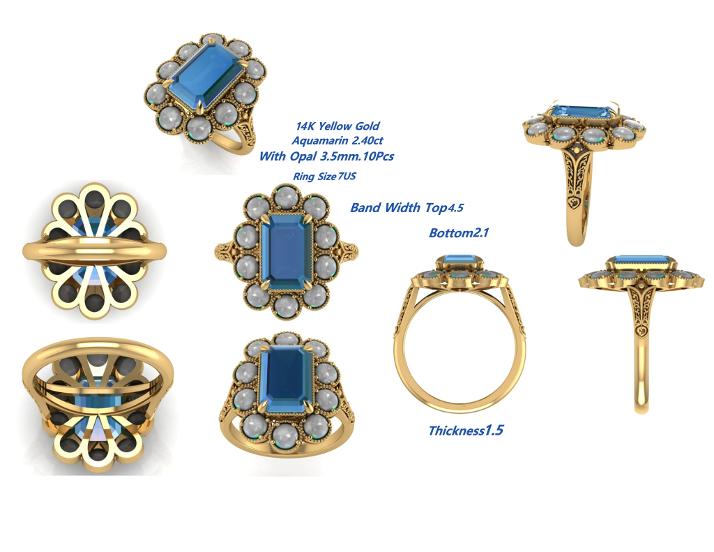
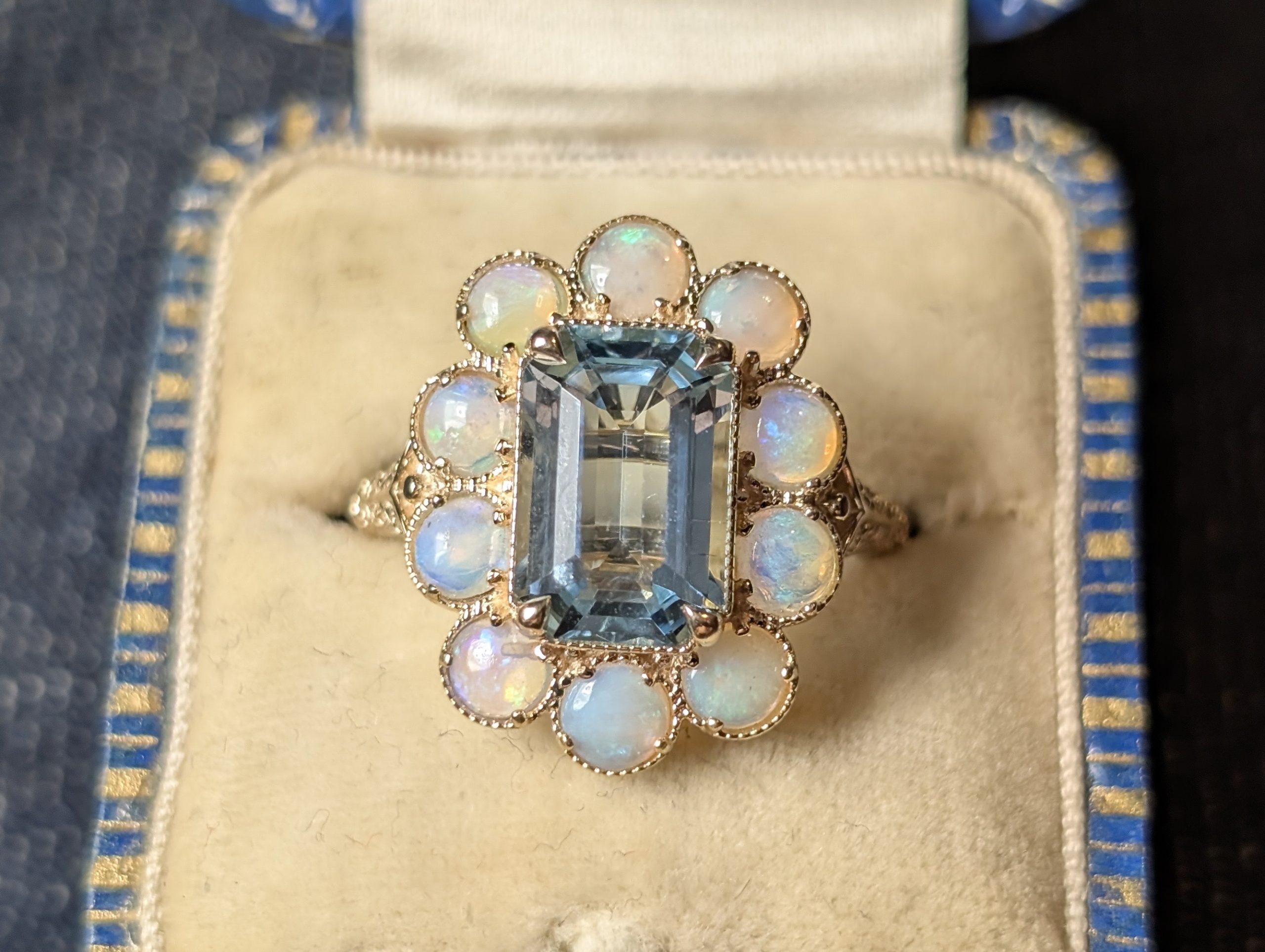
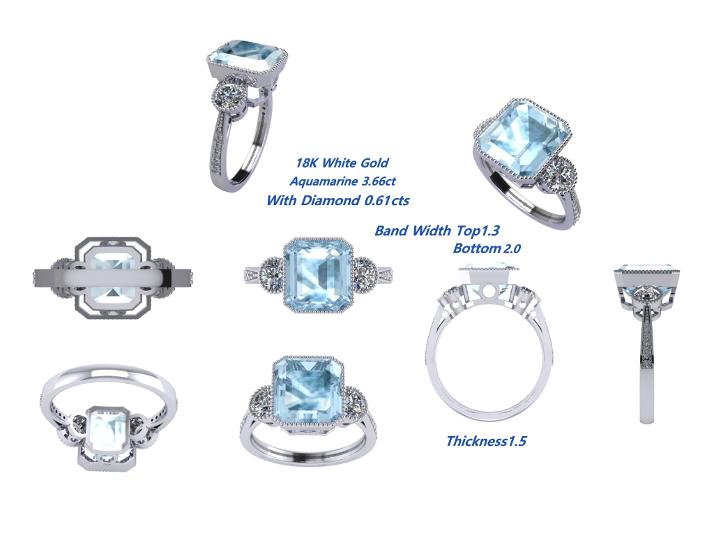
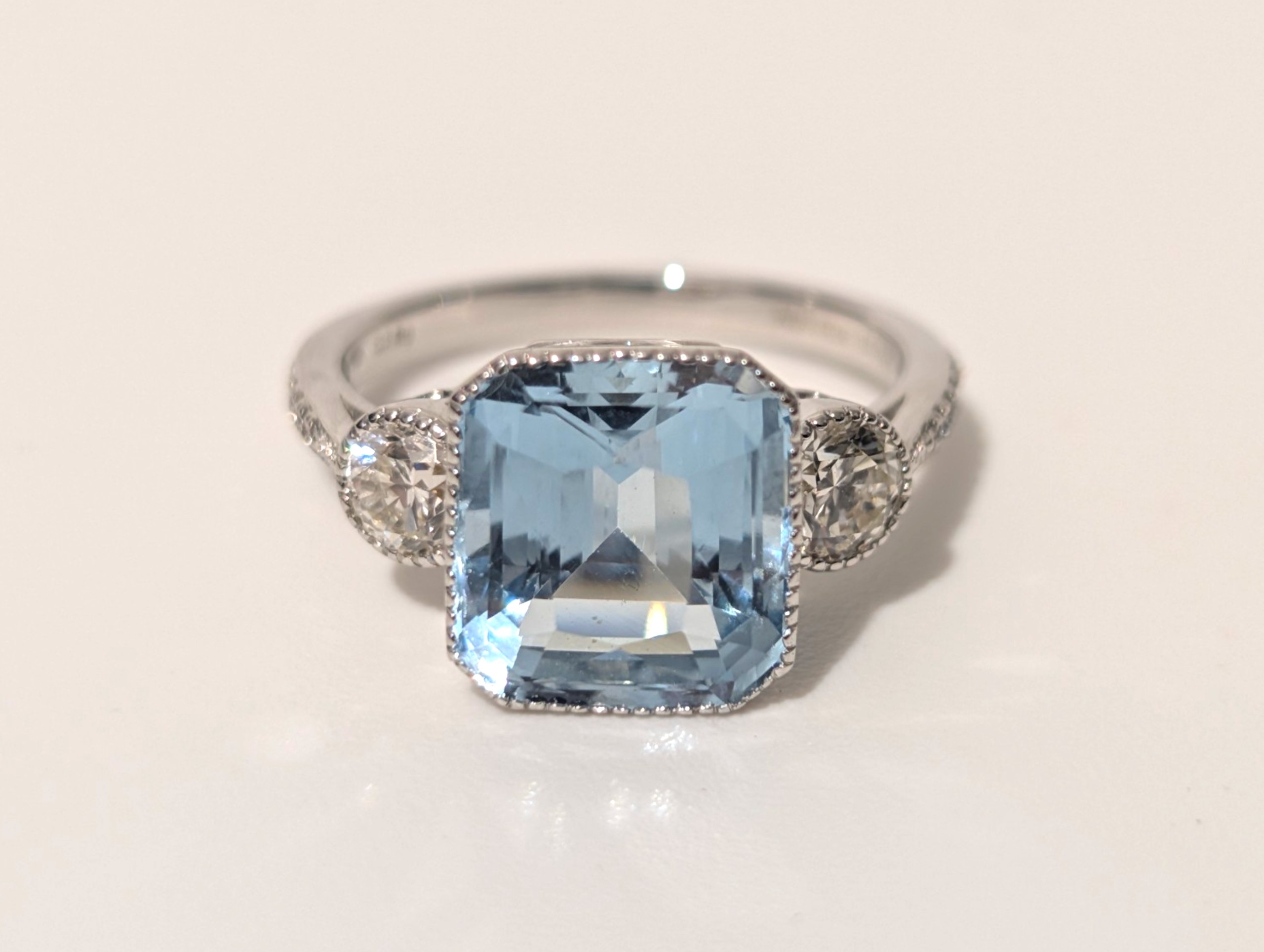
Explore a selection of pieces created by us, from the production-ready CAD design through to the finished jewellery.
 CAD Design
  Finished Piece
 Aquamarine & Opal Ring
 CAD Design
  Finished Piece
 Aquamarine & Diamond Ring
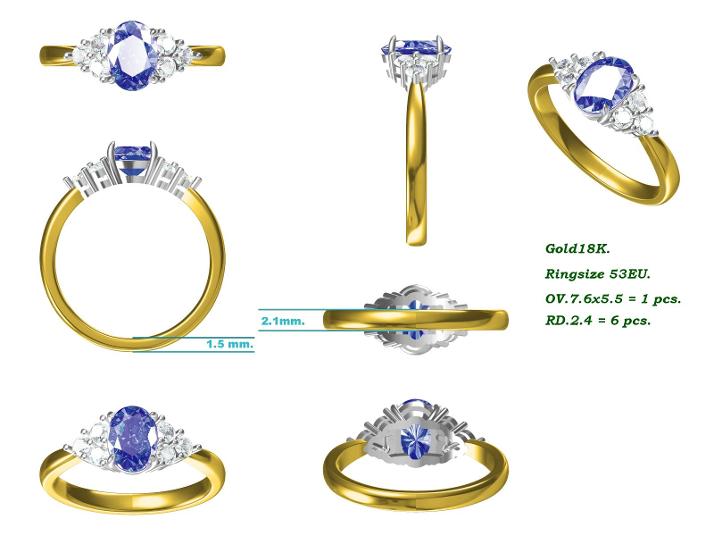 CAD Design
 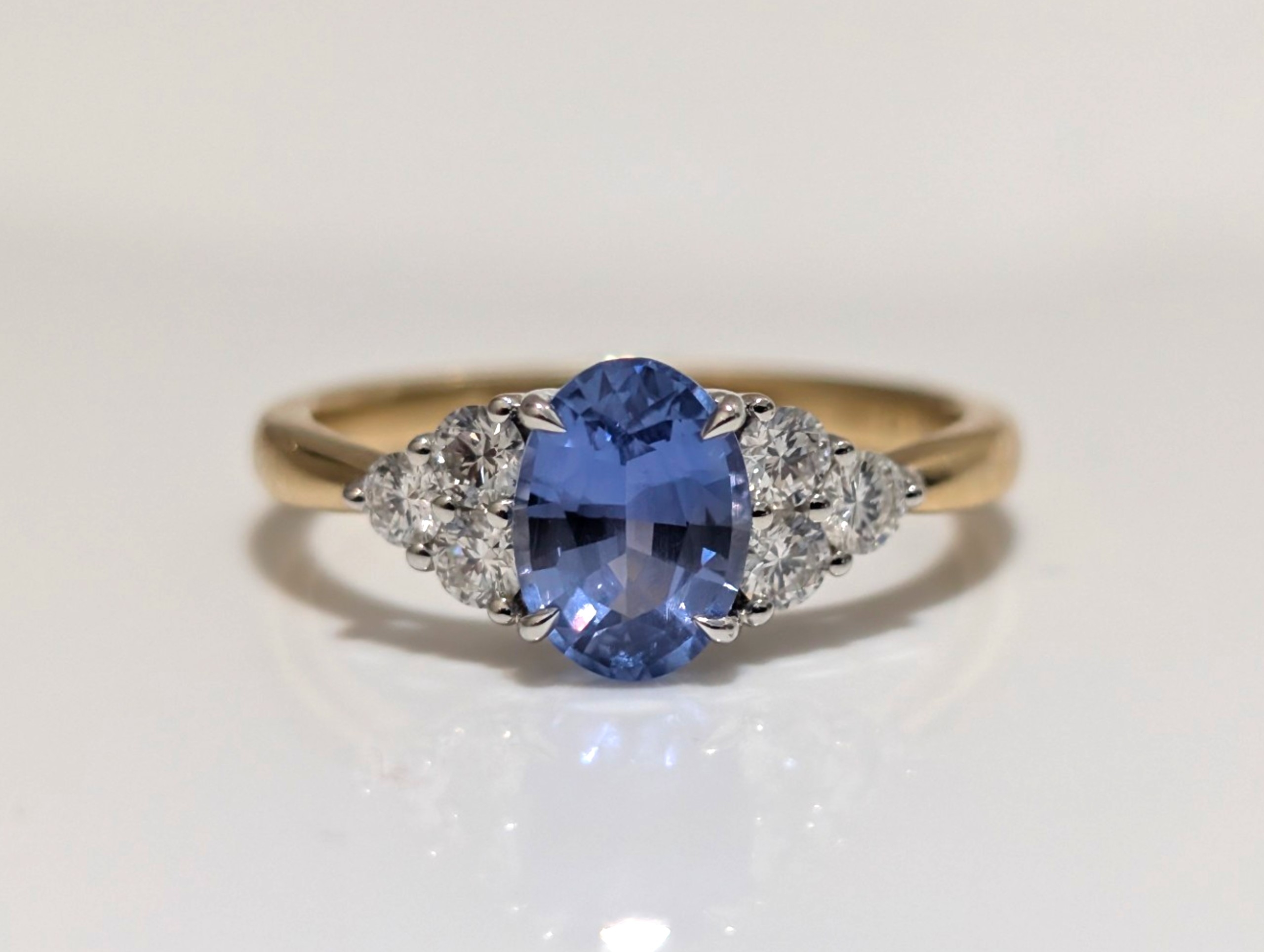 Finished Piece
 Sapphire & Diamond Ring
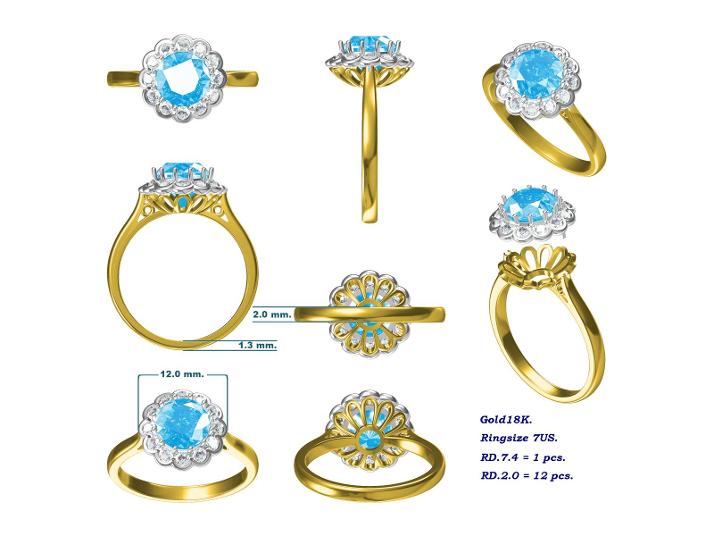 CAD Design
 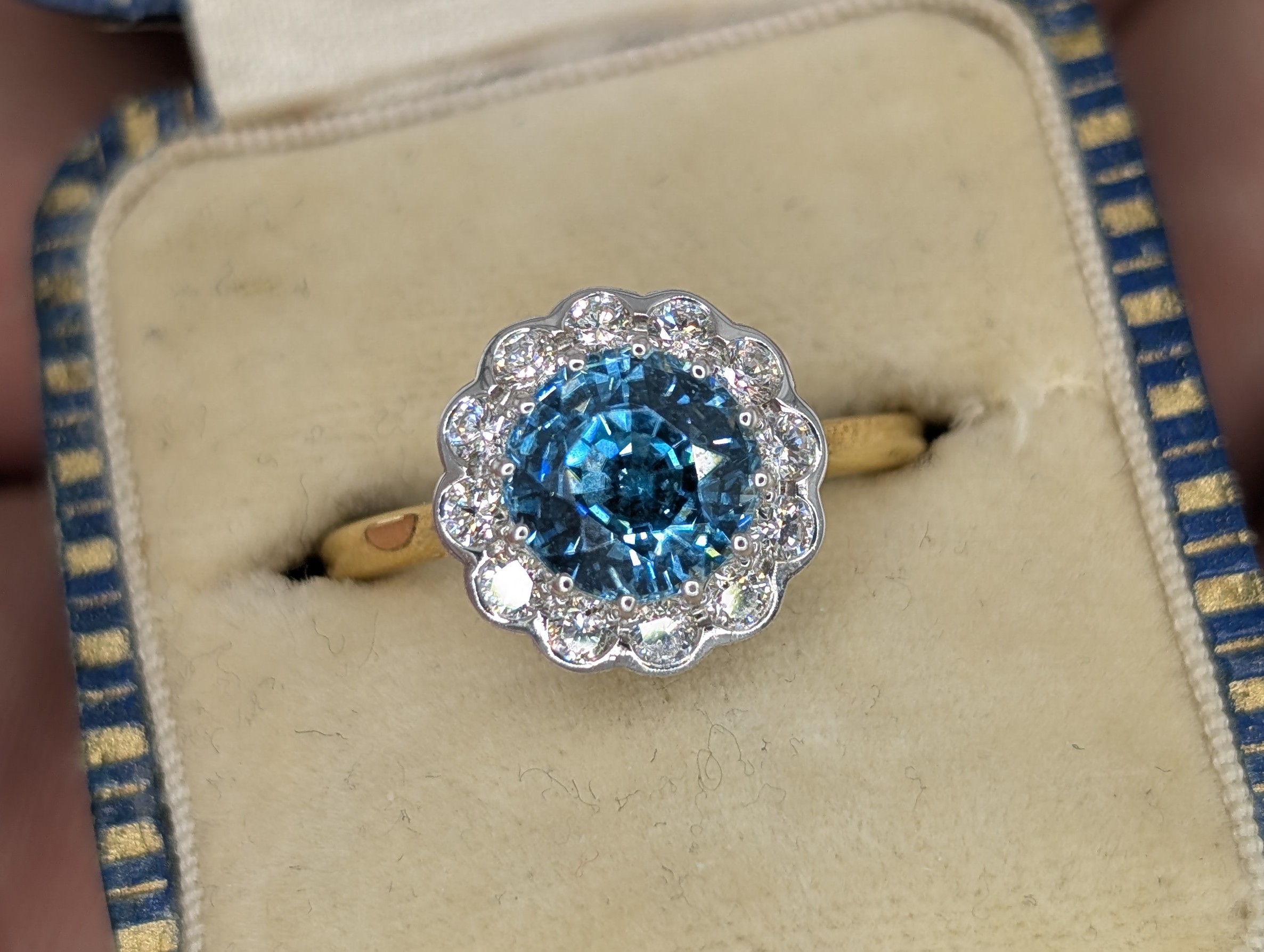 Finished Piece
 Blue Zircon & Diamond Ring
Tell Us About Your Custom Piece
Share your idea below and upload any useful inspiration. We will review your enquiry and contact you to discuss the design, materials, timescale and pricing.
Creating a Custom Aquamarine Engagement Ring
Aquamarine offers something very different from a traditional diamond engagement ring: cool blue colour, elegant transparency and the possibility of working with a centre stone that has real visual presence. A bespoke setting allows those qualities to be balanced with the practical demands of a ring worn regularly.
Is Aquamarine Suitable for an Engagement Ring?
Aquamarine can be used successfully in an engagement ring, although it requires a little more care than sapphire or diamond.
It belongs to the beryl family and has good hardness for jewellery, but hardness is only one aspect of durability. A hard knock can still chip or damage a gemstone, particularly where corners or edges are left unnecessarily exposed.
For someone who understands that an engagement ring should be removed for heavy manual work, gym equipment and similar activities, aquamarine can make a beautiful and distinctive alternative centre stone.
Aquamarine can give an engagement ring impressive scale without needing an overly complicated setting. A strong centre stone, good proportions and carefully chosen diamonds can be enough.
Choosing the Right Aquamarine Colour
Aquamarine can range from extremely pale blue to much stronger blue, sometimes with a greenish component.
For an engagement ring, colour preference is personal. A pale stone can look understated and refined, while a more saturated blue aquamarine creates stronger contrast against diamonds and white metal.
Larger stones can sometimes show colour particularly well because there is more material through which the light travels, but size alone does not guarantee attractive saturation.
The aim should be to choose the stone that looks best to you rather than simply selecting the largest carat weight available.
What Is Santa Maria Aquamarine?
“Santa Maria” is a trade term associated with strongly saturated blue aquamarine and originates from material associated with the Santa Maria de Itabira area of Brazil.
Today, similar terminology may also be used more broadly in the trade to describe a desirable deeper blue appearance, so the phrase should not automatically be treated as proof of geographic origin.
For a bespoke engagement ring, the appearance and quality of the actual aquamarine are ultimately more important than relying on a trade name alone.
Is Aquamarine Heat Treated?
Heat treatment is commonly used with aquamarine to reduce greenish tones and produce a purer blue appearance.
This is widely encountered in the jewellery market. Treatment status should still be represented accurately where known and should not be guessed from photographs.
If treatment information is particularly important to your purchase, appropriate gemmological testing can be considered.
Choosing the Shape of Your Aquamarine
Emerald Cut
Long step facets and crisp lines make this an excellent choice for elegant trilogy and Art Deco inspired engagement rings.
Oval Aquamarine
A versatile shape that works naturally with side diamonds, halos and antique-inspired clusters.
Cushion Aquamarine
Softer corners and broader proportions suit vintage, antique-inspired and diamond-surround designs.
Round & Other Shapes
Round, pear and other cuts can create distinctive engagement rings when the setting is designed around their actual proportions.
Emerald-Cut Aquamarine Engagement Rings
Emerald-cut aquamarine is particularly effective in engagement rings because the clean rectangular outline gives the stone a refined, architectural appearance.
Instead of the small flashes associated with many brilliant cuts, step facets create broader reflections that emphasise the clarity, blue colour and internal depth of the stone.
It can be paired with tapered baguettes, round side diamonds or a fine geometric surround without losing the identity of the centre stone.
Aquamarine and Diamond Engagement Rings
Aquamarine and diamond is a particularly effective combination because the white diamonds add brightness and contrast without competing with the pale blue centre.
Diamonds can flank the aquamarine as substantial side stones, form a fine halo, surround it in a broader cluster or appear only as small accents within the shoulders.
The right amount depends on the aquamarine itself. A larger, strongly coloured centre may require surprisingly little additional decoration.
Aquamarine Trilogy Engagement Rings
Three-stone designs work especially well with aquamarine because the centre stone can remain large and visually dominant while the diamonds provide contrast on either side.
Round side diamonds create a classic look. Pear-shaped diamonds can taper beautifully toward the band, while baguettes suit more geometric and Art Deco inspired designs.
The size of the side stones should be decided relative to the actual length and width of the aquamarine rather than by total carat weight alone.
Aquamarine Halo Engagement Rings
A fine diamond halo can emphasise the outline of an aquamarine and increase its visual presence without creating the weight of a larger cluster.
Smaller diamonds can form a bright border around the blue centre, while a wider halo creates a more obvious vintage appearance.
The gap between the centre stone and surrounding diamonds, as well as the scale of the halo, can be refined during the CAD stage.
Aquamarine Cluster Engagement Rings
A broader diamond surround can give an oval or cushion aquamarine a distinctly antique or vintage character.
The surrounding stones do not have to be identical rounds. Different shapes and graduated sizes can create a more individual outline.
With larger aquamarines, however, restraint can be important. An oversized cluster around an already substantial centre stone may become impractical for frequent wear.
Aquamarine Solitaire Engagement Rings
A solitaire is an excellent option where the aquamarine itself has enough colour and scale to carry the design.
Without surrounding diamonds, details such as claw placement, basket shape, band width and setting height become particularly important.
A simple solitaire can also make it easier to coordinate the ring with a straight wedding band.
Art Deco Aquamarine Engagement Rings
Aquamarine is especially suited to Art Deco inspired engagement rings. Its pale blue colour, transparency and availability in geometric cuts sit naturally beside white diamonds and pale precious metal.
Emerald-cut aquamarines can be flanked by baguettes, while oval and cushion stones can sit within stepped or geometric diamond borders. Milgrain can add further period character where appropriate.
For commissions where Art Deco is the main design direction, see our custom Art Deco style rings page.
Vintage Aquamarine Engagement Rings
Aquamarine also works beautifully beyond Art Deco. Mid-century cocktail and cluster jewellery can provide inspiration for larger centre stones and more expansive diamond settings.
A vintage-inspired engagement ring can retain those proportions while being refined for more practical everyday wear.
See our custom vintage style rings page for broader twentieth-century inspiration.
Antique Inspired Aquamarine Engagement Rings
Earlier jewellery can provide a softer design direction. Fine diamond surrounds, delicate shoulders and two-tone construction can give aquamarine a more Edwardian or Belle Époque inspired appearance.
Yellow gold can introduce a warmer contrast and move the piece away from the cooler white-metal look often associated with aquamarine.
Our custom antique style rings page explores those historic design influences more broadly.
White Gold Aquamarine Engagement Rings
White gold creates a cool palette around the blue centre stone and works naturally with surrounding diamonds.
It is particularly effective in geometric, halo and trilogy settings where the intention is for the metal to remain visually quiet around the gemstones.
Platinum Aquamarine Engagement Rings
Platinum can be particularly suitable for designs where a pale metal appearance and substantial setting construction are desired.
It works especially well with Art Deco influenced layouts, diamond-intensive settings and larger centre stones.
Yellow Gold Aquamarine Engagement Rings
Yellow gold produces a much stronger contrast against pale blue aquamarine and can make the ring feel warmer and less conventional.
It can be used throughout the ring or combined with white metal around the aquamarine and diamonds for a two-tone design.
Two-Tone Aquamarine Engagement Rings
Two-tone construction can be particularly effective with aquamarine. An 18ct yellow gold shank can provide warmth while a white gold or platinum-coloured setting keeps the area around the aquamarine and diamonds crisp.
This approach can also give an antique-inspired design more visual depth without adding further gemstones.
Low-Profile Aquamarine Engagement Rings
Aquamarines can sometimes be relatively deep stones, particularly in larger sizes, so creating a low-profile ring requires careful planning.
The centre can often be kept closer to the finger, but the gemstone's pavilion still needs sufficient space within the setting.
Lower settings may also affect how closely a straight wedding band can sit alongside the ring.
Setting Height and Everyday Wear
A high setting can give a large aquamarine more visual prominence, but it can also increase the chance of the ring catching during everyday activities.
The aim is usually to find a sensible balance: enough height for the stone, construction and wedding-band requirements without raising it unnecessarily.
Designing Around a Wedding Band
If you want a straight wedding band to sit closely beside the engagement ring, this should be considered at the beginning of the design.
A raised basket may allow the wedding ring to pass underneath part of the aquamarine setting. A lower or broader cluster may instead require a shaped band.
CAD allows that relationship to be considered before the engagement ring is manufactured.
Aquamarine Engagement Rings for Everyday Wear
Aquamarine is suitable for fine jewellery, but an engagement ring should still be treated as fine jewellery rather than as something that needs to survive every activity.
Removing the ring for weight training, manual work, gardening and similar activities can substantially reduce unnecessary risk to both the centre stone and the setting.
A sensible setting can protect vulnerable edges, but no construction can make a gemstone completely immune to impact.
Can Aquamarine Scratch or Chip?
Aquamarine has good resistance to scratching compared with many gemstones, but it can still become abraded or damaged over time.
Sharp impacts can chip an exposed edge or corner. This matters particularly with large emerald-cut or rectangular stones.
Claws, partial bezels and surrounding stones can be positioned to offer protection where the design allows.
Is Aquamarine Better for Occasional Wear?
Not necessarily. Many aquamarine rings can be worn regularly when sensibly designed and cared for.
What matters is matching the ring to the wearer. Someone who regularly works with their hands may prefer a lower, more protective setting, while another customer may be comfortable with a larger raised design that is removed for strenuous activities.
Choosing an Aquamarine for a Surprise Proposal
Aquamarine colour is more subtle than ruby or sapphire, so it is worth checking whether the recipient likes pale blue gemstones before making it the centre of a surprise engagement ring.
Jewellery they already wear, saved images and preferred metal colour can all give useful clues.
Inspiration photographs are especially useful because they can show whether the recipient prefers delicate solitaires, antique clusters or strong geometric designs.
Ring Size for a Surprise
If the exact ring size is not known, an existing ring may provide some guidance, although rings worn on another finger are not an exact measurement.
Tell us when the size is uncertain. Some designs are easier to resize after manufacture than rings with detailed shoulders or stones extending far around the band.
Can You Use an Aquamarine I Already Own?
Potentially, yes. An existing loose aquamarine can become the basis of the entire engagement-ring design.
Exact length, width and depth are needed because carat weight alone does not tell us the shape or volume of the stone.
Its condition should also be considered, particularly if it has been removed from older jewellery.
Using an Heirloom Aquamarine
An inherited aquamarine can be given a completely new setting while retaining the sentimental centre stone.
A large stone from an older cocktail ring could become a cleaner engagement-ring trilogy, or an existing aquamarine could be incorporated into a new Art Deco inspired design.
The important point is that the new ring should be developed around the actual gemstone rather than around the proportions of the old mounting.
Does Aquamarine Need a Laboratory Report?
Not every aquamarine requires laboratory documentation.
For a more significant stone, independent gemmological testing may be useful where natural identity or particular claims materially affect the purchase.
A laboratory report does not tell you whether one aquamarine is more beautiful than another. Colour, transparency, cut and proportions still need to be assessed visually.
How Much Does a Custom Aquamarine Engagement Ring Cost?
The price depends on the centre aquamarine, diamonds, precious metal and complexity of the setting.
Aquamarine colour, size, cut and overall quality influence the cost of the centre stone. Larger settings can also require more metal and more substantial construction.
A simple 18ct gold aquamarine solitaire therefore has very different cost considerations from a platinum Art Deco engagement ring containing a large emerald-cut aquamarine and multiple shaped diamonds.
If you have a target budget, include it in your enquiry so the stone and ring can be balanced properly from the beginning.
Should You Choose a Larger Aquamarine or More Diamonds?
This comes down to the visual result you prefer.
Aquamarine can offer attractive dimensions, so some customers prefer to make the centre stone the main event and use only restrained diamonds.
Others prefer a smaller aquamarine surrounded by a more substantial diamond setting.
Bespoke design means the budget does not need to follow a standard retail formula. It can be allocated where it makes the greatest difference to the ring you actually want.
How This Differs From Our Custom Aquamarine Rings Page
Our broader custom aquamarine rings page covers aquamarine rings generally, including statement, cocktail and other bespoke designs.
This page focuses specifically on aquamarine engagement rings: everyday wear, wedding-band fit, proposal considerations, setting height and creating a ring intended to be worn long term.
Why We Use CAD for Aquamarine Engagement Rings
Aquamarines can have substantial dimensions and depth, making precise setting proportions particularly important.
CAD allows us to review the height of the stone, side-stone sizes, shank width, basket construction and wedding-band clearance before production begins.
The detailed 3D CAD carries a $25 non-refundable design fee. If the commission proceeds, the $25 is deducted from the final bill.
Approval and Production
You review the final CAD before committing to production. Once approved, a 40% deposit of the quoted price confirms the commission.
Your aquamarine engagement ring is then created by our workshop. Once complete, we show you the finished piece before the remaining 60% is paid and the ring is securely dispatched.
Caring for an Aquamarine Engagement Ring
Sensible everyday care will help preserve both the aquamarine and its setting.
Remove the ring for activities where it is likely to receive sharp knocks or repeated contact with hard surfaces, and avoid exposing fine jewellery unnecessarily to harsh chemicals or extreme conditions.
Periodic inspection of claws and other setting components is also worthwhile, particularly where the ring contains a larger centre stone.
Is aquamarine suitable for an engagement ring?
Yes. Aquamarine can be used successfully in an engagement ring, although it requires more considered wear than harder stones such as sapphire or diamond.
Can you source an aquamarine for my engagement ring?
The aquamarine can form part of the bespoke process. Tell us the colour, shape, approximate size and budget you prefer so the design can be developed around an appropriate stone.
Can I use my own aquamarine?
Potentially, yes. Its exact dimensions and condition should be considered before the new engagement-ring setting is designed.
Can you make an aquamarine and diamond engagement ring?
Yes. Trilogy rings, halos, clusters, solitaires and geometric diamond settings can all be developed around aquamarine.
Is darker aquamarine always better?
No. Stronger blue colour can be desirable, but the best stone depends on personal preference, cut, transparency and how the aquamarine actually looks in the finished ring.
Can you make an Art Deco aquamarine engagement ring?
Yes. Emerald-cut aquamarines, baguette diamonds, stepped shoulders, geometric borders and fine milgrain all work particularly well with Art Deco inspired designs.
Can you design it to sit beside a wedding band?
Yes. If close or flush wedding-band fit is important, tell us before the CAD is finalised so the engagement-ring profile can be planned accordingly.
Can I have a large aquamarine engagement ring?
Yes. Aquamarine can work very well in larger sizes, although setting height, balance, comfort and protection become increasingly important as the centre stone grows.
How much does the CAD design cost?
The detailed 3D CAD costs $25. The fee is non-refundable, but it is deducted from the final bill if the ring proceeds to production.
When do I pay for my aquamarine engagement ring?
A 40% deposit is required after you approve the final CAD. The remaining 60% is paid after you have seen the finished ring and before dispatch.
Planning an Aquamarine Engagement Ring?
Tell us the aquamarine colour, cut, setting style and precious metal you have in mind, or send inspiration images and we can begin developing the ring around your ideas.
Start Your Enquiry