
Custom Ruby Engagement Rings
Create an engagement ring around a ruby chosen for its colour, character and proportions, with the setting and diamonds designed specifically around the stone and the person who will wear it.
How It Works
From choosing your ruby to approving the finished design, we keep the bespoke process clear and straightforward.
Tell Us Your Idea
Share your preferred ruby colour, ring style, precious metal, budget and inspiration images.
Choose Your Ruby
We develop the ring around your chosen stone or the ruby colour, shape and size you prefer.
Receive Your Quote
Once the concept is agreed, we provide a clear quote based on the ruby, diamonds, metal and design.
3D CAD Design
Proceed with a detailed CAD for a $25 non-refundable design fee, deducted from the final bill if the piece goes ahead.
Approve Your Ring
Review the final CAD before production. Once approved, a 40% deposit confirms your order.
Made & Delivered
We show you the finished ring before the remaining 60% is paid and your jewellery is dispatched.
Some of Our Bespoke Creations
Explore a selection of pieces created by us, from the production-ready CAD design through to the finished jewellery.
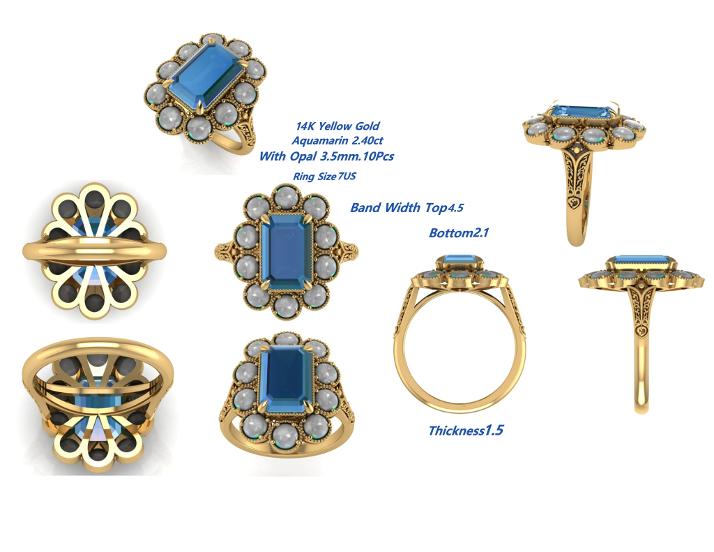 CAD Design
 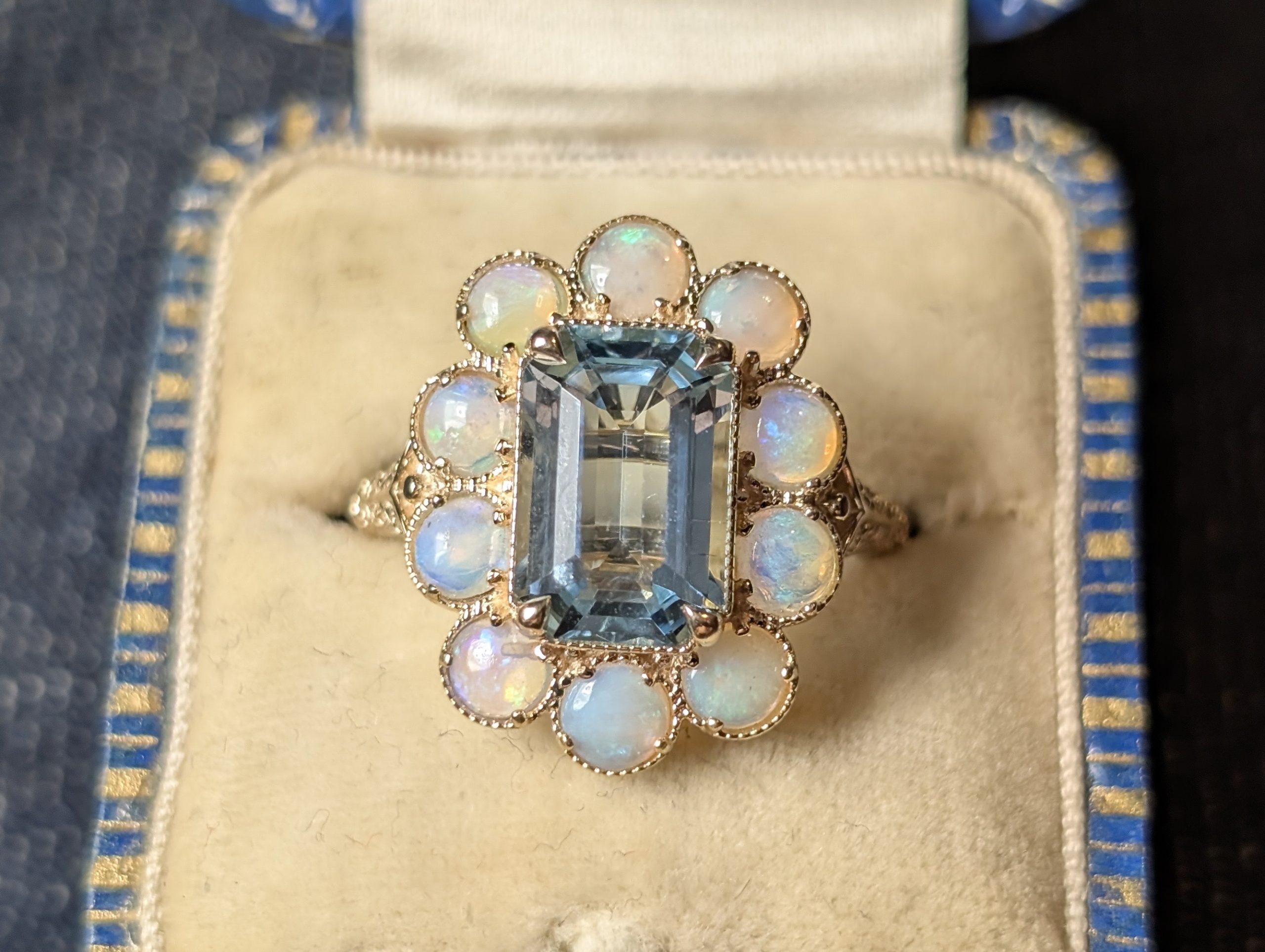 Finished Piece
 Aquamarine & Opal Ring
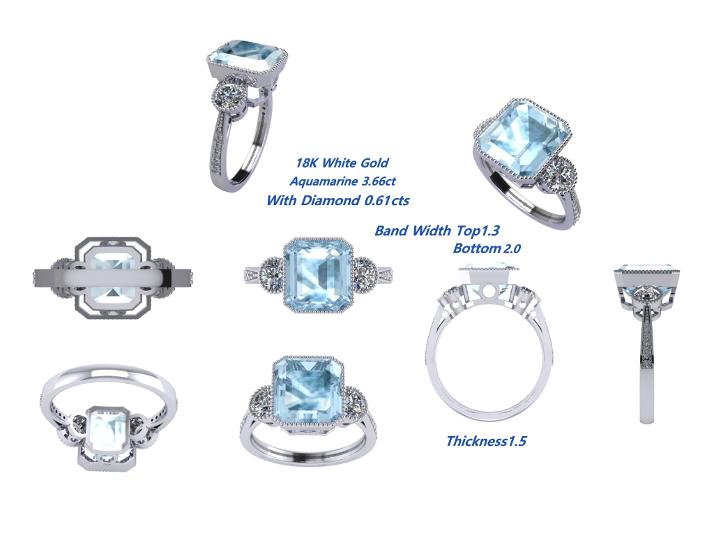 CAD Design
 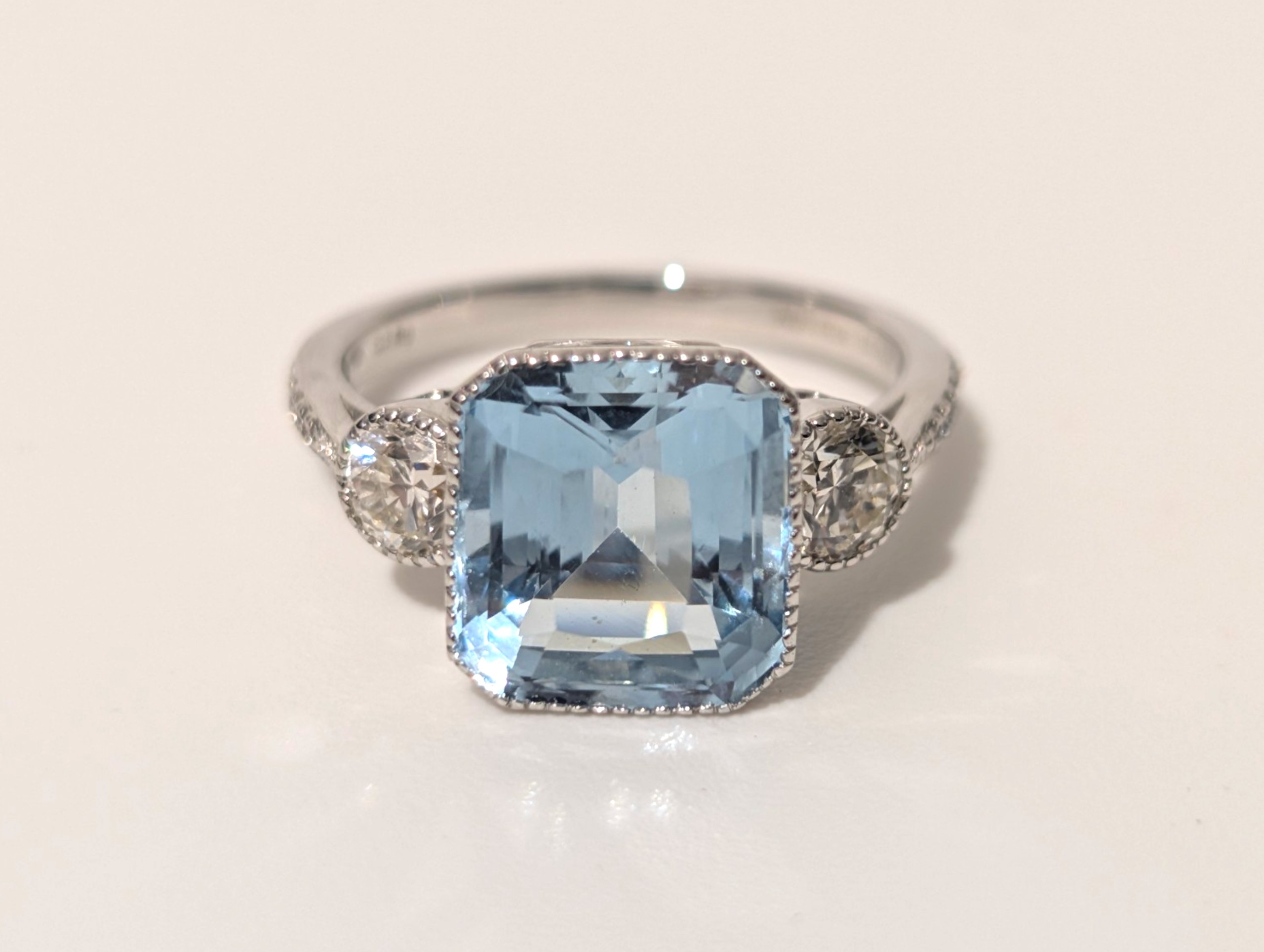 Finished Piece
 Aquamarine & Diamond Ring
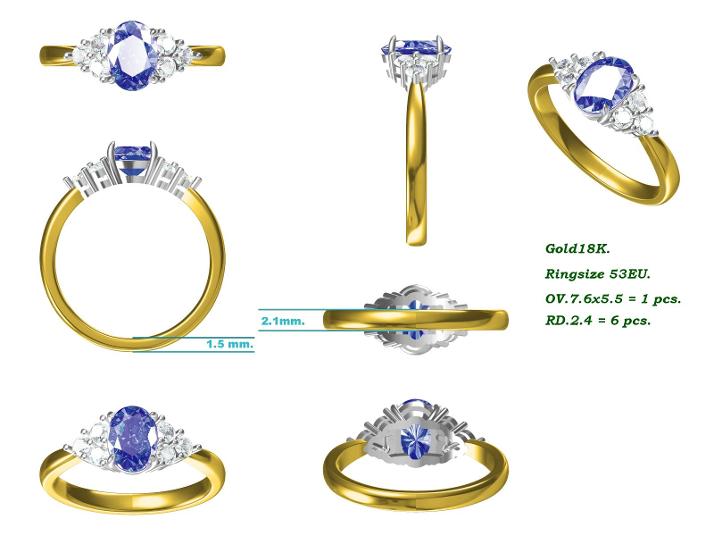 CAD Design
 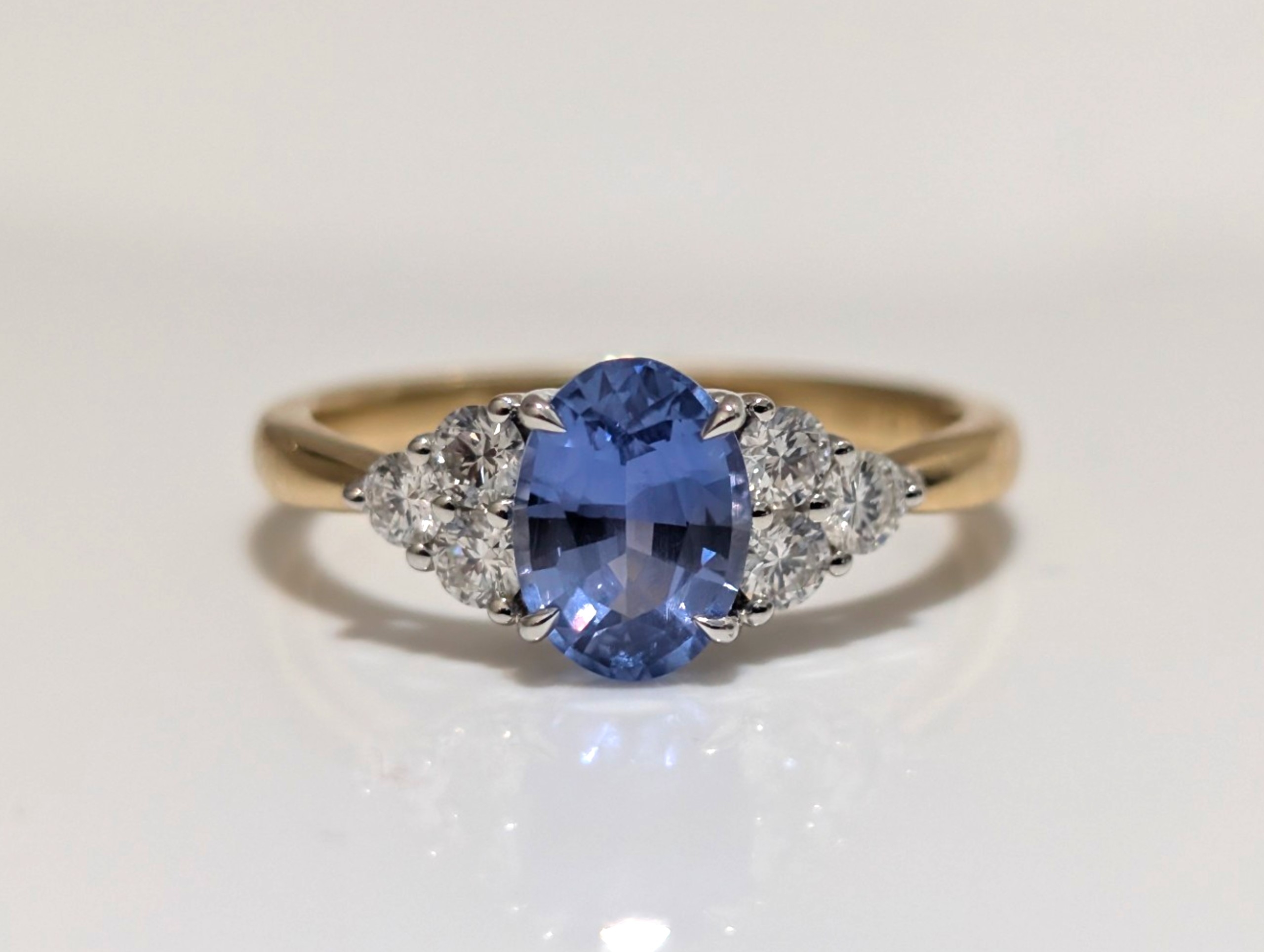 Finished Piece
 Sapphire & Diamond Ring
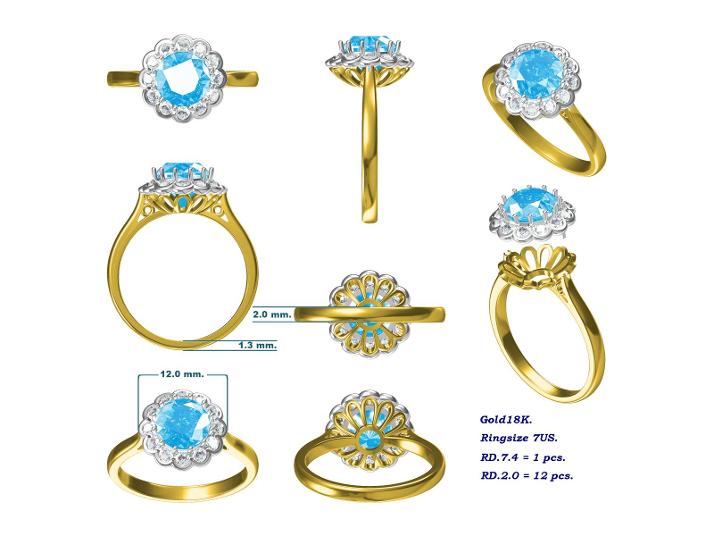 CAD Design
 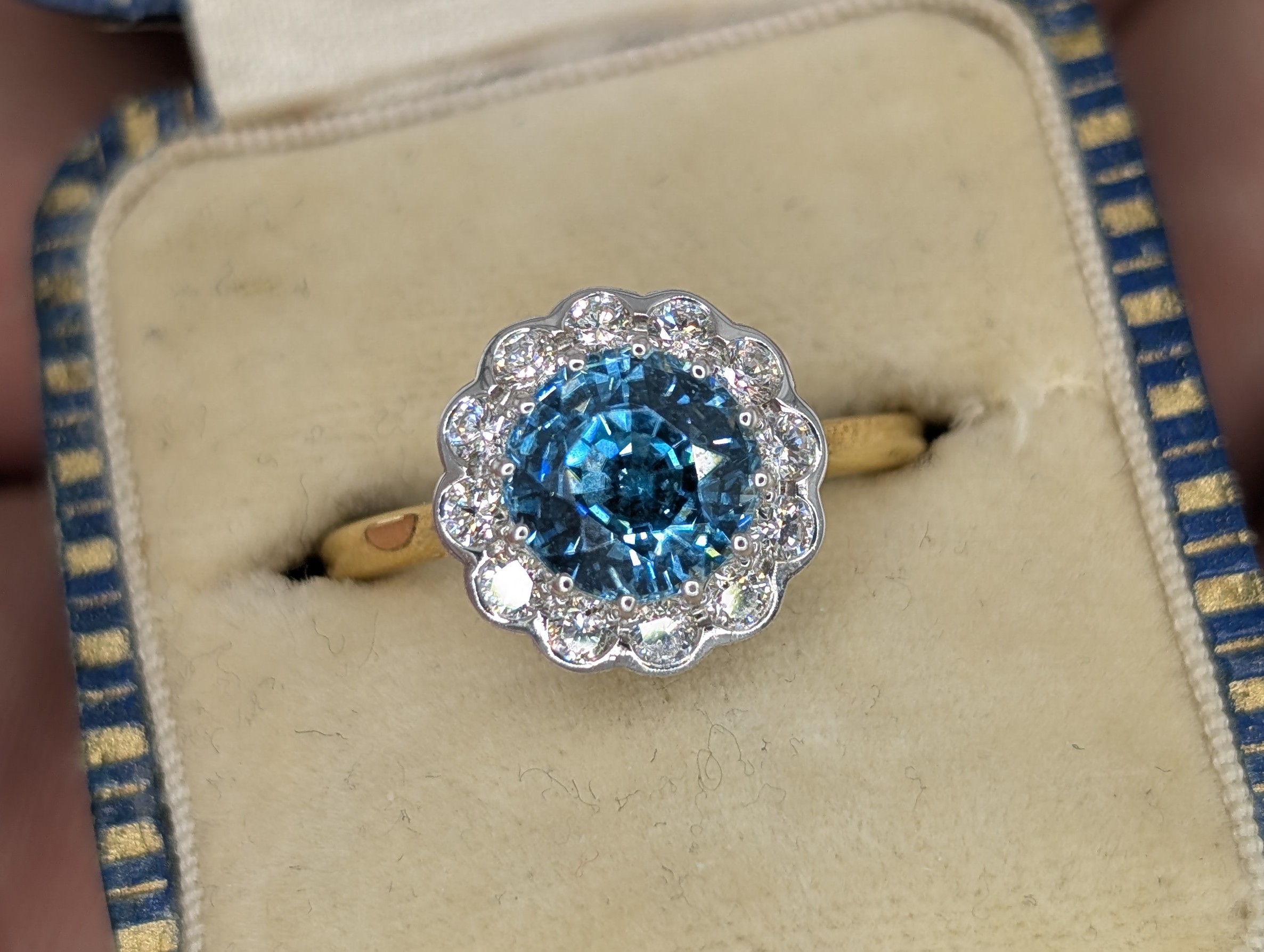 Finished Piece
 Blue Zircon & Diamond Ring
Tell Us About Your Custom Piece
Share your idea below and upload any useful inspiration. We will review your enquiry and contact you to discuss the design, materials, timescale and pricing.
Creating a Custom Ruby Engagement Ring
Ruby gives an engagement ring strong colour without sacrificing the durability expected from jewellery intended for frequent wear. A bespoke design allows the actual ruby, diamonds and setting proportions to be considered together from the beginning.
Why Choose a Ruby Engagement Ring?
Ruby offers something a conventional colourless diamond cannot: an immediately recognisable red centre while still belonging to one of the hardest gemstone families used in fine jewellery.
Ruby is the red variety of corundum, the same mineral family as sapphire. This makes it a strong choice for an engagement ring intended to be worn regularly, although no gemstone should be treated as indestructible.
The other advantage is versatility. Ruby can look rich and traditional in yellow gold, crisp and dramatic beside white diamonds, or strongly geometric in an Art Deco inspired platinum setting.
A ruby engagement ring can be bold without being elaborate. Sometimes one exceptional red centre stone with two well-chosen diamonds creates more impact than a heavily decorated setting.
Choosing the Right Ruby Colour
Ruby colour can vary from bright red through deeper red tones, sometimes with purplish or slightly orangish secondary hues.
A darker ruby is not automatically better. If the stone becomes too dark, much of the red can disappear in ordinary lighting.
For an engagement ring, we would generally consider how lively the ruby appears across different conditions rather than choosing purely according to one descriptive trade term.
Personal preference matters too. Some customers prefer an intense deeper red; others are drawn to brighter stones with a more open appearance.
What Does Pigeon Blood Ruby Mean?
“Pigeon blood” is a trade description associated with a particularly desirable ruby colour, but it should not simply be applied to any attractive vivid-red stone.
Laboratories may use specific criteria when applying colour terminology, and the term should not be inferred from photographs alone.
Where a significant ruby is being sold with a particular laboratory colour designation that affects its price, the corresponding documentation should support the claim.
Heated and Unheated Ruby Engagement Rings
Heat treatment is common in natural ruby and can improve the appearance of suitable material. A traditionally heated natural ruby can still make an excellent engagement-ring centre stone.
Fine unheated rubies can command substantial premiums, particularly where their natural appearance and treatment status have been confirmed by an appropriate gemmological laboratory.
Unheated does not automatically mean more attractive. Colour, transparency, cut and overall visual quality remain important.
Why Ruby Treatment Matters
Not all treatments are equivalent. Some heavily fractured ruby material may be glass filled to improve its apparent transparency.
This is materially different from traditional heat treatment and can also affect care and durability.
For an engagement ring intended to be worn for many years, treatment disclosure is therefore important, particularly where the centre ruby represents a substantial portion of the overall price.
Burmese, Mozambique and Other Ruby Origins
Rubies are mined in several parts of the world, with Myanmar and Mozambique among the best-known sources in today's fine gemstone market.
Geographic origin cannot reliably be determined by simply looking at a ruby's shade of red.
If a specific origin is being claimed and that claim materially affects value, suitable laboratory evidence should support it rather than relying on visual assumptions.
Choosing the Shape of Your Ruby
Oval Ruby
A versatile shape for engagement rings that works naturally in trilogy, cluster, halo and solitaire designs.
Cushion Ruby
Particularly suited to antique and vintage-inspired settings, with a softer outline than a rectangular stone.
Round Ruby
Balanced and adaptable for traditional clusters, target rings and more restrained three-stone settings.
Rectangular Ruby
Straight-sided and step-cut shapes can produce a cleaner, more architectural engagement ring with strong Art Deco influence.
Ruby and Diamond Engagement Rings
Ruby and diamond is one of the most effective combinations in coloured gemstone engagement jewellery.
White diamonds sharpen the visual contrast around the red centre and can be used in anything from a simple three-stone layout to a broad vintage-inspired cluster.
The diamonds should be chosen in proportion to the ruby. If the side stones or surround become too dominant, the centre can lose the very colour impact that made ruby attractive in the first place.
Ruby Trilogy Engagement Rings
A trilogy is a particularly strong choice for ruby because it gives the centre stone substantial diamond contrast without surrounding it on every side.
Pear-shaped diamonds can taper beautifully away from an oval or cushion ruby. Round diamonds create a more traditional appearance, while baguettes or tapered geometric stones can move the design toward Art Deco.
The three stones need to be considered as one composition. Side-stone size, angle and height can all alter how large and dominant the ruby appears.
Ruby Cluster Engagement Rings
Diamond clusters work particularly well around ruby because of the strong white-against-red contrast.
A traditional oval ruby can be surrounded by round diamonds, while a cushion or rectangular centre can be framed using a more geometric arrangement.
Cluster settings can also add substantial finger coverage without requiring the ruby itself to be exceptionally large.
Ruby Halo Engagement Rings
A finer diamond halo can create a different result from a traditional cluster. Smaller diamonds may form a bright outline around the ruby rather than appearing as individual surrounding stones.
The distance between the ruby and halo, width of the border and size of the diamonds all affect whether the ring feels delicate or substantial.
Ruby Solitaire Engagement Rings
A strong ruby can also work beautifully without surrounding diamonds.
In a solitaire, the gemstone becomes the entire focal point, so the basket, claws, shank width and setting height need to be particularly well balanced.
A simpler setting can also make it easier to coordinate the engagement ring with a future wedding band.
Art Deco Ruby Engagement Rings
Ruby works naturally with Art Deco design because vivid red, white diamonds and pale metal create strong visual contrast.
Rectangular centres, baguettes, geometric diamond borders, stepped shoulders and target-style arrangements can all be incorporated.
For designs where period geometry is the main focus, see our custom Art Deco style rings page.
Vintage Ruby Engagement Rings
Ruby can also move away from Art Deco into broader twentieth-century vintage styles.
Mid-century diamond clusters can create much more finger coverage, while Retro-inspired designs can introduce stronger yellow or rose gold and more sculptural forms.
See our custom vintage style rings page for those later design influences.
Antique Inspired Ruby Engagement Rings
Ruby is equally suited to earlier period references. Rich yellow gold and diamond clusters can give a ring a distinctly Victorian character, while finer diamond work and pale metal can create a lighter Edwardian influence.
Our custom antique style rings page explores the earlier historical styles in greater depth.
Yellow Gold Ruby Engagement Rings
Yellow gold creates a warm, rich frame around ruby and works particularly well for customers who prefer traditional or antique-inspired jewellery.
It can also make a relatively simple three-stone or solitaire ring feel more distinctive without requiring additional decoration.
White Gold and Platinum Ruby Engagement Rings
White gold and platinum give the ring a cooler appearance and allow surrounding diamonds to merge visually into the setting.
The contrast between pale metal and saturated red ruby is particularly effective in diamond-heavy and Art Deco inspired designs.
Two-tone designs are also possible, combining a yellow gold shank with white metal around the ruby and diamonds.
Low-Profile Ruby Engagement Rings
A lower setting can be useful for customers who prefer their ring to sit closer to the finger and catch less during daily wear.
However, setting the ruby very low may prevent a straight wedding band from sitting flush beside it.
The best profile depends on the depth of the ruby, the setting style and whether wedding-band fit is an important priority.
Designing the Ring Around a Wedding Band
If you want the eventual wedding ring to sit closely against the ruby engagement ring, this should be considered before production.
A raised centre basket may allow a straight band to pass beneath part of the setting. A broad low cluster may instead require a shaped band.
Neither option is necessarily better, but designing the two-ring relationship in advance gives much more control.
Is Ruby Durable Enough for Everyday Wear?
Ruby is one of the strongest coloured gemstone options for a frequently worn engagement ring.
Its hardness gives good resistance to scratching, although it can still be chipped or damaged by a sufficiently hard impact.
The individual ruby should also be considered. Significant fractures or certain treatments can change the practical care requirements of a particular stone.
Protecting the Ruby in the Setting
The amount of protection required depends on the shape and individual characteristics of the ruby.
Corners and points on less rounded shapes deserve particular attention. Well-positioned claws, partial bezels, halos or surrounding stones may provide useful protection without making the setting unnecessarily heavy.
Choosing a Ruby Ring as a Surprise
Ruby is a strong colour choice, so the recipient's taste matters. If the proposal is a surprise, look at the jewellery they already wear and the colours they naturally choose.
Inspiration photographs can also reveal whether they favour minimalist, antique, vintage or strongly geometric rings.
You do not need to know the correct jewellery terminology. Visual references are often enough to establish the direction.
Ring Size for a Surprise Proposal
An existing ring can sometimes help estimate size, but remember that rings worn on different fingers or hands may not provide an exact match.
If the measurement is uncertain, tell us during the design stage. This is particularly important for elaborate rings that may be more difficult to resize extensively after manufacture.
Can You Use a Ruby I Already Own?
Potentially, yes. An existing loose ruby can become the centre of a newly designed engagement ring.
Length, width and depth need to be measured because carat weight alone does not provide enough information to build the setting.
The condition and treatment of the ruby should also be considered where known.
Using an Heirloom Ruby in an Engagement Ring
An inherited ruby can give a new engagement ring a connection to an older piece without requiring the original setting to be reproduced.
A ruby removed from a dated cluster could become a cleaner trilogy, or an older stone could be reset into an Art Deco inspired design made specifically for the current wearer.
The sentimental gemstone remains while the surrounding jewellery starts a new chapter.
Should a Ruby Have a Laboratory Report?
For more significant rubies, laboratory documentation can be valuable, particularly where treatment status or geographic origin materially affects price.
An appropriate gemmological report may provide information about whether the ruby is natural, detected treatment and, in some cases, an opinion on geographic origin.
The report does not determine whether the stone is visually beautiful. Colour, transparency, cut and proportions still need to be considered.
How Much Does a Custom Ruby Engagement Ring Cost?
Ruby can vary enormously in value, so there is no useful single price for a bespoke ruby engagement ring.
Size, colour, transparency, treatment status, cut and laboratory documentation can all affect the centre stone's value.
The setting then adds precious metal, diamonds, stone setting and the complexity of the design.
A simple ruby solitaire in 18ct yellow gold therefore has very different cost considerations from a platinum ruby and diamond cluster containing numerous individually set stones.
Ruby Size vs Setting Budget
A bespoke commission allows the budget to be distributed according to what matters most to you.
One customer may prefer to invest primarily in a stronger centre ruby and keep the ring restrained. Another might prefer a smaller ruby with larger diamond side stones or an elaborate cluster.
Giving us a realistic budget at the outset helps establish that balance before the ring moves into detailed design.
How This Differs From Our Custom Ruby Rings Page
Our broader custom ruby rings page covers ruby rings generally, including statement, cocktail, vintage and occasional-wear designs.
This page is specifically focused on ruby engagement rings: everyday wear, proposal considerations, wedding-band fit and creating a ring intended to be worn long term.
Why We Use CAD for Ruby Engagement Rings
Engagement-ring proportions are difficult to judge from an idea alone. CAD allows the design to be developed around the actual measurements of the ruby.
Setting height, diamond size, shank width, claw position and potential wedding-band clearance can all be reviewed before manufacture begins.
The detailed 3D CAD carries a $25 non-refundable design fee. If the commission proceeds, the $25 is deducted from the final bill.
Approval and Production
You review the final CAD before production begins. Once the design is approved, a 40% deposit of the quoted price confirms the commission.
Your ruby engagement ring is then created by our workshop. Once complete, we show you the finished jewellery before the remaining 60% is paid and the ring is securely dispatched.
Is ruby suitable for an engagement ring?
Yes. Ruby is a hard and durable gemstone and is one of the strongest coloured-stone choices for an engagement ring intended for frequent wear.
Can you source a ruby for my engagement ring?
The ruby can form part of the bespoke process. Tell us your preferred colour, shape, approximate size and budget so the design can be developed around an appropriate stone.
Can I use my own ruby?
Potentially, yes. Its exact dimensions, condition and any relevant treatment information should be considered before designing the new setting.
Can you make a ruby and diamond engagement ring?
Yes. Trilogy, cluster, halo, solitaire and Art Deco inspired ruby and diamond engagement rings can all be developed.
Is unheated ruby better for an engagement ring?
Not automatically. Unheated status can influence rarity and value, but the colour, transparency, cut and overall appearance of the actual ruby remain extremely important.
Can you make a vintage ruby engagement ring?
Yes. Art Deco, antique and broader twentieth-century vintage jewellery can all provide inspiration for a new ruby engagement ring.
Can you design it to sit beside a wedding band?
Yes. If close or flush wedding-band fit matters to you, tell us before the CAD is finalised so the profile can be developed with that in mind.
Does my ruby need a laboratory report?
Not every ruby requires one, but appropriate documentation can be useful for significant stones where treatment status or geographic origin materially affects the purchase.
How much does the CAD design cost?
The detailed 3D CAD costs $25. The fee is non-refundable, but it is deducted from the final bill if the ring proceeds to production.
When do I pay for my ruby engagement ring?
A 40% deposit is required after you approve the final CAD. The remaining 60% is paid after you have seen the finished ring and before dispatch.
Planning a Ruby Engagement Ring?
Tell us the ruby colour, shape, setting style and precious metal you have in mind, or send inspiration images and we can begin developing the ring around your ideas.
Start Your Enquiry