
Custom Emerald Engagement Rings
Create an engagement ring around the emerald you love, with its colour, proportions, diamonds and setting carefully considered for both appearance and regular wear.
How It Works
From choosing your emerald to approving the final design, we keep the bespoke process clear and straightforward.
Tell Us Your Idea
Share your preferred emerald, ring style, precious metal, budget and inspiration images.
Choose Your Emerald
We develop the ring around your chosen stone or the emerald colour, shape and size you prefer.
Receive Your Quote
Once the concept is agreed, we provide a clear quote based on the emerald, diamonds, metal and design.
3D CAD Design
Proceed with a detailed CAD for a $25 non-refundable design fee, deducted from the final bill if the piece goes ahead.
Approve Your Ring
Review the final CAD before production. Once approved, a 40% deposit confirms your order.
Made & Delivered
We show you the finished ring before the remaining 60% is paid and your jewellery is dispatched.
Some of Our Bespoke Creations
Explore a selection of pieces created by us, from the production-ready CAD design through to the finished jewellery.
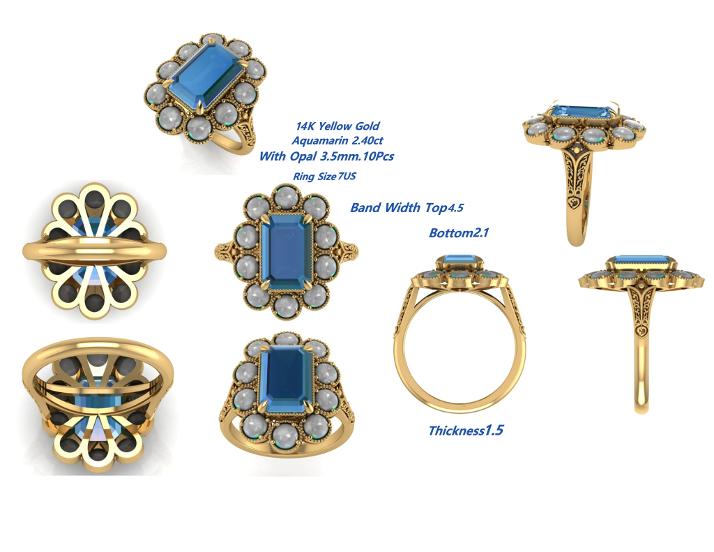 CAD Design
 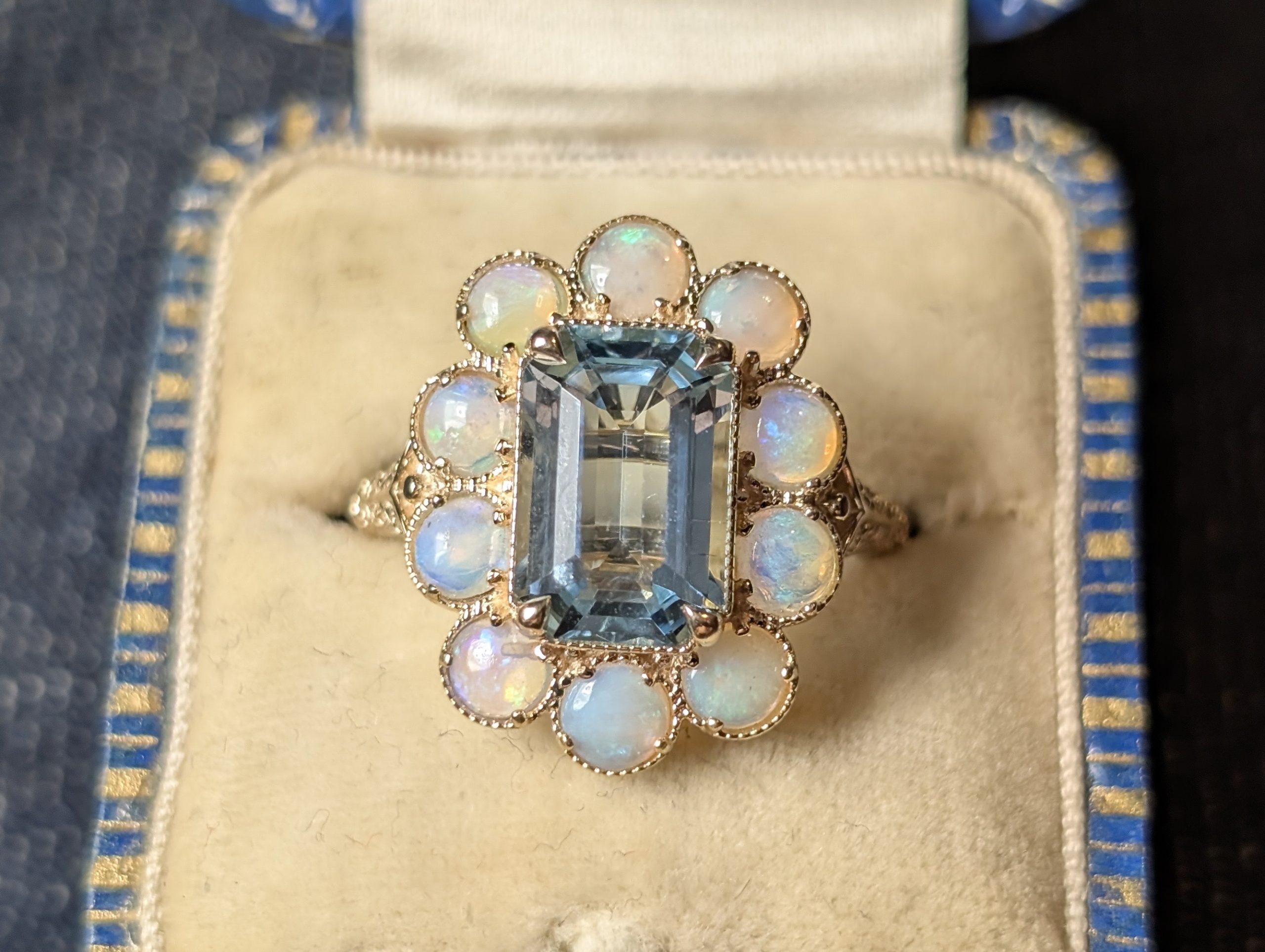 Finished Piece
 Aquamarine & Opal Ring
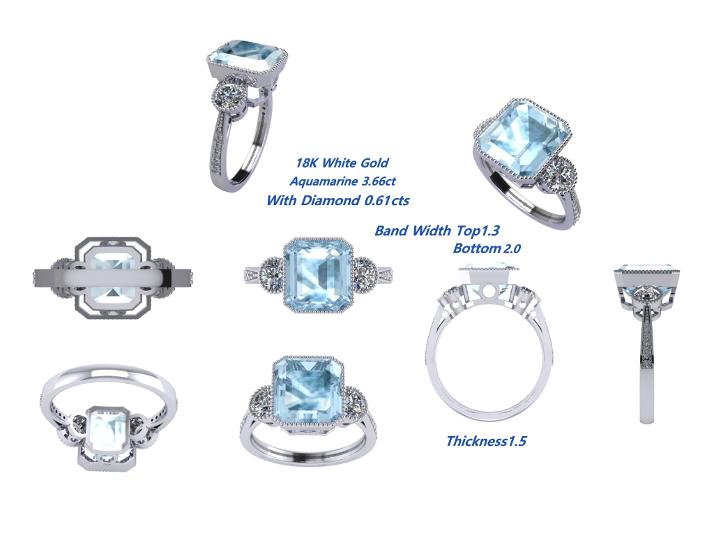 CAD Design
 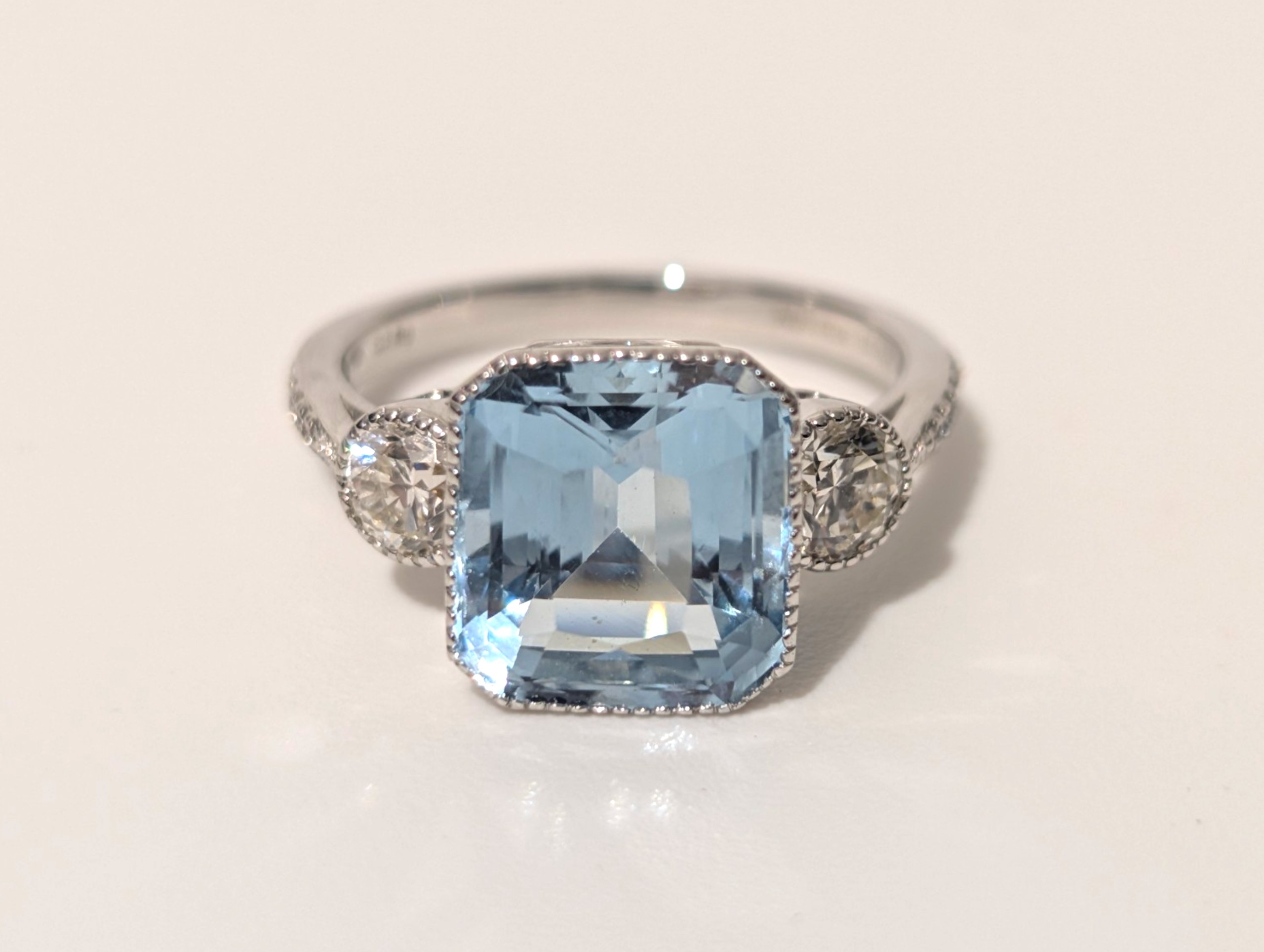 Finished Piece
 Aquamarine & Diamond Ring
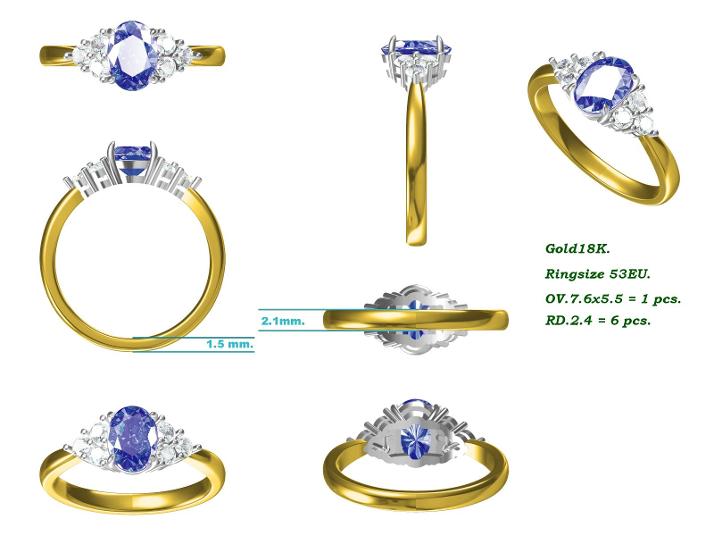 CAD Design
 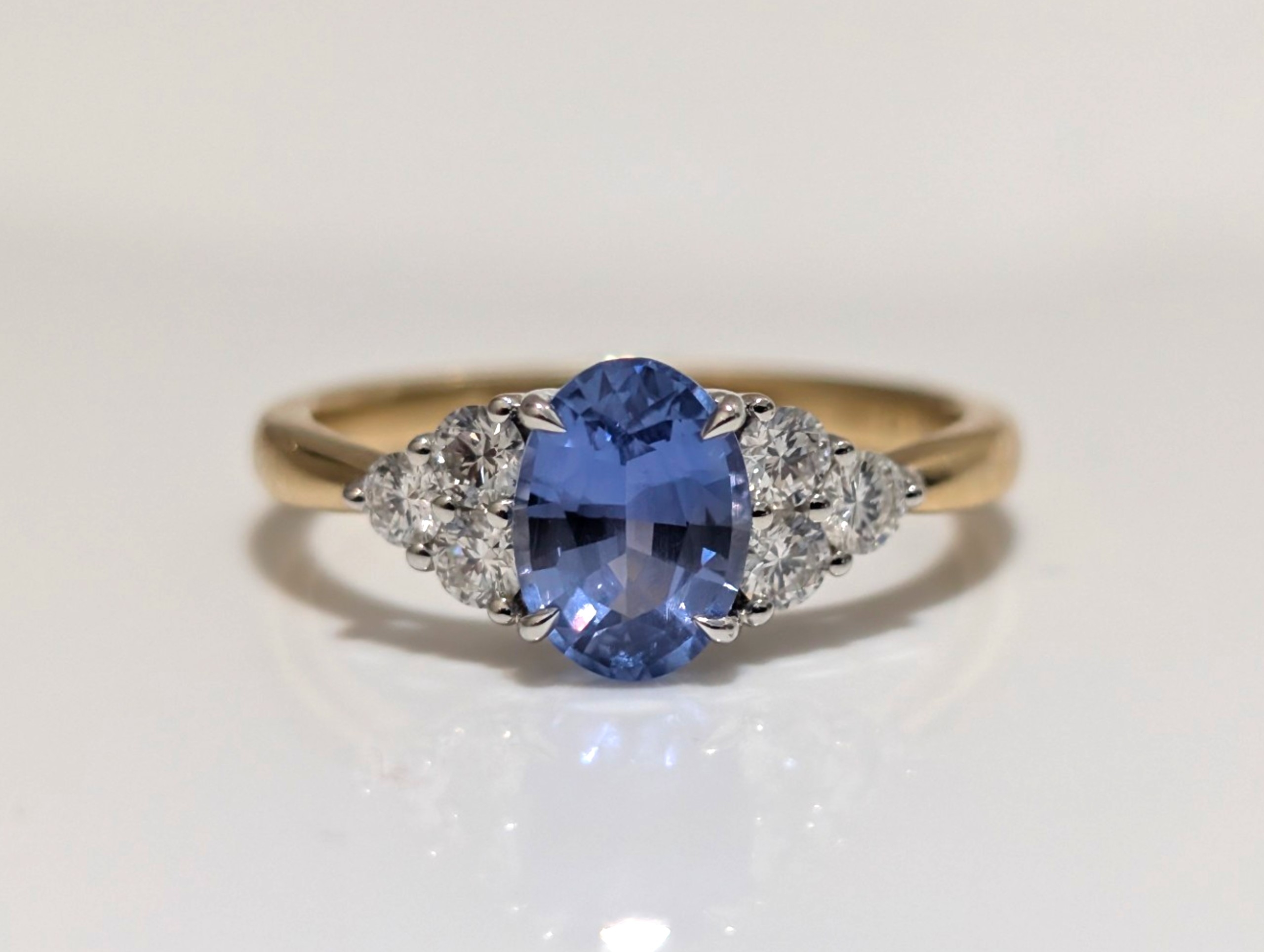 Finished Piece
 Sapphire & Diamond Ring
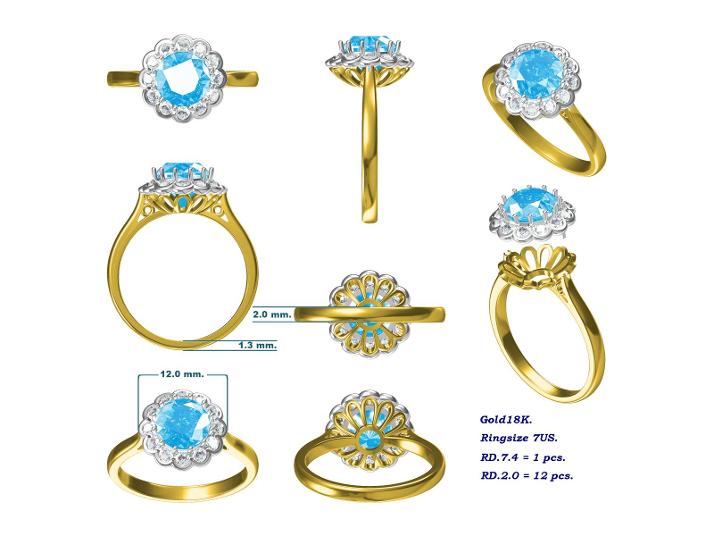 CAD Design
 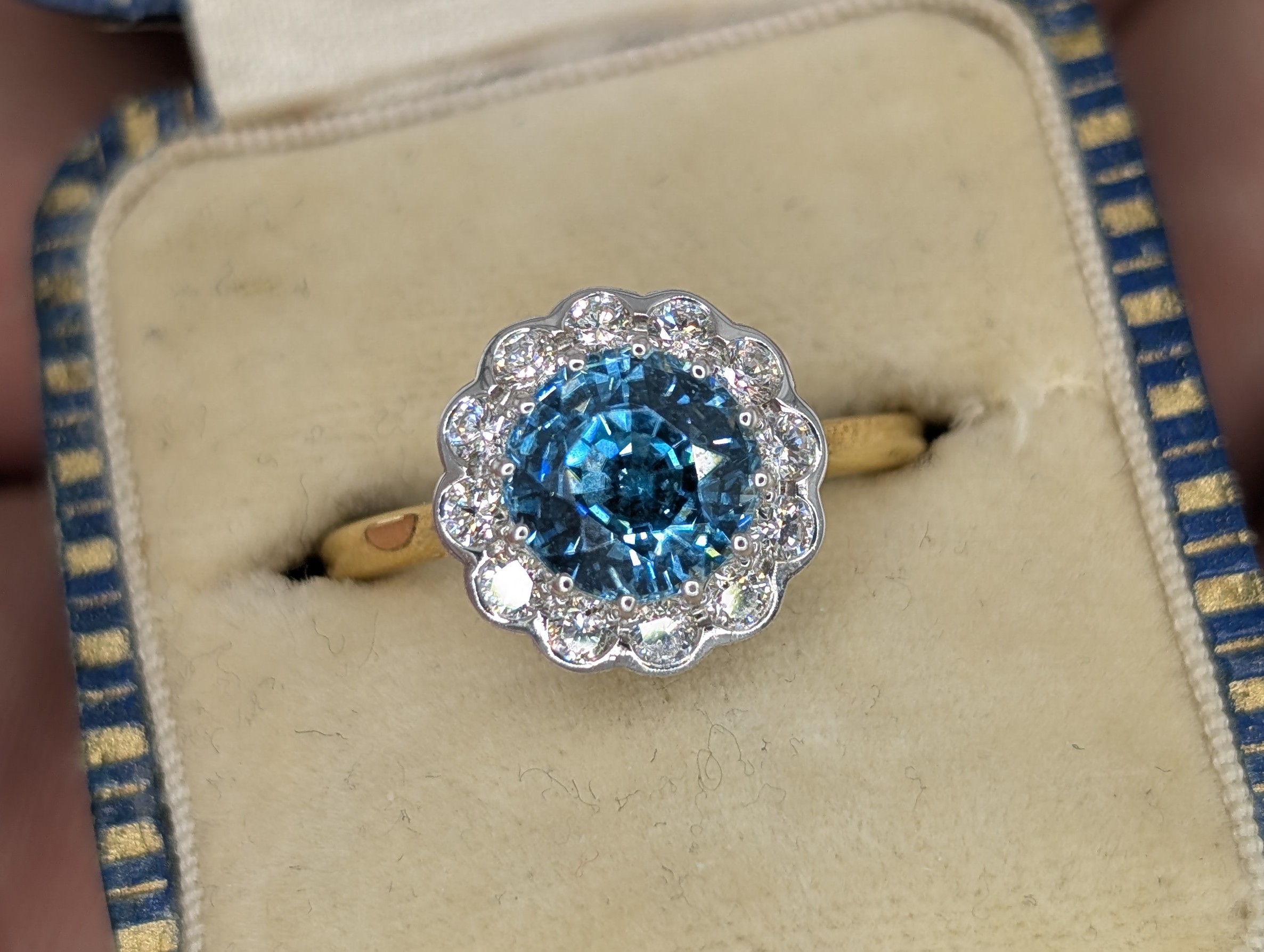 Finished Piece
 Blue Zircon & Diamond Ring
Tell Us About Your Custom Piece
Share your idea below and upload any useful inspiration. We will review your enquiry and contact you to discuss the design, materials, timescale and pricing.
Creating a Custom Emerald Engagement Ring
Emerald makes an unmistakable engagement ring. Its rich green colour and individual internal character can make even a relatively simple setting distinctive, but a ring intended for regular wear also needs to be designed around the practical characteristics of the stone.
Is Emerald Suitable for an Engagement Ring?
Yes, emerald can be used successfully in an engagement ring, but it needs more considered care than sapphire or diamond.
Emerald is reasonably hard, but natural stones commonly contain fissures and inclusions. This means resistance to scratching should not be confused with resistance to knocks or impact.
The right stone, a sensible setting and an owner who understands how to wear and care for it can make an emerald engagement ring entirely workable.
For someone who is particularly hard on their jewellery, however, the setting should be designed with protection as a priority rather than simply choosing the most exposed style possible.
Emerald engagement rings are best designed around the actual stone. Its inclusions, proportions and vulnerable areas can matter just as much as its colour when the ring will be worn regularly.
Choosing an Emerald for Everyday Wear
Not every emerald of a similar size is equally suitable for a frequently worn ring.
Colour is important, but so are transparency, fissures, cut quality and the physical condition of the stone. An emerald with significant surface-reaching features may need a more protective mounting than a stone with a stronger overall structure.
This is one of the reasons a custom engagement ring should be developed around the actual emerald rather than selecting a setting first and attempting to fit a gemstone into it later.
Choosing Emerald Colour
Emerald colour can range from lighter green to much deeper and more saturated tones. Some stones show a slightly bluish or yellowish component.
The darkest stone is not automatically the most attractive. An emerald that becomes too dark can lose liveliness, particularly away from bright lighting.
For an engagement ring, it is worth considering how the emerald looks in normal conditions rather than choosing solely from highly controlled photography.
Emerald Clarity and the Jardin
Natural emeralds commonly contain visible internal features. The traditional term “jardin” is sometimes used to describe the garden-like appearance of these inclusions.
Expecting a natural emerald to look like an internally flawless diamond is therefore not realistic.
The important distinction is between inclusions that simply contribute to the stone's character and features that may create practical vulnerabilities in a ring intended for frequent wear.
Emerald Treatments
Many emeralds have surface-reaching fissures that are treated with oils or other filling substances to improve their apparent clarity.
Treatment level can be significant when comparing higher-value stones. If treatment status matters materially to the purchase, appropriate laboratory documentation should be considered rather than attempting to judge it from photographs.
Treatment is also relevant to future care because aggressive cleaning, high heat and certain workshop processes may not be appropriate for some treated emeralds.
Colombian vs Zambian Emerald Engagement Rings
Colombian and Zambian emeralds are both highly established within fine jewellery, but geographic origin should not be assigned simply by looking at the shade of green.
Attractive material can come from multiple sources, and the actual colour, transparency and character of the individual emerald remain important regardless of country.
If a specific geographic origin is being sold as part of the value proposition, appropriate laboratory evidence should support that claim.
Choosing the Shape of Your Emerald
Emerald Cut
The classic rectangular shape creates a clean, architectural appearance and works especially well with baguettes and Art Deco inspired engagement rings.
Oval Emerald
A versatile choice for trilogy, cluster and halo settings, with a softer outline than a rectangular centre.
Cushion Emerald
Particularly effective in antique-inspired engagement rings and broader diamond surrounds.
Round & Other Shapes
Round, pear and less conventional shapes can all work when the setting is developed around their actual proportions and vulnerable areas.
Why the Emerald Cut Works So Well
The emerald cut uses broad step facets rather than the facet pattern of a brilliant cut. This puts more visual emphasis on colour, transparency and the internal character of the stone.
The truncated corners also avoid leaving four sharp rectangular points completely exposed.
In an engagement ring, this shape works naturally with tapered baguettes, round side diamonds, geometric halos and clean solitaire settings.
Emerald and Diamond Engagement Rings
Emerald and diamond is one of the most effective combinations for a coloured gemstone engagement ring.
The white diamonds create contrast around the green centre without introducing another strong colour. They can be used as two side stones, a full cluster, a fine halo or smaller shoulder accents.
The diamond arrangement should be proportioned around the emerald rather than chosen separately.
Emerald Trilogy Engagement Rings
A trilogy is particularly effective if you want the emerald to remain dominant while still introducing substantial diamonds.
Pear-shaped side diamonds create a soft taper into the band, while baguettes and tapered shapes produce a more architectural look. Round diamonds give a more traditional appearance.
The emerald's length and width should determine the scale of those side stones. Oversized diamonds can make the centre appear less important, whereas side stones that are too small can feel disconnected.
Emerald Cluster Engagement Rings
A diamond cluster can give an emerald engagement ring much more presence across the finger and is especially well suited to antique and vintage-inspired designs.
Oval and cushion emeralds work naturally with rounded diamond surrounds, while rectangular centres can be framed using more geometric stone layouts.
A surround can also provide some additional protection around the perimeter of the emerald, although the exact construction still needs to suit the individual stone.
Emerald Solitaire Engagement Rings
A strong emerald does not need a large quantity of diamonds around it.
A custom solitaire can place all of the emphasis on the colour and cut of the centre stone. The basket, claws and shank then become especially important because there are fewer decorative elements to distract from poor proportions.
For regular wear, exposed corners and vulnerable areas should be considered carefully during the setting design.
Bezel Set Emerald Engagement Rings
A bezel or partially enclosed setting can be worth considering where additional protection around the perimeter of the emerald is desirable.
It can produce a clean contemporary appearance or be adapted into antique and Art Deco inspired designs.
However, a bezel should still be designed specifically around the stone. More metal is not automatically safer if pressure is applied poorly to an included emerald during setting.
Art Deco Emerald Engagement Rings
Emerald is exceptionally well suited to Art Deco inspired engagement rings. Green, white diamonds and platinum or white gold create a strong contrast that naturally supports geometric design.
Emerald-cut centres can be combined with baguettes, stepped shoulders and angular surrounds, while oval and cushion stones can sit within target-style diamond borders.
For detailed Art Deco design guidance, see our custom Art Deco style rings page.
Vintage Emerald Engagement Rings
Emerald also works extremely well in twentieth-century vintage-inspired engagement rings.
A mid-century emerald cluster can use a broader diamond surround, while later vintage designs can incorporate heavier gold and more substantial proportions.
See our custom vintage style rings page for a broader look at twentieth-century jewellery influences.
Antique Inspired Emerald Engagement Rings
Earlier jewellery periods provide another direction entirely. Rich yellow gold and diamond clusters can give an emerald ring a more Victorian character, while delicate pale-metal diamond work can create an Edwardian influence.
For designs led primarily by historical style, visit our custom antique style rings page.
Yellow Gold Emerald Engagement Rings
Yellow gold creates a warm contrast around green emerald and can work particularly well in traditional or antique-inspired settings.
It can also make the metal itself a stronger visual part of the ring, especially in a simpler solitaire or trilogy design.
Platinum and White Gold Emerald Engagement Rings
Platinum and white gold give the setting a cooler appearance and allow surrounding diamonds to blend more naturally into the metal.
This makes pale metal particularly effective for diamond clusters, Art Deco settings and rings where crisp contrast is important.
Two-tone designs can also combine a yellow gold shank with a white-metal setting around the emerald and diamonds.
Low-Profile Emerald Engagement Rings
A lower setting can help keep the gemstone closer to the hand and reduce unnecessary exposure during everyday wear.
However, lowering the centre too far can prevent a straight wedding band from sitting closely beside the engagement ring.
The profile should therefore be considered as part of the entire ring set rather than as an isolated decision.
Designing Around a Wedding Band
If you want a straight wedding band to sit flush against the engagement ring, mention this before the design is finalised.
Some emerald settings can be raised sufficiently for the band to pass beneath part of the centre setting. Others may naturally require a shaped or contoured wedding band.
Both approaches can work, but planning the relationship between the rings during CAD gives much more control over the final result.
Emerald Engagement Rings for Everyday Wear
An engagement ring can be worn thousands of times over many years, so everyday habits matter.
Someone who regularly works with tools, lifts weights, gardens or does other activities involving hard surfaces should remove fine jewellery during those activities regardless of the gemstone.
This becomes particularly important with emerald because inclusions and fissures can make sharp impact more consequential than it might be for some other traditional engagement-ring stones.
Can Emerald Scratch or Chip?
Emerald is relatively hard and reasonably resistant to scratching, but hardness is only one part of durability.
Natural fissures mean that an impact in the wrong place can potentially chip or fracture a stone. Corners and thin edges deserve particular consideration.
Protective setting design helps reduce risk, but no setting can make a gemstone indestructible.
Choosing an Emerald for a Surprise Proposal
If the recipient is not involved in the design, look carefully at the jewellery they already choose for themselves.
A person who prefers delicate jewellery may not want a very broad emerald cluster, while someone drawn to bold vintage pieces might find a small minimalist solitaire underwhelming.
Saved images, comments about jewellery and favourite metal colours can all give useful clues.
Ring Size for a Surprise Engagement Ring
If exact ring size is uncertain, tell us during the design stage. It is better to acknowledge that the measurement is approximate than build the ring around a guessed size presented as exact.
Certain highly detailed or fully stone-set designs can also be more difficult to resize than a simpler shank, so this is worth considering before production begins.
Can You Use an Emerald I Already Own?
Potentially, yes. A loose emerald can become the starting point for the entire engagement ring.
Its length, width, depth and condition need to be considered before the setting is developed.
This is particularly important with emerald because existing fissures, chips or wear may influence the safest way to set the stone.
Using an Heirloom Emerald
An inherited emerald can make a bespoke engagement ring especially personal without requiring the original ring design to be preserved.
A gemstone from an older cluster could be reset into a cleaner trilogy, while an emerald from a damaged ring could become the centre of a new Art Deco inspired design.
The original stone remains part of the story while the jewellery itself is created for the current wearer.
Should an Emerald Have a Laboratory Report?
For a more significant emerald, a gemmological laboratory report can provide useful independent information.
Depending on the report and laboratory, this may include information about whether the stone is natural, detected clarity enhancement and, in some cases, an opinion on geographic origin.
A report does not decide whether the emerald is attractive. Colour, transparency, cut and the way the stone performs visually remain important.
How Much Does a Custom Emerald Engagement Ring Cost?
There is no standard price because emerald values can vary enormously.
Colour, size, transparency, cut, treatment, documentation and overall quality can all affect the price of the centre stone. Diamonds, precious metal and the complexity of the ring then add to the cost.
A restrained 18ct gold emerald solitaire is therefore a very different commission from a platinum Art Deco cluster containing a significant emerald and numerous shaped diamonds.
If you have a realistic budget in mind, include it in the enquiry. The emerald and setting can then be balanced properly from the beginning.
Should More of the Budget Go Into the Emerald or the Setting?
There is no one correct answer.
Some customers would rather invest in the strongest emerald possible and keep the surrounding design simple. Others prefer a smaller centre with substantial diamonds or a more complex antique-inspired setting.
Bespoke design allows those priorities to be decided deliberately rather than accepting whatever balance a ready-made ring happens to offer.
How This Differs From Our Custom Emerald Rings Page
Our broader custom emerald rings page covers emerald rings generally, including cocktail, statement and occasional-wear designs.
This page is specifically focused on engagement rings: regular wear, stone protection, wedding-band fit, proposal considerations and designing around a gemstone that may be worn for many years.
Why CAD Matters for an Emerald Engagement Ring
Emerald settings need to balance appearance with practical protection. CAD allows the ring to be developed around the actual measurements of the centre stone before manufacture begins.
We can assess setting height, metal around vulnerable areas, side-stone proportions, shank width and wedding-band clearance.
The detailed 3D CAD carries a $25 non-refundable design fee. If the commission proceeds, the $25 is deducted from the final bill.
Approval and Production
You review the final CAD before production begins. Once the design is approved, a 40% deposit of the quoted price confirms the commission.
Your emerald engagement ring is then created by our workshop. Once complete, we show you the finished piece before the remaining 60% is paid and the ring is securely dispatched.
Caring for an Emerald Engagement Ring
Emerald benefits from more considered care than many harder traditional engagement-ring stones.
Avoid hard impact and remove the ring for activities where it is likely to strike equipment or hard surfaces. Aggressive ultrasonic or steam cleaning may also be unsuitable for some emeralds, particularly where clarity enhancement is present.
Periodic professional inspection of the setting is worthwhile for any engagement ring and becomes especially sensible where the centre stone is both valuable and relatively vulnerable.
Is emerald suitable for an engagement ring?
Yes, but emerald requires more thoughtful wear and setting design than sapphire or diamond because natural stones commonly contain inclusions and fissures.
Can you source an emerald for my engagement ring?
The emerald can form part of the bespoke process. Tell us the colour, shape, approximate size and budget you prefer so the ring can be developed around an appropriate stone.
Can I use my own emerald?
Potentially, yes. Its dimensions and condition need to be considered before the new setting is designed around it.
Can you make an emerald and diamond engagement ring?
Yes. Trilogy rings, clusters, halos, geometric designs and more restrained diamond-accent settings can all be developed around an emerald.
What setting is safest for an emerald engagement ring?
There is no single safest setting for every emerald. Bezels, protective corners, halos and carefully positioned claws can all be useful depending on the individual stone and design.
Can you make an Art Deco emerald engagement ring?
Yes. Emerald works particularly well with geometric diamond layouts, baguettes, stepped shoulders, platinum or white gold and fine milgrain detailing.
Can the ring be designed to sit with a wedding band?
Yes. If a straight or close-fitting wedding band is important, tell us before the CAD is finalised so the engagement ring profile can be developed accordingly.
Do emeralds need laboratory reports?
Not every emerald requires one, but reports can be useful for significant stones where treatment level or claimed geographic origin materially affects the purchase.
How much does the CAD design cost?
The detailed 3D CAD costs $25. The fee is non-refundable, but it is deducted from the final bill if the ring proceeds to production.
When do I pay for the engagement ring?
A 40% deposit is required after you approve the final CAD. The remaining 60% is paid after you have seen the finished ring and before dispatch.
Planning an Emerald Engagement Ring?
Tell us the emerald shape, colour, setting style and precious metal you have in mind, or send inspiration images and we can begin developing the ring around your ideas.
Start Your Enquiry