
Custom Sapphire Engagement Rings
Create an engagement ring around the sapphire you love, with the colour, setting, diamonds and proportions chosen specifically for the person who will wear it.
How It Works
From choosing your sapphire to approving the final design, every stage is kept clear and straightforward.
Tell Us Your Idea
Share the sapphire colour, ring style, metal, budget and inspiration you have in mind.
Choose Your Sapphire
We develop the ring around your chosen sapphire or the colour, shape and size you prefer.
Receive Your Quote
Once the concept is agreed, we provide a clear quote based on the sapphire, diamonds, metal and design.
3D CAD Design
Proceed with a detailed CAD for a $25 non-refundable design fee, deducted from the final bill if the piece goes ahead.
Approve Your Ring
Review the final CAD before production. Once approved, a 40% deposit confirms your order.
Made & Delivered
We show you the finished ring before the remaining 60% is paid and your jewellery is dispatched.
Some of Our Bespoke Creations
Explore a selection of pieces created by us, from the production-ready CAD design through to the finished jewellery.
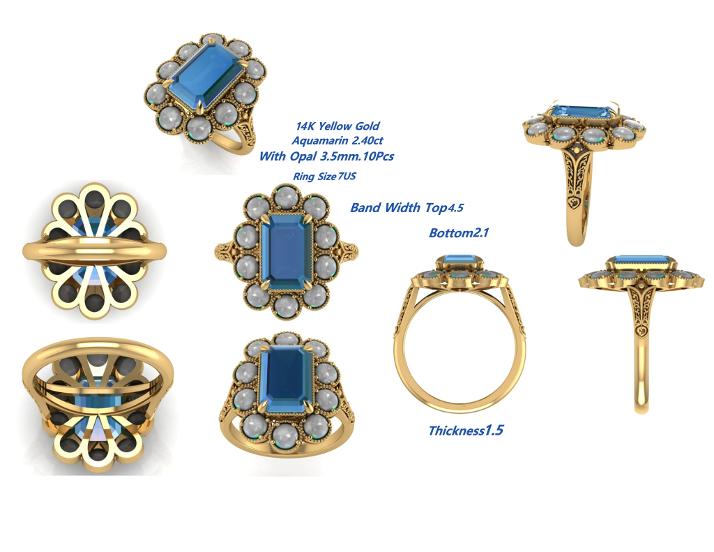 CAD Design
 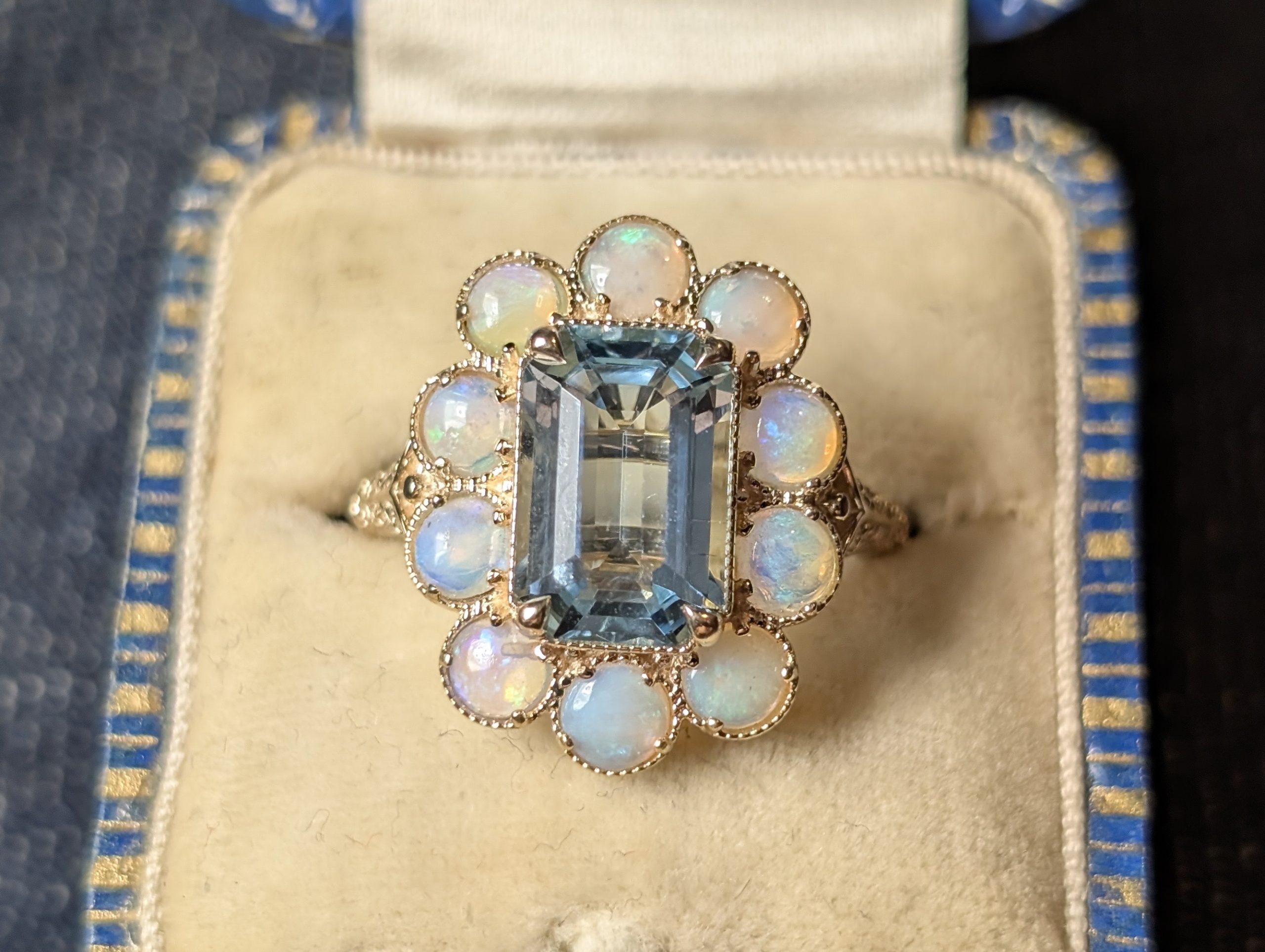 Finished Piece
 Aquamarine & Opal Ring
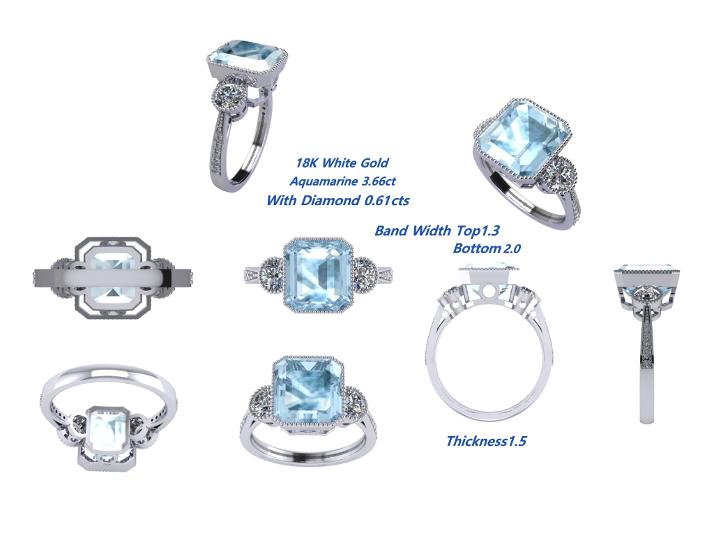 CAD Design
 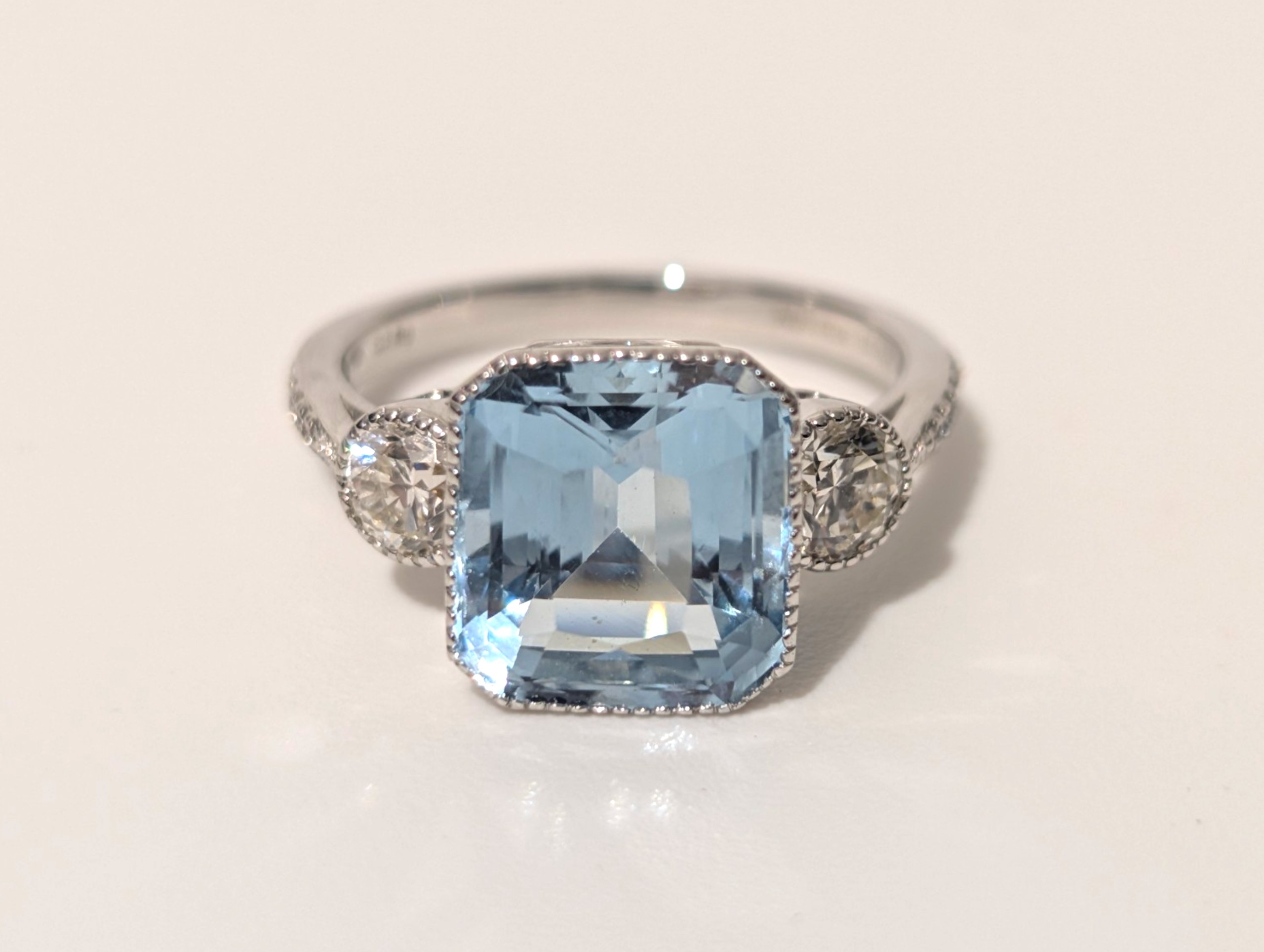 Finished Piece
 Aquamarine & Diamond Ring
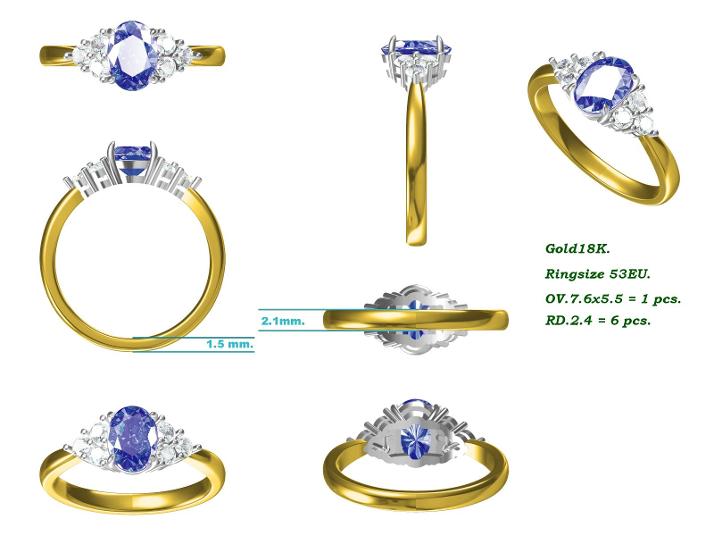 CAD Design
 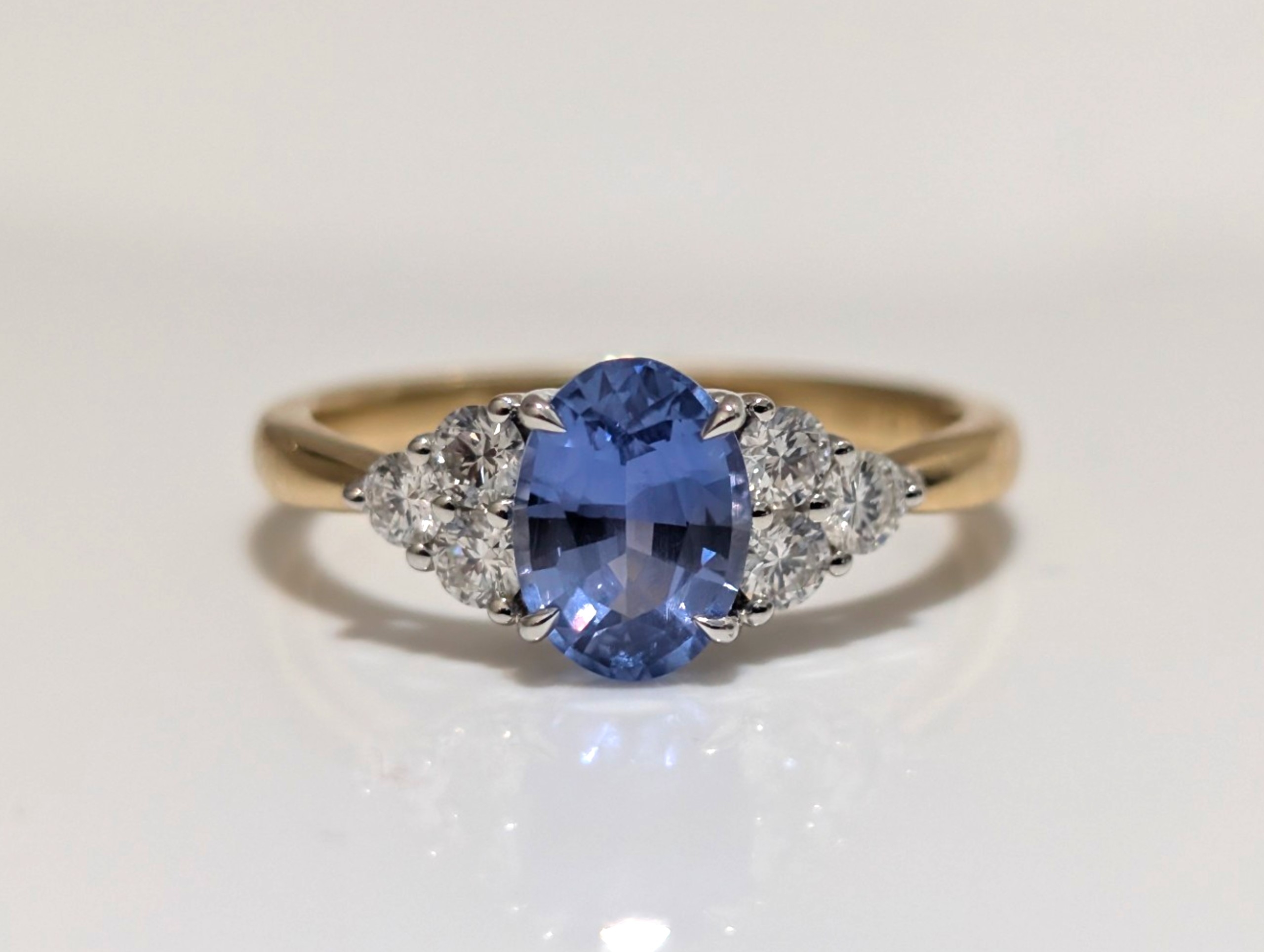 Finished Piece
 Sapphire & Diamond Ring
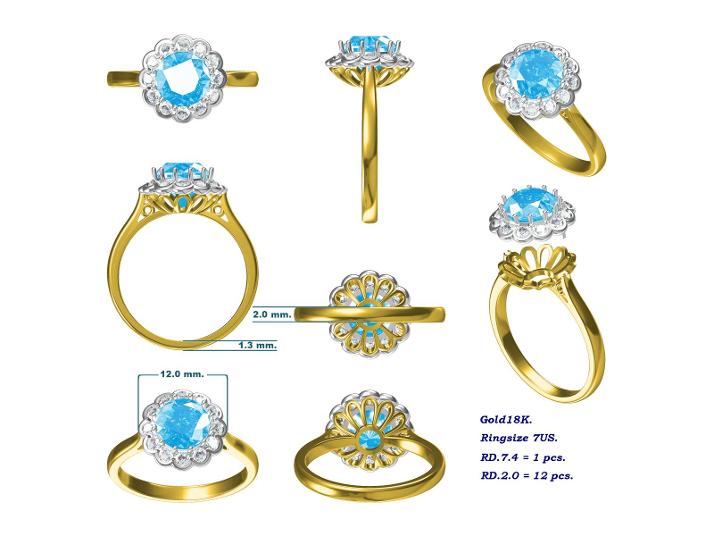 CAD Design
 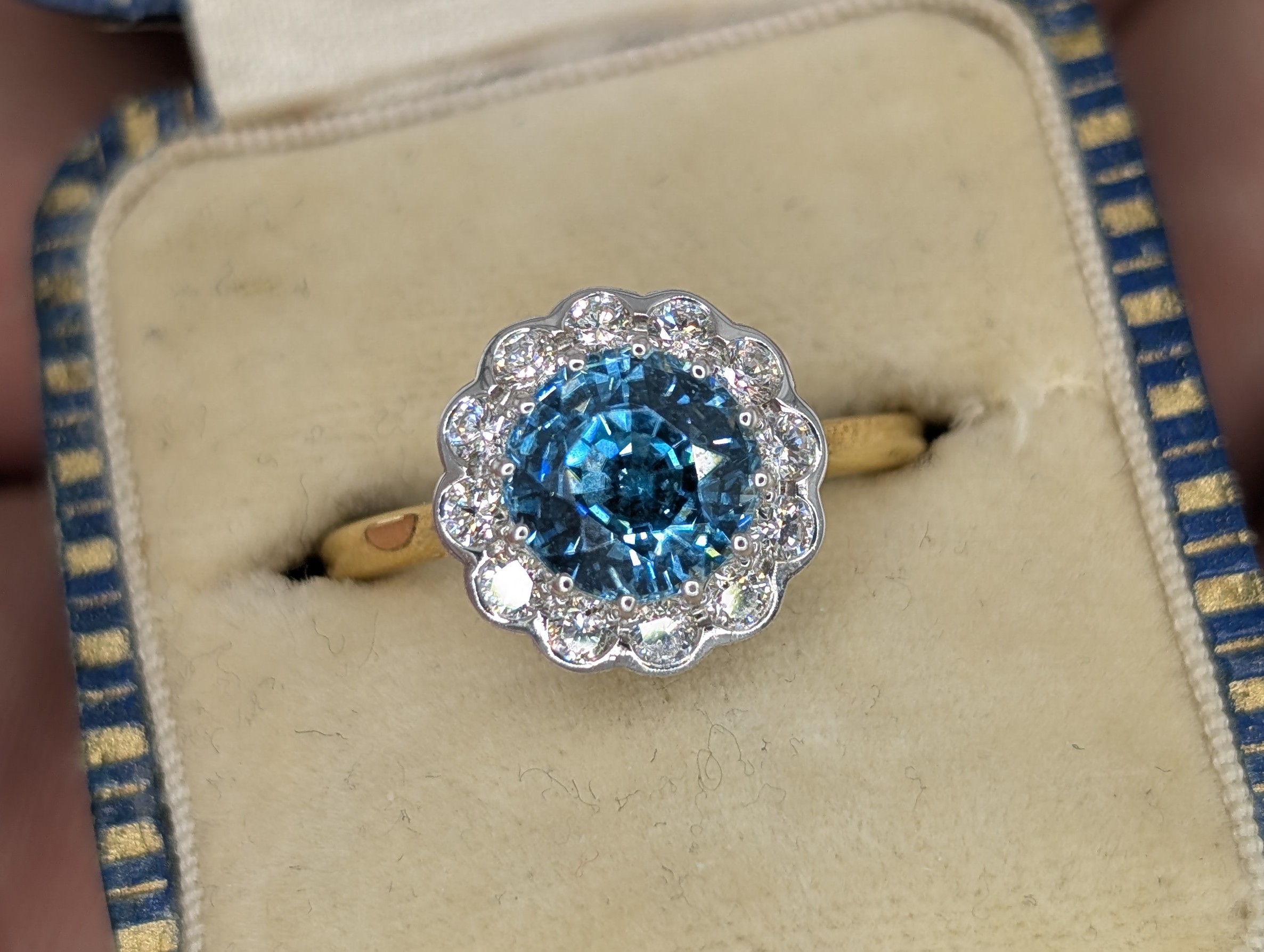 Finished Piece
 Blue Zircon & Diamond Ring
Tell Us About Your Custom Piece
Share your idea below and upload any useful inspiration. We will review your enquiry and contact you to discuss the design, materials, timescale and pricing.
Creating a Custom Sapphire Engagement Ring
Sapphire is one of the most practical coloured gemstones for an engagement ring, but its appeal goes far beyond durability. The range of colours, cuts and proportions makes it possible to create a ring that feels distinctly different from a conventional diamond solitaire.
Why Choose Sapphire for an Engagement Ring?
Sapphire has a long history in fine jewellery and is particularly well suited to rings intended for regular wear.
It belongs to the corundum family and is a hard gemstone, making it a practical choice compared with many softer coloured stones. That does not make it impossible to chip or damage, but it does make sapphire a sensible starting point for a ring expected to be worn most days.
The other advantage is variety. A sapphire engagement ring does not have to mean one specific shade of dark blue. The colour, cut and setting can be chosen to suit the person wearing it.
A sapphire engagement ring should be designed as an everyday ring first and a decorative object second — beautiful proportions matter, but so do comfort, stone protection and how it sits beside a wedding band.
Choosing the Right Blue Sapphire
Blue sapphire can range from lighter, brighter blues through stronger royal tones and much darker stones.
A dark sapphire is not automatically a better sapphire. If the tone becomes too deep, the stone may appear almost black in certain lighting. Many customers prefer a medium to medium-dark blue that retains visible colour across a wider range of conditions.
Saturation, tone, cut and transparency all affect the appearance. This is why choosing the actual sapphire is usually more useful than beginning with a carat-weight target alone.
Does a Sapphire Engagement Ring Have to Be Blue?
No. Sapphire occurs in a wide range of colours apart from red, which is classified as ruby.
Pink, yellow, green and other fancy-coloured sapphires can all be used in bespoke engagement rings. Some customers prefer these because they want the durability of sapphire without the traditional blue appearance.
Blue Sapphire
The classic choice, ranging from lighter bright blues to deeper saturated tones.
Pink Sapphire
Can range from soft blush shades to vivid pink and works particularly well with diamonds and pale metal.
Yellow Sapphire
Offers a warmer alternative and can look especially effective in yellow gold or alongside white diamonds.
Green & Other Colours
Less conventional sapphire colours can create a very individual engagement ring while retaining the practical advantages of corundum.
Heated vs Unheated Sapphire
Heat treatment is common in the sapphire market and has been used for many years to improve colour or clarity in suitable stones.
A heated natural sapphire can still be a beautiful and valuable gemstone. Unheated sapphires can command premiums where their natural colour and quality are particularly desirable.
However, treatment status should not replace visual judgement. An unheated sapphire is not automatically more attractive than a well-cut heated stone.
Where treatment status materially affects the purchase, appropriate gemmological documentation should support the description.
What Does Ceylon Sapphire Mean?
Ceylon sapphire is a traditional trade description associated with sapphire from Sri Lanka.
Sri Lankan material is often associated with attractive blue colours, but geographic origin cannot reliably be established simply by looking at the shade of a sapphire.
If a specific origin is important and materially affects the value, suitable laboratory evidence should support the claim.
Choosing the Shape of Your Sapphire
Oval
One of the most versatile shapes for engagement rings, working equally well in solitaire, trilogy and cluster settings.
Cushion
A softer outline that suits antique-inspired, halo and diamond-surround designs particularly well.
Emerald Cut
Creates a cleaner geometric appearance and works especially well in Art Deco influenced engagement rings.
Round
Balanced and adaptable, making it suitable for traditional solitaires, clusters and target-style settings.
Sapphire and Diamond Engagement Rings
Sapphire and diamond is one of the strongest combinations for a coloured gemstone engagement ring because the diamonds provide brightness without competing with the sapphire's colour.
Diamonds can be used as two substantial side stones, a fine halo, a full cluster or small accents within the shoulders.
The size and placement of those diamonds should be decided around the sapphire. A beautiful centre stone can easily become visually lost if the surrounding diamonds are made too dominant.
Sapphire Trilogy Engagement Rings
A trilogy is an excellent format for a sapphire engagement ring because it gives the centre colour room to stand out while adding significant diamond presence.
Pear-shaped side diamonds can taper gently into the shoulders. Round diamonds produce a more traditional appearance, while baguettes or geometric side stones can introduce Art Deco influence.
The relative size of the three stones matters considerably. Side diamonds should support the sapphire rather than visually competing with it.
Sapphire Cluster Engagement Rings
A diamond cluster can make the sapphire appear broader across the finger and is particularly effective for customers who prefer antique or vintage-inspired jewellery.
A classic oval sapphire with a border of diamonds is only one option. Cushion, round and geometric centres can all be surrounded by diamonds in different sizes and shapes.
This flexibility means a cluster can be traditional, Edwardian-inspired, Art Deco or distinctly modern depending on the proportions.
Sapphire Solitaire Engagement Rings
A sapphire does not need diamonds around it to make an effective engagement ring.
A well-cut sapphire with good colour can work beautifully in a restrained solitaire, particularly where the claws, basket and shank are carefully proportioned around the actual stone.
This approach keeps the sapphire completely central to the design and can also make future wedding-band matching simpler.
Art Deco Sapphire Engagement Rings
Sapphire is especially suited to Art Deco inspired engagement rings. Strong blue colour works naturally against white diamonds and pale metal, while geometric gemstone cuts reinforce the period influence.
Baguettes, stepped shoulders, target surrounds, emerald-cut centres and milgrain can all be considered.
If this is the main design direction you want, see our custom Art Deco style rings page for more detailed style guidance.
Vintage Sapphire Engagement Rings
Sapphire also works well in vintage-inspired rings beyond Art Deco. Mid-century clusters, three-stone rings and broader diamond arrangements can all provide useful references.
For twentieth-century inspiration beyond the Art Deco era, see our custom vintage style rings page.
Antique Inspired Sapphire Engagement Rings
Victorian and Edwardian jewellery offer very different ways to use sapphire in an engagement ring.
Yellow gold and fuller clusters can give the piece a stronger Victorian character, while lighter diamond work and pale metal can create a more Edwardian influence.
If earlier historic design is what interests you most, our custom antique style rings page explores that direction more broadly.
Yellow Gold, White Gold or Platinum?
Metal choice can change a sapphire engagement ring dramatically.
Platinum and white gold produce a cooler appearance and work naturally with diamond surrounds. Yellow gold gives the blue sapphire much more contrast and can create a warmer, more antique-inspired look.
Two-tone construction is also possible, for example using a yellow gold shank with a white setting around the sapphire and diamonds.
Low Profile Sapphire Engagement Rings
A lower setting can be useful for someone who wants the ring to sit closer to the hand and feel less exposed during everyday wear.
However, setting the sapphire too low can make it more difficult for a straight wedding band to sit alongside the ring.
The profile therefore needs to balance protection, comfort and the customer's plans for the eventual wedding band.
Raised Settings and Wedding Band Fit
A slightly raised centre setting can allow a straight wedding band to tuck underneath, reducing the gap between the two rings.
This does not mean every engagement ring should be high set. The sapphire's depth, size and overall design all affect what will be comfortable.
If flush wedding-band fit matters to you, it is best to mention this before the CAD stage so the profile can be designed accordingly.
Sapphire Engagement Rings for Everyday Wear
Because an engagement ring is likely to be worn frequently, practical details matter more than they would in an occasional cocktail ring.
Very exposed corners, extremely delicate claws and high-set stones may be less suitable for someone who is hard on their hands.
The setting should therefore be designed not only around the gemstone, but also around how the ring will actually be worn.
Can a Sapphire Scratch or Chip?
Sapphire is hard and resistant to scratching compared with many other gemstones, but hardness does not make it indestructible.
A sufficiently hard impact can damage a gemstone, especially at exposed edges or corners. The setting should therefore offer reasonable protection without hiding the stone unnecessarily.
Choosing a Sapphire as a Surprise
If the engagement ring is being designed without the recipient's involvement, colour preference becomes especially important.
Look at jewellery they already wear, saved photographs, comments they have made and whether they tend to prefer lighter, brighter stones or darker, richer colours.
Inspiration images can be particularly useful if you are unsure of terminology but know the visual direction.
Ring Size for a Surprise Proposal
Exact ring size can be difficult to obtain discreetly. An existing ring worn on the appropriate finger can sometimes provide guidance, although finger size can vary between hands.
If the size is uncertain, tell us during the enquiry stage rather than presenting a guessed measurement as exact. The design itself can sometimes influence how straightforward later resizing may be.
Can You Use a Sapphire I Already Own?
Potentially, yes. A sapphire you already own can form the centre of the engagement ring.
Its exact measurements, depth and condition should be considered before the new setting is designed.
This can be especially meaningful where the gemstone has been inherited or comes from an older family ring.
Resetting an Heirloom Sapphire
An inherited sapphire does not have to remain in the original setting.
The stone can potentially be incorporated into a new engagement ring designed specifically for the current wearer while preserving the sentimental link to the older piece.
A dated cluster could become a cleaner trilogy, or a loose sapphire might become the centre of a geometric Art Deco inspired setting.
Should a Sapphire Have a Laboratory Report?
Not every sapphire needs a laboratory report, but documentation can become important for more significant stones.
A reputable gemmological laboratory may provide information about whether a sapphire is natural and whether evidence of certain treatment is detected. Some reports may also provide an opinion on geographic origin.
A report does not tell you whether the sapphire is beautiful. Colour, cut, proportions and overall appearance still need to be considered visually.
How Much Does a Custom Sapphire Engagement Ring Cost?
There is no standard price because the sapphire itself can vary substantially in value.
Size, colour, cut, transparency, treatment status and laboratory documentation can all affect the centre stone's cost. The setting then adds precious metal, diamonds and the complexity of the design.
A clean sapphire solitaire in 18ct gold therefore has very different cost considerations from a platinum diamond cluster built around a significant unheated sapphire.
Giving us a realistic target budget allows the sapphire and setting to be balanced from the beginning.
Choosing Between a Larger Sapphire and More Diamonds
One of the advantages of a bespoke engagement ring is being able to decide where the budget has the most visual impact.
Some customers would rather put more of the budget into the centre sapphire and keep the setting restrained. Others prefer a smaller sapphire with a substantial diamond surround or larger side stones.
Neither approach is inherently better. The right balance depends on the style of ring you actually want.
How This Differs From Our Custom Sapphire Rings Page
Our broader custom sapphire rings page covers sapphire jewellery generally, including statement, cocktail and other bespoke ring designs.
This page is specifically focused on sapphire engagement rings: everyday wear, proposal considerations, wedding-band compatibility and designing a ring intended to be worn long term.
Why We Use CAD for Sapphire Engagement Rings
CAD allows us to examine the dimensions and construction of the ring before production begins.
Setting height, band width, sapphire proportions, diamond sizes and wedding-band clearance can all be reviewed before the ring is made.
The detailed 3D CAD carries a $25 non-refundable design fee. If the commission proceeds, the $25 is deducted from the final bill.
Approval and Production
You review the final CAD before committing to production. Once approved, a 40% deposit of the quoted price confirms the order.
Your sapphire engagement ring is then created by our workshop. Once complete, we show you the finished piece before the remaining 60% is paid and the ring is securely dispatched.
Is sapphire suitable for an engagement ring?
Yes. Sapphire is a hard and durable gemstone and is one of the strongest coloured-stone choices for a ring intended for frequent wear.
Can you source the sapphire for me?
The sapphire can form part of the bespoke process. Tell us the colour, shape, approximate size and budget you prefer so the ring can be developed around an appropriate stone.
Can I use my own sapphire?
Potentially, yes. Its dimensions and condition should be considered before the new engagement-ring setting is designed.
Can you make a sapphire and diamond engagement ring?
Yes. Trilogy rings, clusters, halos, Art Deco layouts and more restrained diamond-accented settings can all be designed around sapphire.
Does my sapphire have to be blue?
No. Pink, yellow, green and other fancy-coloured sapphires can also be used in custom engagement rings.
Can you design the ring to sit with a wedding band?
Yes. If a straight or flush-fitting wedding band is important, tell us before the CAD is finalised so the engagement ring profile can be designed with that in mind.
Can you make an antique style sapphire engagement ring?
Yes. Victorian, Edwardian, vintage and Art Deco jewellery can all provide inspiration for the new design.
How much does the CAD design cost?
The detailed 3D CAD costs $25. The fee is non-refundable, but it is deducted from the final bill if the ring proceeds to production.
When do I pay for the engagement ring?
A 40% deposit is required after you approve the final CAD. The remaining 60% is paid after you have seen the completed ring and before dispatch.
Planning a Sapphire Engagement Ring?
Tell us the sapphire colour, shape, setting style and precious metal you have in mind, or send inspiration images and we can begin developing the ring around your ideas.
Start Your Enquiry