
Custom Opal Rings
Create a ring around an opal you genuinely love, from colourful antique-inspired clusters to diamond-set statement rings and completely bespoke designs.
How It Works
From choosing your opal to approving the final design, we keep the bespoke process clear and simple.
Tell Us Your Idea
Share your preferred opal, ring style, precious metal, budget and inspiration images.
Choose & Refine
We develop the design around your opal, refining the setting, diamonds and proportions.
Receive Your Quote
Once the concept is agreed, we provide a clear quote based on the opal, metal, diamonds and design.
3D CAD Design
Proceed with a detailed CAD for a $25 non-refundable design fee, deducted from the final bill if the piece goes ahead.
Approve Your Ring
Review the final CAD before production. Once approved, a 40% deposit confirms your order.
Made & Delivered
We show you the finished ring before the remaining 60% is paid and your jewellery is dispatched.
Some of Our Bespoke Creations
Explore a selection of pieces created by us, from the production-ready CAD design through to the finished jewellery.
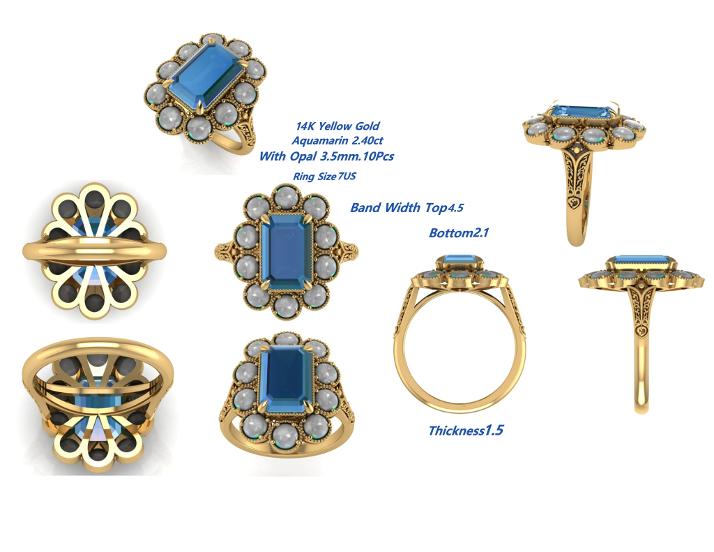 CAD Design
 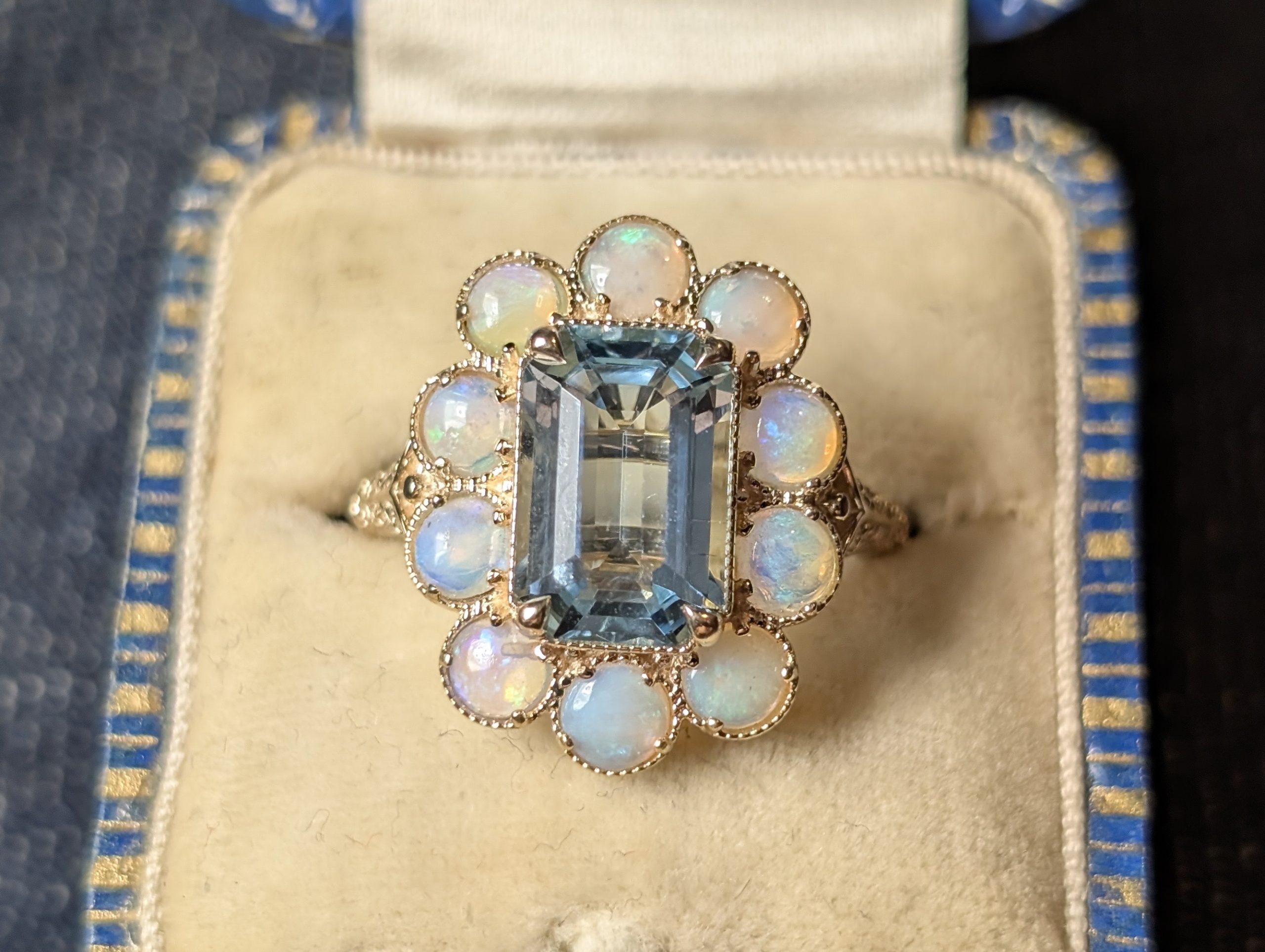 Finished Piece
 Aquamarine & Opal Ring
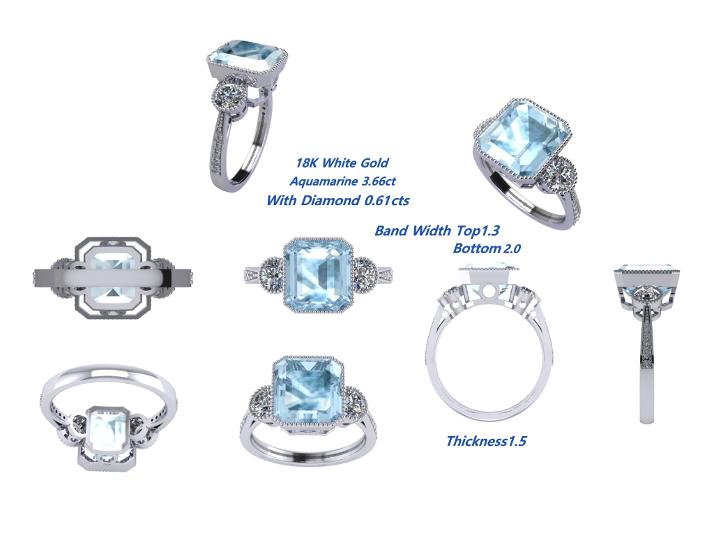 CAD Design
 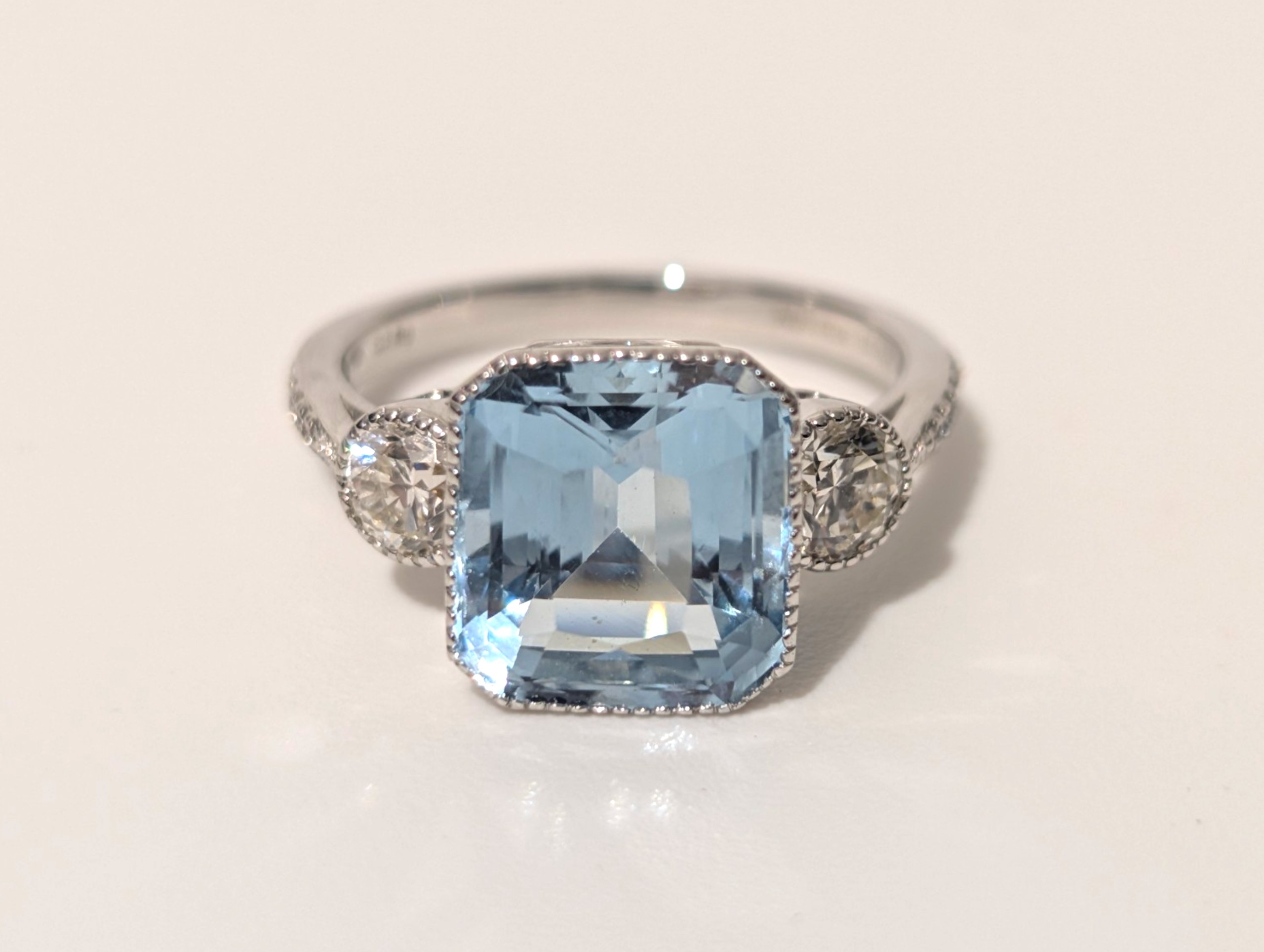 Finished Piece
 Aquamarine & Diamond Ring
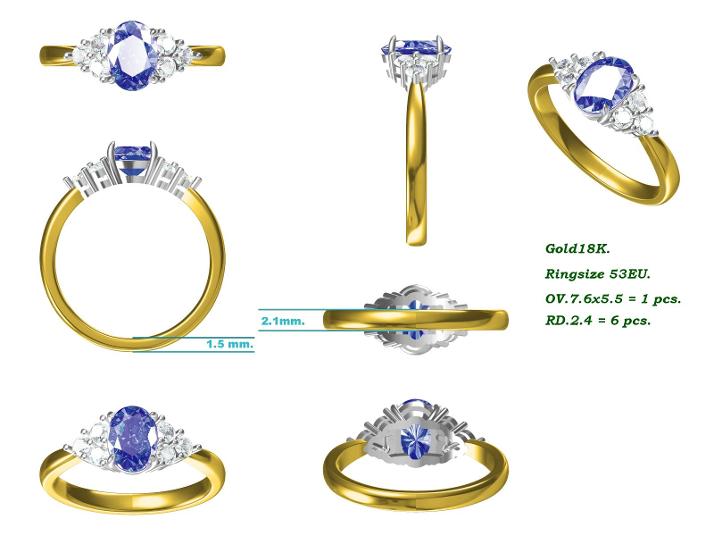 CAD Design
 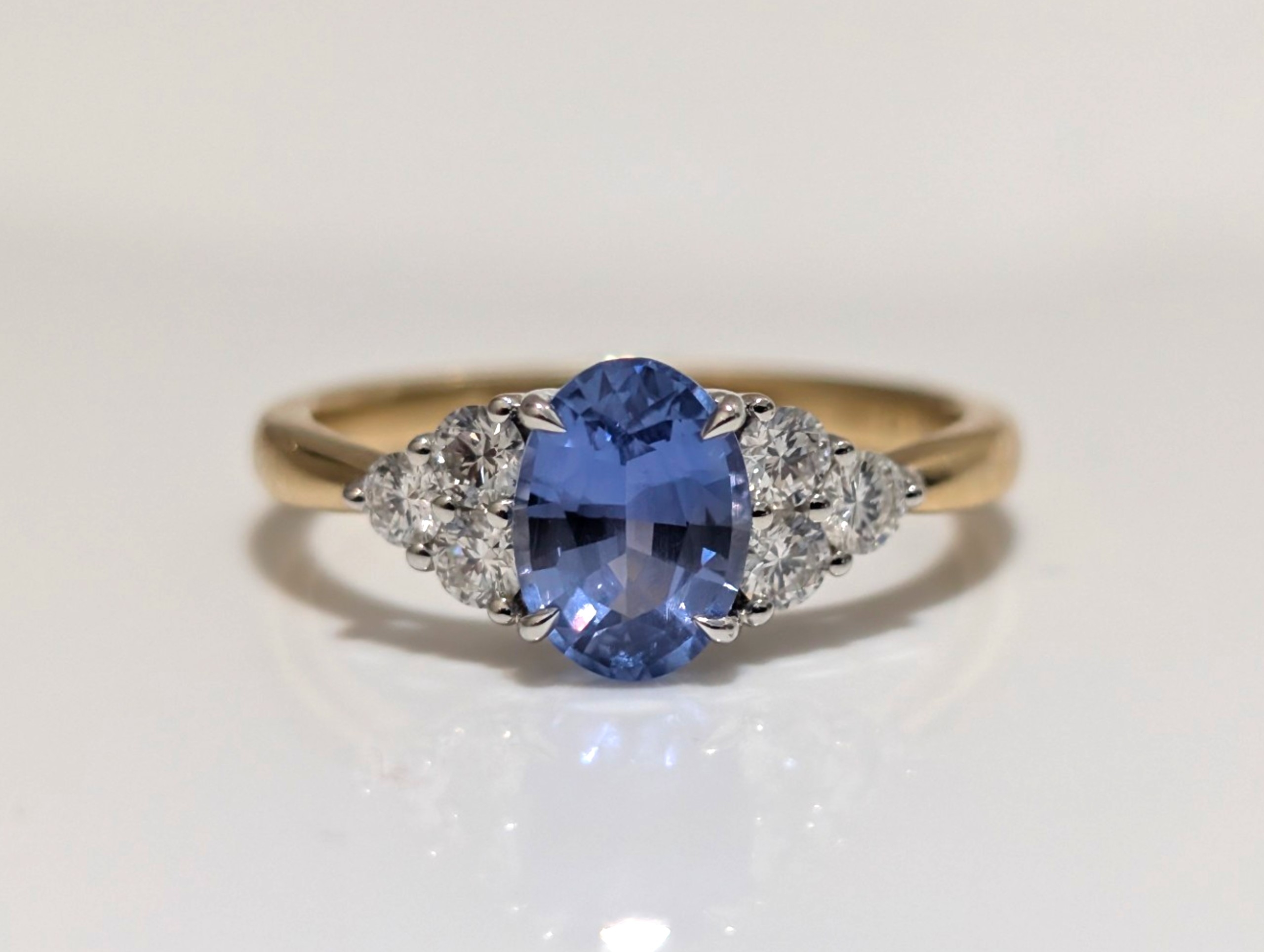 Finished Piece
 Sapphire & Diamond Ring
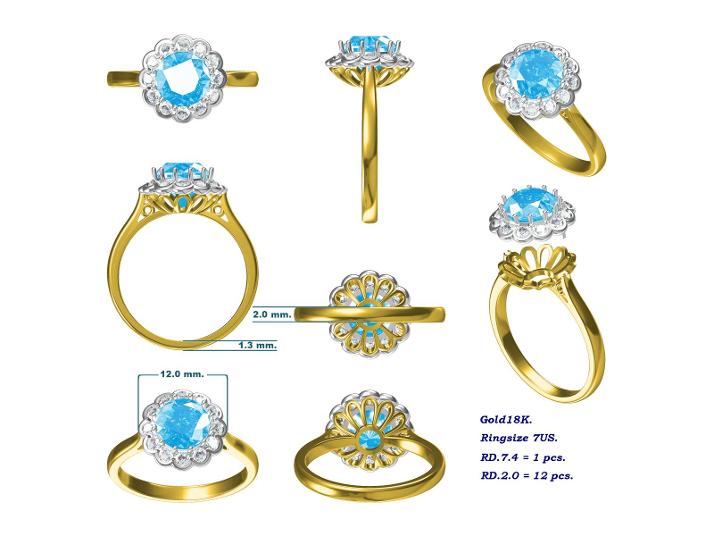 CAD Design
 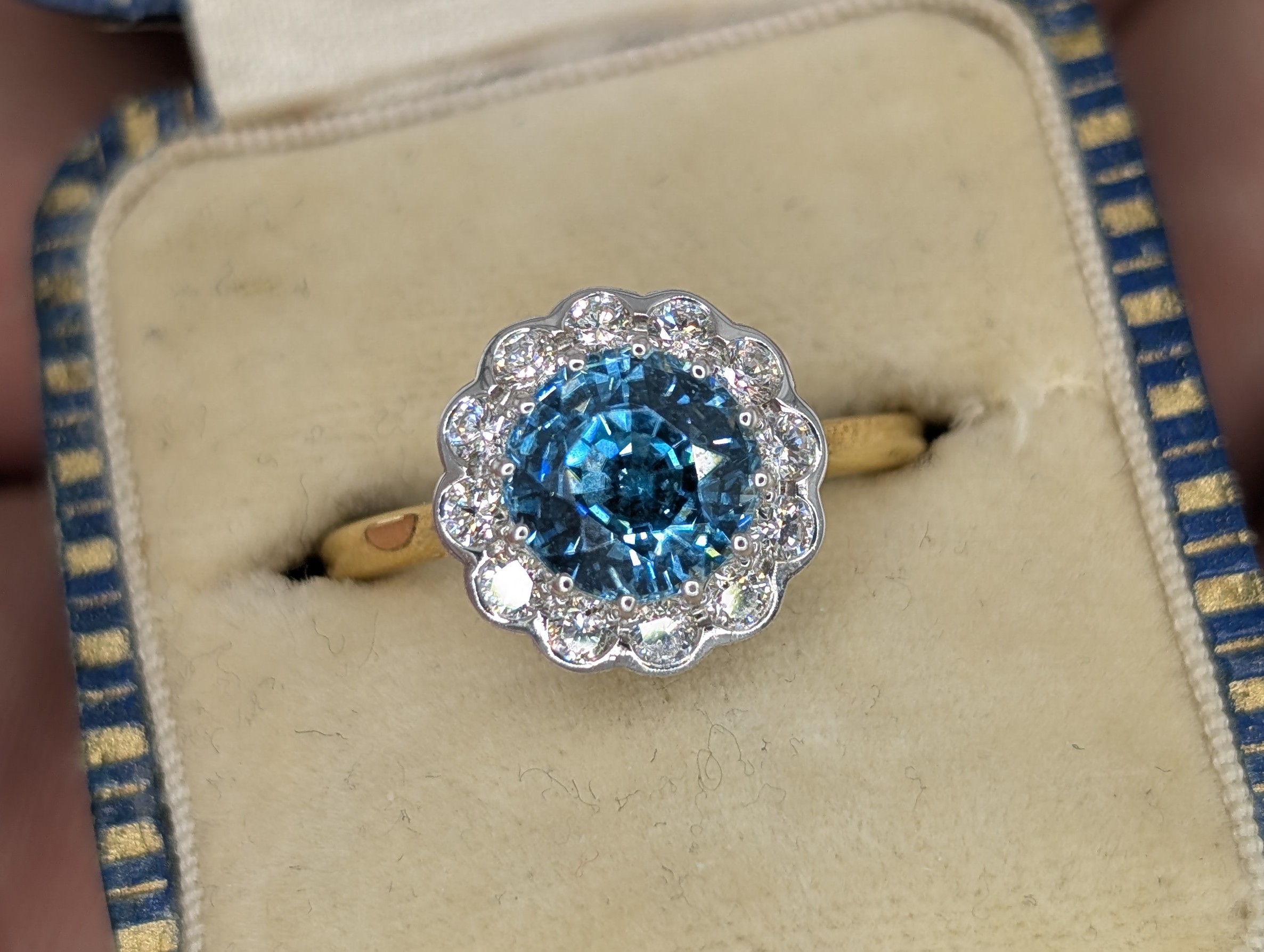 Finished Piece
 Blue Zircon & Diamond Ring
Tell Us About Your Custom Piece
Share your idea below and upload any useful inspiration. We will review your enquiry and contact you to discuss the design, materials, timescale and pricing.
Creating a Custom Opal Ring
Opal is unlike most other gemstones used in rings. Instead of relying on one body colour or a conventional faceting pattern, a fine opal can change dramatically as it moves, making the actual stone especially important when developing a bespoke design.
Design the Ring Around the Opal
Opals vary enormously in shape, body tone, transparency, colour pattern and play-of-colour. That makes them particularly suited to custom work.
A broad oval opal may suit a diamond cluster, while an elongated stone could become the centre of a more unusual north-south setting. A small, intensely colourful opal might need very little surrounding decoration, whereas a pale stone could benefit from the contrast of diamonds or coloured accent stones.
The first step is therefore not choosing a generic setting. It is understanding what is visually interesting about the actual opal.
No two fine opals behave exactly alike. In a bespoke ring, the colour pattern and shape of the individual stone should be treated as part of the design rather than just the centre of it.
What Is Play-of-Colour?
Precious opal can display flashes and patches of spectral colour as the stone, light or viewer moves. This optical effect is known as play-of-colour.
Some stones show broad areas of colour, while others display smaller flashes or directional patterns. The colours themselves may include blue, green, yellow, orange and red in different combinations.
This is one reason still photographs can never tell the full story of an opal. Movement can reveal aspects of the stone that are not obvious from one angle.
Black Opal, White Opal and Crystal Opal
Opal terminology often describes characteristics of the stone rather than a simple colour category.
Black opal has a darker body tone that can create strong contrast against its play-of-colour. White or light opal has a much paler body, producing a softer overall appearance. Crystal opal refers to material with a transparent to semi-transparent character through which play-of-colour can be visible.
These different appearances naturally lead to different ring designs. A dark opal can become an intense focal point within a simple setting, while a pale opal can look particularly attractive surrounded by diamonds.
Australian Opal Rings
Australia is famous for producing precious opal, including material associated with important fields such as Lightning Ridge and Coober Pedy.
However, geographic origin should not be assigned to an opal purely from its appearance. If a particular origin is important to the commission, the stone's provenance or supporting documentation should be considered.
More importantly for the finished ring, the actual colour pattern, stability, shape and overall beauty of the stone need to suit the design.
Ethiopian Opal Rings
Ethiopian opal can show exceptional play-of-colour and is widely used in contemporary jewellery. Some Ethiopian opals are hydrophane, meaning they can absorb water and other liquids.
That property requires more considered care. Temporary changes in appearance may occur after liquid absorption, and exposure to oils, chemicals and prolonged moisture should be avoided.
If an Ethiopian opal is being considered for a ring, particularly one intended for frequent wear, its characteristics and the wearer's habits should be discussed before the design is finalised.
Solid Opal, Doublet or Triplet?
Not every opal seen in jewellery is a single solid piece of precious opal. Doublets and triplets are assembled stones constructed using multiple layers.
An opal doublet typically uses a thin layer of precious opal attached to a darker backing. A triplet generally adds a transparent protective top layer as well.
These constructions can produce attractive jewellery, but they are fundamentally different from solid opal and should be described accurately. They also require care around prolonged moisture because layered construction can be affected differently from solid material.
Choosing the Shape of Your Opal
Oval Opal
One of the most versatile shapes for traditional clusters, diamond halos, antique-inspired settings and larger statement rings.
Round Opal
Particularly effective in compact clusters, target-style rings and balanced geometric designs.
Freeform Opal
Irregular stones can produce especially individual bespoke jewellery because the setting must follow the natural outline of the opal.
Elongated Shapes
Long oval, pear and other elongated opals can create strong north-south designs and work well with carefully placed diamond accents.
Opal and Diamond Rings
Diamonds are an effective companion to opal because they add brightness without introducing another dominant colour.
A diamond surround can frame the opal and increase the visual footprint of the ring, while a pair of side diamonds can keep the design more restrained. Small accent stones can also be used within shoulders or geometric borders.
The diamonds should not automatically be made as large as the budget permits. If the opal has strong colour and pattern, a lighter diamond treatment may allow the centre stone to remain the obvious focus.
Custom Opal Cluster Rings
Cluster rings are one of the most natural formats for opal, especially when the aim is an antique-inspired appearance.
An oval opal surrounded by diamonds creates a familiar classical shape, but a bespoke cluster can be made considerably more individual. Diamond sizes can alternate, the outline can become scalloped or geometric, and coloured gemstones can occasionally be introduced if the palette suits the opal.
The design should still respond to the opal itself. A broad low-domed stone requires a different setting from a taller cabochon.
Antique Style Opal Rings
Opal appears frequently in antique jewellery, making it particularly suitable for designs influenced by Victorian, Edwardian and early twentieth-century pieces.
Yellow gold can create a rich Victorian-style appearance, particularly when combined with old-cut inspired diamonds or a decorative cluster. Finer white-metal detailing can move the ring toward a lighter Edwardian or Belle Époque character.
A new custom opal ring does not need to reproduce one antique example. Historic jewellery can instead provide the proportions, setting ideas and details used to develop something new.
Art Deco Opal Rings
Opal can also work extremely well with Art Deco geometry, particularly where the irregular flashes of colour are contrasted against structured diamond work.
A round or oval opal can sit inside an angular border, while baguette diamonds, stepped shoulders and white metal can introduce much stronger geometric lines.
For commissions where the period style is the main focus, our custom Art Deco style rings page explores those design elements in greater depth.
Opal and Coloured Gemstones
Diamonds are not the only stones that can accompany opal. A carefully chosen coloured gemstone can pick up one of the colours visible within the opal itself.
Small sapphires, emeralds, aquamarines or other suitable stones can occasionally work as accents, but colour matching should be handled carefully. The supporting gems should enhance the opal rather than making the ring visually confused.
This type of design is particularly suited to bespoke work because the secondary stones can be selected after the opal itself has been assessed.
Yellow Gold, White Gold or Platinum?
Metal choice can dramatically change an opal ring. Yellow gold creates warmth and works particularly well with opals that show strong red, orange or green flashes.
White gold and platinum provide a cooler frame and can emphasise blue and green play-of-colour while blending naturally with surrounding diamonds.
There is no universally correct choice. The best metal depends on the actual opal and the style of ring being created.
Bezel Settings for Opal
A bezel or partially enclosed setting can be particularly useful with opal because it offers more protection around the edge than a very open claw setting.
This does not mean every opal should automatically be bezel set. A delicate antique-inspired cluster may require a different construction, and the shape and thickness of the particular stone need to be considered.
The aim is to protect vulnerable areas without making the ring visually heavy.
Can Opal Be Used for an Engagement Ring?
Opal can be used in an engagement ring, but it requires more thoughtful care than sapphire or diamond.
Opal is comparatively softer and can be vulnerable to scratches, chips and hard impacts. Some varieties also require consideration around moisture and sudden environmental changes.
For someone who understands those limitations and is prepared to treat the ring accordingly, opal can create an extremely individual engagement ring. A protective setting can also reduce unnecessary exposure.
For the broader engagement-ring design process, see our bespoke engagement rings page.
Custom Opal Engagement Rings vs Everyday Rings
A ring intended for occasional wear can allow more design freedom than a ring expected to be worn every day.
Very high settings, exposed edges and large domed opals may be perfectly suitable for a statement ring while being less practical for someone who works extensively with their hands.
If the ring is intended for daily wear, tell us during the initial design stage so protection, profile and setting style can be considered from the outset.
Can You Design Around an Opal I Already Own?
Potentially, yes. A loose opal can provide the starting point for the entire commission.
Because opals are often cabochon cut and can have unusual backs, exact length, width and depth measurements are important when designing the setting.
The condition of an older stone should also be assessed before it is reset. Existing chips, crazing, scratches or other damage may affect the type of setting that is sensible.
Resetting an Antique or Heirloom Opal
Older opal jewellery can contain beautiful stones even when the original mount is damaged or no longer suits the owner.
Resetting can preserve the gemstone while completely changing the surrounding jewellery. A worn Victorian-style cluster might become a cleaner bezel-set ring, or a loose inherited opal could become the centre of a new diamond design.
With sentimental stones, preserving the opal's condition should take priority over forcing it into a particular idea.
How Much Does a Custom Opal Ring Cost?
Opal values vary widely because the appearance of individual stones differs so dramatically.
Body tone, brightness, play-of-colour, pattern, size, transparency, type and overall quality can all influence the price of the centre stone. A fine black opal and a light commercial opal of similar dimensions are very different purchases.
The ring itself then adds precious metal, diamonds or accent stones, setting work and the complexity of construction.
If you have a target budget, include it with your enquiry. The opal and surrounding design can then be balanced realistically from the beginning.
Why CAD Is Useful for a Custom Opal Ring
The irregular proportions of opal make CAD particularly valuable. The setting can be built around the actual dimensions of the stone rather than relying on a standard calibrated shape.
We can review the width of a diamond surround, the amount of metal protecting the opal, the setting height and the overall footprint across the finger before the ring enters production.
The detailed 3D CAD carries a $25 non-refundable design fee. If the commission proceeds, the $25 is deducted from the final bill.
Approval and Production
You review the final CAD before production begins. Once the design is approved, a 40% deposit of the quoted price confirms the commission.
The ring is then made by our workshop. When complete, we show you the finished jewellery before the remaining 60% is paid and the ring is securely dispatched.
Caring for an Opal Ring
Opal requires more considered care than many traditional ring stones. Hard impacts, abrasive contact and harsh cleaning methods should be avoided.
Doublets, triplets and some hydrophane opals require additional consideration around water and other liquids. The correct care therefore depends on what type of opal is actually set in the ring.
When the stone's identity or construction is uncertain, it is better to use cautious cleaning methods rather than assuming treatment suitable for diamond jewellery is appropriate.
Can you source an opal for my ring?
Yes. Tell us the approximate type, colour, shape, size and budget you have in mind so the design can be developed around an appropriate stone.
Can I use my own opal?
Potentially, yes. Its exact measurements, construction and condition need to be considered before a new setting is designed.
Can you make an opal and diamond ring?
Yes. Diamond halos, clusters, side stones and more restrained accents can all be incorporated around an opal centre.
Can opal be used for an engagement ring?
Yes, but opal requires more care than harder gemstones such as sapphire or diamond. Setting style and the wearer's lifestyle should be considered carefully for a ring intended for daily wear.
What is the difference between solid opal, doublet and triplet?
Solid opal is a single piece of opal material. Doublets and triplets are assembled stones made from layers and should be identified and cared for accordingly.
Can you create an antique style opal ring?
Yes. Victorian, Edwardian, Art Nouveau and Art Deco jewellery can all provide inspiration for a bespoke opal design.
Is a bezel setting good for opal?
It can be. A well-designed bezel can provide additional protection around the edge of an opal, although the most suitable setting depends on the individual stone and overall design.
How much is the CAD design?
The detailed 3D CAD costs $25. The fee is non-refundable, but it is deducted from the final bill if the ring proceeds to production.
When do I pay for my bespoke opal ring?
A 40% deposit is required after you approve the final CAD. The remaining 60% is paid after you have seen the finished jewellery and before dispatch.
Have an Opal Ring in Mind?
Tell us the type of opal, shape, colours and ring style you prefer, or send inspiration images and we can begin developing your bespoke design.
Start Your Enquiry