
Custom Diamond Rings
Create a diamond ring around the stone, proportions and style you actually want, from refined solitaires and trilogies to distinctive antique-inspired and Art Deco designs.
How It Works
From your first idea to the finished diamond ring, we keep the bespoke process clear and simple.
Tell Us Your Idea
Share your preferred diamond shape, ring style, precious metal, budget and inspiration images.
Choose & Refine
We develop the ring around your diamond, refining the setting, proportions and finer details.
Receive Your Quote
Once the concept is agreed, we provide a clear quote based on the diamond, metal and design.
3D CAD Design
Proceed with a detailed CAD for a $25 non-refundable design fee, deducted from the final bill if the piece goes ahead.
Approve Your Ring
Review the final CAD before production. Once approved, a 40% deposit confirms your order.
Made & Delivered
We show you the finished ring before the remaining 60% is paid and your jewellery is dispatched.
Some of Our Bespoke Creations
Explore a selection of pieces created by us, from the production-ready CAD design through to the finished jewellery.
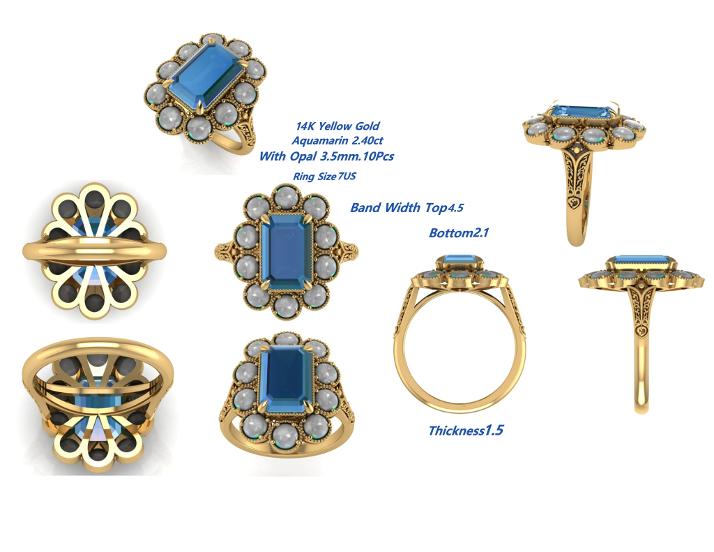 CAD Design
 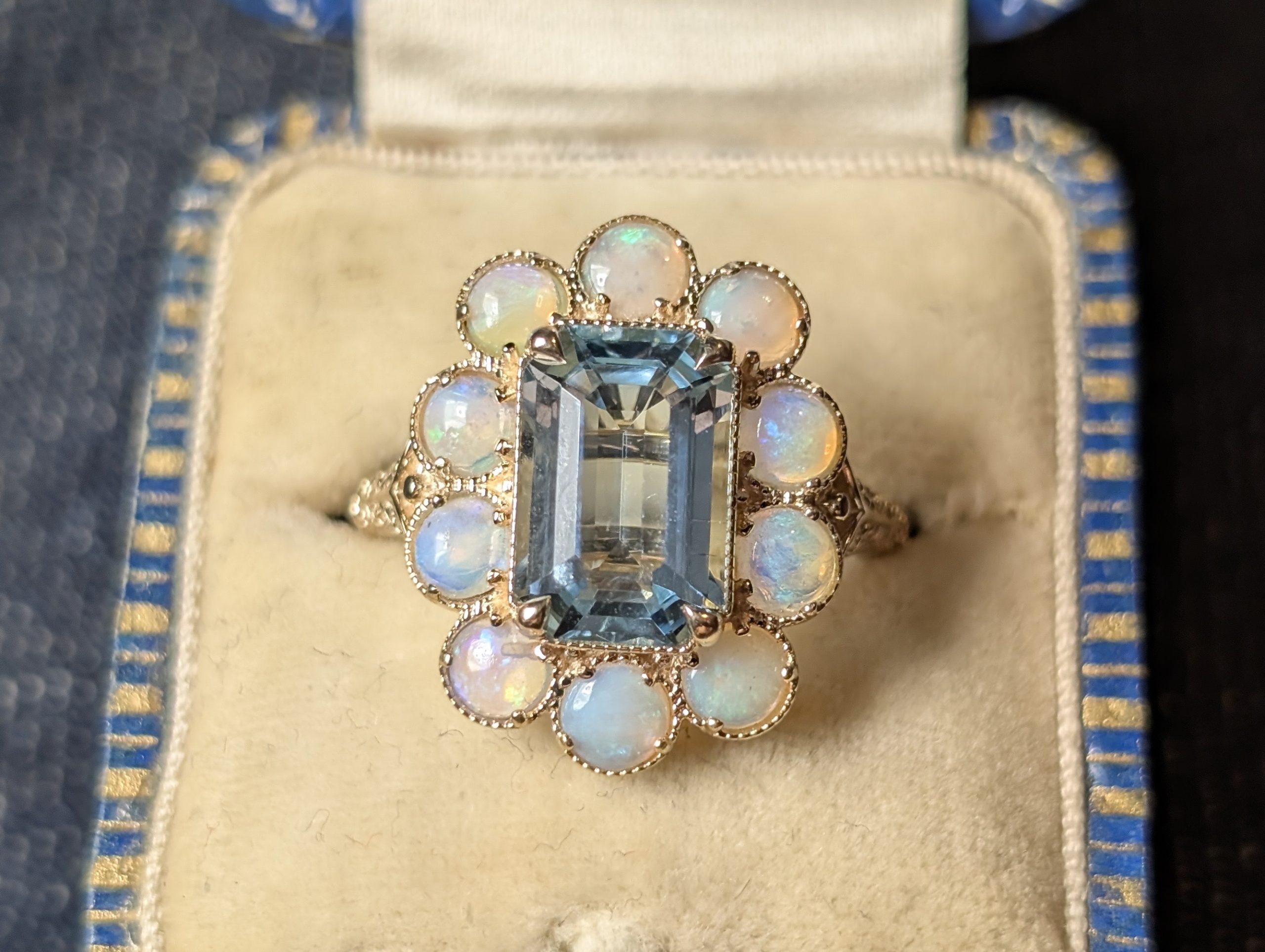 Finished Piece
 Aquamarine & Opal Ring
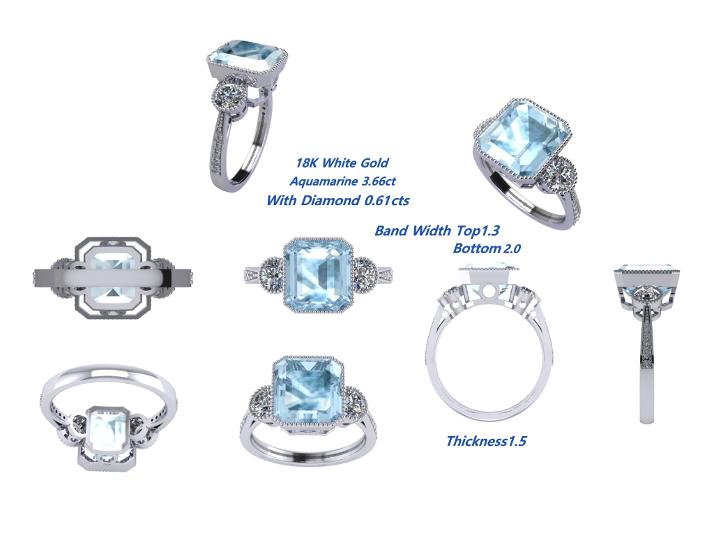 CAD Design
 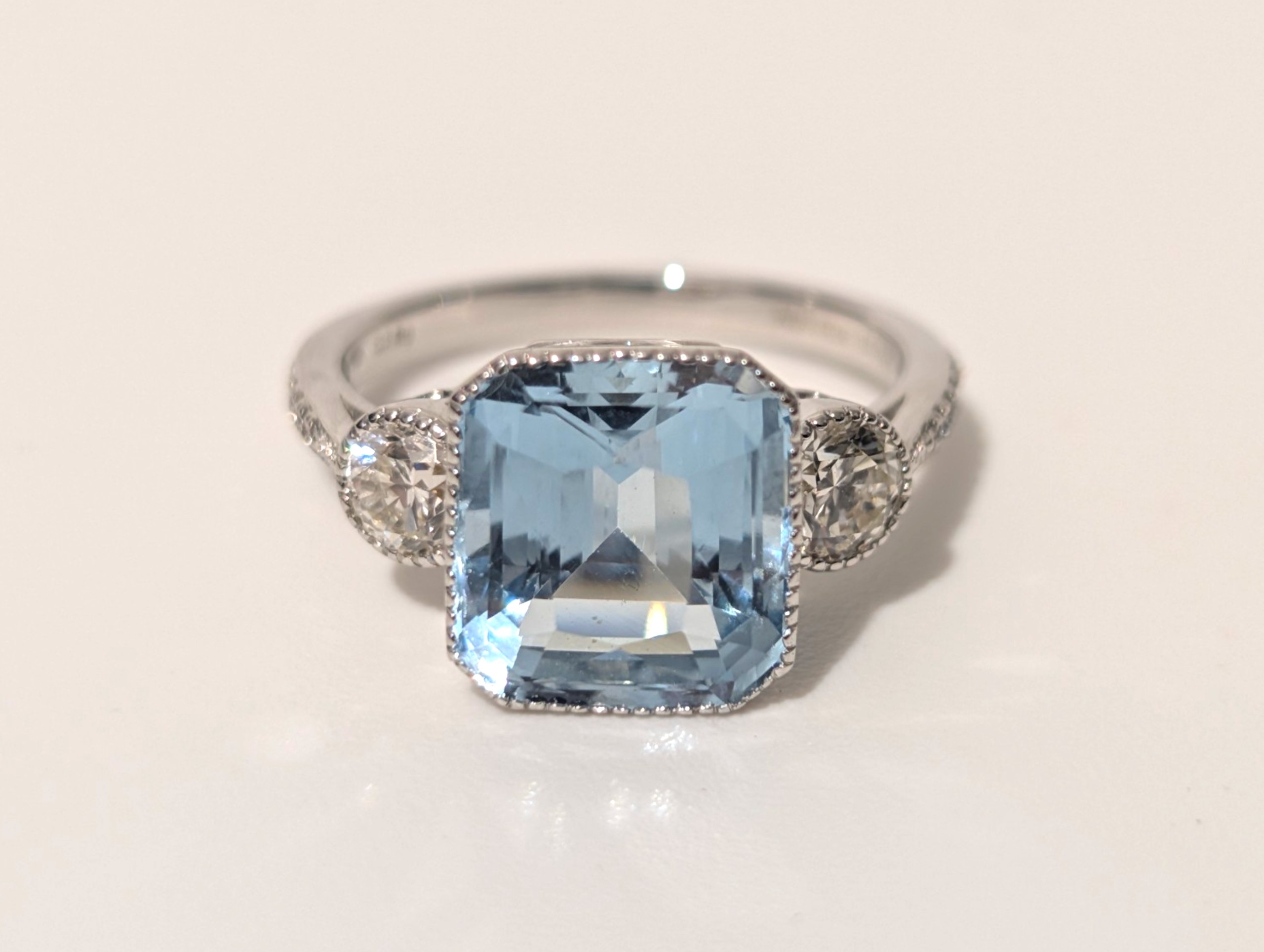 Finished Piece
 Aquamarine & Diamond Ring
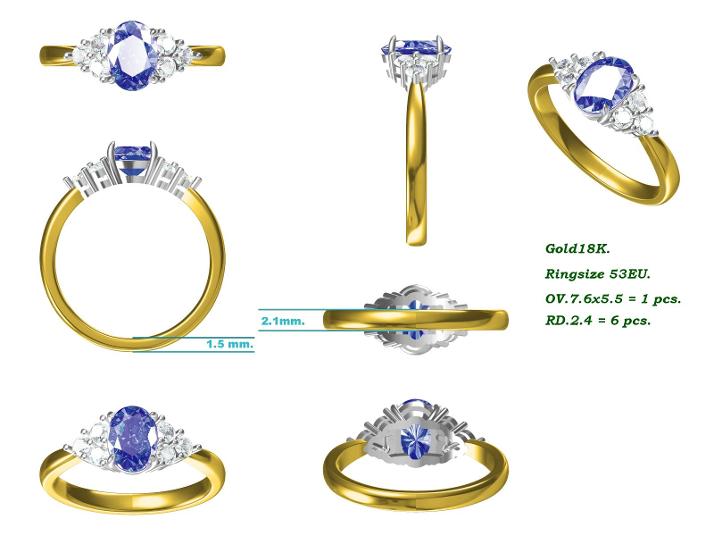 CAD Design
 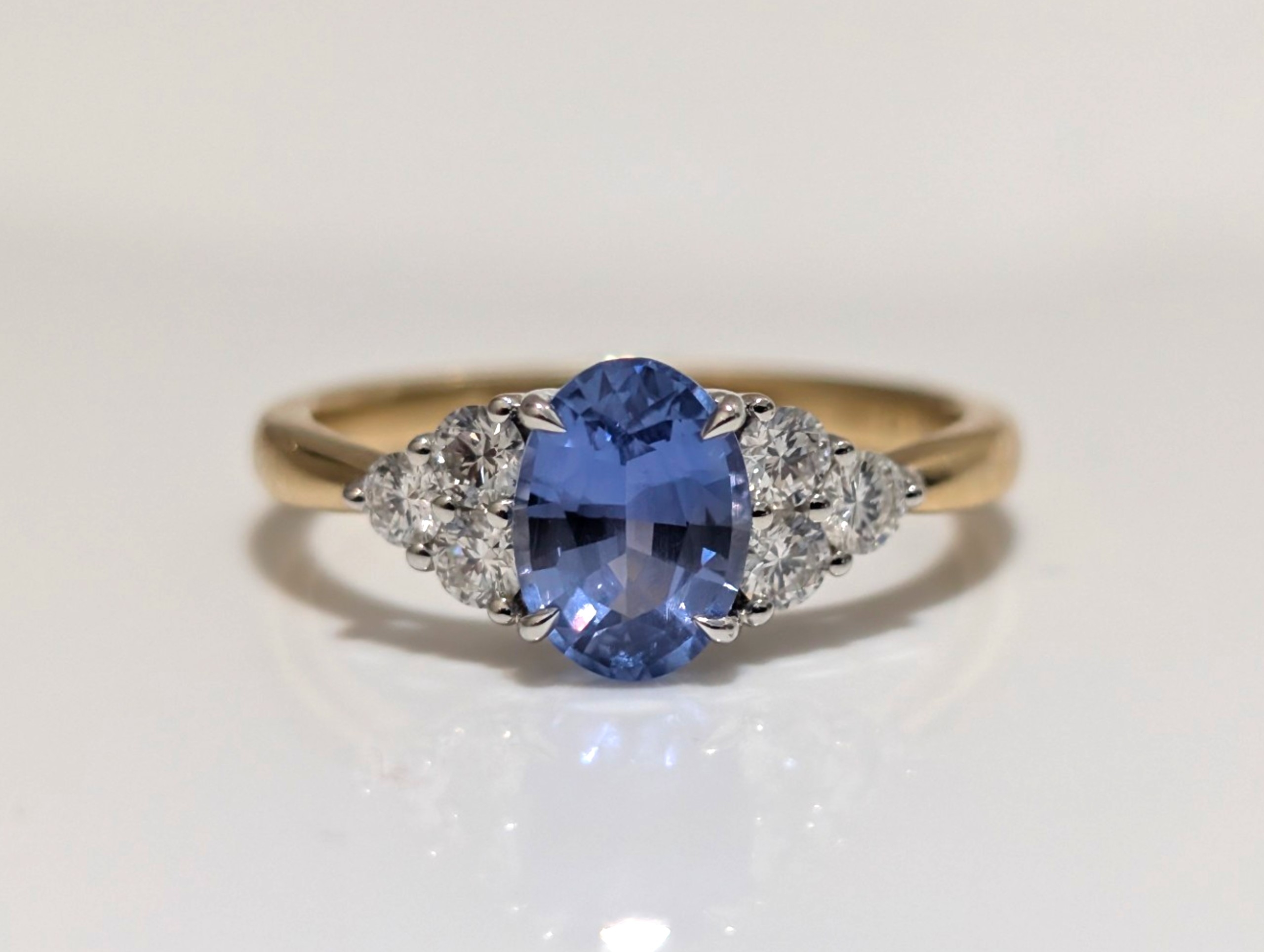 Finished Piece
 Sapphire & Diamond Ring
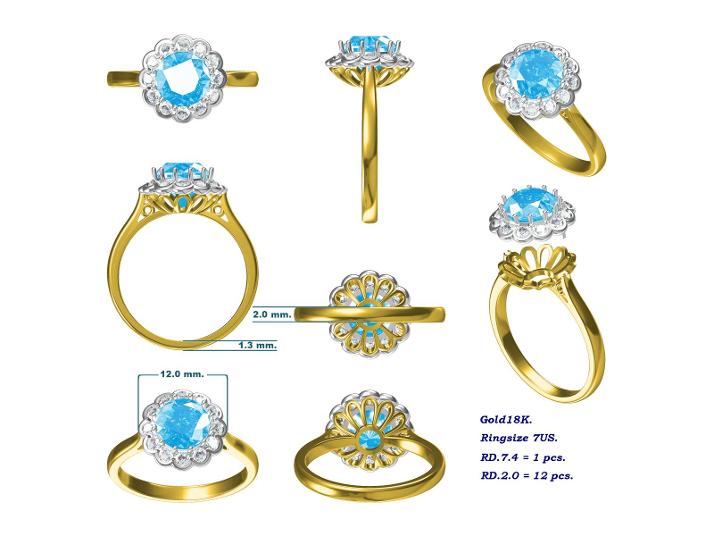 CAD Design
 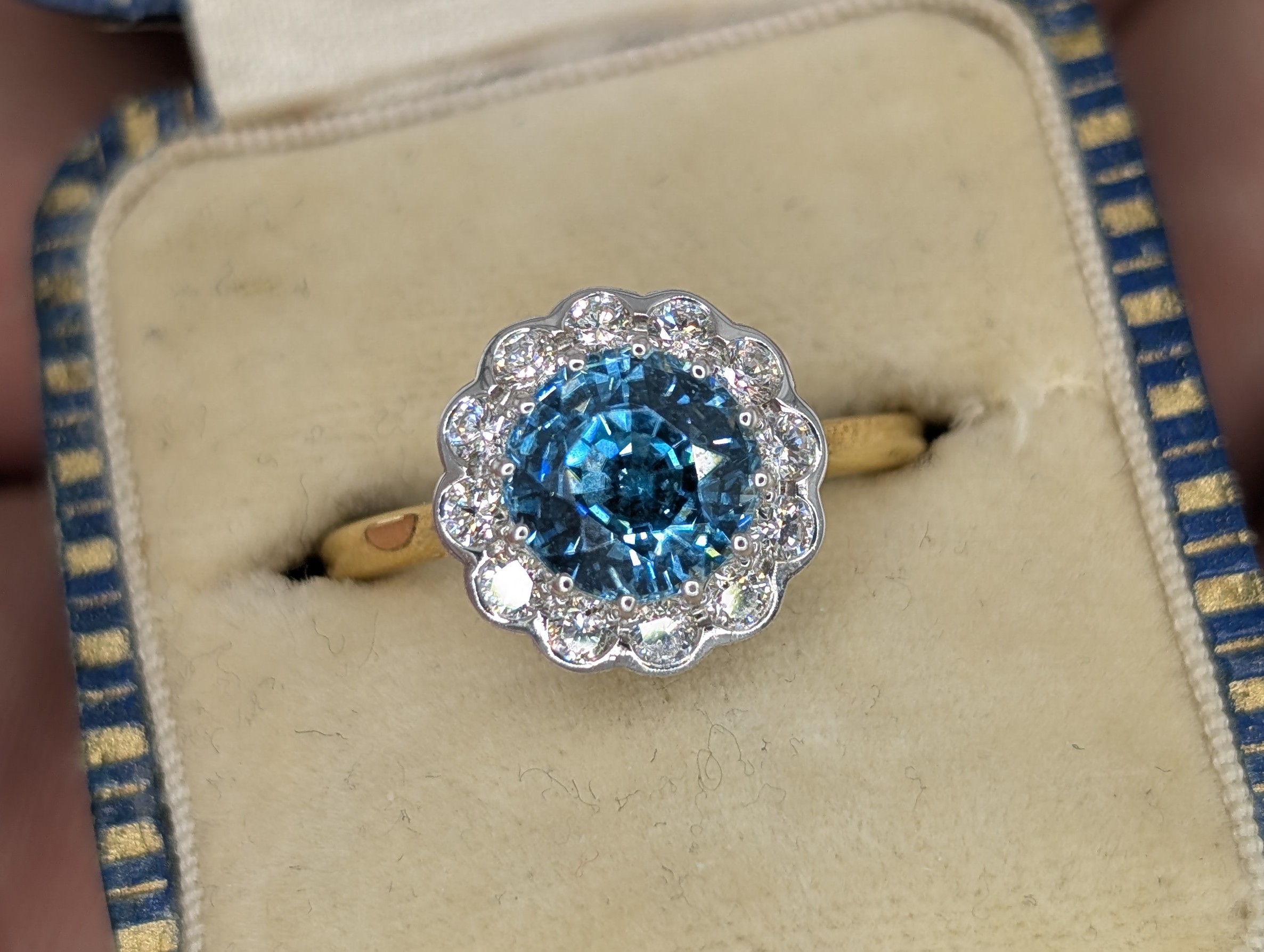 Finished Piece
 Blue Zircon & Diamond Ring
Tell Us About Your Custom Piece
Share your idea below and upload any useful inspiration. We will review your enquiry and contact you to discuss the design, materials, timescale and pricing.
Creating a Custom Diamond Ring
A bespoke diamond ring gives you control over far more than carat weight. The diamond shape, proportions, setting height, precious metal and surrounding stones can all be developed together to create a ring that feels considered from every angle.
Start With the Diamond or Start With the Design?
Either approach can work. Some commissions begin with a particular diamond, perhaps an old cut, an unusual shape or a stone already owned by the customer. Others begin with an image or style of ring and the centre diamond is chosen to suit it.
What matters is bringing the two together before the proportions are finalised. A long oval diamond needs a different setting from a broad cushion, and a deep old mine cut may require different construction from a modern stone of similar carat weight.
This is where bespoke design becomes useful. The ring is built around the actual stone rather than around a generic centre size.
A custom diamond ring should be designed around how the diamond actually looks on the hand — not simply around the carat number written on a grading report.
Understanding the 4Cs
Carat, colour, clarity and cut provide a useful framework when comparing diamonds, but no single grade tells the complete story.
Carat measures weight rather than visible diameter. Colour describes the degree of colour observed under controlled grading conditions. Clarity relates to internal and external features, while cut quality can have a major influence on how effectively a faceted diamond handles light.
The most sensible balance depends on the individual ring. A customer may prefer to place more of the budget into size, while another may prioritise a particular cut, colour range or antique character.
Carat Weight vs Visible Size
Two diamonds of identical carat weight can look different in size. Carat is a measurement of mass, so the distribution of that weight through the stone affects its face-up dimensions.
A deeper diamond may carry more weight below the girdle, while another diamond may spread more broadly when viewed from above.
This becomes especially important with fancy shapes such as oval, cushion, pear and emerald cuts, where length-to-width ratio can also change the visual impression significantly.
Choosing the Shape of Your Diamond
Round Diamond
Extremely versatile for solitaires, clusters, halos, trilogy rings and designs ranging from traditional to modern.
Oval Diamond
An elongated outline can give strong finger coverage while working beautifully in solitaire, halo and three-stone settings.
Emerald Cut
Long step facets and crisp geometry make emerald-cut diamonds particularly suitable for elegant trilogies and Art Deco inspired rings.
Cushion & Antique Cuts
Softer outlines and older cutting styles can give a bespoke ring a very different character from a conventional modern brilliant-cut design.
Custom Diamond Solitaire Rings
A solitaire looks simple because there is nowhere for poor proportions to hide. The centre diamond, claws, basket, shoulders and shank need to work together.
Claw shape can change the appearance of the diamond itself. Fine claws may leave more of the stone visually exposed, while a more substantial setting can create a stronger presence and provide greater protection where appropriate.
The height of the head also matters. A raised solitaire can allow a wedding band to sit underneath more easily, whereas a lower setting may feel more compact on the hand.
Custom Diamond Trilogy Rings
Three-stone rings offer much more flexibility than simply placing three matching round diamonds in a row.
An emerald-cut centre can be flanked by tapered baguettes. A cushion diamond can sit between two smaller rounds. Pear-shaped side stones can produce a graceful taper away from the centre, while three antique-cut diamonds can create a distinctly period-inspired appearance.
The relationship between the stones is more important than total carat weight alone. Side stones that are slightly too large can make the centre feel less important, while stones that are too small can look disconnected.
Custom Diamond Cluster Rings
Cluster rings allow multiple diamonds to form the overall shape of the jewellery rather than acting merely as accents.
A larger centre can be surrounded by a border of smaller diamonds, or several similarly sized stones can be arranged into a flower, oval, geometric panel or more unusual composition.
Cluster designs are particularly useful when creating antique-inspired diamond rings because the surrounding stones can contribute as much to the character of the piece as the centre diamond.
Halo Diamond Rings
A halo places a relatively continuous border of smaller diamonds around the centre stone. Done carefully, it can emphasise the shape of the centre without making the setting unnecessarily heavy.
The width of the halo, size of the diamonds and distance between centre and surround all affect the result. A very fine halo may almost read as a bright outline, whereas larger surrounding stones create a more obvious cluster effect.
Old Cut Diamond Rings
Antique diamond cuts can produce a noticeably different appearance from modern brilliant cuts. Old mine cuts, old European cuts and other historic cutting styles may show broader facets, different proportions and a less uniform outline.
Those characteristics are often exactly what makes an old-cut diamond appealing. A bespoke ring can therefore be designed around the quirks of the stone rather than trying to make it appear like a modern calibrated diamond.
An older diamond can work particularly well in Georgian, Victorian, Edwardian and Art Deco inspired settings depending on its shape and the overall direction of the ring.
Art Deco Diamond Rings
Diamond is central to many Art Deco inspired designs because geometric cutting styles and pale metal can be combined without introducing competing colour.
Emerald cuts, baguettes and other straight-sided stones work naturally with stepped shoulders, geometric borders and strong symmetry. Round diamonds can also be arranged into target-style or panel settings.
For commissions where period geometry is the main focus, see our custom Art Deco style rings page.
Victorian and Edwardian Inspired Diamond Rings
Victorian inspired diamond rings can take a richer, more substantial approach using yellow gold, clusters and old-cut style stones.
Edwardian influence often moves in the opposite direction, with finer diamond work, lighter proportions and pale metal around the stones.
These references can be adapted rather than reproduced literally. A new bespoke ring can use an antique diamond or simply borrow the proportions and detailing of the period.
Platinum, White Gold or Yellow Gold?
Platinum and white gold create a pale frame around a diamond and are especially effective where the intention is for the metal to visually recede around the stones.
Yellow gold creates greater contrast and can give even a relatively simple solitaire a warmer, more traditional appearance.
Two-tone construction is also possible. A yellow gold shank can be paired with a white setting around the diamond where this suits the design and construction.
Diamond Engagement Rings
A large proportion of bespoke diamond rings are created as engagement rings, but designing for everyday wear introduces additional practical considerations.
Setting height, exposed corners, claw position, band thickness and how a future wedding band will sit alongside the ring can all be considered before the design is finalised.
Our bespoke engagement rings page goes deeper into the full engagement-ring design process.
Designing Around a Wedding Band
It is worth deciding early whether a straight wedding band needs to sit flush beside the engagement ring.
Some settings naturally allow another ring to pass underneath the centre. Lower baskets or wider clusters may create a gap and could require a shaped wedding band instead.
Neither approach is wrong, but it is much easier to plan during the bespoke design process than after the ring has been made.
Natural and Laboratory-Grown Diamonds
Natural and laboratory-grown diamonds are both diamond material, but they have very different origins and markets. They should therefore be described clearly rather than treated as interchangeable products from a commercial perspective.
If origin type is important to your commission, make that clear during the enquiry stage so the design and quotation can be based on the appropriate stone.
Diamond Grading Reports
For significant modern diamonds, an independent grading report can provide useful information about characteristics such as carat weight, colour, clarity and measurements.
A report should not be confused with the diamond itself. Two stones with apparently similar grades can still look different because of proportions, inclusion placement, facet pattern and the way each stone presents visually.
For antique diamonds, the assessment may also require more context because older cutting styles were not designed around the proportions expected from modern brilliant cuts.
Choosing Diamond Clarity
The highest clarity grade is not automatically necessary for a beautiful ring. Many clarity characteristics are difficult or impossible to see without magnification depending on their type, size and position.
The sensible choice depends on the diamond itself and how the available budget is being allocated. Paying for a very high clarity grade may be less important to one customer than achieving the preferred size, cut or colour.
Choosing Diamond Colour
Diamond colour grades are assessed under controlled conditions, but the appearance of a mounted stone is also affected by its shape, size and surrounding metal.
A diamond that looks appropriate in yellow gold does not necessarily need the same colour grade as a stone intended for a very white platinum setting.
The objective is to choose a stone that looks right within the actual ring rather than automatically chasing the highest grade in every category.
Can You Design Around a Diamond I Already Own?
Potentially, yes. A loose diamond, inherited stone or diamond removed from an existing piece can form the basis of a new custom ring.
Its exact measurements matter because carat weight alone is not enough to design a setting. The condition of an older stone should also be considered before resetting.
This approach can be particularly attractive where the diamond has sentimental importance but the original ring no longer suits the wearer.
Resetting an Heirloom Diamond
An inherited diamond does not have to remain in a dated or damaged setting simply to preserve its history.
The centre stone can be retained while the surrounding ring is completely reworked. An old solitaire could become a trilogy, while a diamond from an inherited cluster might become the centre of a new Art Deco inspired design.
The result can feel personal without attempting to disguise the history of the original stone.
How Much Does a Custom Diamond Ring Cost?
There is no useful fixed price because the centre diamond can represent a large proportion of the overall budget and diamond values vary substantially according to their individual characteristics.
The setting then adds precious metal, additional diamonds, total weight, complexity, setting work and craftsmanship.
A simple 18ct gold solitaire therefore has very different cost considerations from a platinum geometric ring containing a centre diamond, baguettes and numerous smaller accent stones.
If you have a target budget, include it with your enquiry. The centre stone and setting can then be balanced together rather than developing a ring that later needs major changes.
Why CAD Matters for a Diamond Ring
Even apparently simple diamond rings rely heavily on proportions. Small differences in claw position, shoulder width, setting height or the scale of side stones can noticeably change the finished piece.
CAD allows the proposed construction to be reviewed from different angles before production begins.
The detailed 3D CAD carries a $25 non-refundable design fee. If the commission proceeds, that $25 is deducted from the final bill.
Approval and Production
You review the final CAD before the ring enters production. Once the design is approved, a 40% deposit of the quoted price confirms the commission.
The ring is then made by our workshop. When complete, we show you the finished jewellery before the remaining 60% is paid and the ring is securely dispatched.
Can you design a diamond ring from an inspiration photo?
Yes. Photographs are useful for showing the proportions, stone shapes and details you like, and these can be used as the starting point for your bespoke design.
Can I use a diamond I already own?
Potentially, yes. Its exact dimensions and condition need to be considered so the new setting can be designed around the actual stone.
Can you create a custom diamond engagement ring?
Yes. Solitaire, trilogy, halo, cluster, antique-inspired and Art Deco engagement ring designs can all be developed through the bespoke process.
Do I need the highest diamond clarity grade?
Not necessarily. The best balance depends on the individual diamond, your priorities and budget. Size, cut, colour and visible appearance should all be considered together.
Can you make a ring with an old cut diamond?
Yes. Antique-cut diamonds can be incorporated into new rings, with the setting designed around their individual shape, depth and proportions.
Can you make an Art Deco diamond ring?
Yes. Emerald cuts, baguettes, geometric diamond arrangements, stepped shoulders and milgrain can all be incorporated into an Art Deco inspired design.
How much is the CAD design?
The detailed 3D CAD costs $25. The fee is non-refundable, but it is deducted from the final bill if the ring proceeds to production.
When do I pay for my custom diamond ring?
A 40% deposit is required after you approve the final CAD. The remaining 60% is paid after you have seen the finished jewellery and before dispatch.
Have a Diamond Ring in Mind?
Tell us the diamond shape, setting style, precious metal and overall look you prefer, or send inspiration images and we can begin developing your bespoke design.
Start Your Enquiry