
Custom Gemstone Rings
Create a ring around the gemstone, colour and style you actually want, from sapphire and emerald to opal, aquamarine, ruby and less conventional coloured stones.
How It Works
From choosing your gemstone to approving the final design, we keep the bespoke process clear and simple.
Tell Us Your Idea
Share your preferred gemstone, ring style, precious metal, budget and inspiration images.
Choose & Refine
We develop the design around your gemstone, refining the setting, proportions and surrounding stones.
Receive Your Quote
Once the concept is agreed, we provide a clear quote based on the stones, metal and design.
3D CAD Design
Proceed with a detailed CAD for a $25 non-refundable design fee, deducted from the final bill if the piece goes ahead.
Approve Your Ring
Review the final CAD before production. Once approved, a 40% deposit confirms your order.
Made & Delivered
We show you the finished ring before the remaining 60% is paid and your jewellery is dispatched.
Some of Our Bespoke Creations
Explore a selection of pieces created by us, from the production-ready CAD design through to the finished jewellery.
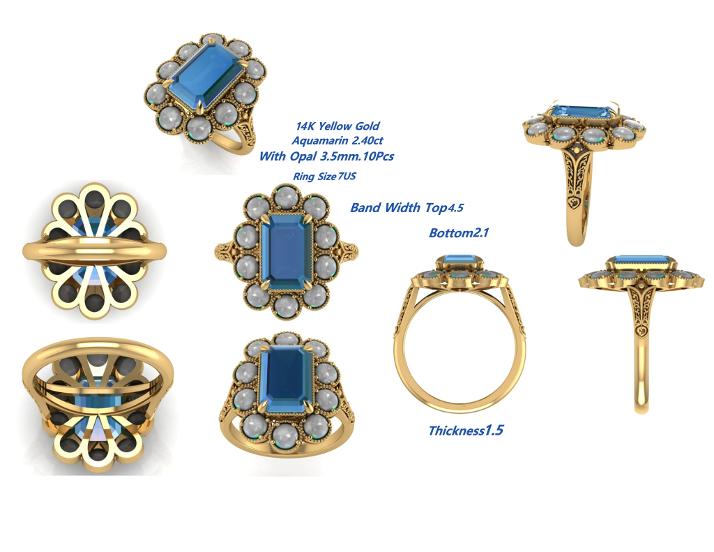 CAD Design
 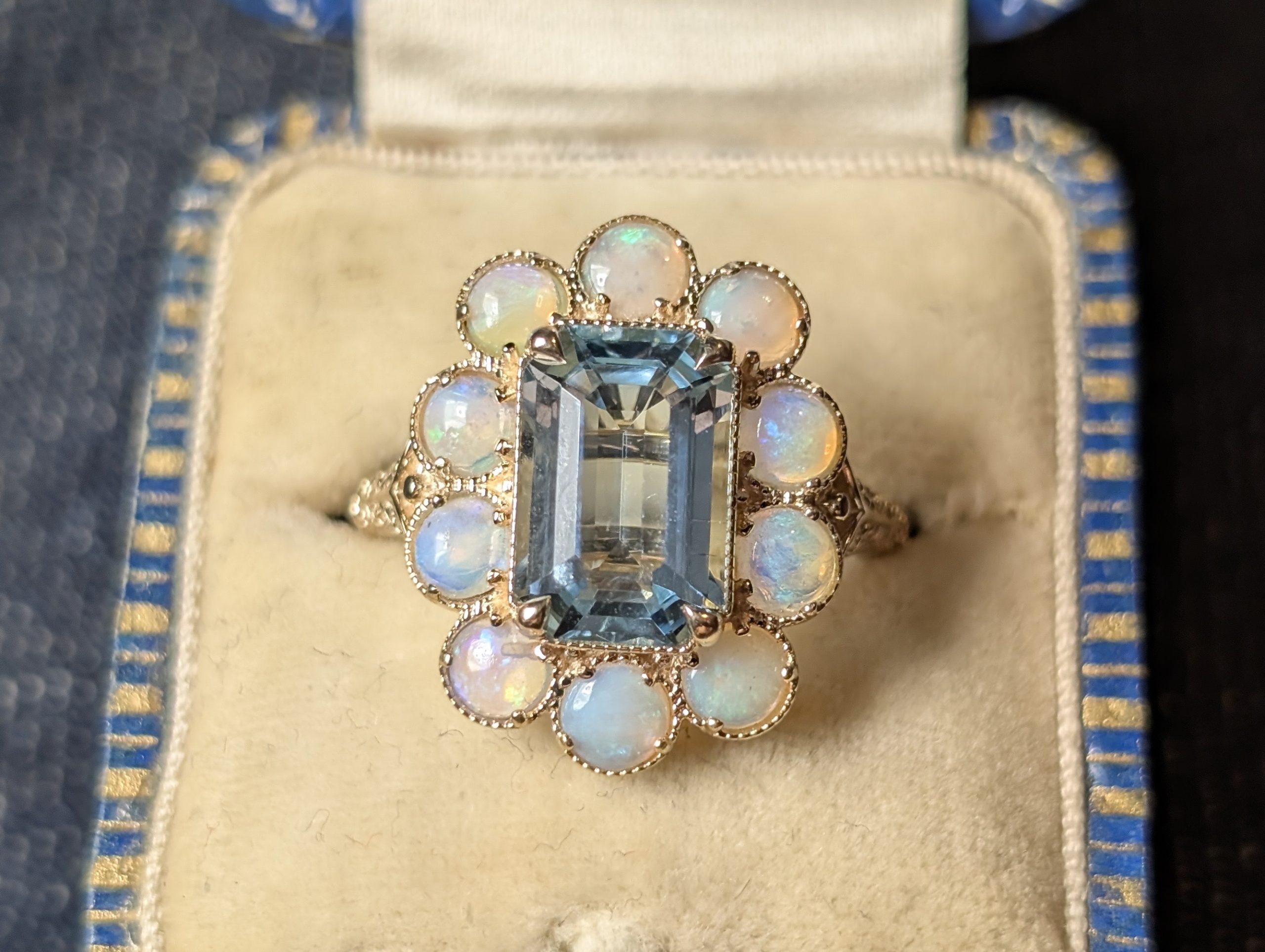 Finished Piece
 Aquamarine & Opal Ring
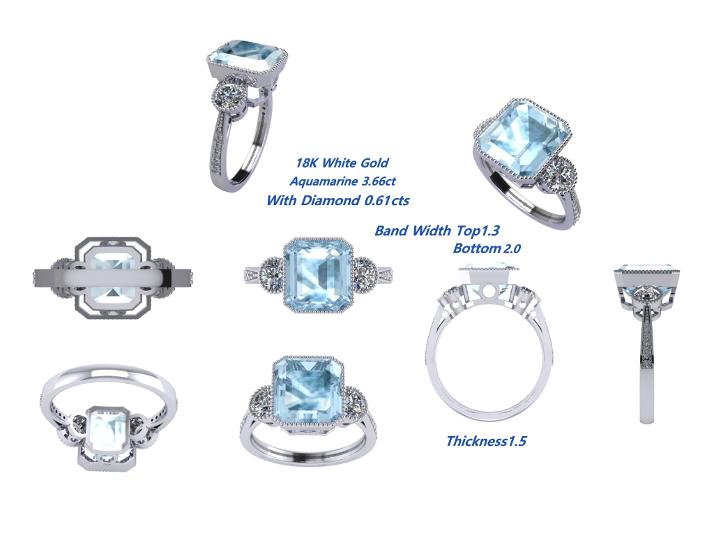 CAD Design
 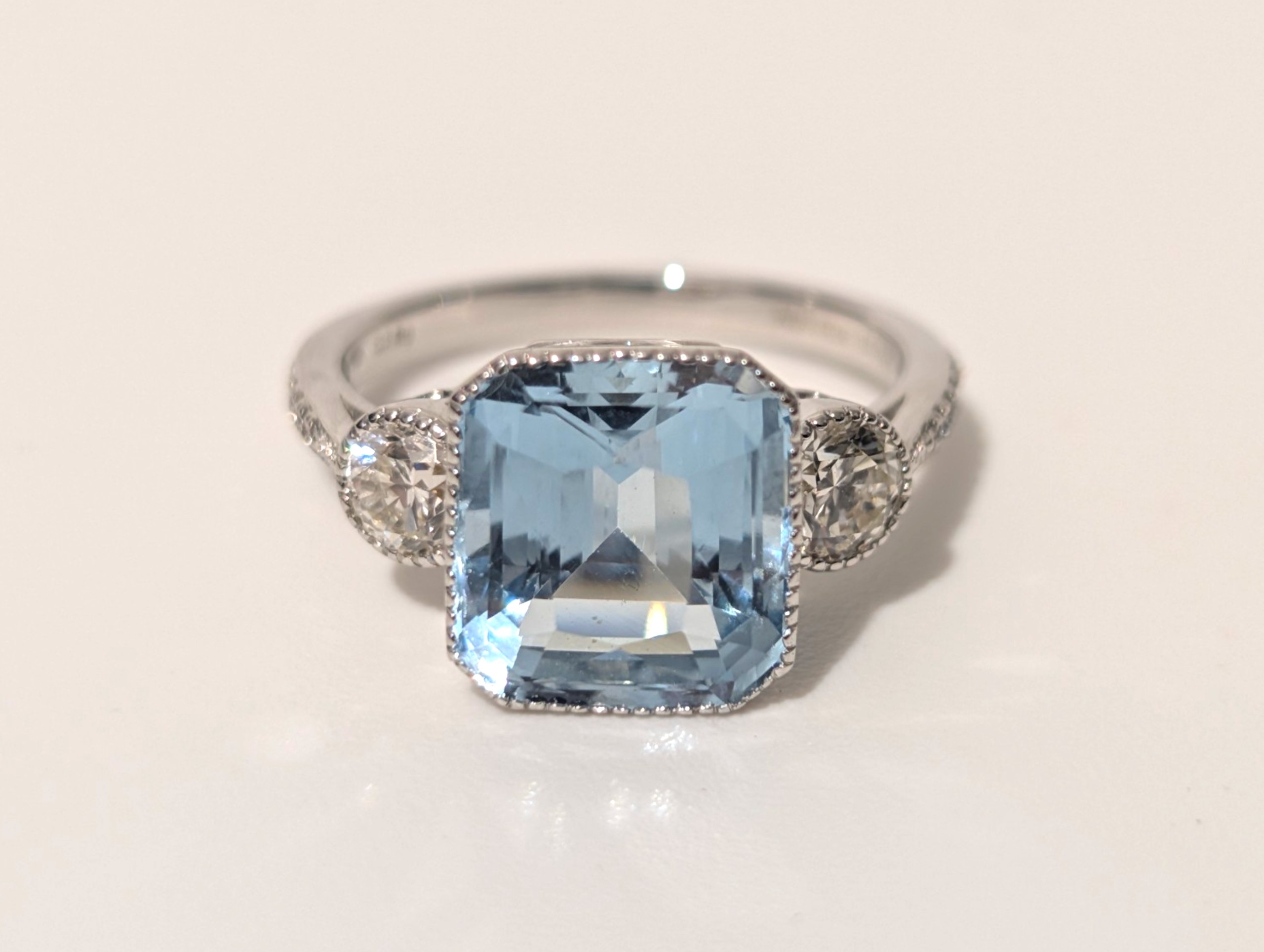 Finished Piece
 Aquamarine & Diamond Ring
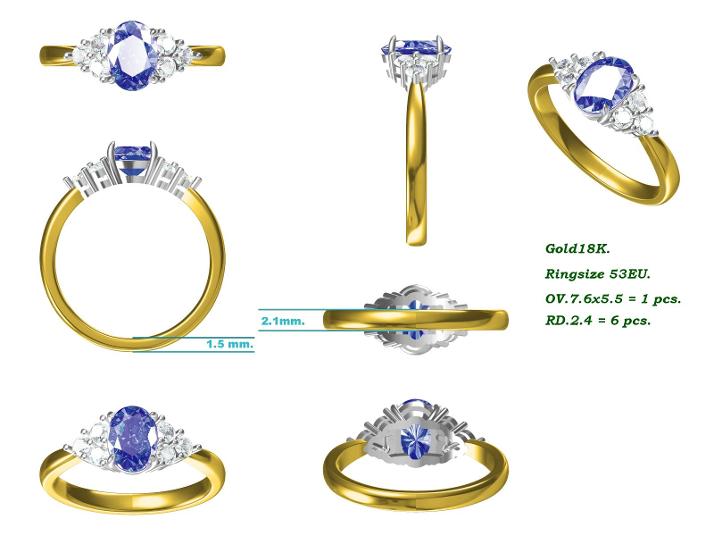 CAD Design
 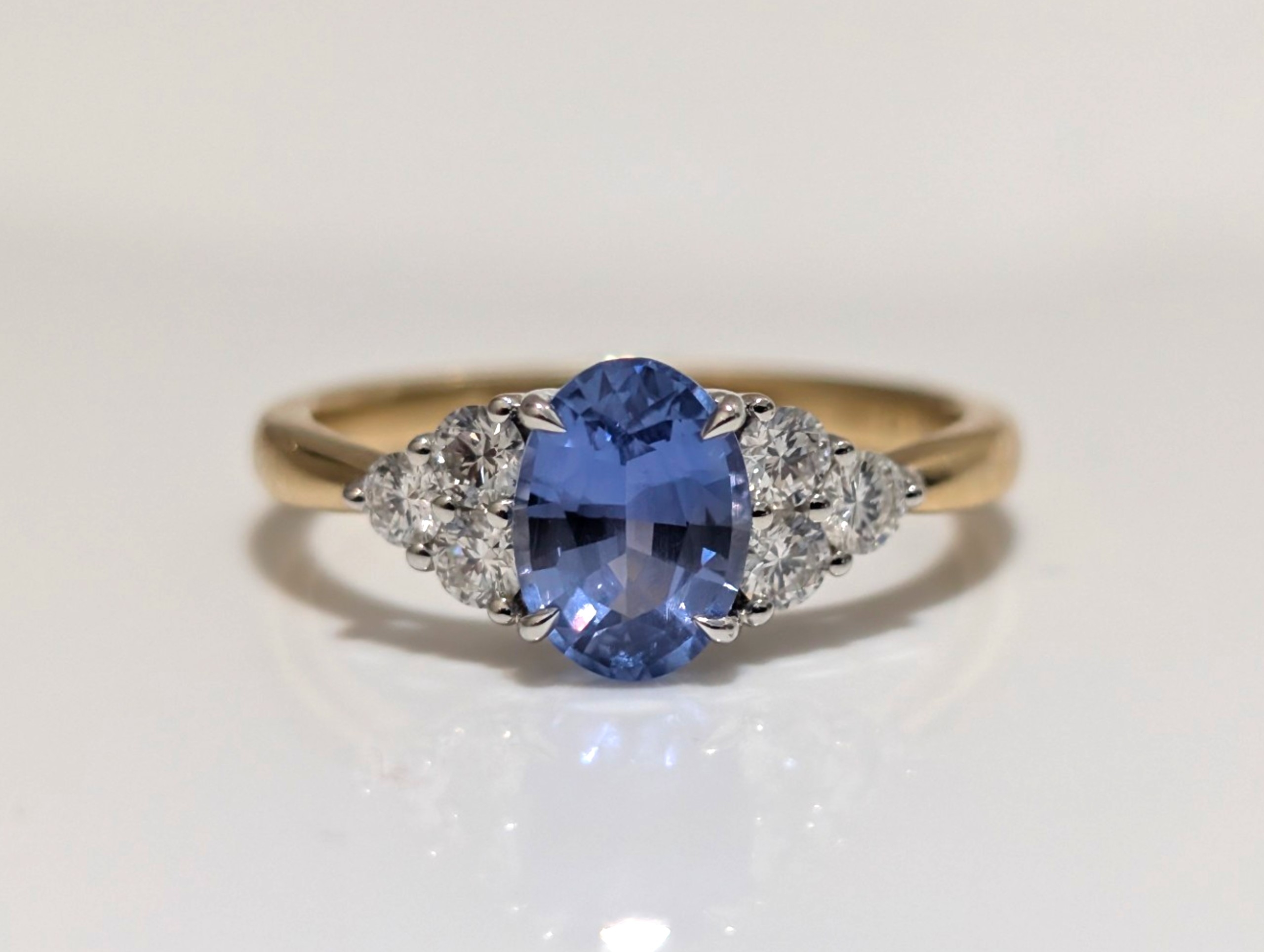 Finished Piece
 Sapphire & Diamond Ring
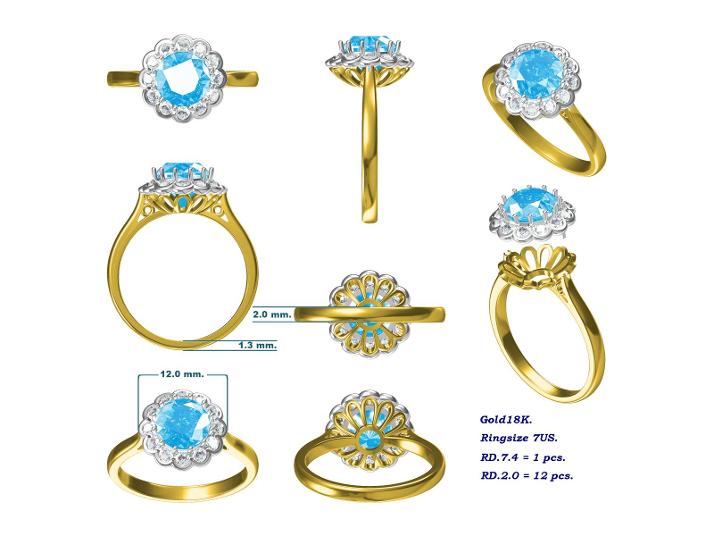 CAD Design
 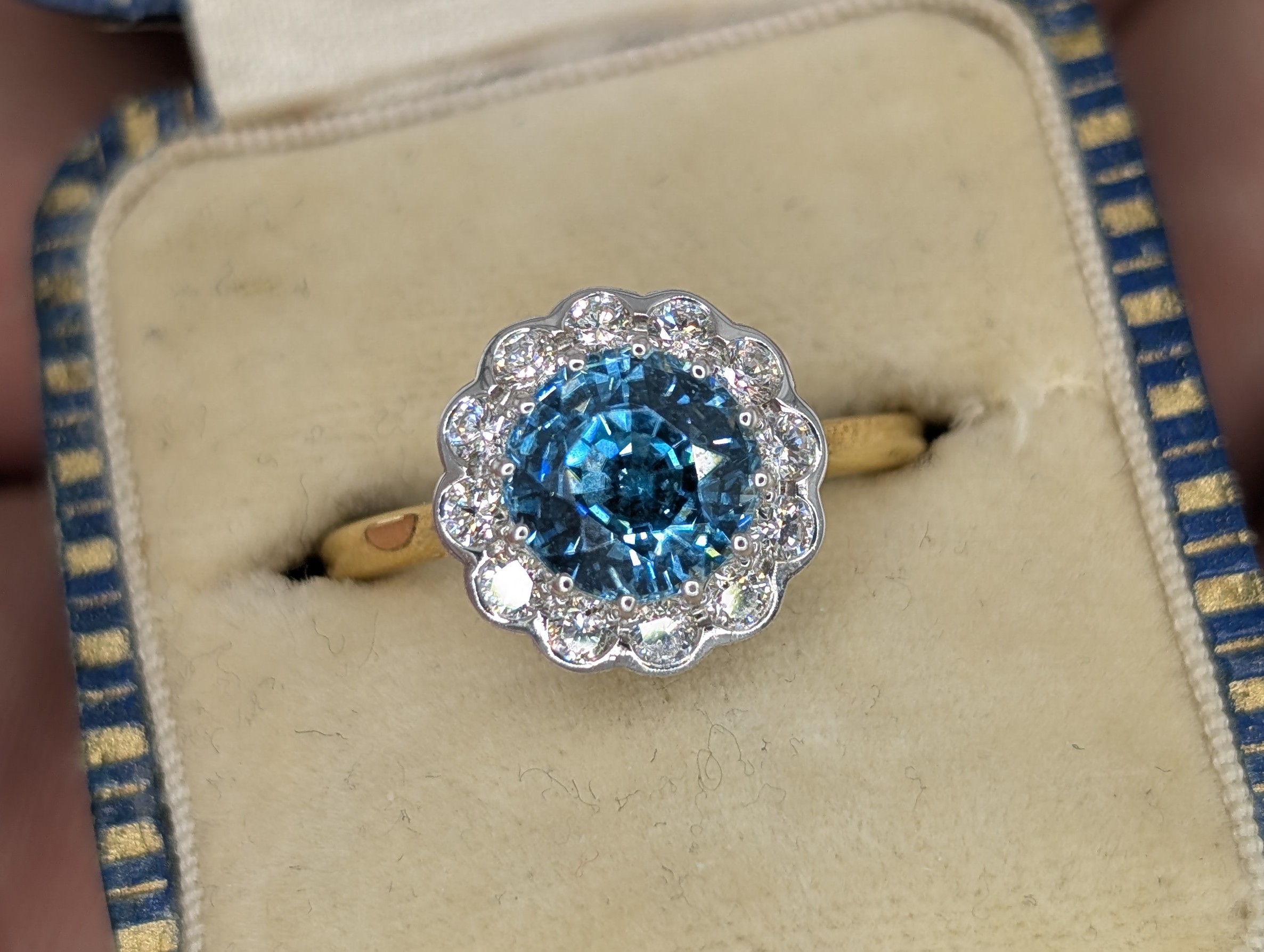 Finished Piece
 Blue Zircon & Diamond Ring
Tell Us About Your Custom Piece
Share your idea below and upload any useful inspiration. We will review your enquiry and contact you to discuss the design, materials, timescale and pricing.
Creating a Custom Gemstone Ring
A coloured gemstone changes the starting point of a bespoke ring. Rather than designing around one standard look, the colour, shape, transparency and character of the actual stone can determine the entire direction of the piece.
Choose the Gemstone Before the Setting
In many custom gemstone rings, the centre stone should be chosen before the final setting is designed. Different gemstones behave differently visually and physically, and their dimensions can vary considerably even when carat weights appear similar.
A long emerald-cut aquamarine may suggest a geometric three-stone ring. A cushion sapphire might suit a diamond cluster. A vivid oval ruby may need little more than two well-proportioned side stones, while a freeform opal may require the setting to follow its individual outline.
Designing in this order allows the jewellery to respond to the stone rather than forcing a distinctive gemstone into a standard mounting.
The most successful custom gemstone rings usually begin with the character of the centre stone, not with a catalogue setting that happened to be available first.
Which Gemstone Should You Choose?
Colour is usually the obvious starting point, but it should not be the only one. Durability, transparency, available shapes, treatment and the way the ring will be worn can all matter.
Sapphire
Available in blue and a range of fancy colours, sapphire is durable and works particularly well in engagement rings, clusters, trilogies and antique-inspired designs.
Ruby
Ruby gives a ring strong colour and contrast, particularly when combined with diamonds and yellow or white precious metal.
Emerald
Emerald offers unmistakable green colour and character, but inclusions and fissures mean thoughtful setting design and appropriate care are especially important.
Aquamarine
Pale to stronger blue aquamarine is particularly effective where a larger centre stone or crisp geometric cut forms a major part of the design.
Opal
Opal brings play-of-colour rather than a single uniform shade. Each stone can be very individual, making it especially suited to jewellery designed around the actual gem.
Other Gemstones
Spinel, tourmaline, garnet, zircon, tanzanite and other gemstones can all offer distinctive alternatives depending on the design and intended wear.
Custom Sapphire Rings
Sapphire is one of the most versatile choices for bespoke jewellery. Blue remains the traditional colour, but pink, yellow, green and other fancy sapphires allow very different rings to be created using the same mineral family.
Oval, cushion, round and emerald-cut sapphires can all lead to very different designs. Treatment status and geographic origin should also be described accurately where those factors are important.
For a dedicated guide, see our custom sapphire rings page.
Custom Emerald Rings
Emerald requires a more individual approach because natural stones frequently contain visible inclusions and fissures. Those features are part of the nature of emerald, but they can influence the most appropriate setting.
Emerald-cut, oval and cushion stones can all work beautifully with diamonds, particularly in trilogy, cluster and Art Deco inspired rings.
Explore the subject in more detail on our custom emerald rings page.
Custom Ruby Rings
Ruby brings a stronger colour contrast than many gemstones and can produce both classical and highly geometric designs.
The treatment of ruby can vary, so heated, unheated and more heavily treated material should not be treated as equivalent. Important claims about treatment or origin should be supported appropriately.
See our custom ruby rings page for a fuller look at bespoke ruby design.
Custom Aquamarine Rings
Aquamarine offers a different design opportunity because attractive stones can often be found in generous dimensions. This makes it particularly useful for rings where the scale and geometry of the centre stone are important.
Emerald and rectangular cuts work naturally with Art Deco influences, while oval and cushion stones can produce softer cluster and trilogy designs.
Our custom aquamarine rings page covers this gemstone in greater detail.
Custom Opal Rings
Opal differs from most faceted coloured gemstones because its appeal often comes from play-of-colour and movement rather than one consistent body colour.
Solid opal, doublets and triplets also need to be distinguished, and some varieties require more careful wear and cleaning than harder traditional ring stones.
See our custom opal rings page for more detailed guidance.
Other Gemstones for Bespoke Rings
Sapphire, ruby and emerald may be the best-known coloured ring stones, but custom jewellery gives much more room to work beyond the obvious choices.
Spinel can occur in vivid reds, pinks, blues and other colours. Tourmaline offers an enormous range of shades. Garnets extend far beyond familiar dark red material and can include bright green tsavorite, orange spessartine and other varieties.
Blue zircon can produce exceptional brilliance and strong colour. Tanzanite offers distinctive violet-blue hues, while moonstone and other cabochon gems lend themselves to softer antique or Art Nouveau inspired designs.
Not every gemstone is equally suited to every type of ring, however. Durability and the intended frequency of wear should form part of the decision.
Gemstone Hardness Is Only Part of Durability
The Mohs scale is useful for understanding resistance to scratching, but hardness should not be confused with complete durability.
A gemstone can be relatively hard yet still contain cleavage, fractures or vulnerable areas that make hard impacts a concern. Conversely, a softer stone may perform adequately in jewellery when worn carefully and protected by a suitable setting.
The individual gemstone, setting and wearer's lifestyle should therefore be considered together rather than selecting a stone by a hardness number alone.
Custom Gemstone Engagement Rings
Coloured gemstones can make excellent engagement rings, but a ring intended for daily wear deserves more practical thought than an occasional statement piece.
Sapphire and ruby are particularly well established for frequent wear. Other gemstones can also be considered, but setting style and care requirements may become increasingly important.
Setting height, exposed edges, ring width and wedding-band fit can all be addressed during the bespoke design process.
Our bespoke engagement rings page explains the wider process in more detail.
Gemstone and Diamond Rings
Diamonds are often used alongside coloured gemstones because they provide brightness without introducing a competing colour.
A gemstone can be flanked by two substantial diamonds, surrounded by a fine halo or incorporated into a larger cluster. Smaller diamonds can also be used in shoulders, geometric borders and milgrain-set details.
The best layout depends on the centre gemstone. A vivid ruby may require much less surrounding detail than a pale aquamarine, while a black opal can be striking with only a restrained diamond frame.
Custom Gemstone Trilogy Rings
Trilogy rings are particularly useful for bespoke coloured-stone designs because the centre gemstone remains dominant while the side stones help balance the ring across the finger.
Round or pear-shaped diamonds are common choices, but baguettes, tapered stones and coloured gemstone combinations can also be used.
Side-stone proportions matter. They should support the centre rather than making the ring look like three unrelated stones placed together.
Custom Gemstone Cluster Rings
A cluster can transform the visible outline of a coloured gemstone. Round diamonds may create a traditional antique-inspired surround, while different shapes can be used to build something more geometric.
Cluster designs also provide an opportunity to combine colours, although this needs restraint. The finished ring should still have a clear focal point.
Art Deco Gemstone Rings
Coloured gemstones are particularly effective in Art Deco inspired jewellery because strong colour can be placed against crisp white diamonds and pale metal.
Sapphire, emerald, ruby and aquamarine can all work beautifully with baguettes, stepped shoulders, target-style borders and geometric diamond arrangements.
For a style-specific guide, see our custom Art Deco style rings page.
Victorian and Edwardian Inspired Gemstone Rings
Coloured stones also lend themselves naturally to earlier antique influences.
Victorian-inspired rings can use richer yellow gold, substantial clusters and stronger colour combinations. Edwardian influence can introduce lighter diamond work, pale metal and more delicate proportions.
These details can be adapted rather than copied, allowing a new ring to reference antique jewellery without pretending to be an antique.
Choosing the Precious Metal
Precious metal changes how the gemstone is perceived. Yellow gold can warm blue, green and red stones and is especially effective for antique-inspired jewellery.
White gold and platinum give the overall ring a cooler appearance and work naturally with diamond-heavy settings.
Two-tone construction can also be useful. A yellow gold shank with a white setting around diamonds can create contrast without forcing the entire ring into one metal colour.
Choosing the Gemstone Shape
Shape affects far more than appearance. It influences the width of the ring, setting construction, placement of side stones and even how the ring visually elongates or broadens the finger.
Oval and cushion shapes work well across many antique-inspired designs. Emerald and rectangular cuts suit cleaner geometric settings. Round stones offer enormous flexibility, while pear, marquise and freeform shapes can create more individual designs.
The best shape is therefore not simply the one currently fashionable. It should suit both the stone and the intended ring.
Carat Weight vs Gemstone Dimensions
Carat measures weight, not visible size. Different gemstones also have different densities, meaning equal carat weights do not necessarily produce similar dimensions across different gem species.
Even within one gemstone type, two stones of the same weight may have very different depth and face-up spread.
Length, width and depth are therefore crucial when developing a custom setting.
Gemstone Treatments
Treatment is common across the gemstone market, but the type and significance of treatment varies from one gem to another.
Sapphire and ruby may be heated. Emerald may contain clarity-enhancing fissure fillers. Aquamarine is frequently heated to modify colour. Some gems may undergo other forms of enhancement.
Treatment should not be guessed from photographs or appearance. Where treatment status materially affects the purchase, appropriate gemmological information should support the description.
Gemstone Origin
Geographic origin can influence how certain high-value gemstones are described and priced, but appearance alone is not enough to establish where a stone came from.
Terms such as Ceylon sapphire, Colombian emerald and Burmese ruby should therefore not be applied solely because a gemstone resembles material associated with those locations.
Where origin is important and materially affects value, suitable laboratory evidence may be appropriate.
Laboratory Reports
A gemmological laboratory report can be useful for more significant stones, particularly where natural origin, treatment status or geographic origin is important to the transaction.
A report does not automatically tell you whether a gemstone is beautiful or whether it suits your ring. Colour, cut, transparency and visual appeal still need to be assessed.
The document and the gemstone should therefore be considered together.
Can You Use a Gemstone I Already Own?
Potentially, yes. A loose gemstone can form the starting point for a completely new bespoke ring.
Exact dimensions and condition need to be considered first. A stone removed from an older piece may have abrasion, chips or vulnerable areas that affect the most suitable setting.
This approach can be particularly useful for inherited jewellery where the gemstone has sentimental value but the original setting no longer suits the wearer.
Resetting Heirloom Gemstones
Resetting does not mean recreating the old ring. A gemstone can be retained while the surrounding jewellery is completely reconsidered.
An inherited sapphire might become a cleaner three-stone ring. An aquamarine from a large cocktail setting could be moved into an Art Deco inspired design. An old opal may become the centre of a more protective bezel setting.
The new ring can therefore preserve the important part of the original jewellery without preserving every detail around it.
Birthstone Rings
A custom gemstone ring can also be created around a birthstone rather than a particular historical style.
This can be kept subtle. A birthstone does not need to become an obvious novelty ring; it can simply provide the colour and centre gemstone for an otherwise refined piece of fine jewellery.
Multiple birthstones can also be considered where the design suits them, although combining colours successfully usually requires careful balance.
How Much Does a Custom Gemstone Ring Cost?
There is no single price because coloured gemstones vary enormously in value. A commercial aquamarine and a fine unheated sapphire of similar dimensions may occupy completely different price ranges.
The setting then adds precious metal, diamonds or other gemstones, overall weight, stone setting and design complexity.
If you have a target budget, include it in the enquiry. This allows the centre gemstone and ring design to be balanced from the beginning rather than designing without any reference to cost.
Why We Use CAD
Coloured gemstones are not always calibrated to standard dimensions, particularly when working with antique stones, unusual cuts or freeform material.
CAD allows the ring to be developed around the actual measurements of the centre stone. Setting height, diamond size, shank width and overall proportions can all be reviewed before production begins.
The detailed 3D CAD carries a $25 non-refundable design fee. If the commission proceeds, the $25 is deducted from the final bill.
Approval and Production
You review the final CAD before production begins. Once the design is approved, a 40% deposit of the quoted price confirms the commission.
Your ring is then created by our workshop. Once complete, we show you the finished jewellery before the remaining 60% is paid and the piece is securely dispatched.
Which gemstones can you use in a custom ring?
Designs can be developed around many suitable gemstones, including sapphire, ruby, emerald, aquamarine, opal, spinel, tourmaline, garnet, zircon and others depending on the piece.
Can I choose the exact gemstone?
Yes. The actual centre stone can form the basis of the design, allowing its shape, dimensions and colour to guide the setting.
Can I use a gemstone I already own?
Potentially, yes. Its dimensions, condition and suitability for the proposed setting need to be considered first.
Can you create a gemstone engagement ring?
Yes. Suitable coloured gemstones can be incorporated into bespoke engagement rings, with durability and setting design considered according to the individual stone.
Can you make an antique style gemstone ring?
Yes. Victorian, Edwardian, Art Nouveau, Belle Époque and Art Deco jewellery can all provide inspiration for new bespoke gemstone designs.
Do gemstones need laboratory reports?
Not every gemstone requires one, but laboratory documentation can be particularly useful for significant stones where natural origin, treatment status or geographic origin materially affects the purchase.
How much does the CAD design cost?
The detailed 3D CAD costs $25. The fee is non-refundable, but it is deducted from the final bill if the ring proceeds to production.
When do I pay for my custom gemstone ring?
A 40% deposit is required after you approve the final CAD. The remaining 60% is paid after you have seen the finished jewellery and before dispatch.
Have a Gemstone Ring in Mind?
Tell us the gemstone, colour, shape and style you prefer, or send inspiration images and we can begin developing your bespoke design.
Start Your Enquiry