
Bespoke Emerald and Diamond Rings
Create an emerald and diamond ring with the centre stone, diamond proportions and setting designed together — from elegant three-stone rings to antique clusters and geometric Art Deco settings.
How It Works
We begin with the emerald and develop the diamonds and setting around its actual colour, dimensions and character.
Tell Us Your Idea
Share the emerald style, diamond layout, metal, budget and inspiration images you have in mind.
Choose & Refine
We refine the emerald, diamond shapes, stone sizes and overall proportions until the design feels balanced.
Receive Your Quote
Once the concept is agreed, we provide a clear quote based on the emerald, diamonds, metal and design.
3D CAD Design
Proceed with a detailed CAD for a $25 non-refundable design fee, deducted from the final bill if the piece goes ahead.
Approve Your Ring
Review the final CAD before production. Once approved, a 40% deposit confirms your order.
Made & Delivered
We show you the finished ring before the remaining 60% is paid and your jewellery is dispatched.
Some of Our Bespoke Creations
Explore a selection of pieces created by us, from the production-ready CAD design through to the finished jewellery.
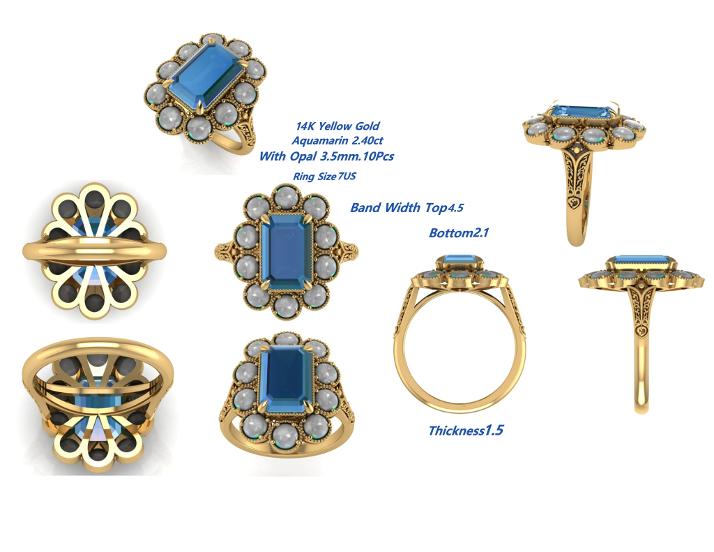 CAD Design
 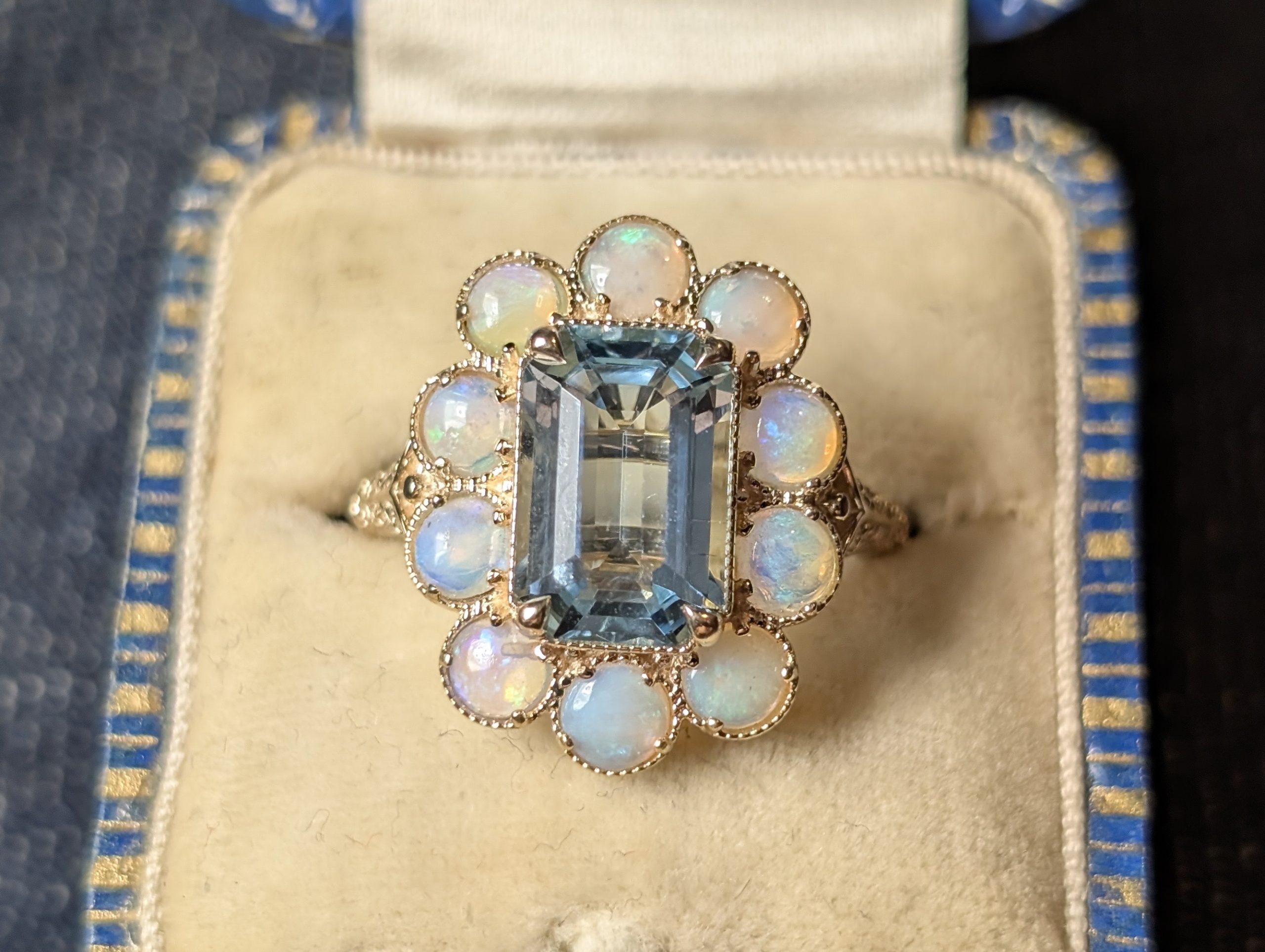 Finished Piece
 Aquamarine & Opal Ring
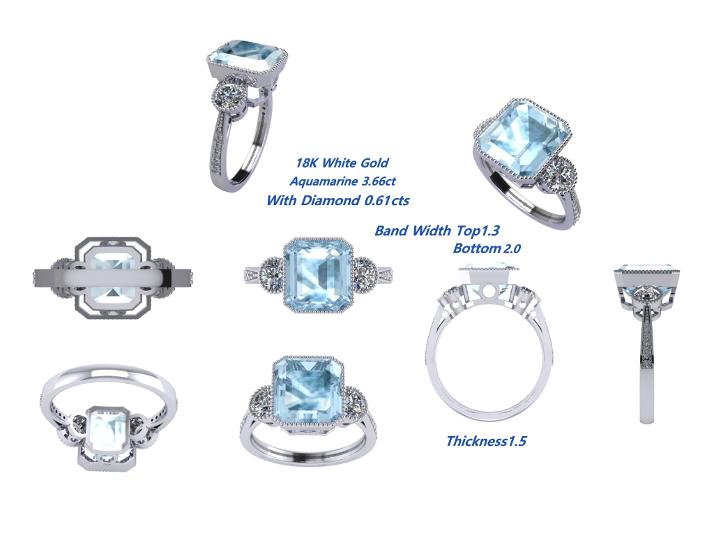 CAD Design
 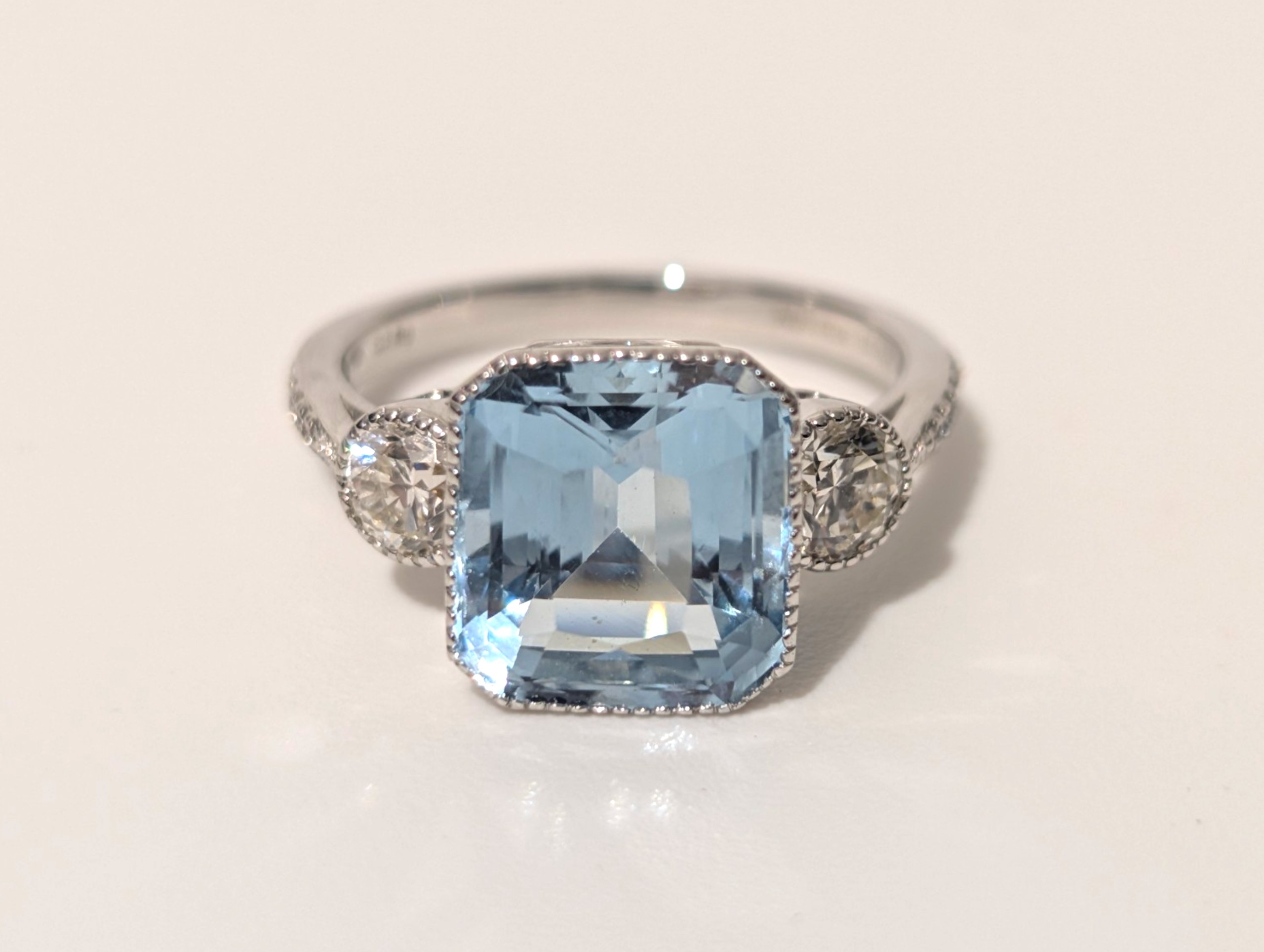 Finished Piece
 Aquamarine & Diamond Ring
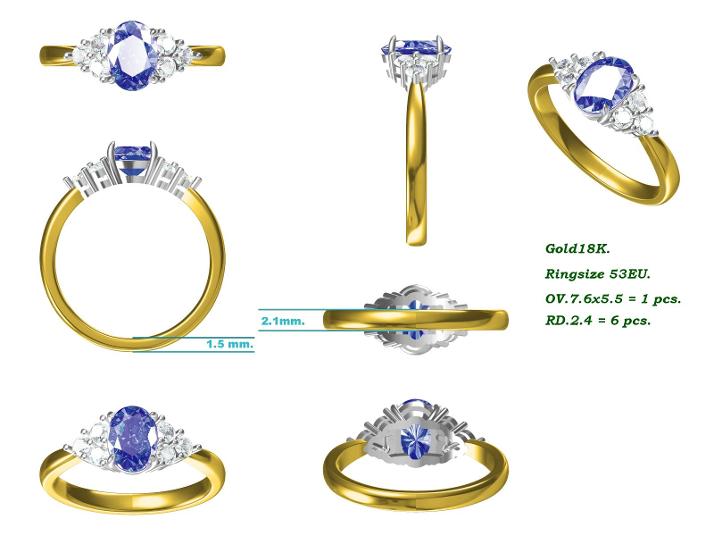 CAD Design
 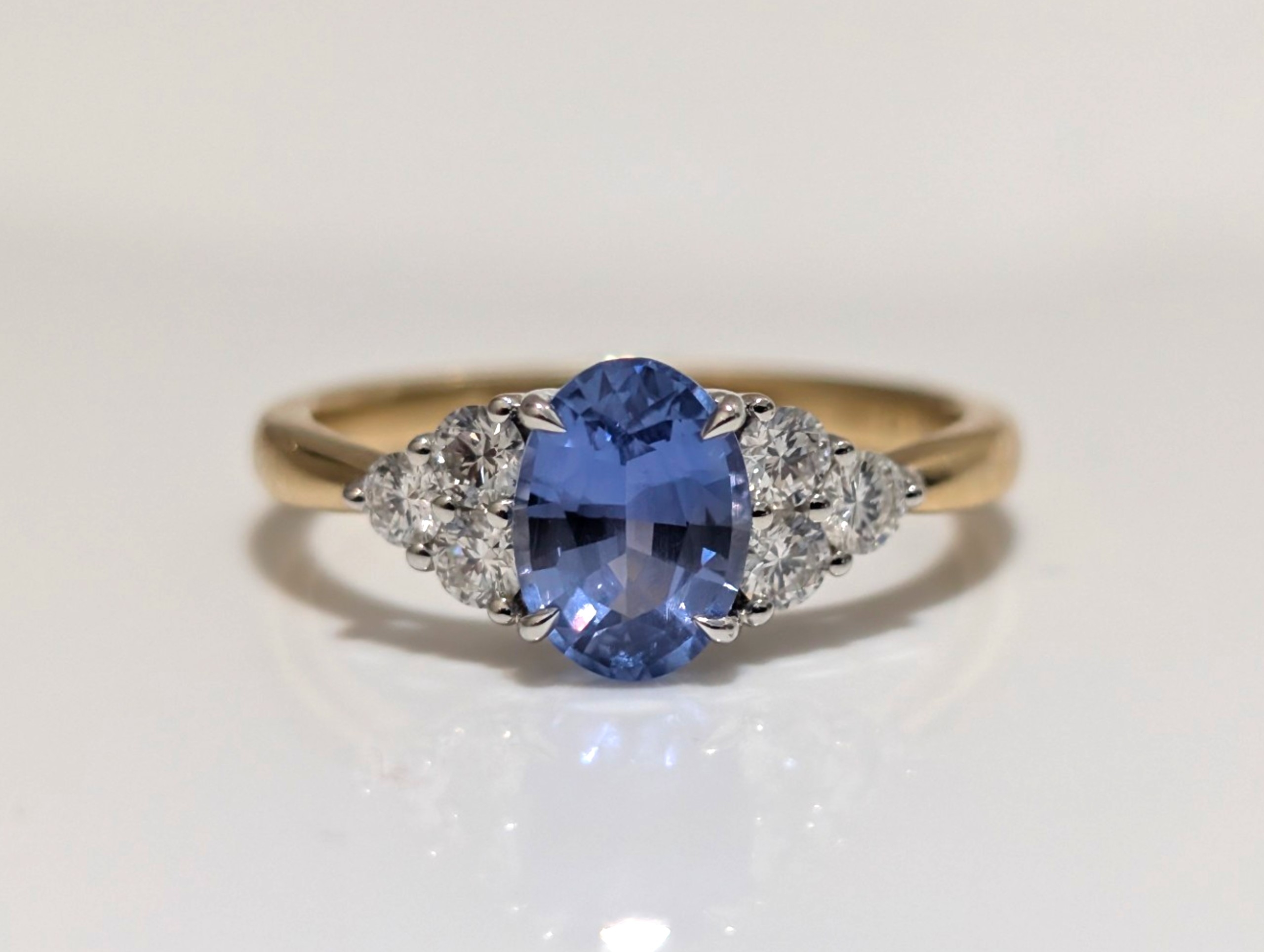 Finished Piece
 Sapphire & Diamond Ring
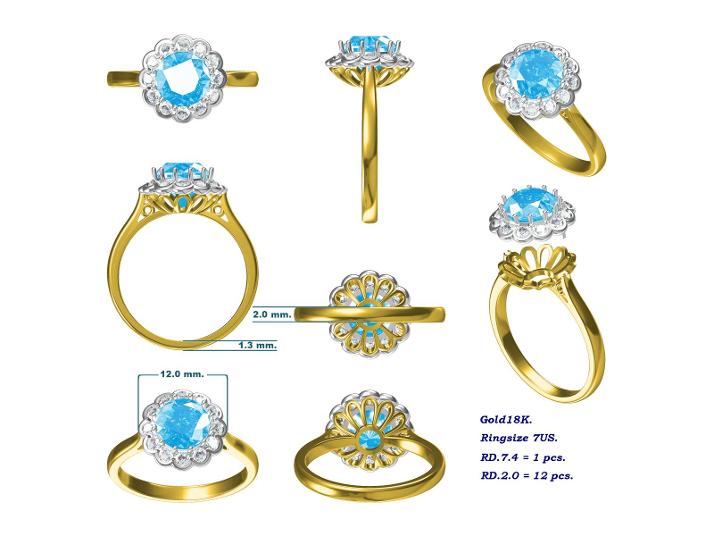 CAD Design
 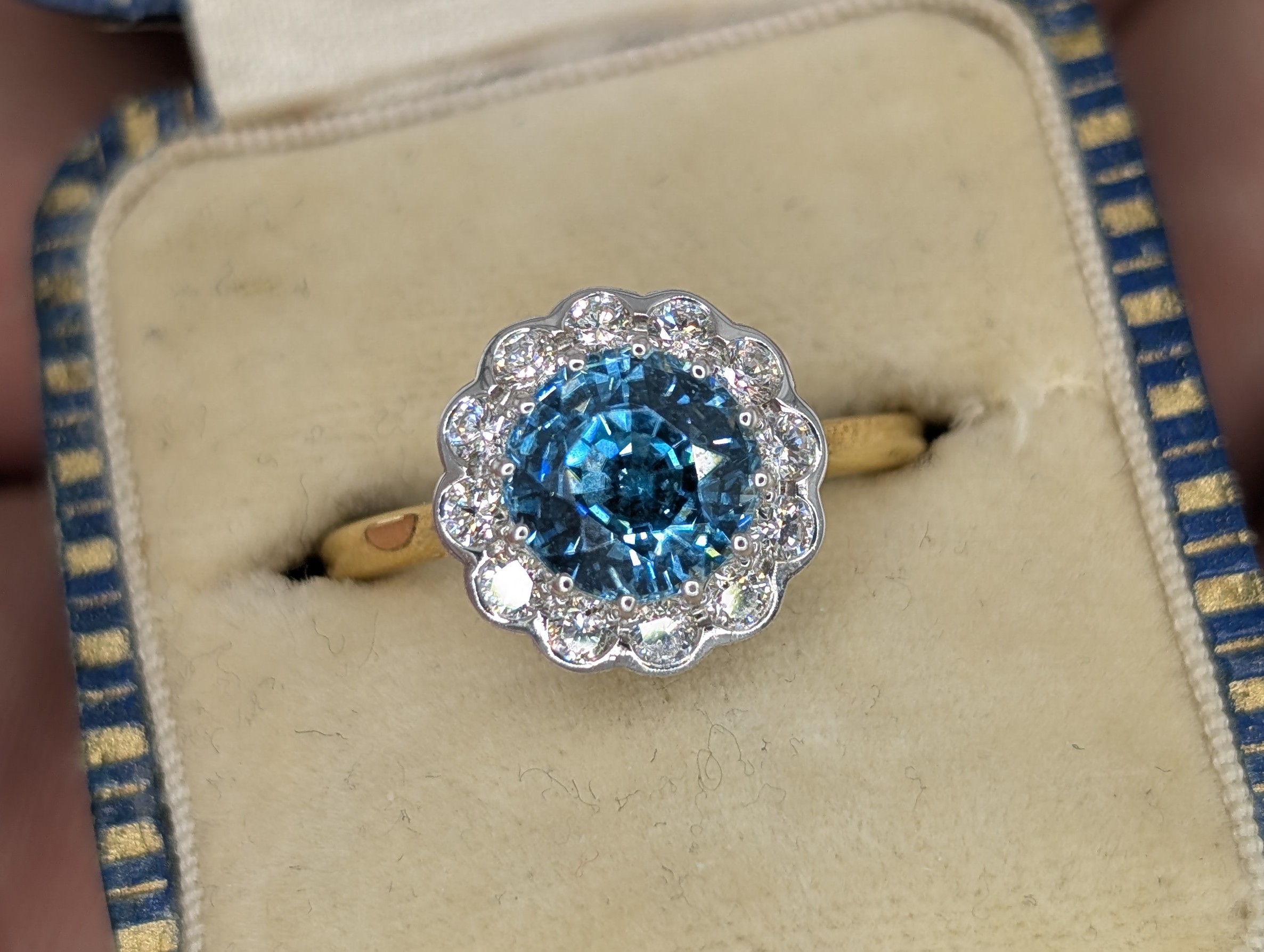 Finished Piece
 Blue Zircon & Diamond Ring
Tell Us About Your Custom Piece
Share your idea below and upload any useful inspiration. We will review your enquiry and contact you to discuss the design, materials, timescale and pricing.
Designing a Bespoke Emerald and Diamond Ring
Emerald and diamond is a classic fine-jewellery combination, but the strongest rings are designed around the individual emerald rather than treating the centre stone as interchangeable. Colour, inclusions, cut and proportions all influence the diamonds and setting that will suit it best.
Why Emerald and Diamond Work So Well Together
Emerald brings intense colour and character, while diamonds add light, contrast and structure around it.
A pair of diamonds can make a green centre feel more prominent without enclosing it. A cluster can dramatically increase the overall presence of the ring, while baguettes can create cleaner architectural lines.
The colour contrast is especially strong in platinum or white gold, while yellow gold produces a warmer and more antique-inspired result.
The emerald should remain the reason the ring exists. Diamonds are most effective when they sharpen its colour and proportions rather than competing to become the main feature.
Choose the Emerald Before Finalising the Diamonds
Emeralds can vary considerably in shape, depth and internal character, even at similar carat weights.
An elongated emerald-cut stone may naturally suit tapered baguettes, while an oval emerald can work beautifully with pear-shaped diamonds or a traditional surrounding cluster.
Choosing the centre first means the diamond proportions can be developed around its actual millimetre dimensions rather than relying on a generic setting.
For a wider guide to emerald selection, see our custom emerald rings page.
Understanding Emerald Colour
Emerald colour can range from lighter green through highly saturated and much deeper tones.
Darker is not automatically better. An emerald should still show attractive green colour rather than becoming overly dark in normal lighting.
Diamonds can make the contrast more apparent, particularly in a trilogy or cluster where bright white stones sit directly beside the emerald.
Emerald Clarity and Natural Inclusions
Natural emeralds commonly contain visible internal features. These are expected to a much greater degree than they would be in many diamonds.
The term “jardin” is often used to describe the garden-like internal appearance of an emerald.
Inclusions themselves do not automatically make an emerald unattractive, but significant fissures and surface-reaching features can influence durability and setting choice.
A bespoke ring gives us the flexibility to design around the actual stone rather than assuming every emerald can be mounted in the same way.
Emerald Treatments and Clarity Enhancement
Many emeralds are treated with oil or other filling substances to improve the appearance of surface-reaching fissures.
The degree and nature of enhancement can be important when comparing more significant stones.
Where treatment information materially affects the purchase, appropriate laboratory documentation is more useful than trying to determine treatment from photographs or colour alone.
Choosing the Shape of the Emerald
Emerald Cut
The classic rectangular outline works naturally with baguette diamonds, trilogies and geometric Art Deco inspired settings.
Oval Emerald
Particularly versatile for diamond clusters, pear-shaped side stones and softer antique-inspired designs.
Cushion Emerald
Softened corners can work beautifully with old-cut diamonds, fuller clusters and antique-style surrounds.
Round & Other Shapes
Round, pear and less conventional stones can create distinctive rings when the diamond layout follows their actual outline.
Emerald-Cut Emerald and Diamond Rings
An emerald-cut centre naturally lends itself to clean lines. The broad step facets make colour and transparency particularly visible, while the rectangular outline provides an obvious starting point for the surrounding design.
Tapered baguettes can create a gradual transition into the shank. Straight baguettes can reinforce a stronger geometric composition, while round diamonds soften the overall effect.
An emerald-cut centre also works particularly well in Art Deco inspired platinum settings.
Emerald and Diamond Trilogy Rings
A trilogy is one of the best ways to keep a significant emerald completely central to the design.
Two diamonds introduce brightness without surrounding the emerald on every side. This allows the green centre to retain a clear outline.
Different side-stone shapes can completely change the character of the ring.
Pear-Shaped Diamond Side Stones
Pear-shaped diamonds work especially well beside oval, cushion and elongated emeralds.
The pointed end can taper toward the shank while the broader end sits nearer the centre, creating a smooth transition across the finger.
Their angle and size should be chosen around the emerald rather than according to a fixed carat ratio.
Baguette Diamond Side Stones
Baguettes produce a much cleaner and more architectural appearance.
They are particularly well matched to rectangular emeralds because their straight facet structure echoes the step cut of the centre stone.
Tapered baguettes can create a graceful transition into the shoulders, while straight baguettes can make the ring feel more strongly geometric.
Round Diamond Side Stones
Round diamonds soften the straight lines of an emerald-cut centre and create a more traditional trilogy.
They can also work beautifully beside oval emeralds where a less formal appearance is desired.
Their brightness gives strong contrast against the deeper green centre.
Emerald and Diamond Cluster Rings
A diamond cluster can dramatically increase the presence of an emerald without requiring the centre stone itself to be exceptionally large.
Oval emeralds surrounded by round diamonds create a classic look, while cushion and rectangular centres allow more individual outlines.
The surrounding diamonds can all be similar in scale or graduated deliberately to create a softer antique-inspired shape.
Diamond Halo vs Traditional Cluster
A fine halo usually follows the emerald closely with smaller diamonds, while a fuller cluster gives the individual surrounding stones more presence.
A halo can work well with a larger emerald where only a bright outline is needed. A traditional cluster may be more suitable when broader finger coverage and stronger vintage character are desired.
Ballerina-Style Emerald Rings
Ballerina settings use tapered or baguette-style diamonds arranged around the centre to create a radiating border.
Emerald can work particularly well in this format because its saturated green colour remains clearly distinct from the surrounding diamonds.
The result can be dramatic, so the overall diameter and setting height should be considered carefully if the ring will be worn frequently.
Art Deco Emerald and Diamond Rings
Emerald and diamond is exceptionally well suited to Art Deco design.
Rich green, white diamonds and pale metal create strong contrast, while step cuts, baguettes and geometric borders reinforce the architectural character.
An emerald-cut centre with tapered baguettes can be kept relatively restrained, while an oval or cushion emerald can sit inside a broader geometric diamond frame.
For period-specific design ideas, see our custom Art Deco style rings page.
Victorian Emerald and Diamond Rings
Victorian influence creates a warmer and often more substantial interpretation of the combination.
Yellow gold, fuller diamond clusters, cushion or oval emeralds and more visible metal can all contribute to the period character.
Old-cut diamonds can also work particularly well where a less uniform and more historical appearance is desired.
See our custom Victorian style rings page for more.
Edwardian Emerald and Diamond Rings
Edwardian inspiration moves the combination toward finer diamond work, pale metal, milgrain and a lighter overall appearance.
An emerald might sit within a delicate platinum diamond surround or be paired with two side diamonds and fine shoulders.
The intention is generally refinement rather than heavy visible metal.
See our custom Edwardian style rings page for more detailed period guidance.
Vintage Emerald and Diamond Rings
Mid-century and later vintage jewellery can provide a broader, more dramatic direction.
Large clusters, ballerina-style settings and substantial diamond surrounds can create significant finger coverage around a relatively compact emerald centre.
For wider twentieth-century influence, see our custom vintage style rings page.
Old-Cut Diamonds with Emerald
Genuine antique-cut diamonds can give an emerald ring more individuality than a perfectly uniform modern halo.
Old mine cuts and other antique diamonds often have broader facets, individual outlines and varying proportions.
That variation can work particularly well in Victorian and antique-style emerald clusters.
The ring should be designed around the actual diamonds rather than assuming they will all match modern calibrated sizes.
Modern Brilliant Diamonds with Emerald
Modern round brilliant diamonds can create much more uniform brightness, particularly in halos and symmetrical clusters.
They are also easier to match closely where the design requires a consistent diamond border.
The choice between antique and modern cuts is therefore largely about the visual result you want rather than one being universally better.
For broader diamond design information, visit our custom diamond rings page.
Yellow Gold Emerald and Diamond Rings
Yellow gold gives emerald a warm and rich appearance.
It works especially well for Victorian-inspired clusters, antique-style trilogies and designs where the metal itself should remain an obvious part of the ring.
Diamonds can be set directly into yellow gold or within a paler white-metal section for additional visual contrast.
White Gold Emerald and Diamond Rings
White gold creates a cooler setting in which the emerald becomes almost the only visible colour.
This can be particularly effective for diamond halos, clusters and clean geometric settings.
Platinum Emerald and Diamond Rings
Platinum works naturally with diamond-intensive emerald settings and period influences such as Edwardian and Art Deco.
Its pale appearance allows the diamonds to dominate visually around the green centre while keeping the setting relatively quiet.
Two-Tone Emerald and Diamond Rings
Two-tone construction can combine a yellow-gold shank with a white-metal upper setting.
This is especially effective when the customer wants warmth from the band but prefers diamonds to sit within pale metal.
It can work beautifully in antique-inspired clusters and substantial three-stone rings.
Emerald and Diamond Engagement Rings
Emerald and diamond can make a distinctive engagement ring, but the emerald requires more considered wear than sapphire or diamond.
Setting security, exposed corners, inclusions and everyday habits should all be considered alongside appearance.
Diamonds can be used to create a protective visual frame, particularly in cluster and halo settings.
For engagement-specific guidance, see our custom emerald engagement rings page.
Emerald and Diamond Anniversary Rings
The combination works equally well outside engagement jewellery.
A trilogy, cluster or substantial cocktail-style design can make an impressive anniversary ring without needing to coordinate with a wedding band.
This can also allow a broader setting or larger overall footprint.
Choosing Diamonds Around an Emerald
The diamonds should be considered in relation to the emerald rather than simply purchased according to total carat weight.
Their visible dimensions, brilliance, outline and placement all affect how large the centre appears.
Two relatively modest diamonds can make a well-proportioned emerald appear more substantial, while oversized side stones can make the centre look visually weaker.
How White Should the Diamonds Be?
The bright contrast of diamonds against green emerald can make diamond colour noticeable, but the highest possible grade is not necessarily required for every ring.
Cut, brightness, matching and the surrounding metal all contribute to how white the stones appear in the finished setting.
The diamonds should be selected as part of the ring rather than treating grading figures in isolation.
Carat Weight vs Millimetre Size
Carat describes weight, not visible size.
Emeralds can carry significant depth beneath the setting, particularly depending on the rough material and cut.
Two emeralds of the same weight may therefore look very different when viewed from above.
Millimetre dimensions are especially important when choosing side diamonds and developing cluster proportions.
Colombian and Zambian Emeralds
Colombia and Zambia are among the best-known sources of fine emerald, but attractive stones can come from more than one locality.
Geographic origin should not be assigned simply from colour or photographs.
Where a specific origin forms a meaningful part of the stone's value, appropriate laboratory evidence should support that claim.
Should an Emerald Have a Laboratory Report?
Not every emerald requires a laboratory report, but documentation can be particularly useful for more significant stones.
Depending on the laboratory and service, a report may address natural identity, detected clarity enhancement and sometimes provide an opinion on geographic origin.
A report cannot replace visual assessment. Colour, transparency, cut and the overall appearance of the actual emerald remain central.
Can You Use an Emerald I Already Own?
Potentially, yes. An existing emerald can form the centre of an entirely new diamond setting.
Its exact length, width, depth and condition should be considered before the diamond layout is developed.
This is particularly important if the emerald has previously been worn and may have small chips or areas requiring additional protection.
Can You Use My Existing Diamonds?
Existing diamonds may also potentially be reused.
A matched pair could become side stones around a new emerald, while several smaller diamonds might be arranged into a halo or cluster.
Their actual measurements and condition need to suit the new design.
Remodelling an Heirloom Emerald Ring
An inherited emerald and diamond ring can often provide the stones for a completely new piece.
A dated cluster could become a cleaner three-stone ring. An emerald from a worn setting could be framed by existing diamonds in a new Art Deco layout.
This retains the important gemstones while allowing the proportions and style to suit the current wearer.
Protecting the Emerald
Emerald's natural inclusions mean setting design deserves particular care.
Corners on rectangular stones may benefit from protective metal, while halos or surrounding diamonds can create some separation between the emerald's edge and surrounding objects.
The objective is not to bury the stone beneath metal, but to avoid leaving vulnerable areas unnecessarily exposed.
Bezel and Semi-Bezel Settings
A bezel or partially enclosed setting may be worth considering where additional edge protection is desired.
This can create a clean contemporary ring or be incorporated into an antique or Art Deco inspired setting.
The individual emerald still matters because setting pressure needs to be handled appropriately around included stones.
How Much Does a Bespoke Emerald and Diamond Ring Cost?
The price can vary substantially because both emerald and diamond quality cover a broad range.
Emerald size, colour, transparency, cut, treatment and documentation can all affect the cost of the centre stone.
The diamonds then add their own value according to number, size, quality and shape, while precious metal and setting complexity contribute to the final manufacturing cost.
A simple emerald with two diamond side stones therefore has very different cost considerations from a platinum ballerina or large antique-style cluster.
Spend More on the Emerald or the Diamonds?
This depends on the ring you want to see on the hand.
Some customers prefer to concentrate the budget on the best emerald possible and use restrained diamonds around it.
Others would rather use a smaller centre stone and gain more presence from a substantial diamond border.
A bespoke commission allows those priorities to be decided before the stones are sourced and the setting is finalised.
Why CAD Matters for Emerald and Diamond Rings
Relative stone size is especially important in mixed gemstone rings.
CAD allows us to review the width of a trilogy, the scale of a diamond border, setting height, stone spacing and the transition into the shoulders before production.
This is particularly useful for non-standard emeralds and designs using shaped diamond side stones.
The detailed 3D CAD carries a $25 non-refundable design fee. If the commission proceeds, the $25 is deducted from the final bill.
Approval and Production
You review the final CAD before production begins. Once the design is approved, a 40% deposit of the quoted price confirms your order.
Your emerald and diamond ring is then created by our workshop. Once complete, we show you the finished jewellery before the remaining 60% is paid and the ring is securely dispatched.
Can you source both the emerald and diamonds?
The gemstones can form part of the bespoke process. Tell us your preferred emerald shape, colour, approximate size, diamond layout and budget so the combination can be developed accordingly.
Can you make an emerald and diamond trilogy ring?
Yes. Pear, round, baguette, tapered baguette and other suitable diamond side stones can be considered around the emerald centre.
Can you make an emerald and diamond cluster?
Yes. The surrounding diamonds can range from a fine halo to a broad antique or vintage-inspired cluster.
Can you make an Art Deco emerald and diamond ring?
Yes. Emerald-cut centres, baguettes, stepped shoulders, geometric borders and pale metal all work especially well for Art Deco inspired emerald designs.
Can you use old-cut diamonds?
Potentially, yes. Genuine antique diamonds can be incorporated into a new setting designed around their actual dimensions and individual outlines.
Can I use my own emerald or diamonds?
Potentially, yes. Their condition and exact measurements should be considered before the new setting is designed.
Are emerald and diamond rings suitable for engagement rings?
Yes, although emerald requires more thoughtful wear and setting protection than sapphire or diamond because natural emeralds commonly contain fissures and inclusions.
Does an emerald need a laboratory report?
Not every emerald requires one, but reports can be valuable for significant stones where treatment or claimed geographic origin materially affects the purchase.
How much does the CAD design cost?
The detailed 3D CAD costs $25. The fee is non-refundable, but it is deducted from the final bill if the ring proceeds to production.
When do I pay for my ring?
A 40% deposit is required after you approve the final CAD. The remaining 60% is paid after you have seen the finished jewellery and before dispatch.
Have an Emerald and Diamond Ring in Mind?
Tell us the emerald shape, diamond arrangement, precious metal and overall style you prefer, or send inspiration images and we can begin developing your bespoke ring.
Start Your Enquiry