
Custom Victorian Style Rings
Create a new ring inspired by nineteenth-century jewellery, from old-cut diamond clusters and five-stone rings to rich yellow gold, coloured gemstones and distinctive Victorian settings.
How It Works
From your Victorian inspiration to the final CAD, every detail is refined before your ring enters production.
Tell Us Your Idea
Share the gemstones, Victorian details, precious metal, budget and inspiration images you like.
Refine the Design
We refine the stone arrangement, proportions, shoulders and period details around your chosen design.
Receive Your Quote
Once the concept is agreed, we provide a clear quote based on the gemstones, metal and complexity of the ring.
3D CAD Design
Proceed with a detailed CAD for a $25 non-refundable design fee, deducted from the final bill if the piece goes ahead.
Approve Your Ring
Review the final CAD before production. Once approved, a 40% deposit confirms your order.
Made & Delivered
We show you the finished ring before the remaining 60% is paid and your jewellery is dispatched.
Some of Our Bespoke Creations
Explore a selection of pieces created by us, from the production-ready CAD design through to the finished jewellery.
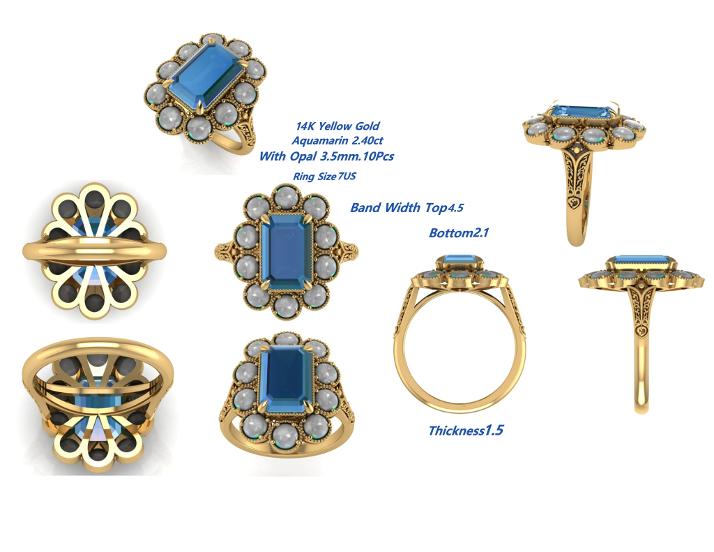 CAD Design
 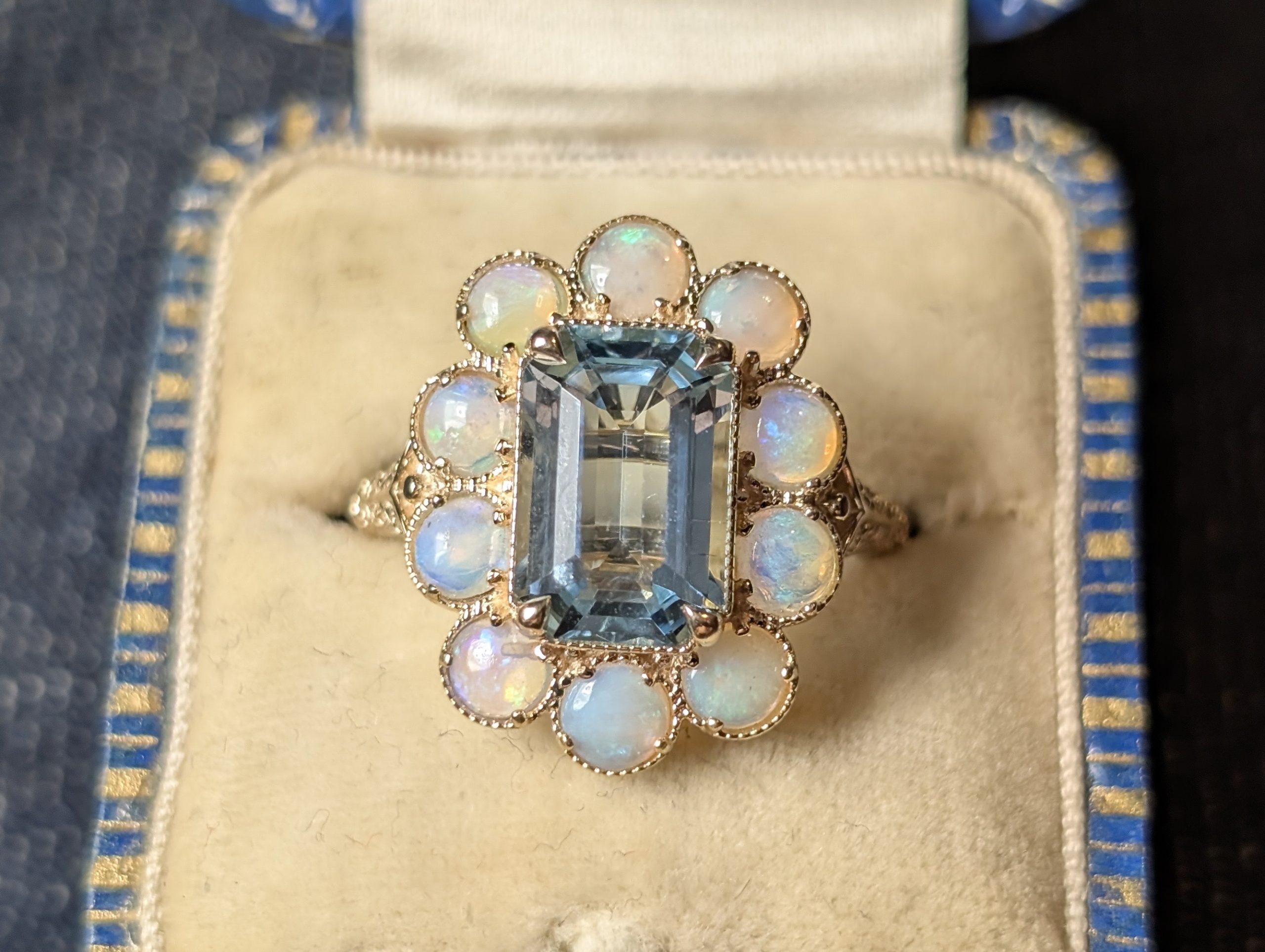 Finished Piece
 Aquamarine & Opal Ring
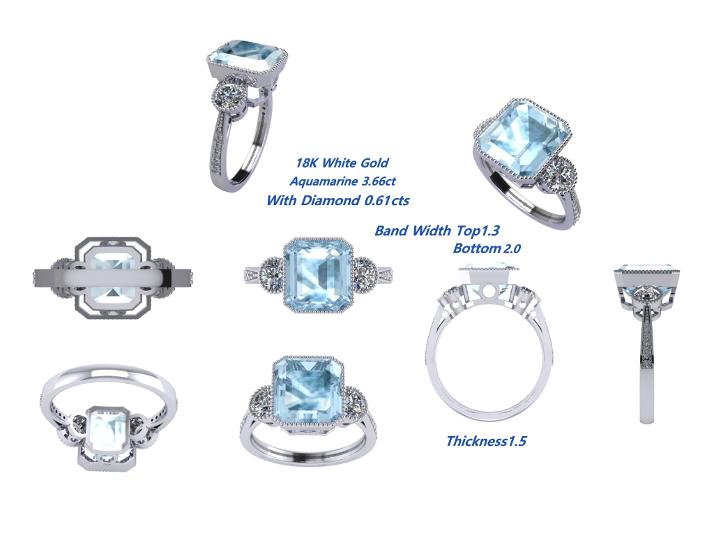 CAD Design
 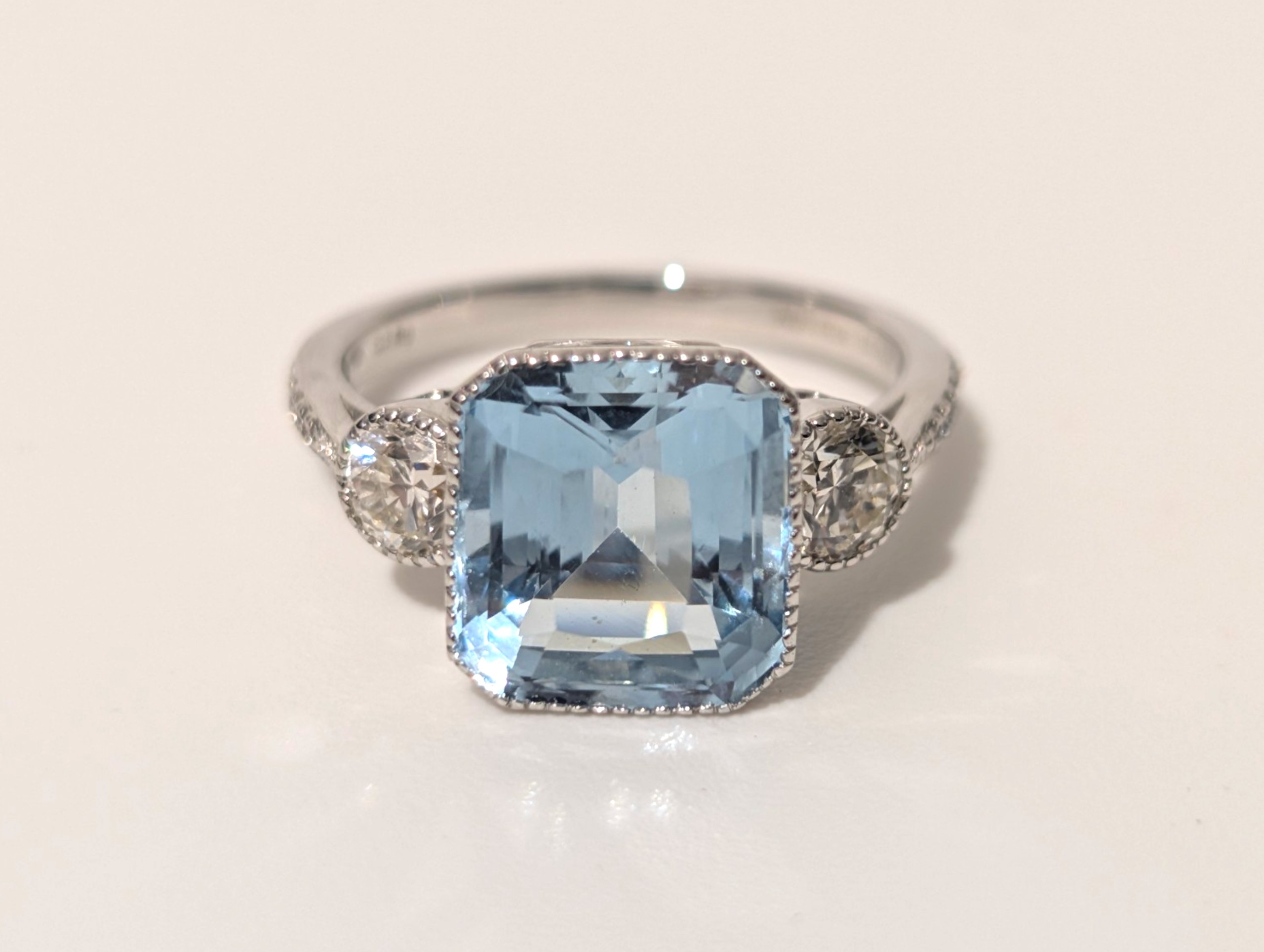 Finished Piece
 Aquamarine & Diamond Ring
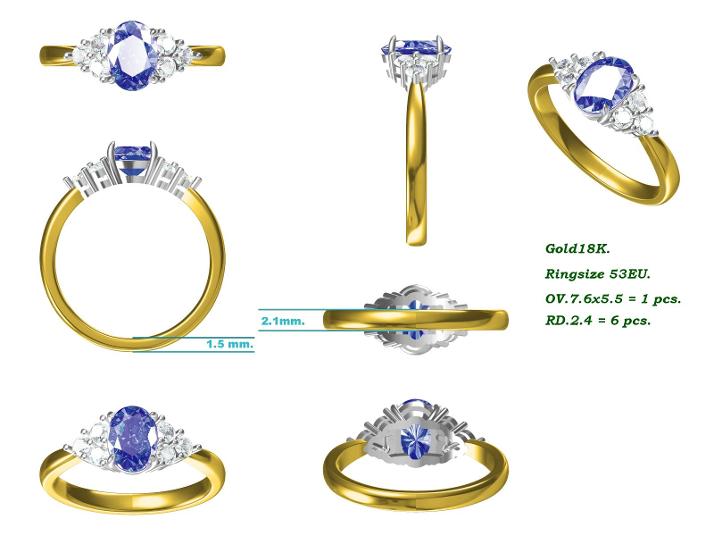 CAD Design
 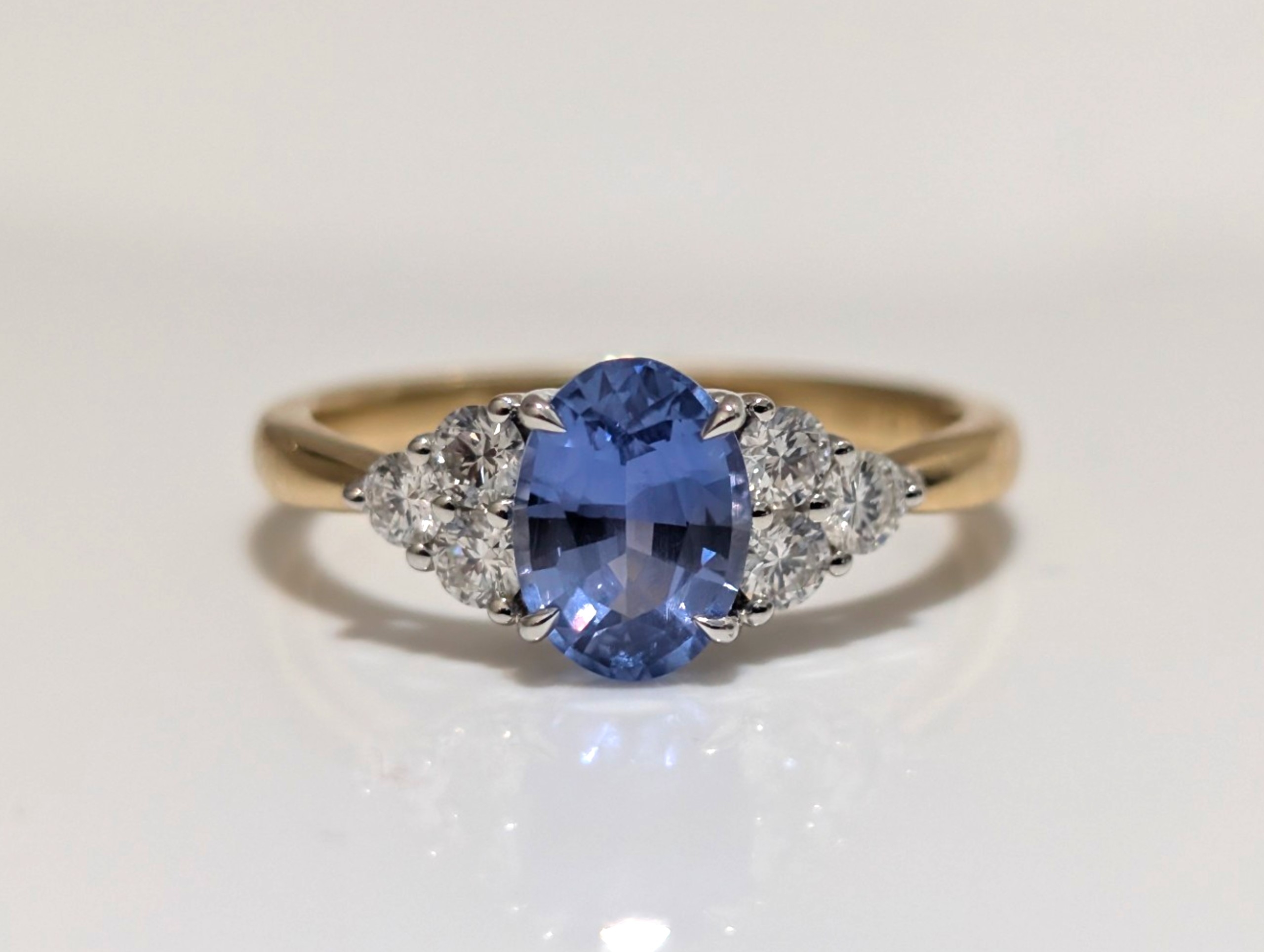 Finished Piece
 Sapphire & Diamond Ring
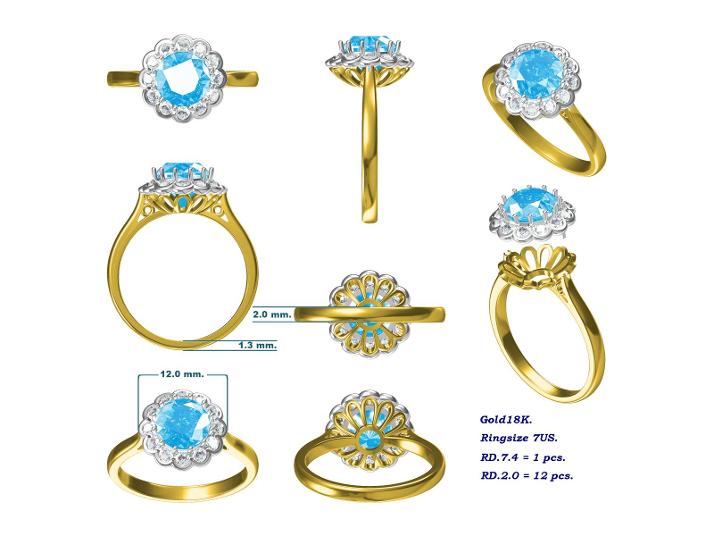 CAD Design
 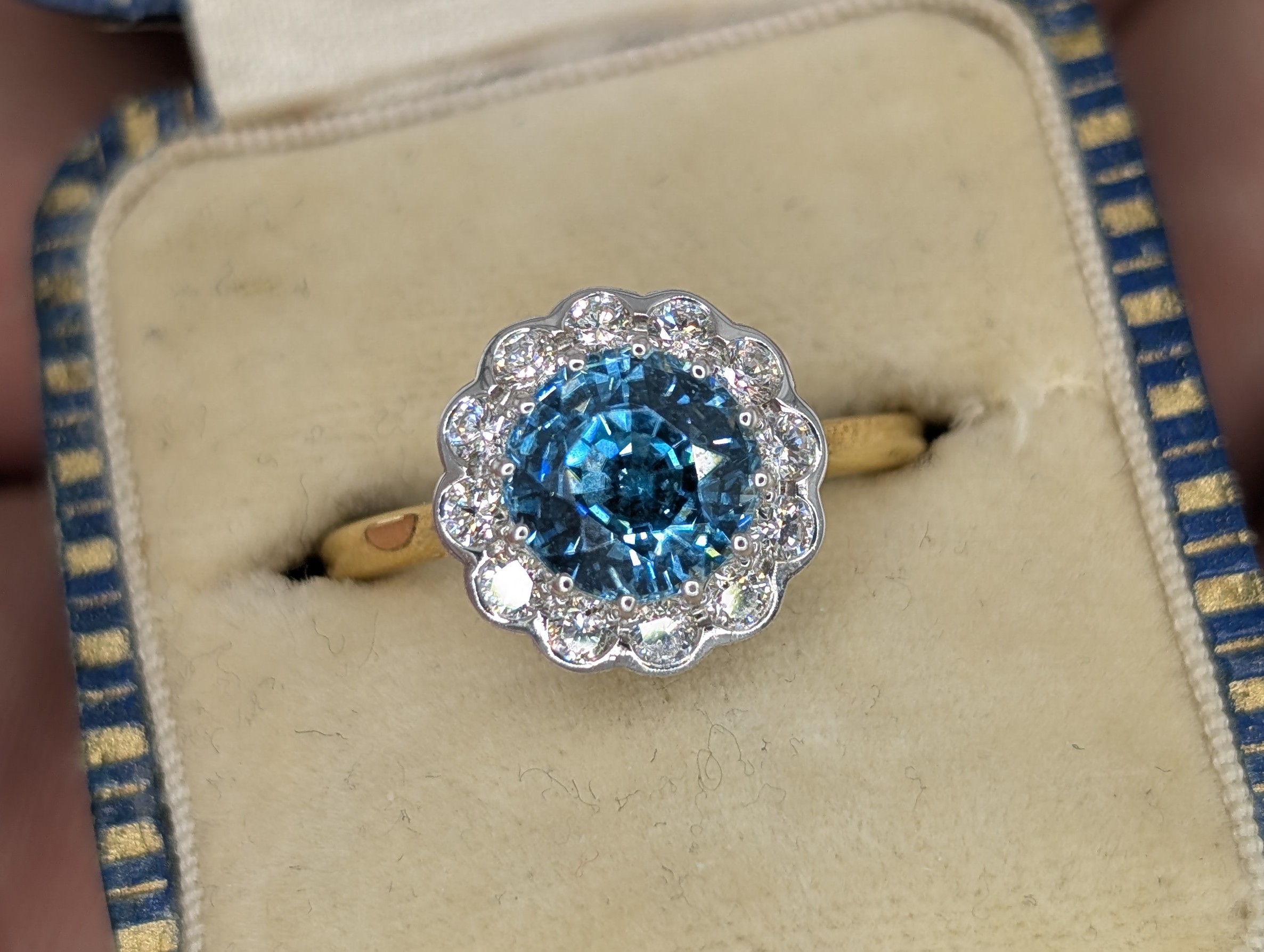 Finished Piece
 Blue Zircon & Diamond Ring
Tell Us About Your Custom Piece
Share your idea below and upload any useful inspiration. We will review your enquiry and contact you to discuss the design, materials, timescale and pricing.
Creating a Custom Victorian Style Ring
Victorian jewellery was remarkably varied. The period spans more than six decades, so there is no single formula for a Victorian ring. Rich yellow gold, coloured gemstones, old-cut diamonds, clusters, five-stone settings and substantial decorative shoulders all provide useful starting points for a new bespoke design.
What Makes a Ring Victorian in Style?
Queen Victoria's reign lasted from 1837 to 1901, covering a period of enormous change in jewellery design, manufacturing and gemstone supply. A ring from the 1840s can therefore look very different from one made near the end of the nineteenth century.
For bespoke work, Victorian influence is often communicated through the relationship between the stones and the metal rather than through one decorative motif.
Substantial yellow gold, graduated stone settings, coloured gemstone clusters, star or gypsy settings and old-cut diamonds can all create a recognisable nineteenth-century character.
A Victorian-inspired ring does not need to look ornate. Some of the strongest designs are simple five-stone, trilogy or gypsy-style rings where the proportions and stone setting do the work.
Different Victorian Design Directions
Diamond Five-Stone Rings
Graduated diamonds running across the finger create one of the most recognisable Victorian ring formats.
Gemstone Clusters
Sapphire, ruby, emerald or opal centres surrounded by diamonds can create a rich and unmistakably period-inspired appearance.
Gypsy Settings
Stones set into substantial gold bands create a lower-profile, metal-led design particularly associated with later Victorian jewellery.
Decorative Goldwork
Engraving, carved shoulders, scrolling forms and star settings can introduce period detail without requiring a complex cluster.
Early, Mid and Late Victorian Influence
The Victorian period is sometimes divided into broad early, middle and late phases, although jewellery does not change neatly on fixed dates.
Earlier nineteenth-century designs may retain influences from Georgian jewellery, including substantial gold work and hand-cut stones. As the century progressed, gemstone jewellery became increasingly varied, while later Victorian rings often included robust gold settings, gypsy-set diamonds, clusters and more recognisable late nineteenth-century forms.
For a new bespoke ring, the goal does not need to be archaeological precision. A period can instead provide a coherent design vocabulary.
Old Cut Diamonds in Victorian Style Rings
Antique diamonds are particularly effective in Victorian-inspired jewellery because their facet patterns and individual outlines differ from modern brilliant cuts.
Old mine cuts can have cushion-like outlines, relatively high crowns, deep proportions and broader facets. Other nineteenth-century diamonds may show similarly individual cutting.
These characteristics can create broad flashes of light rather than the more uniform brilliance associated with many modern diamonds.
When genuine antique diamonds are used, the setting should be designed around the actual stones because older cuts may vary considerably in diameter, depth and outline.
Can Modern Diamonds Be Used?
Yes. A custom Victorian style ring does not require every gemstone to be nineteenth century.
Modern diamonds can be incorporated into a setting whose proportions, metalwork and stone arrangement provide the historical influence.
This can be useful where the customer wants more consistency between multiple stones or prefers the appearance of a modern brilliant cut.
For broader information about bespoke diamond designs, see our custom diamond rings page.
Victorian Five-Stone Rings
The five-stone ring is one of the most useful Victorian formats to reinterpret in new jewellery.
Five diamonds can graduate from a larger centre outward toward smaller stones, producing a continuous line of light across the finger. Coloured gemstones can also be introduced, either as the centre or as alternating stones.
The setting may be relatively open or built into a more substantial gold framework depending on the desired appearance.
A modern bespoke version can retain the characteristic graduated arrangement while adjusting the profile, shank and stone security for the intended wearer.
Victorian Trilogy Rings
Three-stone rings also work naturally within Victorian-inspired design.
A larger old-cut centre diamond flanked by two smaller stones can create a simple period look. A ruby, sapphire or emerald centre with diamond sides introduces colour without making the ring overly elaborate.
The shoulder design can reinforce the Victorian character through carved, tapered or decorative goldwork.
Victorian Cluster Rings
Clusters allow a relatively compact centre stone to create much more visual presence on the hand.
A coloured gemstone surrounded by diamonds can form an oval, round or softly irregular outline. Diamond-only clusters can also use several stones to create the appearance of a larger central composition.
The proportions are critical. Victorian-inspired clusters often benefit from visible individuality between the stones rather than the extremely uniform halo effect found in some modern jewellery.
Victorian Gypsy Rings
Gypsy-set rings are especially distinctive because the gemstones sit into the body of a substantial band rather than rising high above it.
One, three or occasionally more stones can be incorporated. Diamonds are a classic choice, but ruby, sapphire and other suitable gemstones can create strong variations.
The surrounding metal is an important part of the design. This makes the style particularly effective for customers who appreciate antique jewellery but prefer a solid, lower-profile ring.
Star Set Diamonds
Star settings can be cut into the surface of a broad gold band, allowing a small diamond or gemstone to sit within an engraved radiating pattern.
Used sparingly, this can introduce a strong late Victorian character without requiring a raised cluster or elaborate stone layout.
The geometry and depth of the setting should still be considered carefully so the decorative star complements the stone rather than overwhelming it.
Victorian Sapphire Rings
Sapphire works particularly well in Victorian-inspired jewellery. Rich blue against yellow gold creates a strong period appearance, especially when accompanied by old-cut style diamonds.
An oval sapphire can form the centre of a diamond cluster, while smaller sapphires and diamonds can alternate across a five-stone ring.
A sapphire centre can also be set into a heavier gold trilogy for a simpler interpretation.
For more detailed sapphire guidance, see our custom sapphire rings page.
Victorian Ruby Rings
Ruby is particularly effective in Victorian-inspired designs because strong red colour sits beautifully against rich yellow gold.
Ruby and diamond clusters, alternating five-stone rings and three-stone arrangements can all create a convincing period influence.
For ruby selection, treatments and broader bespoke options, visit our custom ruby rings page.
Victorian Emerald Rings
Emerald can produce a particularly rich Victorian colour palette, especially when combined with yellow gold and diamonds.
Oval and cushion stones work naturally in clusters, while a rectangular emerald can provide a slightly cleaner centre within a heavier gold setting.
Because emeralds commonly contain fissures and inclusions, the individual stone should still determine the most appropriate mounting.
See our custom emerald rings page for more detailed emerald guidance.
Victorian Opal Rings
Opal is one of the gemstones most naturally associated with richly coloured nineteenth-century jewellery.
Its play-of-colour can be surrounded by diamonds, combined with smaller coloured gemstones or set into warm yellow gold.
A simple opal cluster can feel immediately Victorian without relying on excessive engraving or ornament.
Because opal requires more careful wear than many faceted gemstones, setting protection should be considered when the ring is intended for regular use.
See our custom opal rings page for more.
Garnet in Victorian Style Rings
Garnet can be especially effective in Victorian-inspired jewellery. Deep red almandine and pyrope varieties pair naturally with yellow gold and can create a rich nineteenth-century appearance.
Cabochons, faceted cushions and smaller clustered garnets can all be used, depending on the design.
Garnet also allows a strong period look without relying solely on the more familiar sapphire, ruby and emerald combinations.
Turquoise and Victorian Influence
Turquoise appeared in many nineteenth-century jewellery designs and can be used in small cabochons, clusters and decorative details.
In a new ring, it can introduce a softer and more unusual colour palette than the faceted gemstones commonly associated with modern fine jewellery.
Because turquoise is comparatively soft and can be sensitive to wear, it is better suited to customers who understand those care requirements.
Victorian Diamond Rings
Diamond-only Victorian-inspired designs can range from substantial five-stone rings to clusters and lower-set bands.
Genuine old cuts can create a particularly convincing character, but modern diamonds can also be used where more regular matching is desired.
Yellow gold with white metal around the diamonds can be especially effective, keeping warmth in the shank while allowing the stones to sit within a paler visual frame.
Yellow Gold and Victorian Jewellery
Yellow gold is one of the strongest visual tools when creating a Victorian-inspired ring.
Rather than hiding all of the metal beneath pavé stones, many period-inspired designs benefit from allowing the gold itself to form a substantial part of the composition.
Broad shoulders, heavier shanks and visible gold between gemstones can all contribute to the nineteenth-century character.
18ct Gold or Lower-Carat Gold?
Different gold standards were used historically, but a new bespoke ring does not need to duplicate the exact alloy of an antique example.
The metal can be chosen according to appearance, structure, budget and the intended design.
18ct yellow gold is especially attractive where a rich gold colour is part of the visual character of the ring.
Two-Tone Victorian Style Rings
Two-tone construction can work particularly well where diamonds need a pale setting but the rest of the ring should remain yellow gold.
A white setting around the diamonds can visually recede while the yellow-gold shank and shoulders retain the richer Victorian appearance.
This approach can be especially effective in clusters and larger five-stone rings.
Decorative Shoulders
The shoulders of a ring are one of the easiest places to introduce Victorian character without making the centre setting overly complicated.
Scrolling forms, carved details, split shoulders and small accent stones can all be incorporated depending on the style.
These details should support the centre rather than compete with it. A heavily decorated shoulder on an already elaborate cluster can quickly make the ring feel visually crowded.
Engraving
Hand-inspired engraving can add depth and texture to a Victorian style ring, particularly across broad shoulders or the visible sides of the shank.
The pattern does not have to cover the entire piece. A restrained engraved section may feel much more convincing than decorating every available surface.
Victorian Snake Ring Inspiration
Snake and serpent jewellery became an important motif in nineteenth-century jewellery and remains one of the most recognisable Victorian influences.
A bespoke snake ring can range from a subtle coiled gold band to a more sculptural design with gemstone eyes or a stone set into the head.
The form needs to be developed carefully so the motif remains elegant rather than becoming overly literal or costume-like.
Victorian Floral and Natural Motifs
Flowers, leaves and other natural forms also appear throughout nineteenth-century jewellery.
In a ring, these details can be incorporated into shoulders, clusters or the profile of the setting.
The most wearable bespoke designs usually use them subtly rather than turning the entire ring into an elaborate sculptural object.
Victorian Engagement Rings
A Victorian-inspired engagement ring offers an alternative to a conventional modern solitaire while still allowing the piece to be constructed specifically for everyday wear.
Sapphire and diamond clusters, old-cut diamond five-stone rings, gemstone trilogies and lower gypsy-style settings can all work depending on the wearer's taste.
Practical details such as setting height, exposed edges and wedding-band fit can also be considered during the bespoke process.
For the broader engagement-ring design process, see our bespoke engagement rings page.
Can a Victorian Style Ring Be Simple?
Absolutely. Victorian influence does not require a ring covered in engraving, scrolls and numerous gemstones.
A three-stone diamond ring in yellow gold, a five-stone graduated band or a single old-cut diamond set into a substantial gold ring can all have strong nineteenth-century character.
In fact, restraint often produces a more convincing result than adding period details simply because they are available.
Custom Victorian Style Men's Rings
Victorian influence can work particularly well in broader rings because many period designs already use substantial gold and flush or gypsy-set stones.
A single diamond, sapphire or ruby can be set into a heavy band, or three stones can be arranged across the front with engraved or star-shaped surrounds.
The result can feel strongly historical without becoming overly ornate.
Using a Genuine Victorian Ring as Inspiration
Original Victorian jewellery is one of the best sources of design inspiration because it reveals proportions that can be difficult to understand from generic “vintage-style” jewellery.
You may like the shoulders of one ring, the graduated stone arrangement of another and the gold profile of a third.
Those features can be studied and adapted into a new ring built around your gemstone and finger size.
New Victorian Style Ring vs Genuine Victorian Ring
A genuine Victorian ring and a newly made Victorian-inspired ring offer different advantages.
An original piece provides genuine age, period workmanship and the individuality that comes from surviving for more than a century.
A newly made bespoke ring gives much greater control over centre stone, finger size, setting profile, metal weight and the practical structure of the finished jewellery.
We would not describe a new Victorian-style ring as an antique. The historical influence should be clear without misrepresenting its age.
Using an Antique Diamond or Gemstone
A genuine antique diamond or coloured gemstone can potentially be incorporated into a newly made Victorian-inspired ring.
This can be an especially effective approach because the individuality of an older cut often supports the period character naturally.
Exact dimensions and condition need to be considered first. Antique stones may have chips, abrasion, worn edges or unconventional proportions that influence the safest new setting.
Remodelling an Heirloom Victorian Ring
If you already own an inherited Victorian ring, it may sometimes be possible to reuse the important stones within a new piece.
A damaged five-stone ring might provide diamonds for a new trilogy. A sapphire from a worn cluster could become the centre of a simpler yellow-gold ring, while several smaller diamonds could be reorganised into a different period-inspired setting.
The original stones remain connected to the older jewellery even if the new ring is designed for a completely different wearer.
Victorian Style Rings for Everyday Wear
One advantage of creating a new period-inspired ring is that practical considerations can be built into it from the beginning.
Very high antique settings can be lowered where appropriate, vulnerable claws can be strengthened and the shank can be given enough substance for the intended wear.
The goal is not to modernise the ring until it loses its Victorian character, but to make sensible structural decisions that suit a newly made piece.
How Much Does a Custom Victorian Style Ring Cost?
The cost depends on the gemstones, gold weight and complexity of the design.
A relatively simple gypsy-set diamond band has different requirements from a large sapphire cluster containing numerous individually set diamonds.
Genuine old-cut diamonds and significant coloured gemstones can also represent a substantial portion of the total cost.
Victorian-inspired rings often contain more visible metal than delicate modern settings, so gold weight can also be an important part of the quote.
If you have a target budget, include it in your enquiry so the gemstones and setting can be balanced from the beginning.
Why CAD Is Useful for Victorian Inspired Rings
Although CAD is a modern design tool, it is especially useful for controlling the proportions of a new period-inspired ring.
We can review the graduation of a five-stone arrangement, the width of a cluster, shoulder shapes, setting height and the amount of visible gold before production begins.
It is also extremely useful when designing around genuine antique stones that do not conform to standard modern dimensions.
The detailed 3D CAD carries a $25 non-refundable design fee. If the commission proceeds, the $25 is deducted from the final bill.
How This Differs From Our Antique Style Rings Page
Our broader custom antique style rings page covers several historic influences rather than one individual period.
This page focuses specifically on Victorian design: nineteenth-century goldwork, five-stone rings, gypsy settings, gemstone clusters, old-cut diamonds and the proportions associated with jewellery made during Queen Victoria's reign.
Approval and Production
You review the final CAD before committing to production. Once approved, a 40% deposit of the quoted price confirms your order.
Your Victorian style ring is then created by our workshop. Once complete, we show you the finished jewellery before the remaining 60% is paid and the ring is securely dispatched.
Is a custom Victorian style ring actually Victorian?
No. It is a newly made ring inspired by nineteenth-century Victorian jewellery. We distinguish clearly between genuine antique pieces and newly manufactured period-inspired jewellery.
Can you recreate a Victorian ring from a photograph?
A genuine Victorian ring can be used as inspiration for the stone layout, shoulders, proportions and other details before developing a new design around your requirements.
Can you make a Victorian five-stone ring?
Yes. Graduated diamond, gemstone and mixed-stone five-stone designs can all be developed with Victorian-inspired proportions.
Can you make a Victorian gypsy ring?
Yes. Diamonds or suitable coloured gemstones can be set into a substantial gold band using a low-profile Victorian-inspired design.
Can you use genuine old-cut diamonds?
Potentially, yes. Antique-cut diamonds can be incorporated into new settings designed around their actual dimensions and individual outlines.
Which gemstones work in Victorian style rings?
Diamond, sapphire, ruby, emerald, opal, garnet and other suitable gemstones can all work depending on the particular Victorian design being developed.
Can I use a gemstone from an inherited ring?
Potentially, yes. Its condition and exact measurements should be considered before the new setting is developed.
Can you make a Victorian style engagement ring?
Yes. Diamond five-stone rings, gemstone clusters, trilogies and other Victorian-inspired settings can all be adapted for an engagement ring.
Does a Victorian style ring have to be yellow gold?
No, although yellow gold is particularly effective for many Victorian-inspired designs. Two-tone construction and other precious metals can also be considered where they suit the ring.
How much does the CAD design cost?
The detailed 3D CAD costs $25. The fee is non-refundable, but it is deducted from the final bill if the ring proceeds to production.
When do I pay for my Victorian style ring?
A 40% deposit is required after you approve the final CAD. The remaining 60% is paid after you have seen the finished jewellery and before dispatch.
Have a Victorian Ring in Mind?
Send us the gemstones, setting style and nineteenth-century details you like, or share photographs of genuine Victorian jewellery and we can begin developing your bespoke design.
Start Your Enquiry