
Custom Edwardian Style Rings
Create a new ring inspired by the refinement of early twentieth-century jewellery, with fine diamond work, pale metal, delicate proportions and elegant period detailing developed around your chosen stones.
How It Works
From your Edwardian inspiration to the final CAD, every detail is refined before your ring enters production.
Tell Us Your Idea
Share your preferred gemstones, Edwardian details, precious metal, budget and inspiration images.
Refine the Design
We refine the proportions, stone layout, shoulders, openwork and finer period details.
Receive Your Quote
Once the concept is agreed, we provide a clear quote based on the stones, metal and complexity of the design.
3D CAD Design
Proceed with a detailed CAD for a $25 non-refundable design fee, deducted from the final bill if the piece goes ahead.
Approve Your Ring
Review the final CAD before production. Once approved, a 40% deposit confirms your order.
Made & Delivered
We show you the finished ring before the remaining 60% is paid and your jewellery is dispatched.
Some of Our Bespoke Creations
Explore a selection of pieces created by us, from the production-ready CAD design through to the finished jewellery.
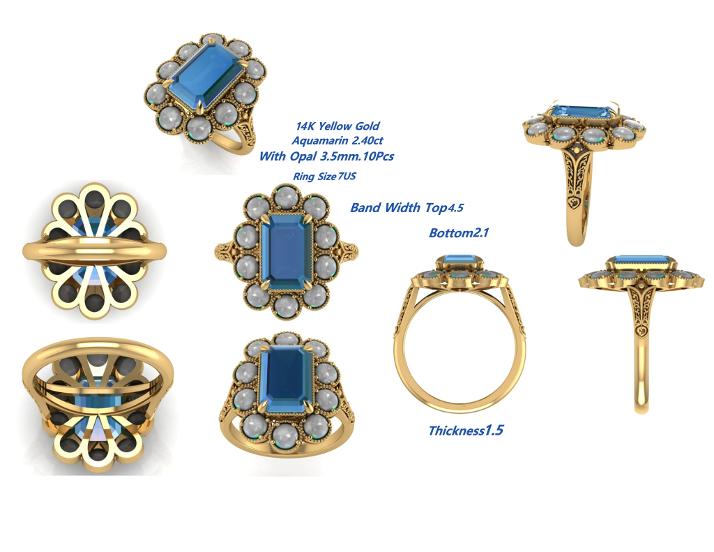 CAD Design
 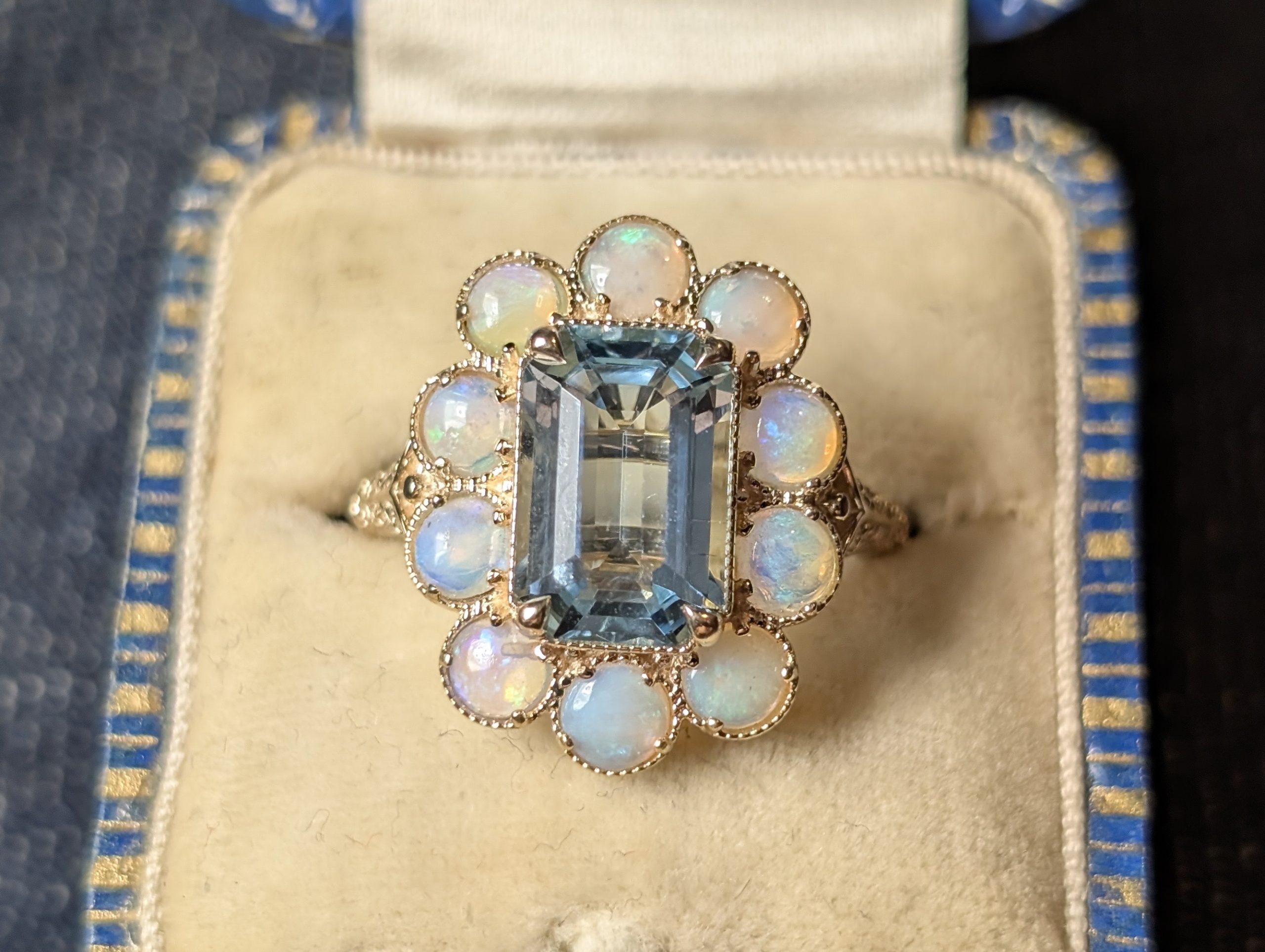 Finished Piece
 Aquamarine & Opal Ring
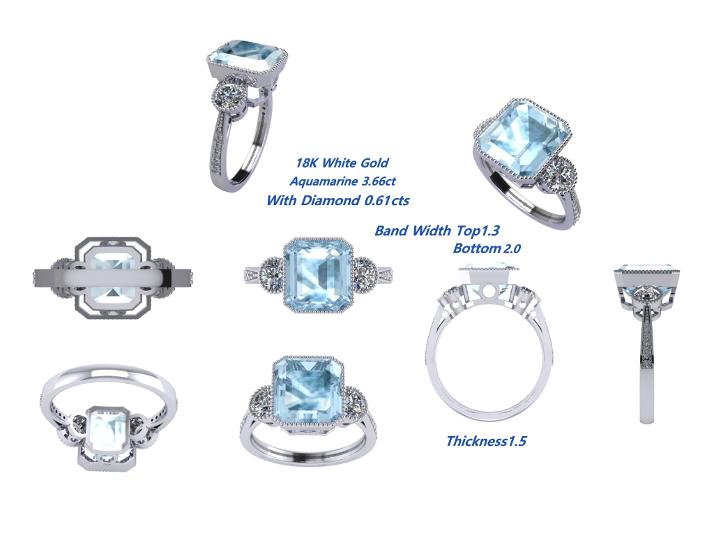 CAD Design
 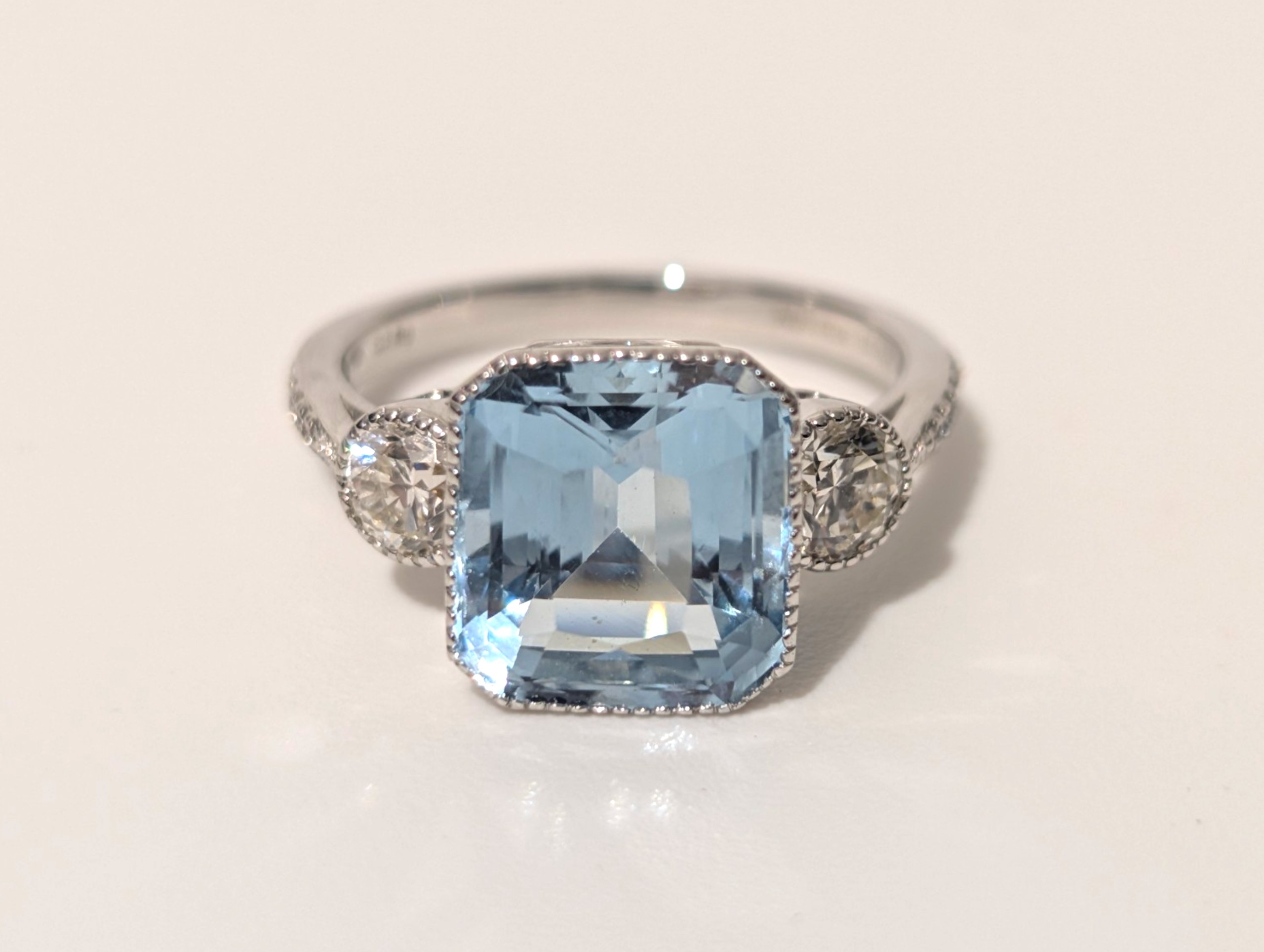 Finished Piece
 Aquamarine & Diamond Ring
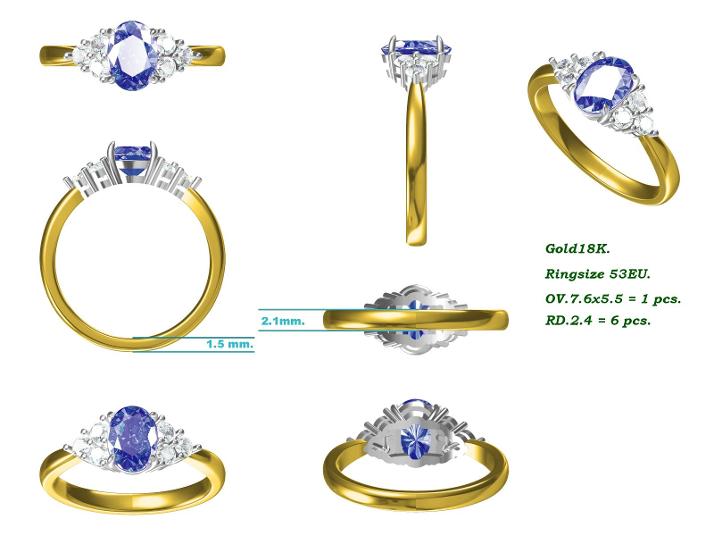 CAD Design
 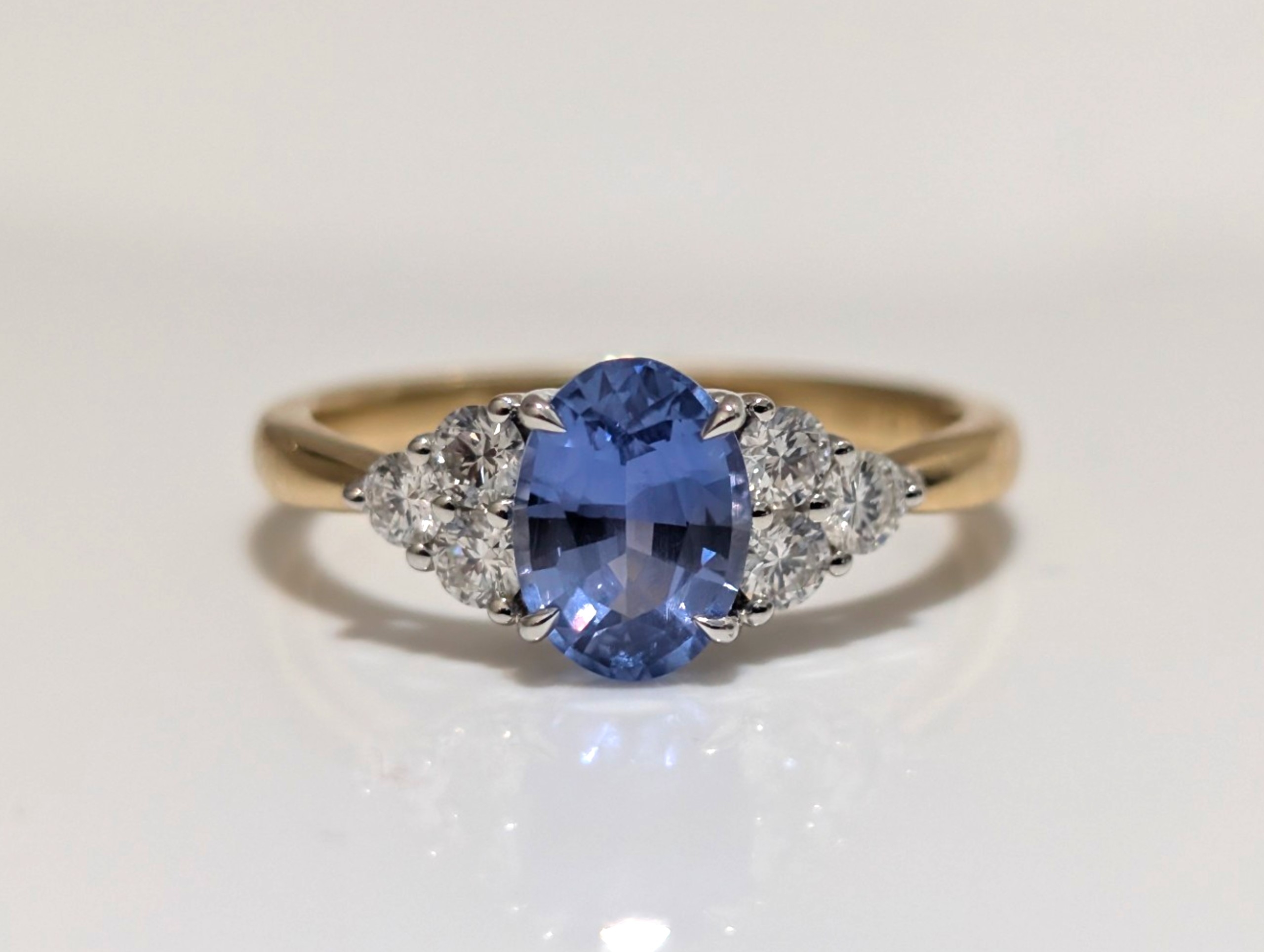 Finished Piece
 Sapphire & Diamond Ring
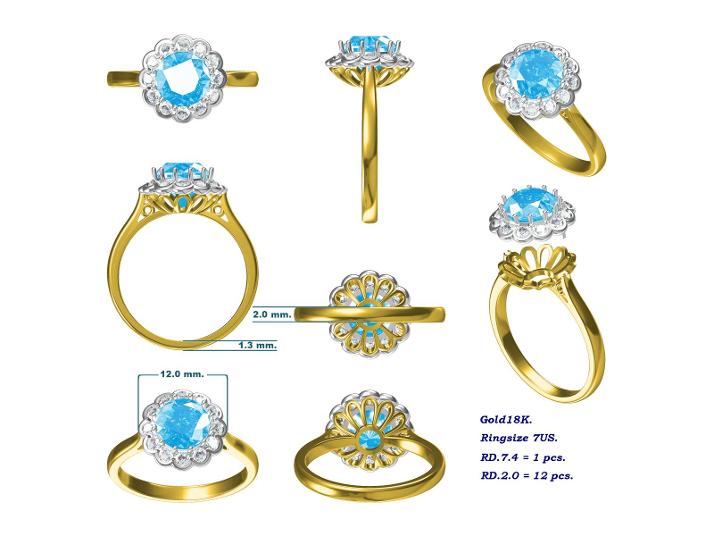 CAD Design
 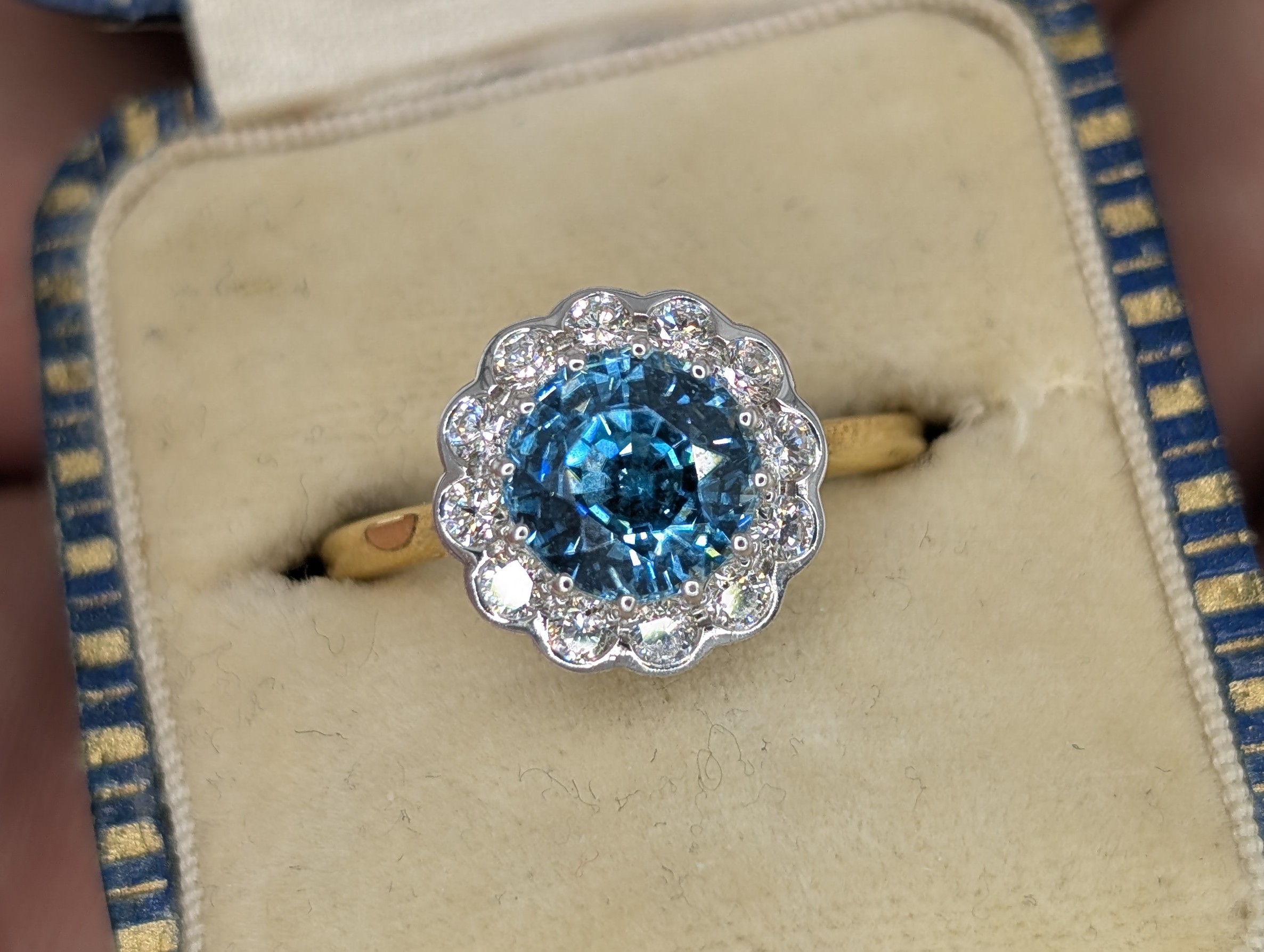 Finished Piece
 Blue Zircon & Diamond Ring
Tell Us About Your Custom Piece
Share your idea below and upload any useful inspiration. We will review your enquiry and contact you to discuss the design, materials, timescale and pricing.
Creating a Custom Edwardian Style Ring
Edwardian jewellery is known for refinement rather than weight. Fine diamond work, pale metal, open spaces, delicate borders and restrained proportions give the period a very different character from the richer gold-heavy jewellery of the Victorian era.
What Makes a Ring Edwardian in Style?
The Edwardian era is associated with the early years of the twentieth century, particularly the period around the reign of Edward VII. Fine jewellery of the time increasingly made use of platinum, allowing jewellers to create delicate-looking settings with detailed diamond work and lighter visual proportions.
In a custom ring, Edwardian influence can be introduced through pierced-style openwork, fine milgrain edges, diamond borders, slender shoulders and pale metal around the gemstones.
The overall effect should feel refined rather than heavy.
The strongest Edwardian-inspired rings often appear delicate without actually being fragile. Fine proportions and visible open space are more important than adding excessive decoration.
Edwardian vs Victorian Style Rings
Victorian and Edwardian jewellery sit next to one another historically, but the visual difference can be considerable.
Victorian-inspired rings often work naturally with richer yellow gold, substantial clusters, heavier bands and pronounced metalwork. Edwardian influence generally becomes lighter, whiter and more diamond-led.
Platinum and delicate-looking diamond settings allowed jewellery to appear almost lace-like compared with many nineteenth-century pieces.
For the earlier, richer side of period jewellery, see our custom Victorian style rings page.
Key Edwardian Ring Details
Platinum & Pale Metal
White metal allows diamonds to dominate visually and supports the refined appearance associated with fine Edwardian jewellery.
Milgrain
Fine beaded edges around bezels and diamond borders can soften metal lines and add subtle period character.
Openwork
Pierced-style spaces between sections of the setting can make even a substantial ring appear lighter and more intricate.
Fine Diamond Work
Small diamonds, graduated arrangements and delicate borders can create detail without relying on heavy goldwork.
Platinum in Edwardian Style Rings
Platinum is closely associated with high-quality Edwardian jewellery because its strength allowed jewellers to create finer structures than were possible with softer traditional metals alone.
This made it possible to reduce the amount of visible metal around diamonds and create highly detailed settings with a light appearance.
In a new bespoke ring, platinum can still be used to achieve that cool, refined look, particularly in diamond-heavy designs.
White Gold as an Alternative
White gold can also be used where a pale-metal appearance is desired.
It works particularly well with sapphire, aquamarine and diamond combinations, as well as finer cluster and trilogy settings.
The choice between platinum and white gold should follow the actual design, construction and customer preference rather than period association alone.
Two-Tone Edwardian Inspired Rings
Two-tone construction can create a useful bridge between Edwardian refinement and warmer traditional gold.
A yellow-gold shank can support a white-metal upper setting around diamonds or coloured gemstones.
This can preserve the pale, fine appearance around the stones while introducing warmth through the rest of the ring.
Old Cut Diamonds in Edwardian Rings
Old European cuts and other antique diamond cuts can work beautifully in Edwardian-inspired rings because their broader facet patterns complement period settings naturally.
Unlike modern calibrated stones, genuine antique diamonds may show individual outlines, depth and facet arrangements.
A custom setting can therefore be developed around the actual stone rather than forcing it into a standard modern mount.
Edwardian Diamond Cluster Rings
Diamond clusters can be distinctly Edwardian when the surrounding stones and metalwork remain fine and restrained.
A larger centre diamond may be framed by smaller stones with delicate milgrain and open sections between them.
Rather than producing a heavy halo effect, the setting can allow more light and visual space around the individual diamonds.
Edwardian Sapphire Rings
Sapphire and diamond is one of the strongest combinations for Edwardian-inspired jewellery.
Blue sapphire gives a clear colour focal point while fine diamond detailing and pale metal keep the setting light.
Oval and cushion sapphires can sit within delicate diamond clusters, while rectangular stones can work in cleaner early twentieth-century designs.
For sapphire-specific guidance, see our custom sapphire rings page.
Edwardian Aquamarine Rings
Aquamarine is particularly well suited to Edwardian and Belle Époque influence because its pale blue colour works naturally with platinum, white gold and diamonds.
Larger aquamarines can be given a surprisingly delicate appearance when surrounded by restrained diamond work and open settings.
Oval, cushion and elongated rectangular stones can all suit the style.
See our custom aquamarine rings page for more detailed aquamarine guidance.
Edwardian Emerald Rings
Emerald can create a strong contrast against diamonds and pale metal while still retaining the refinement associated with Edwardian design.
A smaller emerald centre can sit within a fine diamond border, while a larger stone may be better served by two side diamonds and more restrained surrounding detail.
Because emerald requires thoughtful setting and care, the individual gemstone should determine the final construction.
Edwardian Ruby Rings
Ruby creates a richer colour contrast but can still work beautifully in a lighter Edwardian-inspired setting.
Oval or cushion rubies surrounded by fine diamonds can produce a particularly elegant result, especially when the amount of visible metal is kept restrained.
Edwardian Opal Rings
Opal can also work within Edwardian-inspired jewellery, particularly when paired with fine diamonds and pale metal.
The softer organic appearance of an opal can create an interesting contrast with precise diamond borders and delicate milgrain.
Because opal needs more careful wear than harder gemstones, protection should still be considered within the setting.
Edwardian Trilogy Rings
A three-stone ring can be given a distinctly Edwardian appearance through lighter settings, fine claws and restrained shoulders.
A sapphire or aquamarine centre with two diamonds can work especially well, as can three old-cut diamonds arranged with minimal visible metal.
Small accent diamonds or fine shoulder details can add period character without overwhelming the three principal stones.
Edwardian Navette Rings
Navette-shaped rings use a long pointed oval or marquise-like outline, often created from several diamonds or a combination of gemstones.
The elongated form can create strong finger coverage while remaining relatively narrow from side to side.
A new bespoke version can use an old-cut diamond centre, a coloured gemstone or multiple smaller stones within a fine geometric frame.
Edwardian Panel Rings
Panel-style rings spread several stones across a defined decorative section rather than relying on one raised centre.
Diamonds can be arranged symmetrically with small coloured gemstone accents, fine milgrain and pierced sections between them.
The result can feel intricate while still remaining relatively low on the finger.
Milgrain Detailing
Milgrain is one of the most recognisable details in early twentieth-century jewellery.
Fine beaded metal edges can outline diamonds, bezels and decorative sections without adding significant visual weight.
It works best when it reinforces the architecture of the setting. Too much can make a ring look artificially “vintage” rather than genuinely inspired by the period.
Openwork and Pierced-Style Detail
Visible open space can be just as important as the gemstones themselves.
Small openings between diamond-set sections make the structure feel lighter and give the setting a lace-like appearance.
In a newly made ring, those sections still need enough physical substance to remain practical for the intended wear.
Edwardian Engagement Rings
Edwardian influence works especially well for engagement rings where the customer wants something more detailed than a modern solitaire without moving into the strong geometry of Art Deco.
Old-cut diamonds, sapphire clusters, aquamarine trilogies and delicate platinum settings can all create an elegant period-inspired ring.
Wedding-band fit, setting height and daily wear can also be considered during the bespoke design process.
For the wider engagement-ring process, see our bespoke engagement rings page.
Edwardian Style vs Art Deco
Edwardian and Art Deco jewellery sit close together historically, but their design language is quite different.
Edwardian-inspired jewellery tends to favour delicacy, curves, fine diamond work and lace-like construction. Art Deco moves toward stronger geometry, straight lines, stepped forms and more architectural contrast.
If your preference is for the latter, see our custom Art Deco style rings page.
Belle Époque Influence
Edwardian jewellery overlaps stylistically with the broader Belle Époque period in European decorative arts and jewellery.
Fine platinum work, bows, garlands, delicate diamond motifs and airy construction are all associated with this refined aesthetic.
In ring design, these influences are usually best adapted with restraint rather than reproducing every decorative motif found in period jewellery.
Can an Edwardian Style Ring Be Simple?
Yes. The style does not require dense diamond work.
A single old-cut diamond with fine shoulders, a sapphire trilogy in pale metal or a compact diamond cluster with milgrain can all carry strong Edwardian influence.
The key is finesse in the proportions rather than quantity of decoration.
Using Genuine Antique Diamonds
Antique diamonds can be particularly effective because their irregular proportions and broader facets already provide genuine period character.
A newly made setting can be designed around an individual old European cut, old mine cut or other antique diamond.
Exact measurements matter because antique stones may not correspond to modern calibrated sizes.
Using a Gemstone You Already Own
Potentially, yes. A sapphire, diamond, aquamarine or other suitable gemstone can become the centre of a new Edwardian-inspired ring.
Its exact length, width, depth and condition should be considered before the setting is developed.
The period details can then be designed around the actual stone rather than forcing it into a pre-existing mounting.
Resetting an Heirloom Stone
An inherited gemstone can be retained while the surrounding setting is completely redesigned.
An old diamond might become the centre of a fine platinum cluster, while an inherited sapphire could be surrounded by smaller diamonds in a lighter Edwardian-inspired arrangement.
This preserves the important stone without requiring the new wearer to keep an old ring design they do not love.
Edwardian Style Rings for Everyday Wear
One challenge with historical inspiration is maintaining the light appearance without making the new ring unnecessarily delicate.
A bespoke design can preserve fine visual proportions while ensuring the shank, settings and joins have enough substance for the intended use.
This is particularly important with engagement rings and other pieces likely to be worn frequently.
How Much Does a Custom Edwardian Style Ring Cost?
The cost depends on the centre stone, number and type of diamonds, precious metal and complexity of the design.
A simple sapphire trilogy may require relatively few stones, while an intricate platinum panel ring with numerous individually set diamonds can involve considerably more work.
Genuine old-cut diamonds and significant coloured gemstones can also account for a substantial part of the overall price.
If you have a target budget, include it in the enquiry so the stones and design can be balanced from the beginning.
Why CAD Works Well for Edwardian Inspired Design
Edwardian style depends heavily on fine proportion. Borders that are too wide, shoulders that are too heavy or openwork that is too small can quickly change the character of the ring.
CAD allows the centre stone, diamond layout, open spaces, milgrain boundaries and overall profile to be reviewed before production.
The detailed 3D CAD carries a $25 non-refundable design fee. If the commission proceeds, the $25 is deducted from the final bill.
How This Differs From Our Antique Style Rings Page
Our broader custom antique style rings page covers several historical periods and antique-inspired design directions.
This page focuses specifically on Edwardian jewellery: pale metal, fine diamond work, milgrain, openwork, delicate clusters and the lighter proportions associated with fine jewellery of the early twentieth century.
Approval and Production
You review the final CAD before production begins. Once the design is approved, a 40% deposit of the quoted price confirms your order.
Your Edwardian style ring is then created by our workshop. Once complete, we show you the finished jewellery before the remaining 60% is paid and the ring is securely dispatched.
Is a custom Edwardian style ring actually antique?
No. It is newly made jewellery inspired by Edwardian design. We distinguish clearly between genuine antique pieces and newly manufactured period-inspired rings.
Can you use a genuine Edwardian ring as inspiration?
Yes. Photographs can be used to identify the stone layout, proportions, shoulders and fine period details you like before developing a new bespoke design.
Can you use genuine old-cut diamonds?
Potentially, yes. Antique diamonds can be incorporated into new settings designed around their individual measurements and proportions.
Which gemstones suit Edwardian style rings?
Diamond, sapphire, aquamarine, emerald, ruby and opal can all work depending on the design, with sapphire and aquamarine particularly effective alongside diamonds and pale metal.
Does an Edwardian style ring need to be platinum?
No. Platinum is especially appropriate for many period-inspired designs, but white gold and two-tone combinations can also be considered where they suit the ring.
Can you make an Edwardian engagement ring?
Yes. Old-cut diamond rings, sapphire clusters, fine trilogies and delicate platinum settings can all be adapted for engagement-ring use.
Can I use my own gemstone?
Potentially, yes. Its dimensions and condition should be considered before the new setting is designed around it.
What is the difference between Edwardian and Art Deco rings?
Edwardian-inspired rings generally favour lighter, finer, more lace-like diamond work, while Art Deco designs tend toward stronger geometry, straight lines and stepped forms.
How much does the CAD design cost?
The detailed 3D CAD costs $25. The fee is non-refundable, but it is deducted from the final bill if the ring proceeds to production.
When do I pay for my Edwardian style ring?
A 40% deposit is required after you approve the final CAD. The remaining 60% is paid after you have seen the finished jewellery and before dispatch.
Have an Edwardian Ring in Mind?
Send us the gemstones, proportions and early twentieth-century details you like, or share photographs of original Edwardian jewellery and we can begin developing your bespoke design.
Start Your Enquiry