Custom Art Nouveau Rings
Create a new ring inspired by the flowing lines, botanical forms and expressive gemstone combinations of Art Nouveau jewellery, developed around your chosen stones and individual design.
How It Works
From your first inspiration to the final CAD, we refine the organic form and gemstone layout before production.
Tell Us Your Idea
Share your preferred gemstones, natural motifs, precious metal, budget and inspiration images.
Refine the Design
We refine the flowing lines, stone placement, proportions and Art Nouveau details around your idea.
Receive Your Quote
Once the concept is agreed, we provide a clear quote based on the gemstones, metal and complexity of the design.
3D CAD Design
Proceed with a detailed CAD for a $25 non-refundable design fee, deducted from the final bill if the piece goes ahead.
Approve Your Ring
Review the final CAD before production. Once approved, a 40% deposit confirms your order.
Made & Delivered
We show you the finished ring before the remaining 60% is paid and your jewellery is dispatched.
Some of Our Bespoke Creations
Explore a selection of pieces created by us, from the production-ready CAD design through to the finished jewellery.
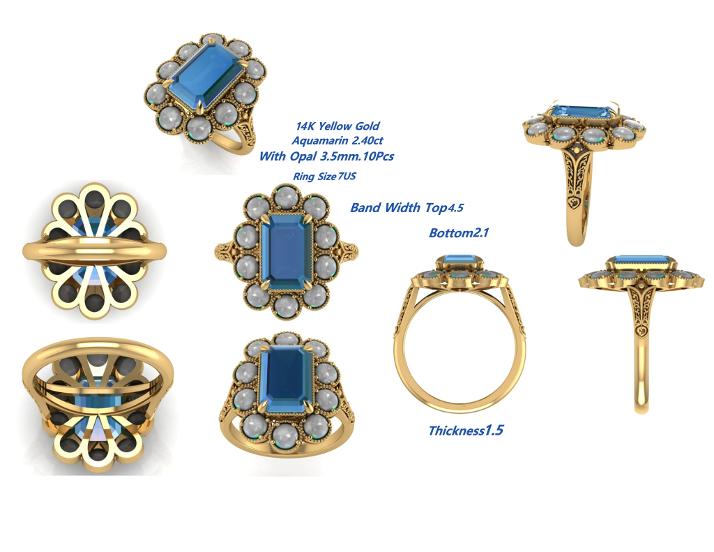 CAD Design
 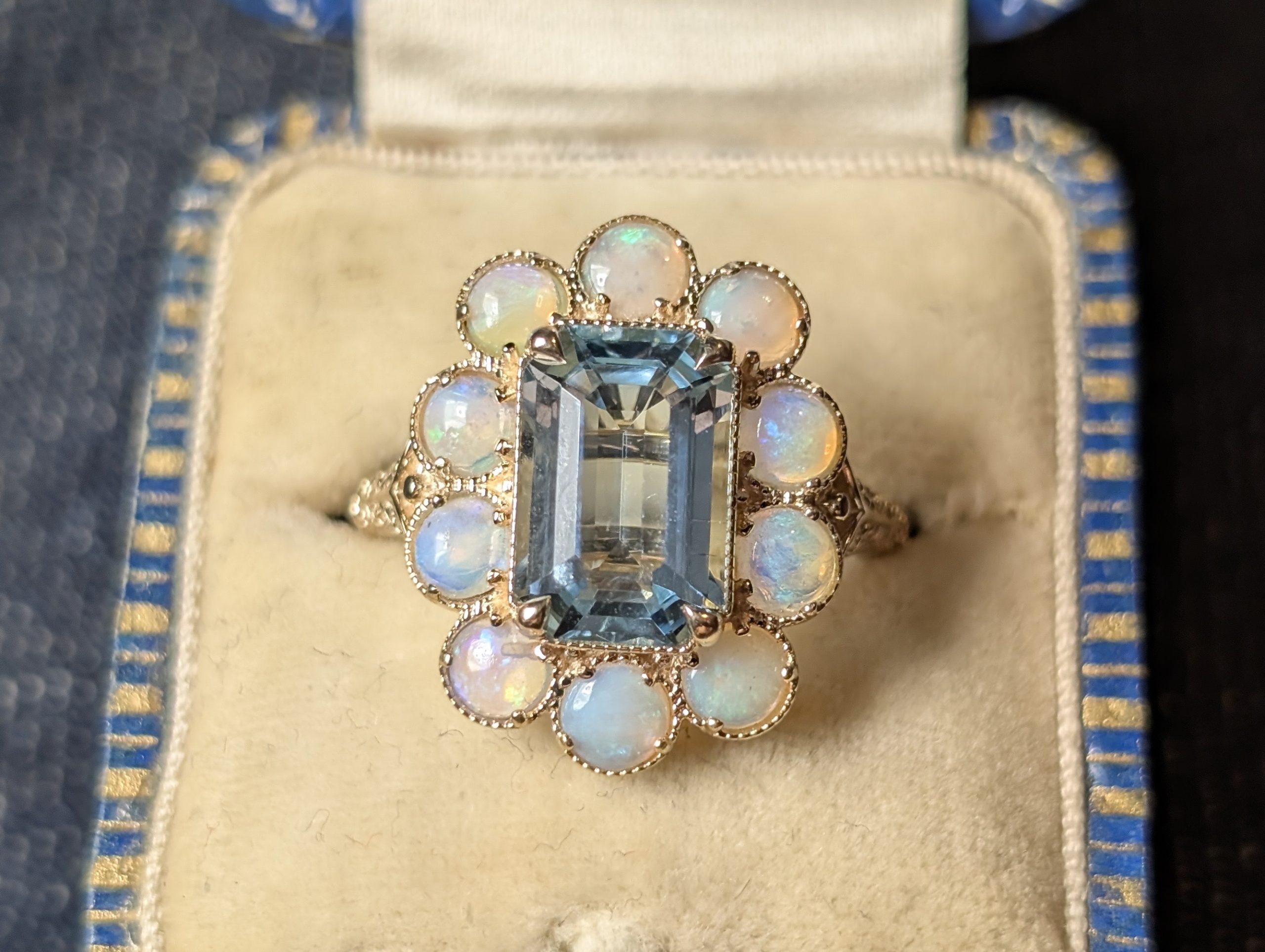 Finished Piece
 Aquamarine & Opal Ring
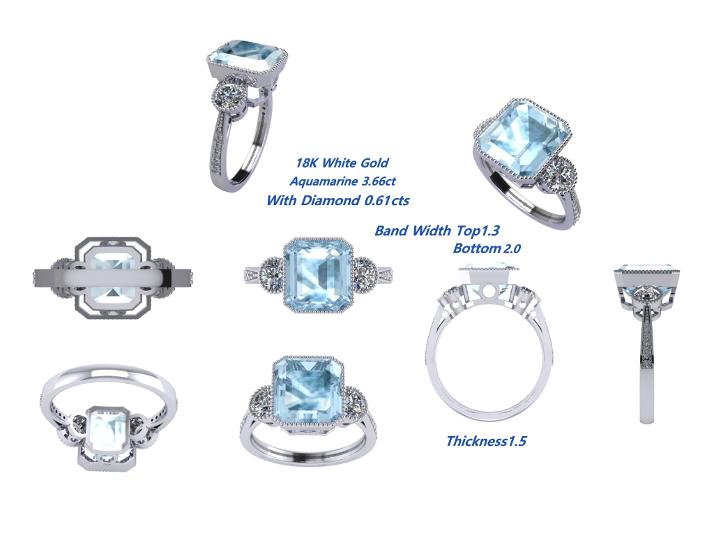 CAD Design
 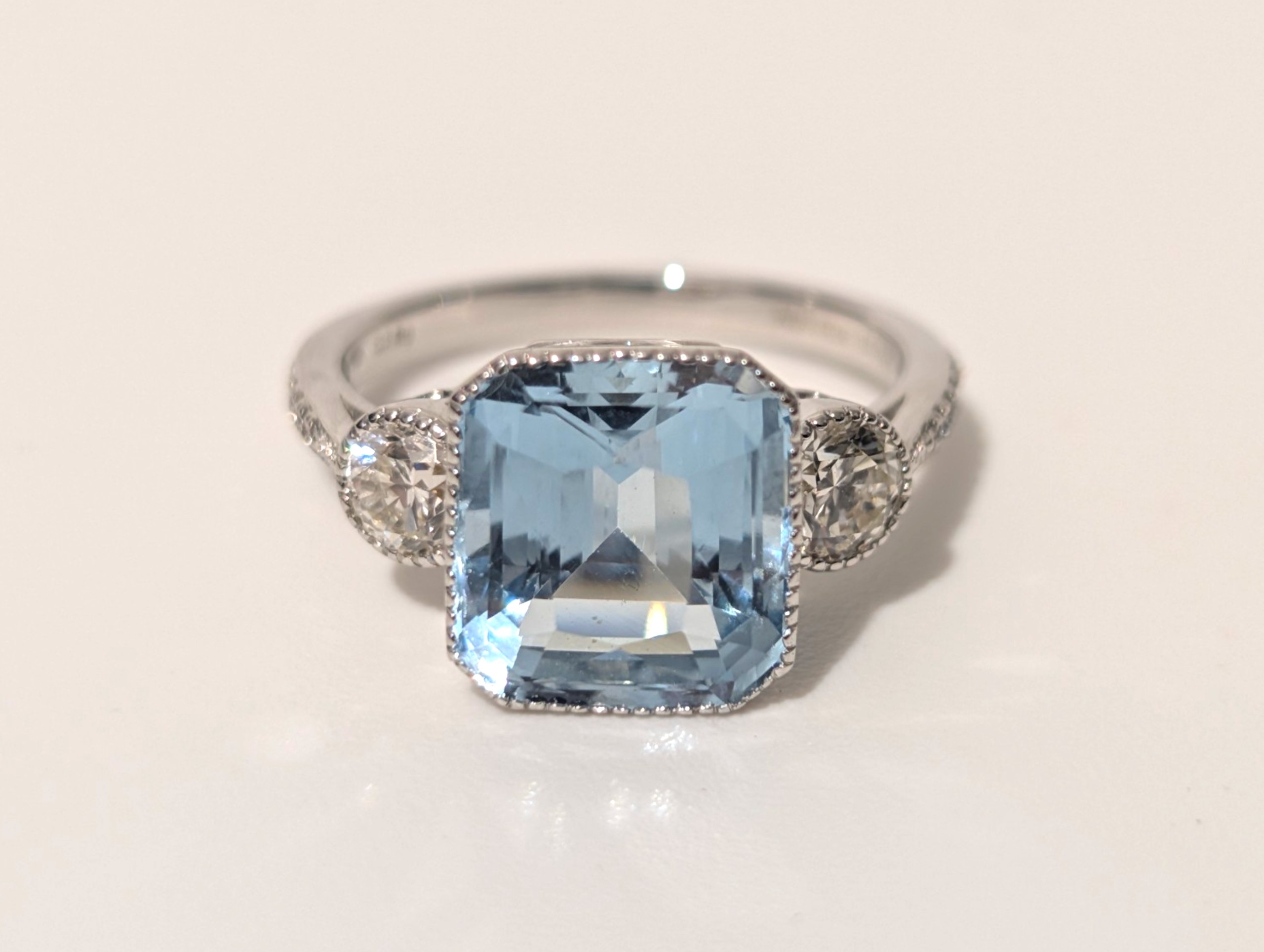 Finished Piece
 Aquamarine & Diamond Ring
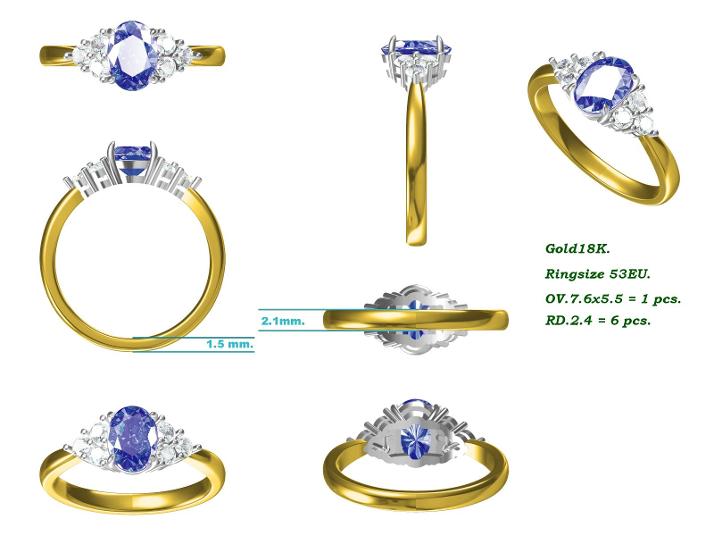 CAD Design
 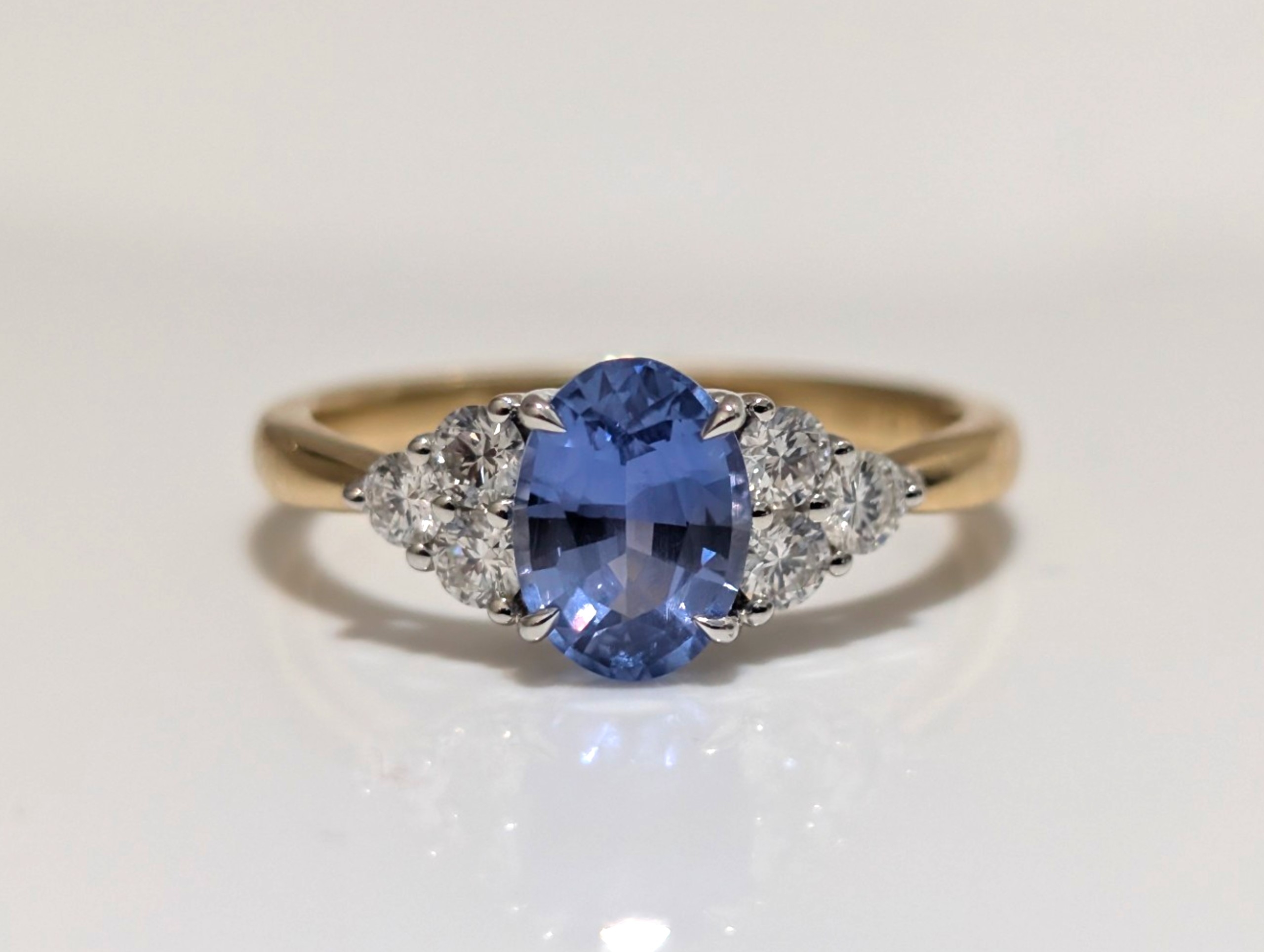 Finished Piece
 Sapphire & Diamond Ring
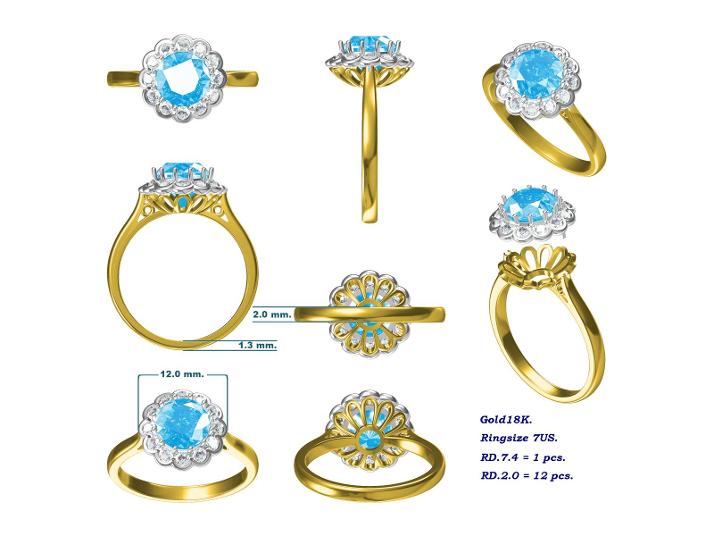 CAD Design
  Finished Piece
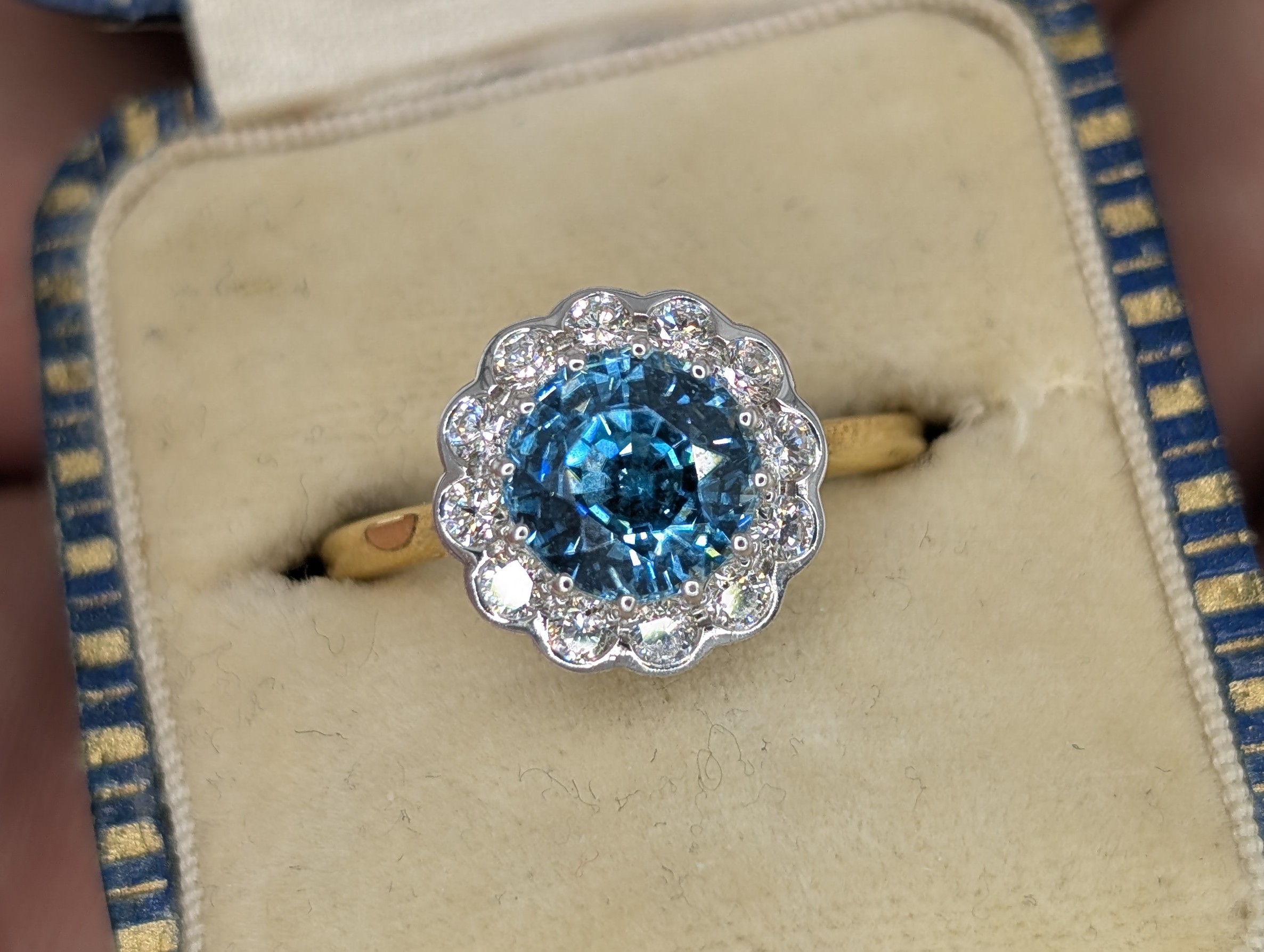
 Blue Zircon & Diamond Ring
Tell Us About Your Custom Piece
Share your idea below and upload any useful inspiration. We will review your enquiry and contact you to discuss the design, materials, timescale and pricing.
Creating a Custom Art Nouveau Ring
Art Nouveau offers a very different approach to antique-inspired jewellery. Rather than strict symmetry or conventional stone layouts, the design can flow around the gemstone, using natural forms, asymmetry and sculptural metalwork as part of the composition.
What Makes a Ring Art Nouveau in Style?
Art Nouveau jewellery is closely associated with flowing lines, natural forms and a move away from rigid historic revival styles. Flowers, leaves, vines, insects and softly curving forms all became important sources of inspiration.
In rings, this can translate into shoulders that appear to grow toward the centre stone, asymmetrical gemstone arrangements, sweeping bezels and settings that follow the natural outline of the design.
The gemstone does not always need to sit in the exact centre of a symmetrical structure. The surrounding metal can move around it more freely.
Art Nouveau design is at its strongest when the metal and gemstone appear to belong to the same flowing form, rather than when botanical details are simply added to a conventional ring.
Key Art Nouveau Ring Details
Flowing Lines
Curving shoulders and sweeping metalwork can guide the eye naturally toward the centre stone.
Botanical Forms
Leaves, flowers, vines and buds can be incorporated into the actual structure rather than added as surface decoration.
Asymmetry
Gemstones and decorative elements do not always need to mirror one another exactly, giving the ring a more organic character.
Unusual Gemstones
Opal, moonstone, coloured gemstones and cabochons can work beautifully within expressive Art Nouveau inspired designs.
Art Nouveau vs Art Deco Rings
Art Nouveau and Art Deco are frequently grouped together because they both sit outside the conventional Victorian jewellery image, but visually they move in almost opposite directions.
Art Nouveau tends toward curves, natural growth, asymmetry and softness. Art Deco favours straight lines, geometry, repetition and symmetry.
A flowing opal ring with leaf-shaped shoulders has a very different design language from an emerald-cut sapphire framed by baguette diamonds.
If your preference is for geometry rather than organic form, see our custom Art Deco style rings page.
Art Nouveau vs Victorian Style Rings
Art Nouveau emerged during the later nineteenth century and around the turn of the twentieth century, but it is visually distinct from many conventional Victorian ring designs.
A Victorian-inspired ring may use a five-stone arrangement, gypsy setting or traditional diamond cluster. Art Nouveau is more likely to make the setting itself part of the artistic composition.
Shoulders can become stems, stone surrounds can resemble petals, and asymmetry can be intentional rather than something to correct.
For more traditional nineteenth-century influence, see our custom Victorian style rings page.
Flowers and Botanical Motifs
Flowers are one of the most recognisable Art Nouveau influences, but a successful floral ring does not need to resemble a literal flower.
A gemstone may form the centre of a soft petal-like setting, or the shoulders may curl upward like leaves or stems.
Diamonds can be used sparingly as small points of light within these forms rather than as a conventional halo.
Keeping the motif slightly abstract often produces a more sophisticated ring than making every petal and leaf overly literal.
Leaf Inspired Rings
Leaves can be incorporated into ring shoulders particularly effectively.
They may appear as softly engraved forms, sculpted metal or small diamond-set sections that taper away from the centre stone.
The direction of the leaves can also be used to create movement, drawing the eye inward rather than simply decorating the band.
Vines and Whiplash Curves
Long sweeping curves are strongly associated with Art Nouveau design. In jewellery, these can create a sense of movement even within a relatively small ring.
One shoulder may rise toward the centre while another curves beneath it, or two lines may cross and separate around a gemstone.
This type of design is particularly suited to bespoke CAD because the curve can be refined until it looks intentional from every angle.
Asymmetrical Art Nouveau Rings
Symmetry is not essential to Art Nouveau. A smaller accent stone may sit on only one side of the centre, or a leaf detail may extend further on one shoulder than the other.
The challenge is making asymmetry feel balanced rather than accidental.
Visual weight, gemstone colour and the direction of the metalwork all need to be considered together.
Art Nouveau Opal Rings
Opal is one of the most natural gemstones for Art Nouveau inspired jewellery. Its changing play-of-colour and smooth cabochon surface work beautifully with flowing metal and botanical forms.
An oval or freeform opal can become the starting point for the entire design, with the gold or white metal following its actual outline.
Small diamonds or coloured gemstones can then be used as accents rather than as a conventional symmetrical surround.
Because opal is less durable than sapphire or diamond, the setting should still provide sensible protection if the ring is intended for regular wear.
See our custom opal rings page for more detailed opal guidance.
Art Nouveau Moonstone Rings
Moonstone can work exceptionally well in Art Nouveau inspired jewellery because its soft glow complements organic design rather than demanding a rigid geometric setting.
Cabochon moonstones can sit inside flowing bezels, leaf motifs or sculptural shoulders.
Diamonds can be added sparingly to create contrast, although a design with too much brilliant-cut diamond work may overpower the quieter character of the moonstone.
Art Nouveau Aquamarine Rings
Aquamarine can give an Art Nouveau ring a lighter and more refined colour palette.
Oval and cushion stones work especially well where the setting uses flowing shoulders rather than straight geometric borders.
Pale blue aquamarine can be combined with small diamonds, opals or other softly coloured gemstones depending on the design.
For broader aquamarine options, see our custom aquamarine rings page.
Art Nouveau Sapphire Rings
Sapphire can introduce stronger colour into an otherwise organic ring.
Rather than surrounding an oval sapphire with a conventional diamond halo, the stone can be framed by curling shoulders, leaf forms or an uneven arrangement of smaller diamonds.
Green, yellow, pink and other fancy-coloured sapphires can also produce less traditional Art Nouveau palettes.
See our custom sapphire rings page for more detailed sapphire information.
Art Nouveau Emerald Rings
Emerald can work beautifully when the design takes inspiration from leaves, stems and natural growth.
Green colour can become part of the botanical theme rather than simply functioning as a centre gemstone.
Because emerald often contains fissures and requires thoughtful setting, the individual stone should determine the degree of protection built into the design.
Art Nouveau Ruby Rings
Ruby gives Art Nouveau jewellery a richer and more dramatic colour direction.
A ruby can form the centre of a floral design, sit within curling goldwork or be combined with smaller contrasting gemstones.
Yellow gold can make the colour particularly rich, while pale metal creates a more restrained contrast.
Garnet and Art Nouveau Design
Garnet can be particularly effective in Art Nouveau inspired rings, especially where the design uses warm yellow gold and darker natural colours.
Deep red almandine or pyrope garnets can produce a rich period feel, while green garnets can reinforce botanical themes in a very different way.
Cabochon or faceted stones may both work depending on the design.
Peridot in Art Nouveau Rings
Peridot can introduce a bright yellow-green colour that suits floral and leaf-inspired designs particularly well.
It can be paired with opal, diamond or other coloured gemstones where a more decorative palette is desired.
As with any gemstone, its durability and intended wear should be considered before choosing an extremely exposed setting.
Unusual Gemstone Combinations
Art Nouveau offers more freedom than many traditional ring styles when it comes to combining colours.
Opal and peridot, moonstone and sapphire, aquamarine and diamond, or garnet with contrasting green stones can all produce interesting results.
The goal should still be coherence. The colours should support the natural theme and metalwork rather than appearing as unrelated gemstones placed together simply for novelty.
Our custom gemstone rings page covers a wider selection of stones.
Cabochon Gemstones
Cabochons are especially useful in Art Nouveau design because their smooth surfaces and softer outlines work naturally with sculptural metal.
Opal, moonstone, garnet and other suitable stones can be cut without conventional faceting, allowing colour and optical effects to become the main focus.
A bezel can then follow the shape closely rather than imposing a geometric claw arrangement.
Bezel Settings in Art Nouveau Rings
Bezels can be particularly effective because the metal can flow directly into the rest of the design.
Instead of appearing as a separate component holding the stone, the bezel may become part of a leaf, petal or sweeping line.
This can also provide useful edge protection for certain gemstones, although the suitability of a bezel still depends on the individual stone.
Yellow Gold Art Nouveau Rings
Yellow gold works beautifully with the organic warmth of Art Nouveau design.
It is especially effective with opal, garnet, peridot, moonstone and richly coloured gemstones.
Because the metal itself can form much of the visual composition, allowing a meaningful amount of visible gold can be more appropriate than covering every surface with small diamonds.
White Gold and Platinum
Pale metal can give Art Nouveau inspired jewellery a more ethereal appearance, particularly when combined with moonstone, aquamarine, opal and diamonds.
It can also help finer sculptural details remain visually quiet around the gemstones.
Metal choice should follow the design rather than a rigid period formula.
Two-Tone Art Nouveau Rings
Two-tone construction can be used to separate botanical elements or emphasise the centre setting.
Yellow-gold stems may flow into a white-metal gemstone setting, or pale metal may be used only around diamonds while the rest of the ring remains warm gold.
Used carefully, this can reinforce the sculptural form without making the ring unnecessarily busy.
Art Nouveau Engagement Rings
Art Nouveau can make a particularly distinctive engagement ring for someone who prefers natural forms to conventional solitaire or halo settings.
Sapphire, diamond and other suitably durable gemstones can form the centre, while botanical shoulders or asymmetric accents establish the style.
Opal and moonstone can also be used, but the wearer should understand their additional care requirements if the ring will be worn frequently.
For the broader bespoke engagement-ring process, visit our bespoke engagement rings page.
Nature-Inspired Engagement Rings
A ring does not need to reproduce a historical Art Nouveau piece exactly to use the movement's natural design principles.
A modern engagement ring can take inspiration from vines, leaves or flowers while remaining clean enough for everyday wear.
This can be particularly effective for customers who want something less conventional without choosing an obviously antique reproduction.
Can an Art Nouveau Ring Be Subtle?
Yes. Organic design does not require an elaborate sculptural ring.
A solitaire may have two softly curling shoulders. A trilogy may use leaf-shaped settings around the side stones. A small cluster may follow an irregular floral outline rather than a conventional circle.
Small details can establish the style without overwhelming the centre stone.
Can an Art Nouveau Ring Be Asymmetrical?
Yes, and intentional asymmetry can be one of the most interesting parts of the design.
One side may carry a smaller coloured gemstone while the other uses a curling leaf, or the centre gemstone may sit slightly off-axis within a sweeping arrangement.
The design still needs visual balance, which is where careful CAD development becomes particularly valuable.
Using an Original Art Nouveau Ring as Inspiration
Genuine period jewellery can provide excellent references for the relationship between gemstones and metalwork.
You may like the shoulder treatment from one ring, the asymmetry of another and the gemstone palette of a third.
Those influences can be brought together into a new design rather than simply reproducing one antique piece exactly.
Using Your Own Gemstone
Potentially, yes. An existing gemstone can become the starting point for the entire Art Nouveau design.
This works especially well with opals, cabochons and unusually shaped stones because the surrounding metal can be developed specifically around their outline.
Exact measurements and condition should be considered before the detailed setting is designed.
Resetting an Heirloom Gemstone
An inherited gemstone can be incorporated into a completely new Art Nouveau inspired ring.
An opal from an old cluster might become part of a flowing botanical design, while an inherited sapphire could be given leaf-shaped shoulders and asymmetric diamond accents.
This retains the sentimental stone while allowing the new jewellery to reflect the current wearer's taste.
Art Nouveau Rings for Everyday Wear
Sculptural design needs to be balanced against practicality. A delicate-looking vine or leaf still needs enough physical substance to survive the intended wear.
Sharp projections can be softened, excessively thin sections avoided and setting height controlled where necessary.
The centre gemstone should also influence the design. Sapphire and diamond allow different choices from opal or moonstone, which generally deserve more protection and careful wear.
How Much Does a Custom Art Nouveau Ring Cost?
The price depends on the gemstones, precious metal and amount of sculptural work involved.
A restrained sapphire ring with flowing shoulders can be considerably simpler than a complex opal design containing numerous individually set accent stones and detailed botanical metalwork.
Larger coloured gemstones and specialist stones can also account for a substantial part of the total cost.
If you have a target budget, include it in the enquiry so the gemstone selection and design complexity can be balanced from the beginning.
Why CAD Is Particularly Useful for Art Nouveau Design
Organic designs need to work from every viewing angle. A curve that looks elegant from above may appear heavy or awkward from the side if it is not developed carefully.
CAD allows the flow of the shoulders, height of the centre stone, asymmetry, metal thickness and gemstone placement to be reviewed before production begins.
It is also extremely useful when the design is being built around an irregular opal or other non-standard gemstone.
The detailed 3D CAD carries a $25 non-refundable design fee. If the commission proceeds, the $25 is deducted from the final bill.
How This Differs From Our Antique Style Rings Page
Our broader custom antique style rings page covers several different historical design directions.
This page focuses specifically on Art Nouveau: flowing organic lines, botanical forms, asymmetry, unusual gemstone combinations and sculptural settings influenced by nature.
Approval and Production
You review the final CAD before production begins. Once the design is approved, a 40% deposit of the quoted price confirms your order.
Your Art Nouveau ring is then created by our workshop. Once complete, we show you the finished jewellery before the remaining 60% is paid and the ring is securely dispatched.
What makes a ring Art Nouveau in style?
Flowing lines, botanical forms, asymmetry, natural motifs and expressive gemstone arrangements are among the strongest characteristics of Art Nouveau inspired ring design.
Can you make an Art Nouveau ring from an inspiration photo?
Yes. Original jewellery and other visual references can be used to identify the forms, gemstone arrangements and details you like before developing a new bespoke design.
Which gemstones suit Art Nouveau rings?
Opal, moonstone, aquamarine, sapphire, emerald, ruby, garnet, peridot and diamond can all work depending on the design and intended wear.
Can you make an Art Nouveau opal ring?
Yes. Opal is particularly well suited to flowing and organic designs, and the setting can be developed around the individual shape and play-of-colour of the stone.
Can an Art Nouveau ring be asymmetrical?
Yes. Intentional asymmetry is entirely appropriate and can be used through gemstone placement, shoulders, leaves or other sculptural elements.
Can you make an Art Nouveau engagement ring?
Yes. The style can be adapted into an engagement ring using botanical shoulders, flowing bezels, asymmetric accents and gemstones suitable for the wearer's lifestyle.
Can I use my own gemstone?
Potentially, yes. Exact measurements and condition should be considered before the new setting is designed around it.
Does an Art Nouveau ring have to be yellow gold?
No. Yellow gold works particularly well with many organic designs, but white gold, platinum and two-tone combinations can also be used where they suit the overall piece.
How much does the CAD design cost?
The detailed 3D CAD costs $25. The fee is non-refundable, but it is deducted from the final bill if the ring proceeds to production.
When do I pay for my Art Nouveau ring?
A 40% deposit is required after you approve the final CAD. The remaining 60% is paid after you have seen the finished jewellery and before dispatch.
Have an Art Nouveau Ring in Mind?
Send us the gemstones, botanical forms and flowing details that inspire you, or share photographs of original Art Nouveau jewellery and we can begin developing your bespoke design.
Start Your Enquiry