
Custom Art Deco Engagement Rings
Create an engagement ring inspired by the geometry and detail of the Art Deco era, designed around your chosen gemstone, diamond layout and preferred proportions.
How It Works
From the first inspiration image to the final CAD, every detail is refined before your ring enters production.
Tell Us Your Idea
Share your preferred centre stone, Art Deco details, precious metal, budget and inspiration images.
Refine the Design
We develop the geometry, stone layout, proportions and period details around your chosen centre.
Receive Your Quote
Once the concept is agreed, we provide a clear quote based on the stones, metal and complexity of the design.
3D CAD Design
Proceed with a detailed CAD for a $25 non-refundable design fee, deducted from the final bill if the piece goes ahead.
Approve Your Ring
Review the final CAD before production. Once approved, a 40% deposit confirms your order.
Made & Delivered
We show you the finished ring before the remaining 60% is paid and your jewellery is dispatched.
Some of Our Bespoke Creations
Explore a selection of pieces created by us, from the production-ready CAD design through to the finished jewellery.
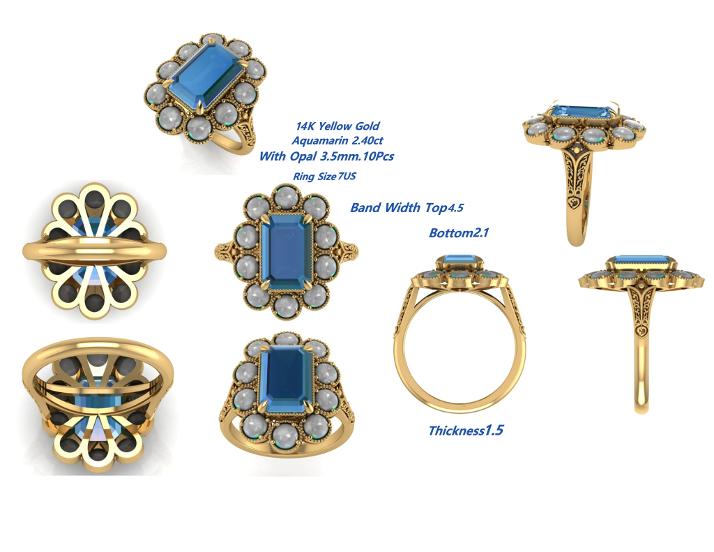 CAD Design
 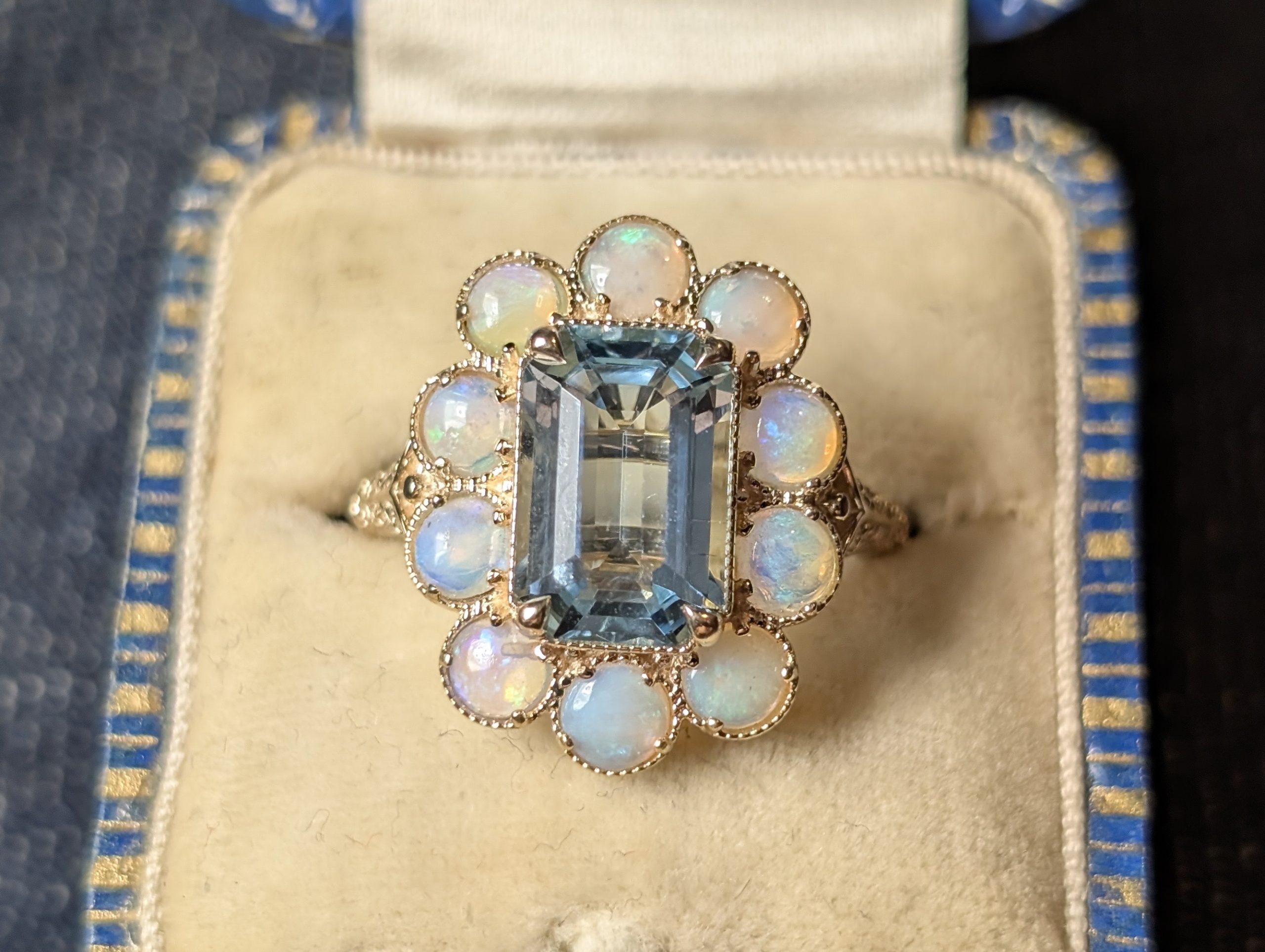 Finished Piece
 Aquamarine & Opal Ring
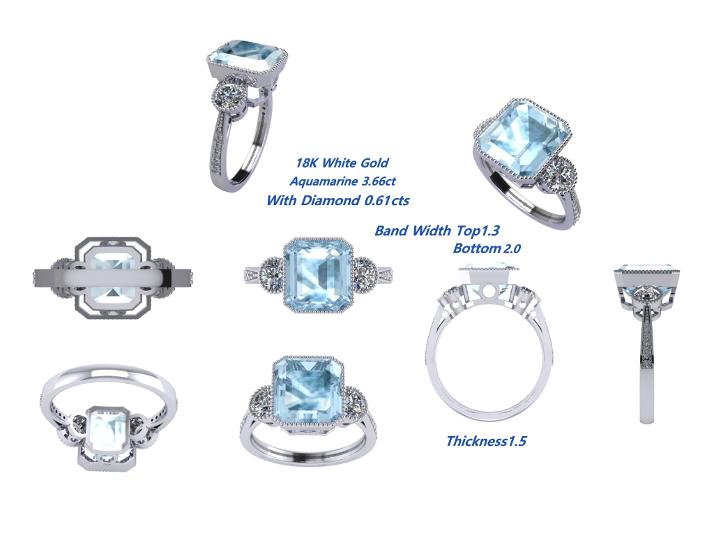 CAD Design
 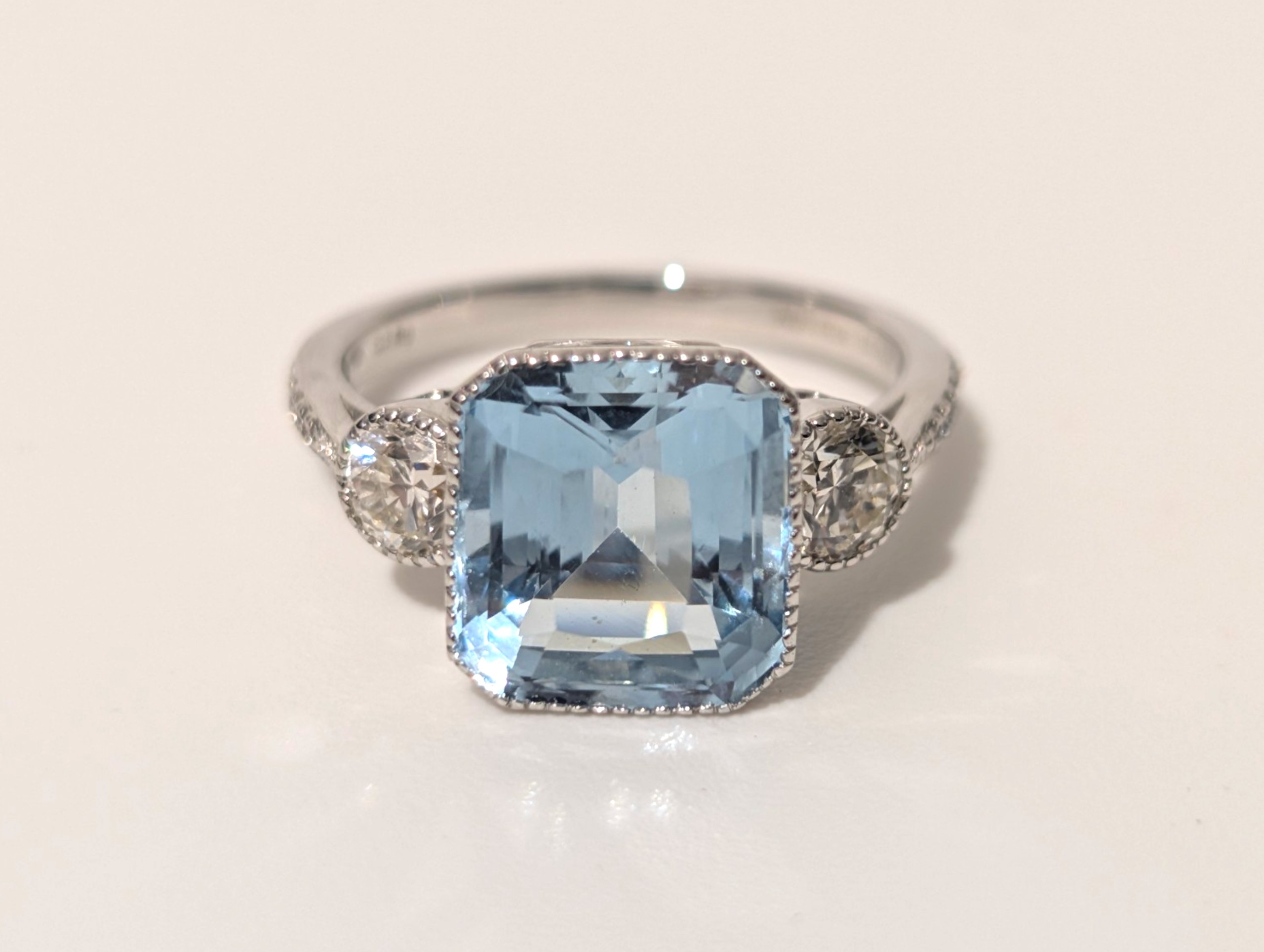 Finished Piece
 Aquamarine & Diamond Ring
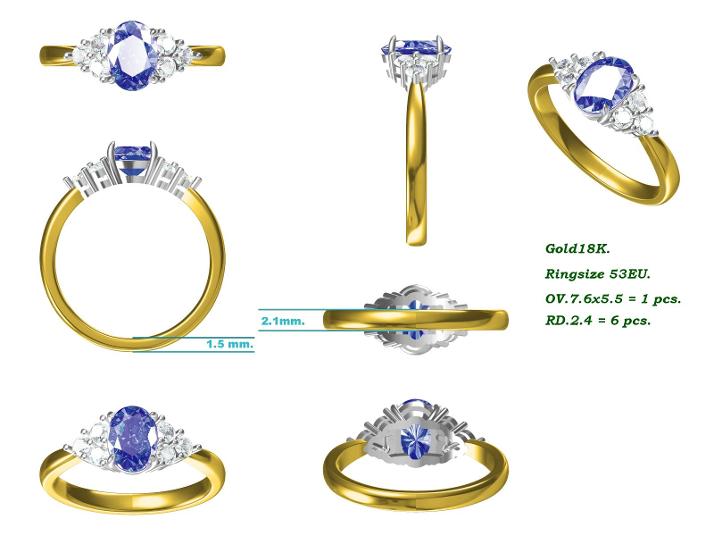 CAD Design
 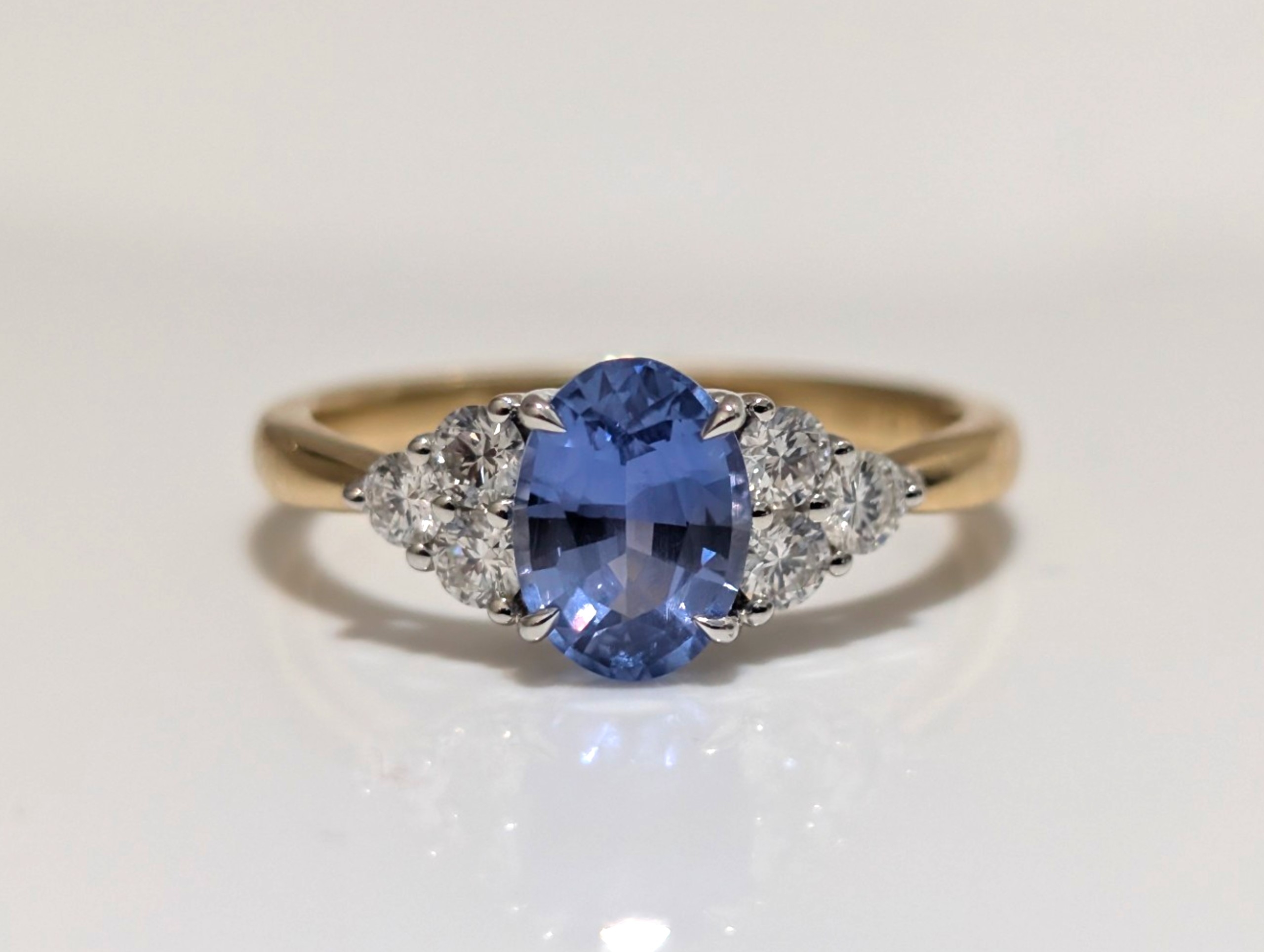 Finished Piece
 Sapphire & Diamond Ring
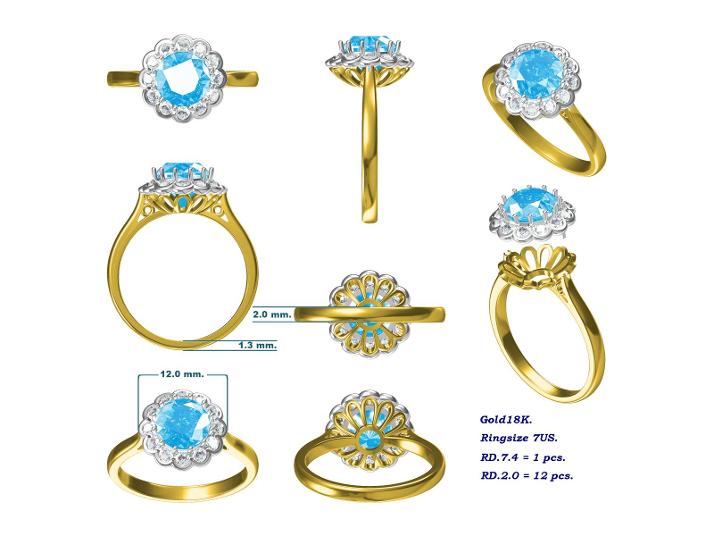 CAD Design
 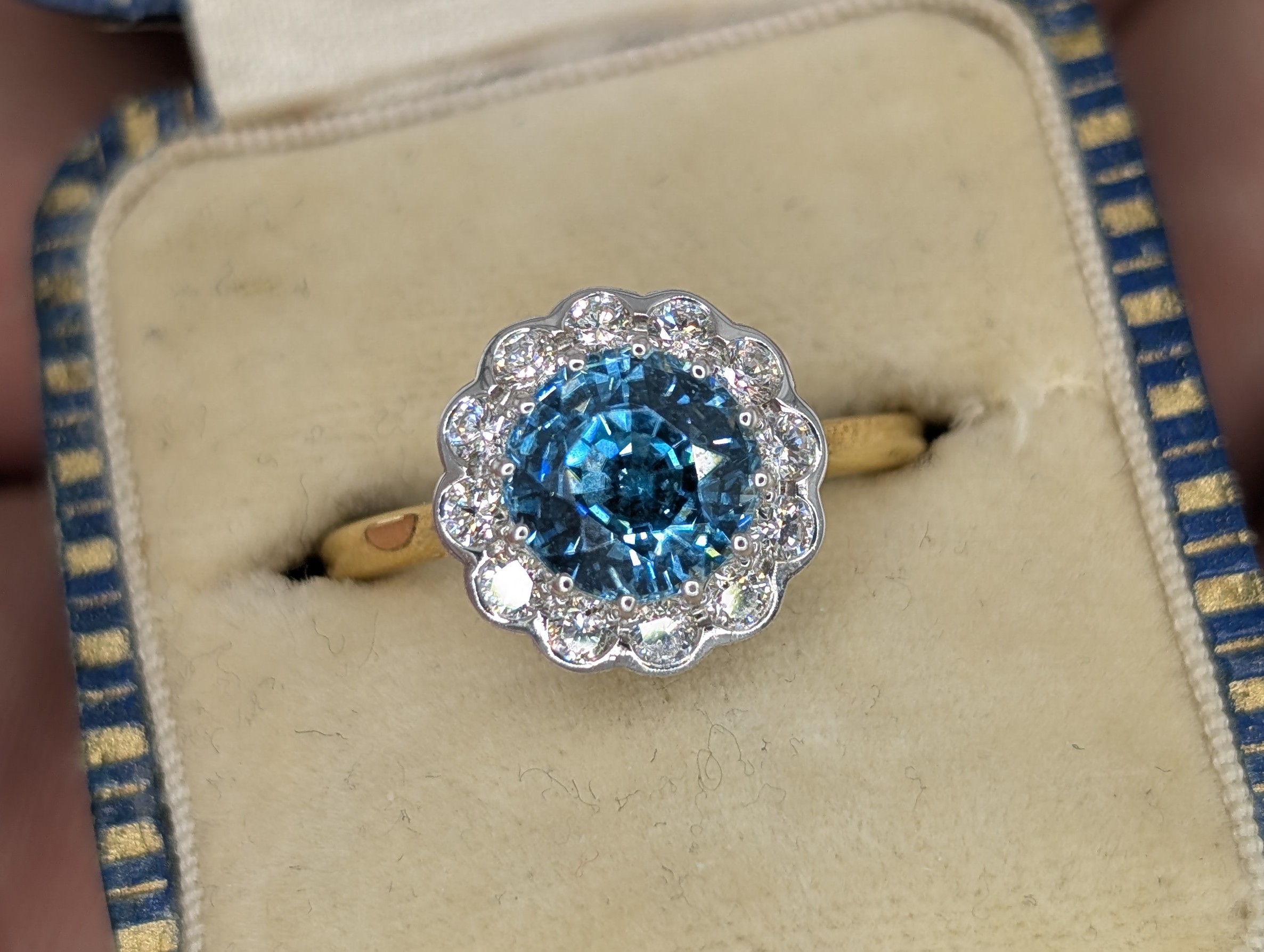 Finished Piece
 Blue Zircon & Diamond Ring
Tell Us About Your Custom Piece
Share your idea below and upload any useful inspiration. We will review your enquiry and contact you to discuss the design, materials, timescale and pricing.
Creating a Custom Art Deco Engagement Ring
Art Deco engagement rings are defined less by ornament for its own sake and more by structure: symmetry, geometric stone layouts, contrasting colours and carefully controlled proportions. A bespoke design allows those period influences to be developed around the exact centre stone and the way the ring will be worn.
What Makes an Engagement Ring Art Deco?
Art Deco jewellery is strongly associated with the 1920s and 1930s, although its influence extends beyond rigid date boundaries. In rings, the style often relies on geometry rather than the softer, flowing forms seen in earlier jewellery.
Rectangles, octagons, stepped outlines, calibrated gemstone borders, baguette diamonds and strong symmetry are all useful design elements.
Pale metal such as platinum or white gold can make the stones appear almost architectural, while sapphire, emerald and ruby provide sharp areas of colour against diamonds.
A convincing Art Deco engagement ring is usually about proportion before decoration. The centre stone, border, side stones and shoulders should look like parts of one geometric composition.
Choosing the Centre Stone
The centre stone has a major influence on the entire ring. A long emerald-cut diamond naturally suggests a different composition from an oval sapphire or cushion-cut ruby.
Rather than forcing every gemstone into the same geometric surround, the design should grow from its exact outline and dimensions.
This is particularly important with coloured gemstones and antique-cut diamonds, which may not conform to standard calibrated sizes.
Best Centre Stone Shapes for Art Deco Engagement Rings
Emerald Cut
Crisp rectangular lines and step facets make emerald cuts one of the strongest choices for architectural Art Deco designs.
Oval
An oval centre can be contrasted against a geometric border, producing the tension between curves and straight lines often seen in period-inspired jewellery.
Cushion
Softer corners suit octagonal surrounds, stepped diamond frames and antique-inspired geometric clusters.
Round
Round diamonds and gemstones can sit inside square, octagonal or target-style borders to create a strongly geometric outline.
Art Deco Diamond Engagement Rings
Diamond-only designs allow the geometry of the ring to become the main feature. Instead of relying on colour contrast, different diamond cuts can create structure.
An emerald-cut centre can be paired with baguettes. A round diamond can sit within an octagonal border. Smaller stones can create stepped shoulders or extend the setting horizontally across the finger.
Modern brilliant diamonds can be used, but genuine old-cut diamonds can also produce a more individual period character.
For broader diamond guidance, see our custom diamond rings page.
Art Deco Sapphire Engagement Rings
Blue sapphire is one of the most natural coloured-stone choices for an Art Deco engagement ring.
Strong blue colour contrasts sharply against diamonds and white metal, while oval, cushion and emerald-cut sapphires can all form the centre of highly structured layouts.
Sapphire can also be used as calibrated accent stones around a diamond, producing the coloured target borders strongly associated with Art Deco jewellery.
For sapphire-specific engagement-ring guidance, see our custom sapphire engagement rings page.
Art Deco Emerald Engagement Rings
Emerald gives Art Deco jewellery one of its strongest colour contrasts. Rich green against diamond and platinum can create an immediately recognisable geometric look.
Emerald-cut centres work particularly naturally with baguette diamonds and stepped shoulders, while oval stones can be framed inside rectangular or octagonal surrounds.
Because emerald requires more considered wear than sapphire or diamond, the setting should balance the visual openness of the design with sensible protection.
See our custom emerald engagement rings page for more.
Art Deco Ruby Engagement Rings
Ruby provides a vivid red centre that can work exceptionally well against white diamonds and pale metal.
Oval and cushion rubies can sit inside geometric diamond borders, while rectangular stones can be developed into stronger architectural compositions.
Ruby can also appear as calibrated accent stones around a diamond centre, creating a coloured target effect.
For more detailed ruby guidance, see our custom ruby engagement rings page.
Art Deco Aquamarine Engagement Rings
Aquamarine works particularly well where the design calls for a larger geometric centre stone.
Emerald-cut and rectangular aquamarines can provide substantial scale, while pale blue colour works naturally against white diamonds and platinum or white gold.
For engagement-ring specific considerations, visit our custom aquamarine engagement rings page.
Art Deco Opal Engagement Rings
Opal produces an interesting contrast within Art Deco design because the gemstone itself can be fluid and unpredictable while the surrounding setting is highly structured.
A round or oval opal can sit within an angular diamond border, allowing the geometry to frame the play-of-colour.
Because opal requires additional care, the engagement-ring setting should also be designed with protection in mind.
See our custom opal engagement rings page for the practical considerations.
Baguette Diamonds
Baguettes are one of the most useful diamond shapes in Art Deco engagement-ring design.
Their straight edges can extend the lines of a rectangular centre, taper into the shoulders or create stepped arrangements around a central gemstone.
Because they produce broader flashes rather than the sparkle pattern of a modern round brilliant, they can also create useful visual contrast within the same ring.
Tapered Baguettes and Geometric Side Stones
Tapered baguettes can create a clean transition between a centre stone and the shank, particularly with emerald-cut or rectangular centres.
Trapezoid, shield and other geometric diamond shapes may also be used where the proportions of the design call for them.
The key is not to include shaped stones simply because they look Art Deco in isolation. Their angles should make sense within the overall geometry of the ring.
Art Deco Trilogy Engagement Rings
A trilogy does not need to look traditional. With the right combination of shapes, a three-stone ring can have a very strong Art Deco character.
An emerald-cut centre with tapered baguettes is one of the clearest examples. A sapphire centre with angular diamond side stones can create an equally strong period influence.
The advantage of a trilogy is that the geometry can remain crisp without creating an excessively broad ring.
Art Deco Target Engagement Rings
Target rings use one or more contrasting borders around a centre stone. Sapphire, ruby or emerald may form a coloured ring around a diamond, or the arrangement can be reversed with a coloured gemstone at the centre.
The effect can be subtle with one fine calibrated border or much stronger with multiple geometric layers.
These designs depend heavily on accurate stone placement and proportion, making them particularly suitable for a custom CAD-led process.
Geometric Cluster Engagement Rings
A geometric cluster builds the overall outline of the engagement ring from multiple surrounding stones rather than simply following the shape of the centre.
A round centre can become an octagonal ring. An oval sapphire might sit within a rectangular diamond frame. A cushion centre can be given stepped corners and side details.
This is one of the most effective ways to create an unmistakably Art Deco appearance without needing an exceptionally large centre stone.
Art Deco Halo Engagement Rings
A conventional modern halo usually follows the outline of the centre stone closely. An Art Deco inspired halo can take a more architectural approach.
The outer line might become octagonal or rectangular, or different diamond shapes may be introduced at the cardinal points or corners.
This allows the surrounding setting to become part of the design rather than simply making the centre appear larger.
Milgrain in Art Deco Engagement Rings
Milgrain is a fine beaded edge that can soften the boundary between metal and stone.
In an Art Deco inspired engagement ring, it can be used around diamond borders, bezels and geometric sections to add period character.
It is most effective when used selectively. Covering every surface with milgrain can weaken the clean geometry that gives the style its strength.
Openwork and Fine Detailing
Some Art Deco inspired settings use open spaces between geometric sections rather than filling every area with metal or gemstones.
This can make a substantial ring feel lighter and allow the underlying structure to become visible.
For an engagement ring, however, delicate-looking detailing still needs enough physical substance for regular wear.
Platinum Art Deco Engagement Rings
Platinum is naturally suited to Art Deco inspired rings because pale metal allows diamonds and coloured gemstones to dominate visually.
It also works particularly well for geometric settings containing numerous individual stones and detailed sections.
The choice should still be based on the actual design rather than using platinum simply because it is historically associated with fine jewellery of the period.
White Gold Art Deco Engagement Rings
White gold can create a similarly cool visual effect and works effectively with diamonds, sapphire, emerald, ruby and aquamarine.
It can be particularly useful where the customer prefers the appearance of pale metal but wants the ring made in gold.
Yellow Gold Art Deco Engagement Rings
Art Deco inspired jewellery does not need to be made entirely in white metal.
Yellow gold can create a richer contrast and works particularly well in two-tone designs where the shank is yellow gold but the diamond-set upper section remains white.
This can give the ring a less conventional interpretation of the period while retaining the geometric structure.
Two-Tone Art Deco Engagement Rings
Two-tone construction can help separate different visual elements within a geometric design.
A yellow gold shank may support a white gold or platinum-coloured diamond setting, or small sections of contrasting metal can be used to reinforce particular lines within the ring.
The contrast should still serve the design rather than becoming decoration for its own sake.
Old Cut Diamonds in Art Deco Engagement Rings
Genuine old-cut diamonds can introduce a softer and less uniform brilliance than modern brilliant cuts.
That can create an interesting contrast against the strict geometry of an Art Deco inspired setting.
Because old diamonds often have individual outlines and depth proportions, the ring should be designed around the actual stone rather than assuming a standard calibrated size.
Modern Diamonds in Period-Inspired Rings
A newly made Art Deco engagement ring does not need antique diamonds to feel convincing.
Modern diamonds can work extremely well when the surrounding geometry, metalwork, proportions and stone layout establish the period influence.
This can also make it easier to source particular dimensions or matching side stones where the design depends on strict symmetry.
Can an Art Deco Engagement Ring Be Minimal?
Yes. Art Deco does not automatically mean a very large diamond panel covering half the finger.
A clean emerald-cut centre with two baguette side stones can have strong period character while remaining restrained.
Similarly, a solitaire can incorporate subtle stepped shoulders, an octagonal bezel or small geometric diamond details without becoming ornate.
Art Deco Engagement Rings for Everyday Wear
Engagement rings need to work outside photographs. Broad geometric designs, pointed corners and high settings can all look impressive but should be balanced against the wearer's lifestyle.
The most exposed points can be reinforced, setting height can be kept sensible and the shank can be proportioned to support the upper section without becoming unnecessarily heavy.
The centre gemstone also matters. A sapphire or diamond may tolerate regular wear differently from an opal or emerald, so the design should reflect the actual stone being used.
Low-Profile Art Deco Engagement Rings
A geometric ring can often be designed with a relatively low profile, particularly where the centre stone is not excessively deep.
This can make a broad cluster or target ring feel more secure and less likely to catch during everyday wear.
The trade-off is that a very low setting may prevent a straight wedding band from sitting tightly beside it.
Designing Around the Wedding Band
Wedding-band fit should be discussed before the engagement ring is finalised.
Some geometric rings can be raised enough for a straight wedding band to pass underneath the outer setting. Others naturally create a wider footprint at finger level and may suit a shaped band instead.
Neither approach is wrong, but deciding during CAD prevents the relationship between the two rings from becoming an afterthought.
Art Deco Engagement Ring and Wedding Band Sets
A shaped wedding band can become part of the overall Art Deco composition.
Instead of trying to hide the fact that the band curves around the engagement ring, geometric steps or diamond details can be incorporated into its outline deliberately.
This is particularly useful with target rings and broad clusters where a completely straight band would otherwise leave a noticeable gap.
Choosing an Art Deco Engagement Ring as a Surprise
Art Deco is a strong style, so it is worth establishing whether the recipient already likes geometric or vintage jewellery.
Look at the shapes, metals and gemstones they already wear. Saved images can also reveal whether they prefer highly detailed target rings or much cleaner three-stone designs.
You do not need to identify the precise historical terminology. Inspiration photographs can communicate the visual direction clearly.
Ring Size for a Surprise Proposal
Ring size deserves particular attention with geometric engagement rings because some designs have diamonds or detailing extending onto the shoulders.
More complex shanks may have less scope for major resizing than a plain band, so if the size is uncertain, tell us before the design is finalised.
Using Your Own Centre Stone
Potentially, yes. A diamond or coloured gemstone you already own can form the centre of a new Art Deco engagement ring.
Exact dimensions are especially important because the surrounding geometry needs to be built accurately around the actual centre stone.
Antique diamonds and inherited gemstones may also have individual depth or outline characteristics that influence the setting.
Resetting an Heirloom Stone
An inherited gemstone can be retained while the old mounting is completely reimagined.
A sapphire from a traditional cluster could become the centre of a geometric target ring. An old diamond could be framed by baguettes, while an inherited emerald could be reset into a lower, more structured design.
The new engagement ring can therefore preserve the important gemstone without requiring the original setting to be reproduced.
How Much Does a Custom Art Deco Engagement Ring Cost?
The cost depends heavily on the centre stone and the complexity of the surrounding geometry.
A clean three-stone ring containing one centre and two baguettes can require far fewer diamonds than an intricate target ring with several calibrated borders.
Shaped diamonds can also influence the cost because a design may require stones of particular dimensions rather than simply a quantity of small round diamonds.
Precious metal weight, stone setting and the complexity of construction all contribute to the final quote.
Centre Stone vs Setting Budget
One of the most useful parts of a bespoke commission is deciding where the budget should have the greatest visual effect.
A customer might choose a stronger centre stone with a relatively clean geometric setting. Another may prefer a smaller centre surrounded by elaborate diamond work.
Providing a realistic overall budget at the beginning allows these decisions to be made before the ring becomes overcomplicated.
How This Differs From Our Custom Art Deco Style Rings Page
Our broader custom Art Deco style rings page covers Art Deco inspired rings generally, including cocktail, statement and other bespoke jewellery.
This page is specifically focused on engagement rings: everyday wear, proposal considerations, wedding-band fit, centre-stone durability and creating a geometric design intended to be worn long term.
Why CAD Is So Useful for Art Deco Design
Art Deco inspired rings depend heavily on alignment and proportion. A border that is slightly too wide or a baguette set at the wrong angle can change the entire appearance.
CAD allows the centre stone, side diamonds, borders, shoulders and overall footprint to be reviewed before production begins.
It is also useful for checking setting height and wedding-band clearance, particularly with broad geometric clusters.
The detailed 3D CAD carries a $25 non-refundable design fee. If the commission proceeds, the $25 is deducted from the final bill.
Approval and Production
You review the final CAD before committing to production. Once approved, a 40% deposit of the quoted price confirms the commission.
Your Art Deco engagement ring is then created by our workshop. Once complete, we show you the finished piece before the remaining 60% is paid and the ring is securely dispatched.
Can you make an Art Deco engagement ring from an inspiration photo?
Yes. Photographs can be used to identify the geometry, gemstone layout and period details you like before developing a new design around your chosen centre stone.
Which gemstones work best in Art Deco engagement rings?
Diamond, sapphire, emerald, ruby and aquamarine can all work particularly well, although the suitability of any gemstone for regular wear should be considered individually.
Can you make an Art Deco sapphire engagement ring?
Yes. Sapphire works naturally with diamonds, baguettes, target borders and white-metal geometric settings.
Can you use old cut diamonds?
Potentially, yes. Antique-cut diamonds can be incorporated into new settings designed around their individual measurements and proportions.
Can I use my own centre stone?
Potentially, yes. Exact measurements and condition should be considered so the geometric setting can be developed around the actual gemstone.
Can an Art Deco engagement ring sit flush with a wedding band?
In many designs, yes. If close or flush fit matters, tell us before the CAD is finalised so setting height and lower-profile geometry can be planned around the future band.
Can I have an Art Deco ring in yellow gold?
Yes. Yellow gold can be used throughout the ring or combined with white metal around diamonds for a two-tone Art Deco design.
Does the design have to be very elaborate?
No. A restrained emerald-cut centre with baguette side stones or subtle stepped shoulders can have strong Art Deco character without becoming highly ornate.
How much does the CAD design cost?
The detailed 3D CAD costs $25. The fee is non-refundable, but it is deducted from the final bill if the ring proceeds to production.
When do I pay for my Art Deco engagement ring?
A 40% deposit is required after you approve the final CAD. The remaining 60% is paid after you have seen the completed ring and before dispatch.
Have an Art Deco Engagement Ring in Mind?
Send us the centre stone, geometric details and period pieces that inspire you, or simply share a few reference images and we can begin developing your bespoke design.
Start Your Enquiry