
Bespoke Opal and Diamond Rings
Create an opal and diamond ring around the individual colour, pattern and shape of your centre stone, with the diamond setting developed specifically to complement and protect it.
How It Works
We begin with the opal and develop the diamonds, setting and proportions around the character of the actual stone.
Tell Us Your Idea
Share your preferred opal type, diamond layout, precious metal, budget and inspiration images.
Choose & Refine
We refine the opal, diamond shapes, stone sizes and setting until the overall ring feels balanced.
Receive Your Quote
Once the concept is agreed, we provide a clear quote based on the opal, diamonds, metal and complexity of the design.
3D CAD Design
Proceed with a detailed CAD for a $25 non-refundable design fee, deducted from the final bill if the piece goes ahead.
Approve Your Ring
Review the final CAD before production. Once approved, a 40% deposit confirms your order.
Made & Delivered
We show you the finished ring before the remaining 60% is paid and your jewellery is dispatched.
Some of Our Bespoke Creations
Explore a selection of pieces created by us, from the production-ready CAD design through to the finished jewellery.
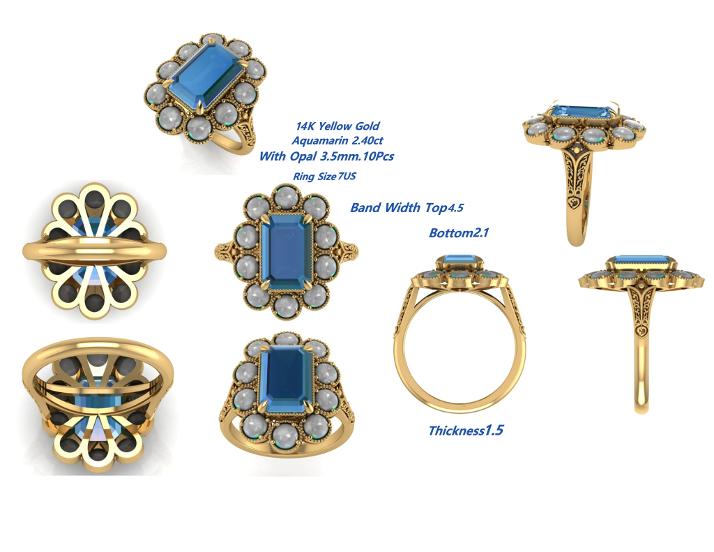 CAD Design
 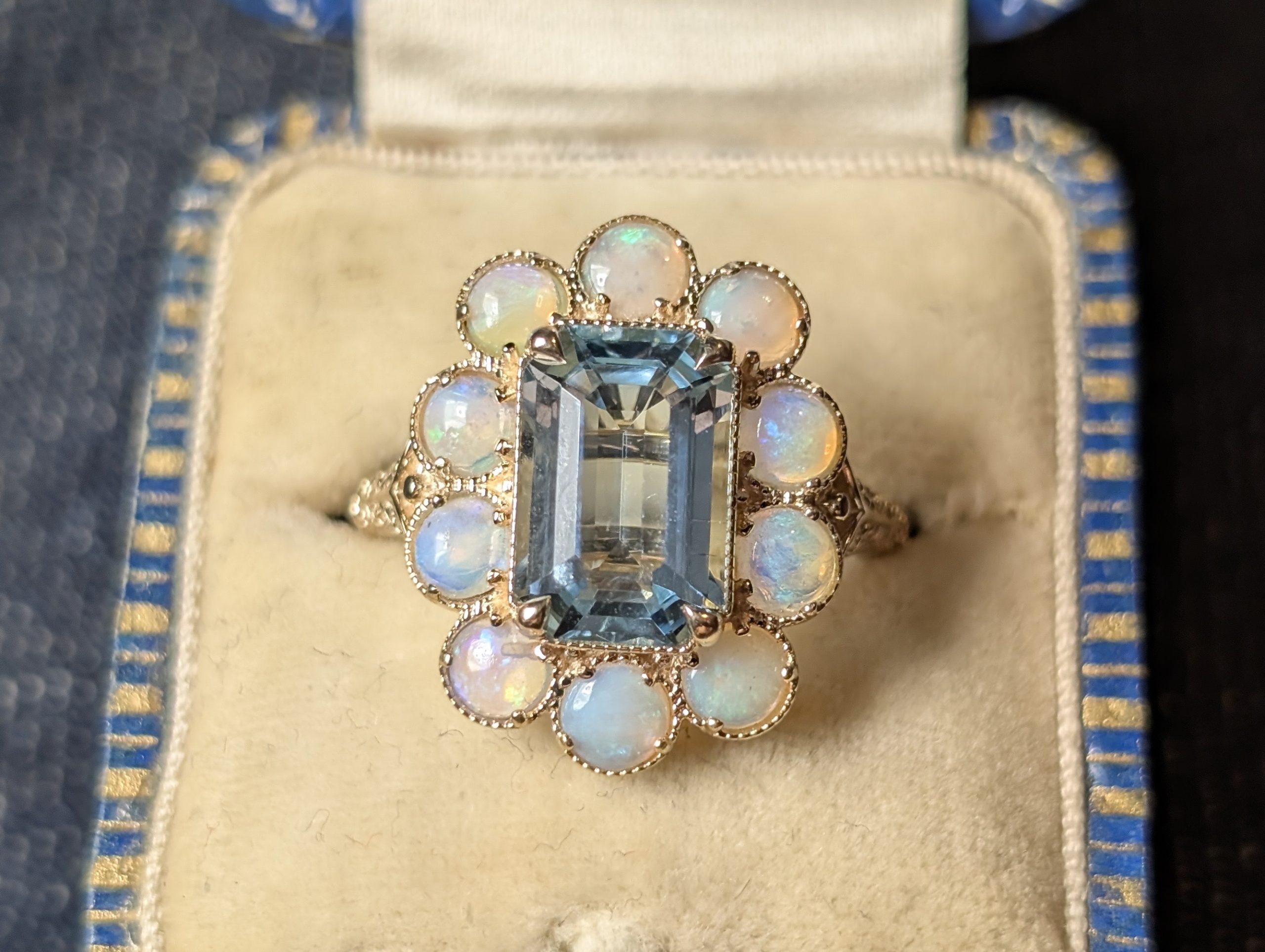 Finished Piece
 Aquamarine & Opal Ring
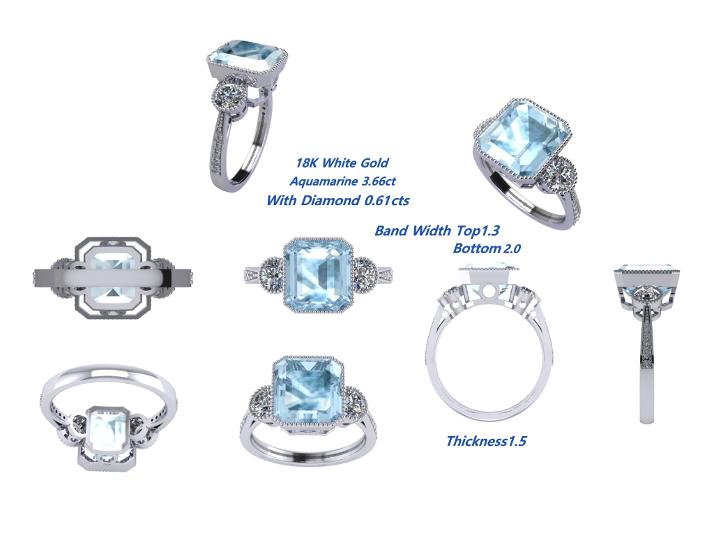 CAD Design
 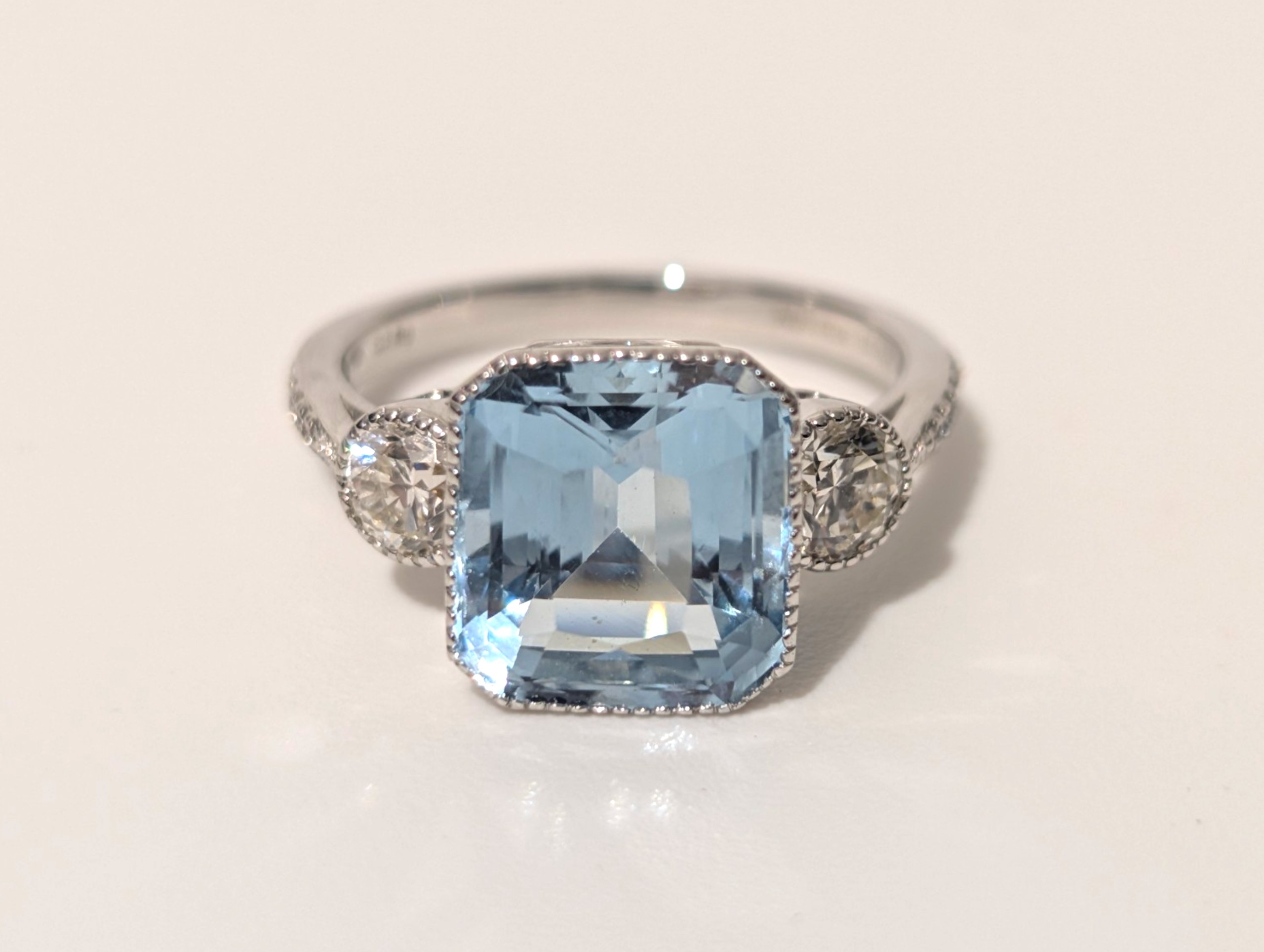 Finished Piece
 Aquamarine & Diamond Ring
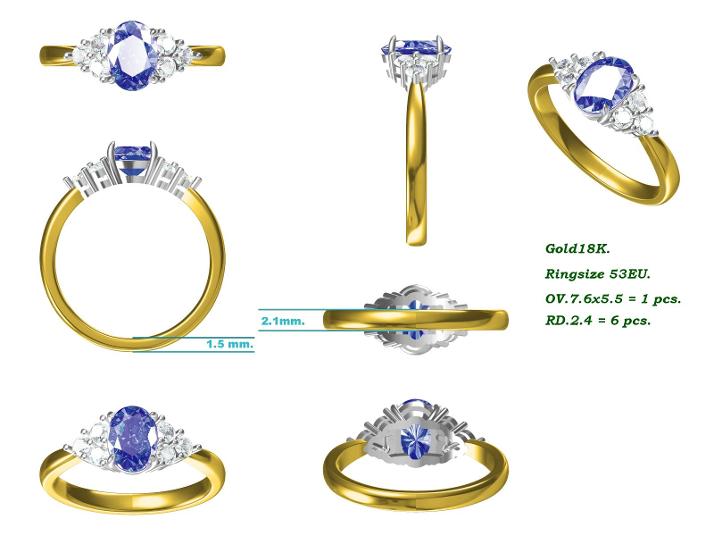 CAD Design
 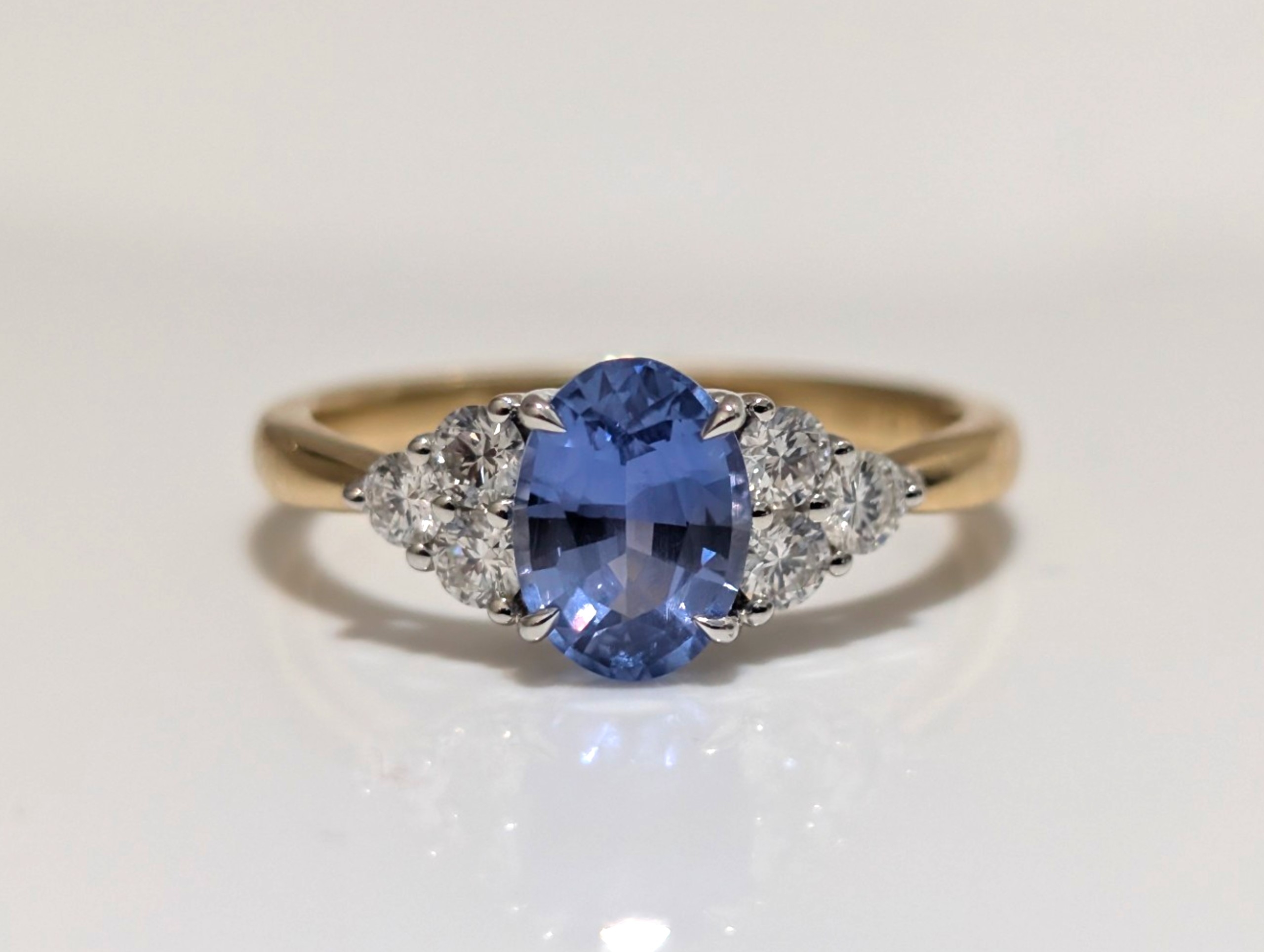 Finished Piece
 Sapphire & Diamond Ring
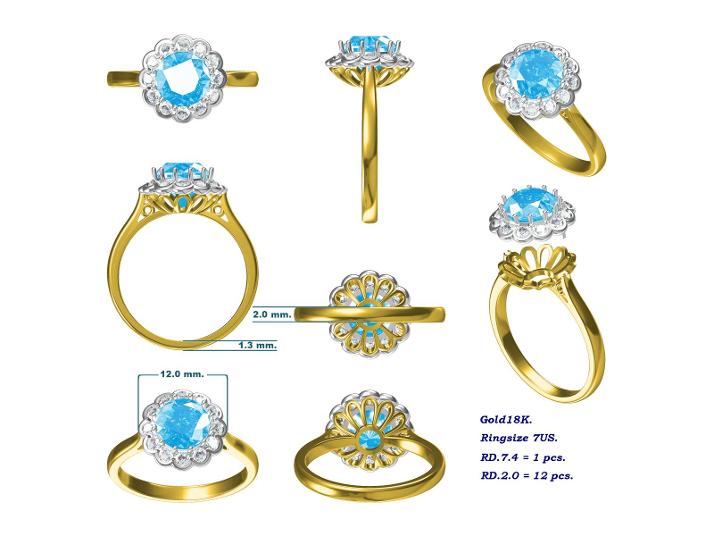 CAD Design
 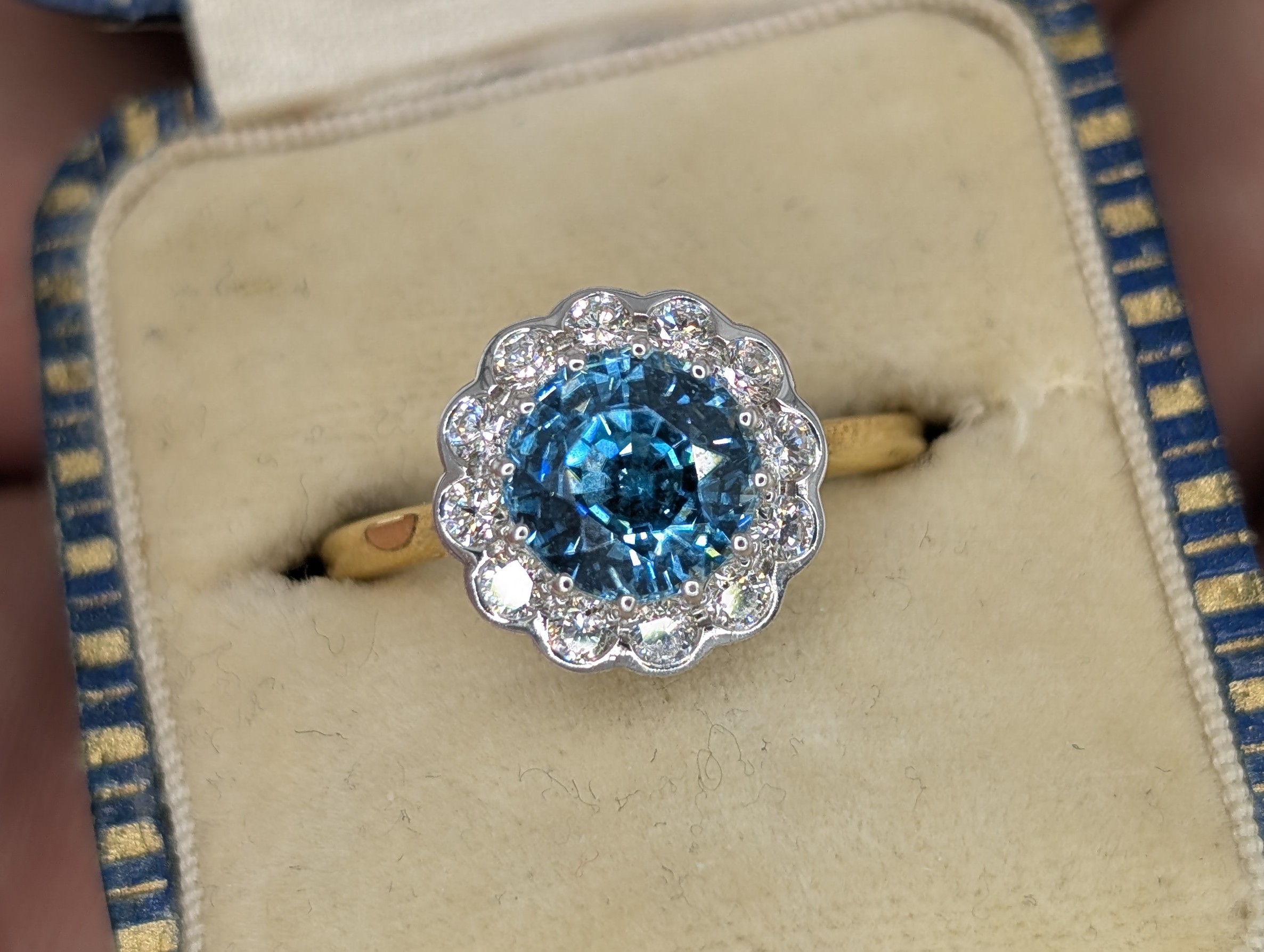 Finished Piece
 Blue Zircon & Diamond Ring
Tell Us About Your Custom Piece
Share your idea below and upload any useful inspiration. We will review your enquiry and contact you to discuss the design, materials, timescale and pricing.
Designing a Bespoke Opal and Diamond Ring
Opal and diamond create a combination unlike almost any other: shifting natural colour at the centre surrounded by the crisp brightness of diamonds. Because every opal has its own pattern, shape and character, the most successful rings are designed around the individual stone.
Why Opal and Diamond Work So Well Together
Diamonds provide a bright neutral frame around opal without introducing another competing colour.
This can make the play-of-colour appear more pronounced, especially where reds, greens, blues and oranges move across the centre stone.
Diamonds can also give definition to a pale opal whose edge might otherwise blend into the surrounding metal.
The combination can range from a single opal with two restrained side diamonds to a broad vintage cluster containing a substantial diamond surround.
With opal, the centre stone should lead the design. Its pattern is already complex; the diamonds are often most effective when they frame and illuminate it rather than compete with it.
Choose the Opal Before Designing the Diamond Setting
Opals are not interchangeable in the way calibrated faceted gemstones can be.
Two stones of similar dimensions may have completely different dome heights, body tones, colour patterns and outlines.
This means the diamond arrangement should usually be developed after the centre opal has been chosen.
Exact measurements allow the border, side stones and protective metalwork to follow the real stone rather than an approximate template.
For broader guidance on opal varieties and bespoke settings, see our custom opal rings page.
Understanding Play-of-Colour
Precious opal can display changing spectral colours as the stone, viewer or light source moves.
Some stones show broad flashes of colour, while others display smaller patches, pinfire patterns or more complex mixtures.
The most appealing pattern is a matter of taste. Brightness, colour range, distribution and how the opal performs in movement all contribute to its appearance.
This is also why a video can be particularly useful when choosing an opal for a bespoke diamond ring.
Black Opal and Diamond Rings
Black opal can create one of the most dramatic opal and diamond combinations.
Its darker body tone provides a strong background against which play-of-colour can appear particularly vivid. White diamonds then add another layer of contrast.
A fine black opal may need surprisingly little diamond work. Two side stones, a narrow halo or a restrained vintage-style border can be enough.
Where the opal itself represents a substantial part of the ring's value, protective setting design becomes especially important.
White Opal and Diamond Rings
White and light opals create a softer effect.
A bright diamond cluster can define the edge of the opal and add more brilliance without overwhelming its pastel play-of-colour.
Yellow gold gives the combination a warmer antique feel, while platinum or white gold produces a cooler and more delicate appearance.
Crystal Opal and Diamond Rings
Crystal opal can show a transparent to semi-transparent body with play-of-colour visible through the stone.
Strong examples can look especially striking beside diamonds because the opal appears luminous rather than opaque.
The setting beneath and around the stone can influence how the opal appears, so the design needs to consider more than just its face-up outline.
Australian Opal and Diamonds
Australia is one of the best-known sources of precious opal, including material associated with Lightning Ridge, Coober Pedy and other fields.
However, origin should not be assigned simply by looking at an opal.
Where Australian origin is an important part of the purchase, provenance or suitable supporting evidence should be considered.
The appearance and condition of the actual stone remain central to the finished ring.
Ethiopian Opal and Diamond Rings
Ethiopian opal can show exceptionally vivid colour, but some material is hydrophane and can absorb water and other liquids.
This may temporarily alter the appearance of the stone and means additional care is required around moisture, oils and chemicals.
If hydrophane opal is being considered for a frequently worn diamond ring, those characteristics should be understood before the design is finalised.
Solid Opal, Doublet or Triplet?
Knowing the construction of the centre stone matters.
Solid opal is one piece of opal material. A doublet generally combines a thinner layer of precious opal with a backing, while a triplet usually adds a transparent protective top layer as well.
Doublets and triplets can be attractive, but they are assembled gemstones and should not be represented as equivalent to solid opal.
Their layered construction also changes how they should be cared for.
Choosing the Shape of Your Opal
Oval Opal
One of the most versatile shapes for diamond clusters, halos, side stones and antique-inspired designs.
Round Opal
Balanced and effective for compact clusters, bezel settings and symmetrical diamond surrounds.
Pear & Elongated Opal
Creates a distinctive north-south design and can be paired with carefully positioned diamonds around the pointed end.
Freeform Opal
Ideal for true bespoke work, where diamonds and metal can be developed around the individual natural outline of the stone.
Opal and Diamond Trilogy Rings
A three-stone layout can give an opal considerable diamond presence without surrounding its entire edge.
Two round diamonds can create a classic composition, while pear-shaped stones can taper more gracefully into the shoulders.
The side stones should be proportioned around the visible size of the opal. Oversized diamonds can draw attention away from the play-of-colour, while stones that are too small may appear disconnected.
Pear-Shaped Diamond Side Stones
Pear-shaped diamonds can work beautifully beside an oval opal.
Their broader ends sit toward the centre while the points draw the eye outward toward the shank.
This creates a softer and more flowing transition than a pair of rectangular diamonds.
Round Diamond Side Stones
Round diamonds provide strong brilliance and work naturally beside oval and round opals.
They can create a simple three-stone ring or form the beginning of a larger diamond arrangement across the shoulders.
Because their sparkle is relatively intense, their size should be kept in balance with the opal's own brightness.
Opal and Diamond Cluster Rings
The diamond cluster is one of the most natural settings for opal.
It can increase finger coverage, create a strong antique or vintage appearance and give the centre stone a bright visual border.
Round diamonds can surround an oval opal in a traditional arrangement, or graduated diamonds can be used to create a softer and less uniform outline.
The cluster can also help create some separation between the opal's edge and surrounding objects during wear.
Opal and Diamond Halo Rings
A fine halo creates a lighter result than a substantial cluster.
Small diamonds can trace the outline of the opal closely, adding brightness while keeping the centre visually dominant.
This can work particularly well with black or crystal opal where the colour pattern is already strong enough to carry the design.
Double Halo Opal Rings
A double diamond border can create considerable presence, but it is not automatically an improvement.
A relatively small opal can become visually lost inside two large rows of diamonds if the overall proportions are not controlled.
CAD is particularly useful here because the total width of the ring can be assessed before deciding how much diamond surround is genuinely needed.
Bezel-Set Opal and Diamond Rings
A bezel can be especially useful with opal because metal surrounds much of the stone's edge.
Diamonds can then sit outside that bezel, appear on the shoulders or form a surrounding halo.
The result can be modern and clean or adapted into Victorian, Edwardian and other antique-inspired styles.
A protective setting does not make opal indestructible, but it can reduce unnecessary edge exposure.
Claw-Set Opal and Diamond Rings
Claw settings can expose more of the opal and create a lighter appearance.
They can work well where the stone is suitable and the wearer understands the additional care required.
The claws need to be positioned carefully around the opal rather than relying on a standard configuration designed for a faceted gemstone.
Victorian Opal and Diamond Rings
Opal and diamond are particularly effective in Victorian-inspired jewellery.
Yellow gold, substantial clusters and individually visible diamonds can create a rich nineteenth-century appearance.
Oval opals work especially naturally in these settings, while old-cut diamonds can add a less uniform and more authentic-feeling sparkle.
For more period-specific inspiration, see our custom Victorian style rings page.
Edwardian Opal and Diamond Rings
Edwardian influence produces a much lighter interpretation.
Fine diamond work, pale metal and delicate milgrain can frame an opal without creating the heavier appearance of a Victorian cluster.
White or crystal opals can work especially well within this softer palette.
See our custom Edwardian style rings page for more.
Art Nouveau Opal and Diamond Rings
Opal is one of the most natural gemstones for Art Nouveau inspired jewellery.
Its shifting colours and smooth cabochon surface work beautifully with flowing goldwork, leaves, flowers and asymmetrical diamond accents.
Instead of surrounding the stone with a perfectly regular halo, diamonds can appear as points of light within a more organic setting.
For this design direction, see our custom Art Nouveau rings page.
Art Deco Opal and Diamond Rings
Opal can also create a striking contrast within Art Deco design.
The natural and shifting centre stone can be placed inside a highly structured diamond frame, combining organic colour with deliberate geometry.
An oval opal might sit within an angular surround, while baguettes and stepped shoulders introduce stronger architectural lines.
See our custom Art Deco style rings page for geometric design inspiration.
Vintage Opal and Diamond Rings
Later twentieth-century jewellery can provide inspiration for broader, more dramatic opal and diamond settings.
Large cabochon opals surrounded by substantial diamonds can produce impressive cocktail and statement rings.
Ballerina-style arrangements and broad clusters are also possible where the opal has enough presence to remain visually central.
For broader vintage influences, see our custom vintage style rings page.
Old-Cut Diamonds with Opal
Genuine old-cut diamonds can work particularly well around opal.
Their broader facets and individual outlines create a less uniform border than modern brilliant cuts, which can complement the organic character of the centre stone.
This is especially effective in Victorian and broader antique-inspired clusters.
Because antique diamonds may vary in diameter and depth, the setting should be developed around the actual stones.
Modern Brilliant Diamonds with Opal
Modern round brilliant diamonds create brighter and more consistent sparkle.
They are particularly useful for fine halos and symmetrical clusters where close visual matching is important.
The choice between old cuts and modern diamonds is therefore mainly a question of the overall character you want from the ring.
For broader diamond design guidance, see our custom diamond rings page.
Yellow Gold Opal and Diamond Rings
Yellow gold gives opal and diamond jewellery a warmer appearance.
It works particularly well where the opal shows strong red, orange or green flashes and in designs inspired by Victorian jewellery.
The diamonds can remain in yellow gold or be set into a contrasting white-metal upper section.
White Gold Opal and Diamond Rings
White gold creates a cleaner, cooler frame.
It can work particularly well with black, crystal and white opals, allowing both the diamonds and play-of-colour to stand out without a strong metal colour around them.
Platinum Opal and Diamond Rings
Platinum can be particularly effective in fine diamond-intensive designs, especially Edwardian and Art Deco inspired rings.
The pale metal visually recedes around the diamonds and leaves the opal as the dominant source of colour.
Two-Tone Opal and Diamond Rings
Two-tone construction can introduce warmth through a yellow-gold shank while keeping the opal and diamonds within a pale upper setting.
This approach can work beautifully in antique-inspired rings where the gold should remain visible but the diamond border is intended to appear bright.
Opal and Diamond Engagement Rings
Opal and diamond can make a highly individual engagement ring, but opal needs more careful wear than sapphire, ruby or diamond.
It is softer and more vulnerable to scratching and impact, so the wearer should be comfortable removing the ring for strenuous activities.
A bezel, halo or thoughtfully designed cluster may provide additional protection, depending on the individual stone.
For engagement-specific guidance, see our custom opal engagement rings page.
Opal and Diamond Anniversary Rings
Opal and diamond is equally suited to anniversary and special-occasion jewellery.
Without needing to coordinate the ring with a wedding band, there may be more freedom to use a broad cluster, larger opal or sculptural setting.
This can be an excellent way to create something highly individual around a particularly striking stone.
Can Opal Be Worn Every Day?
Opal can be worn regularly by someone who understands that it needs more care than many traditional ring gemstones.
It should be removed for activities where it could receive sharp impacts, heavy abrasion or unnecessary exposure to chemicals.
A protective diamond surround does not change the physical properties of the centre stone, so lifestyle remains important even with a secure setting.
Can Opal Scratch or Chip?
Yes. Opal is softer than diamond, sapphire and ruby and can become scratched or abraded through careless wear.
A hard enough impact may also chip or fracture exposed edges.
Setting design can reduce unnecessary exposure, but no ring construction can make the gemstone completely immune to damage.
Opal and Water
The correct advice depends on the type of opal.
Some hydrophane opals can absorb water and other liquids, which may temporarily alter their appearance.
Doublets and triplets also contain layers and should not be treated in exactly the same way as solid opal.
Blanket advice that every opal reacts identically to water should therefore be avoided.
Cleaning an Opal and Diamond Ring
A ring containing both opal and diamond should be cleaned according to the more sensitive centre stone, not simply according to what the diamonds can tolerate.
Harsh chemicals and aggressive cleaning methods are inappropriate for some opals, and ultrasonic cleaning should not be assumed safe.
The exact method should take account of whether the opal is solid, hydrophane, doublet or triplet.
Choosing Diamonds Around an Opal
The diamonds should support the opal's visible size and brightness.
A very bright black opal may need only modest diamond accents, while a pale white opal may benefit from a more defined surrounding border.
Total carat weight is less important than the face-up dimensions, shape and placement of the diamonds.
How White Should the Diamonds Be?
Diamond colour matters less in isolation than it does as part of the complete ring.
The metal colour, opal body tone and quality of the diamond cut all influence how the stones appear beside one another.
The highest possible colour grade is therefore not automatically necessary for every bespoke opal ring.
Using Your Own Opal
Potentially, yes. An opal you already own can become the centre of a completely new diamond setting.
Its exact length, width, height and outline are particularly important because cabochon opals may not conform to standard calibrated sizes.
The condition of the stone should also be considered before resetting, especially if it has previously been worn in older jewellery.
Using Your Own Diamonds
Existing diamonds may potentially be incorporated into the new ring.
A pair could become side stones, while a collection of smaller diamonds might be reorganised into a new cluster or halo around the opal.
Their dimensions and condition need to be compatible with the new design.
Remodelling an Heirloom Opal and Diamond Ring
Inherited opal jewellery can often provide the stones for a new bespoke piece.
An old cluster could be redesigned with a more protective bezel, or the original opal could be retained while its diamonds are rearranged into a lighter halo or more contemporary three-stone setting.
This can preserve the sentimental gemstones while giving the finished ring proportions better suited to the current wearer.
Does an Opal Need a Laboratory Report?
Not every opal requires laboratory documentation.
Specialist testing may be useful where identification, treatment, assembled construction or other important claims need clarification.
A report does not tell you which opal has the most beautiful play-of-colour. Pattern, brightness, body tone and appearance in movement still need to be assessed visually.
Looking for Other Opal Ring Styles?
If you are considering an opal ring without a particular emphasis on diamonds, our custom opal rings page explores a wider range of opal types, settings and bespoke design directions.
How Much Does a Bespoke Opal and Diamond Ring Cost?
Prices vary significantly because both opal and diamond values cover a very broad range.
The opal's type, body tone, brightness, colour pattern, size, construction and overall quality can all influence the centre stone.
The number, size and shape of the diamonds then contribute to the cost, alongside precious metal and the complexity of manufacture.
A simple bezel-set white opal with two diamonds therefore has very different cost considerations from a fine black opal surrounded by a substantial platinum diamond cluster.
Spend More on the Opal or the Diamonds?
In many designs, it makes sense to let the opal lead the budget.
An exceptional centre stone may require surprisingly little diamond work to create a strong finished ring.
Other customers may prefer a more modest opal with a broader diamond cluster to gain additional finger coverage and brilliance.
A bespoke commission allows that balance to be decided before the ring is committed to production.
Why CAD Matters for Opal and Diamond Rings
Opals often have individual cabochon profiles, unusual dome heights and non-standard outlines.
CAD allows the setting to be developed around the real measurements of the stone, while also controlling diamond size, overall width, bezel or claw placement and setting height.
This is particularly useful for clusters, halos and freeform opals where a standard pre-made mounting would be unsuitable.
The detailed 3D CAD carries a $25 non-refundable design fee. If the commission proceeds, the $25 is deducted from the final bill.
Approval and Production
You review the final CAD before production begins. Once the design is approved, a 40% deposit of the quoted price confirms your order.
Your opal and diamond ring is then created by our workshop. Once complete, we show you the finished jewellery before the remaining 60% is paid and the ring is securely dispatched.
Can you source both the opal and diamonds?
The stones can form part of the bespoke process. Tell us the opal type, colours, approximate size, diamond arrangement and budget you prefer.
Can you make an opal and diamond cluster ring?
Yes. The diamond border can range from a fine halo to a substantial Victorian or vintage-inspired cluster.
Can you make an opal and diamond trilogy?
Yes. Round, pear and other suitable diamond side stones can be proportioned around an individual opal centre.
Can you use old-cut diamonds?
Potentially, yes. Genuine antique diamonds can be incorporated into a new setting designed around their actual measurements.
Can I use my own opal or diamonds?
Potentially, yes. Their exact dimensions and condition should be considered before the new ring is designed.
What is the best setting for an opal and diamond ring?
There is no single best setting for every opal. Bezels, protective halos, clusters and carefully positioned claws can all be considered depending on the individual stone and intended wear.
Can an opal and diamond ring be worn every day?
It can be worn regularly with appropriate care, but opal is more vulnerable to scratching and impact than sapphire, ruby or diamond and should be removed for strenuous activities.
Can you make an antique style opal and diamond ring?
Yes. Victorian, Edwardian, Art Nouveau, Art Deco and broader vintage influences can all be developed around an individual opal.
How much does the CAD design cost?
The detailed 3D CAD costs $25. The fee is non-refundable, but it is deducted from the final bill if the ring proceeds to production.
When do I pay for my ring?
A 40% deposit is required after you approve the final CAD. The remaining 60% is paid after you have seen the finished jewellery and before dispatch.
Have an Opal and Diamond Ring in Mind?
Tell us the opal type, colour pattern, diamond arrangement, precious metal and overall style you prefer, or send inspiration images and we can begin developing your bespoke ring.
Start Your Enquiry