
Custom Sapphire Cluster Rings
Create a sapphire cluster ring around your chosen centre stone, with the surrounding diamonds, proportions and precious metal designed specifically to complement its colour and shape.
How It Works
We begin with the sapphire and build the cluster around its actual dimensions, refining every surrounding stone before production.
Tell Us Your Idea
Share your preferred sapphire colour, cluster style, metal, budget and any inspiration images.
Choose & Refine
We refine the sapphire, surrounding diamond sizes, cluster outline and proportions around the centre stone.
Receive Your Quote
Once the concept is agreed, we provide a clear quote based on the sapphire, diamonds, precious metal and design.
3D CAD Design
Proceed with a detailed CAD for a $25 non-refundable design fee, deducted from the final bill if the piece goes ahead.
Approve Your Ring
Review the final CAD before production. Once approved, a 40% deposit confirms your order.
Made & Delivered
We show you the finished ring before the remaining 60% is paid and your jewellery is dispatched.
Some of Our Bespoke Creations
Explore a selection of pieces created by us, from the production-ready CAD design through to the finished jewellery.
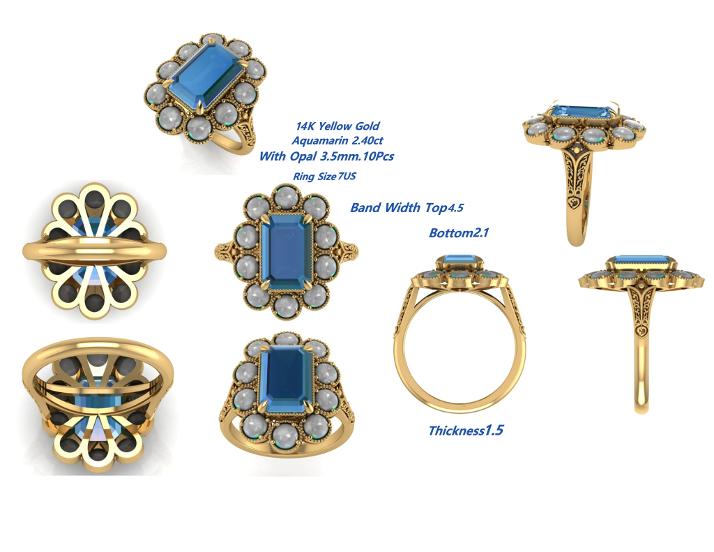 CAD Design
 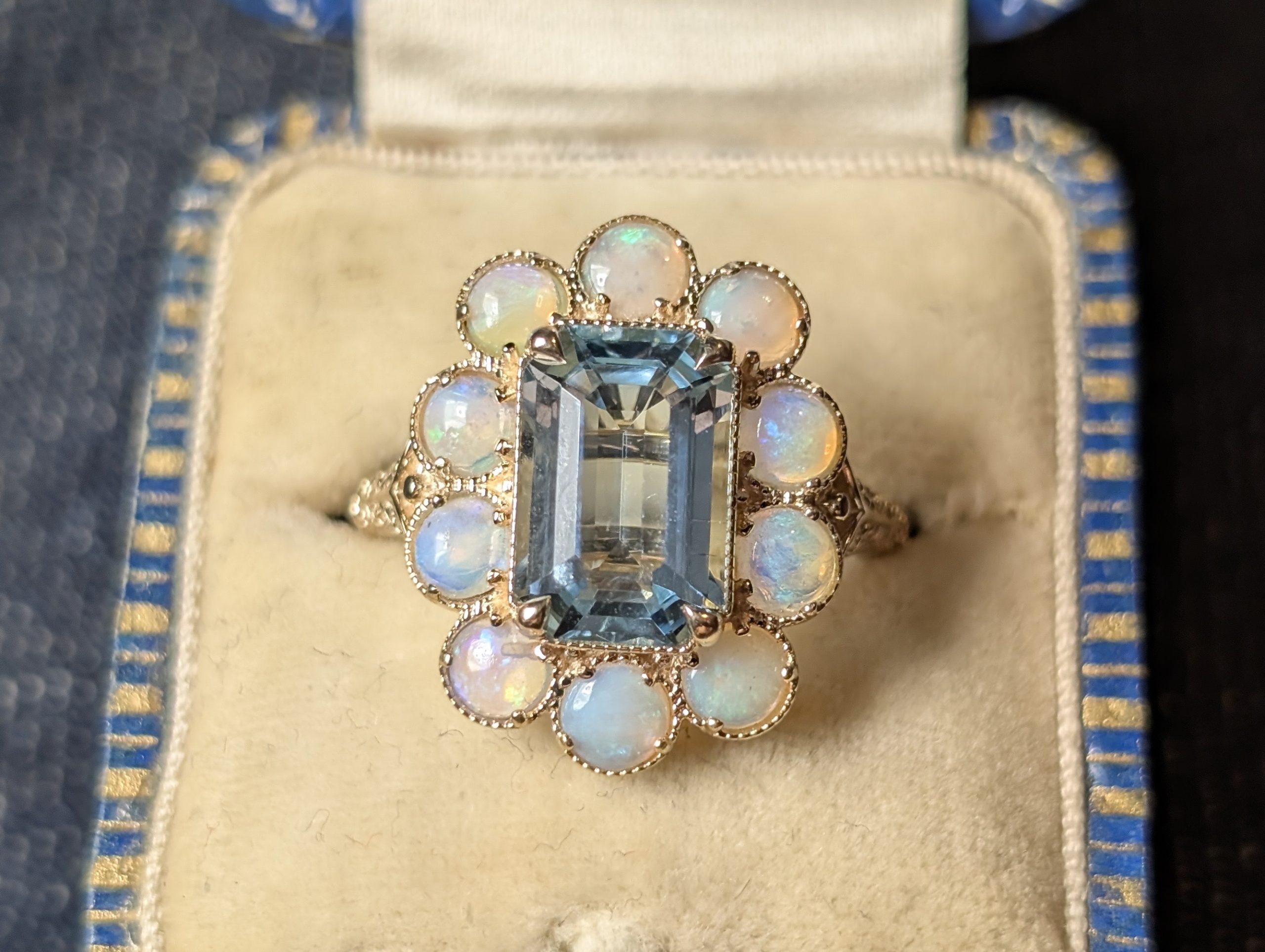 Finished Piece
 Aquamarine & Opal Ring
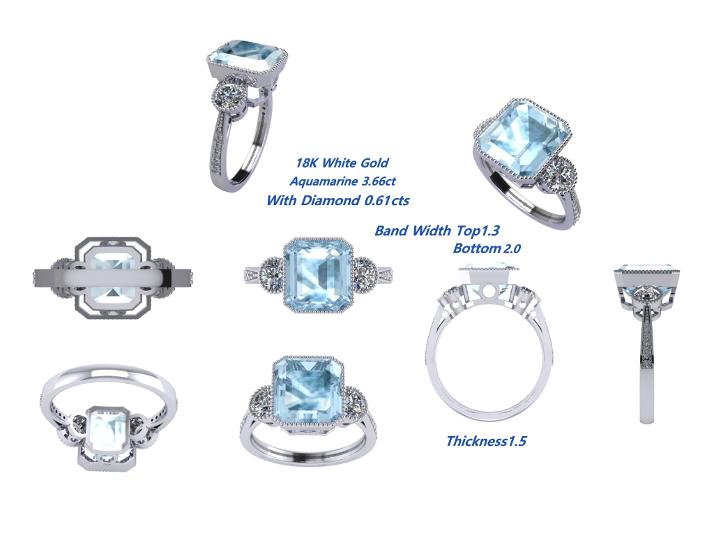 CAD Design
 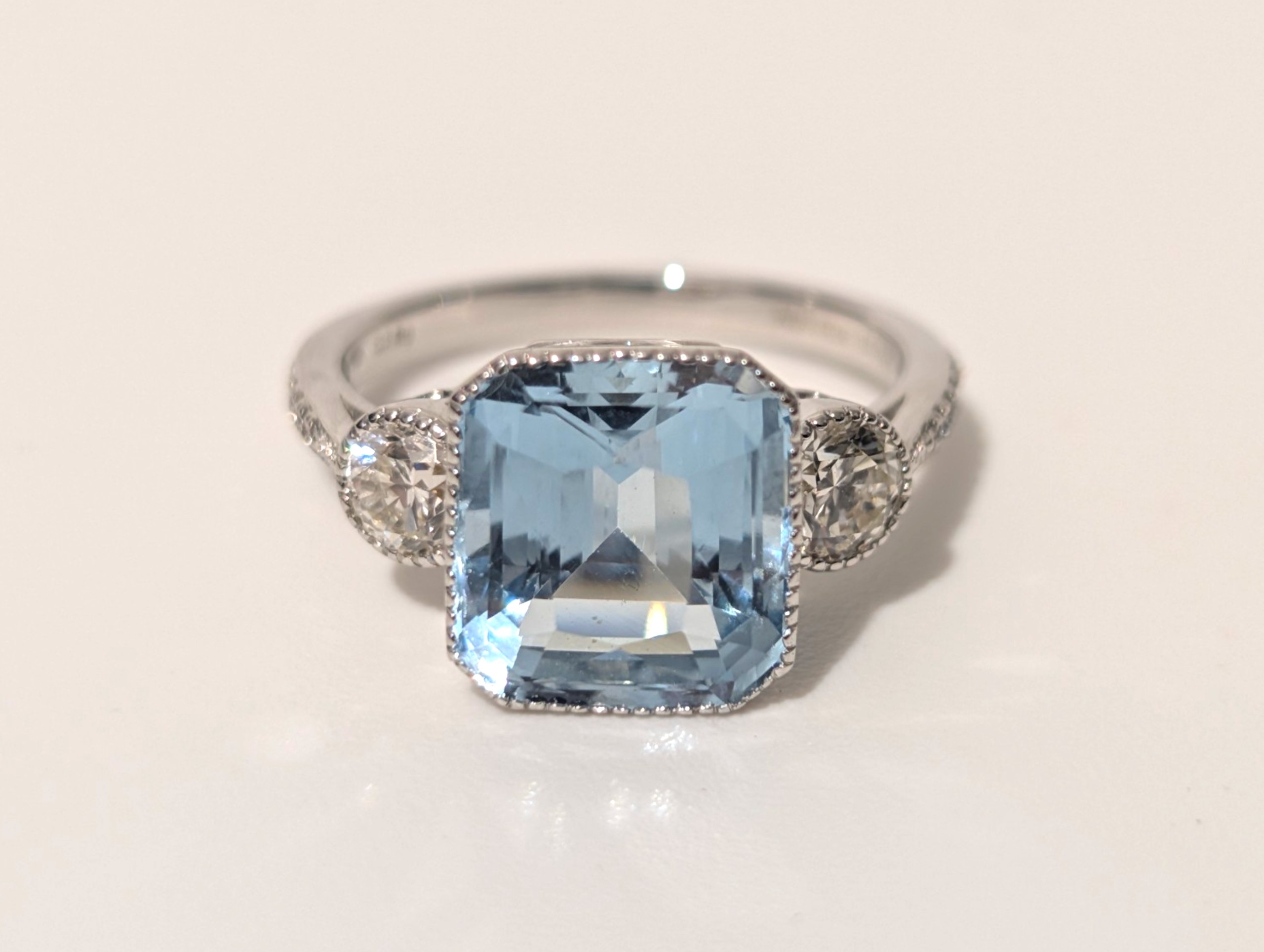 Finished Piece
 Aquamarine & Diamond Ring
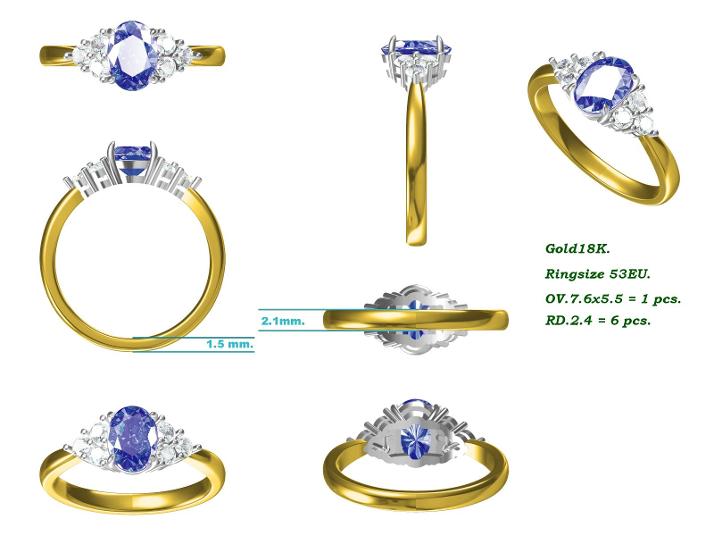 CAD Design
 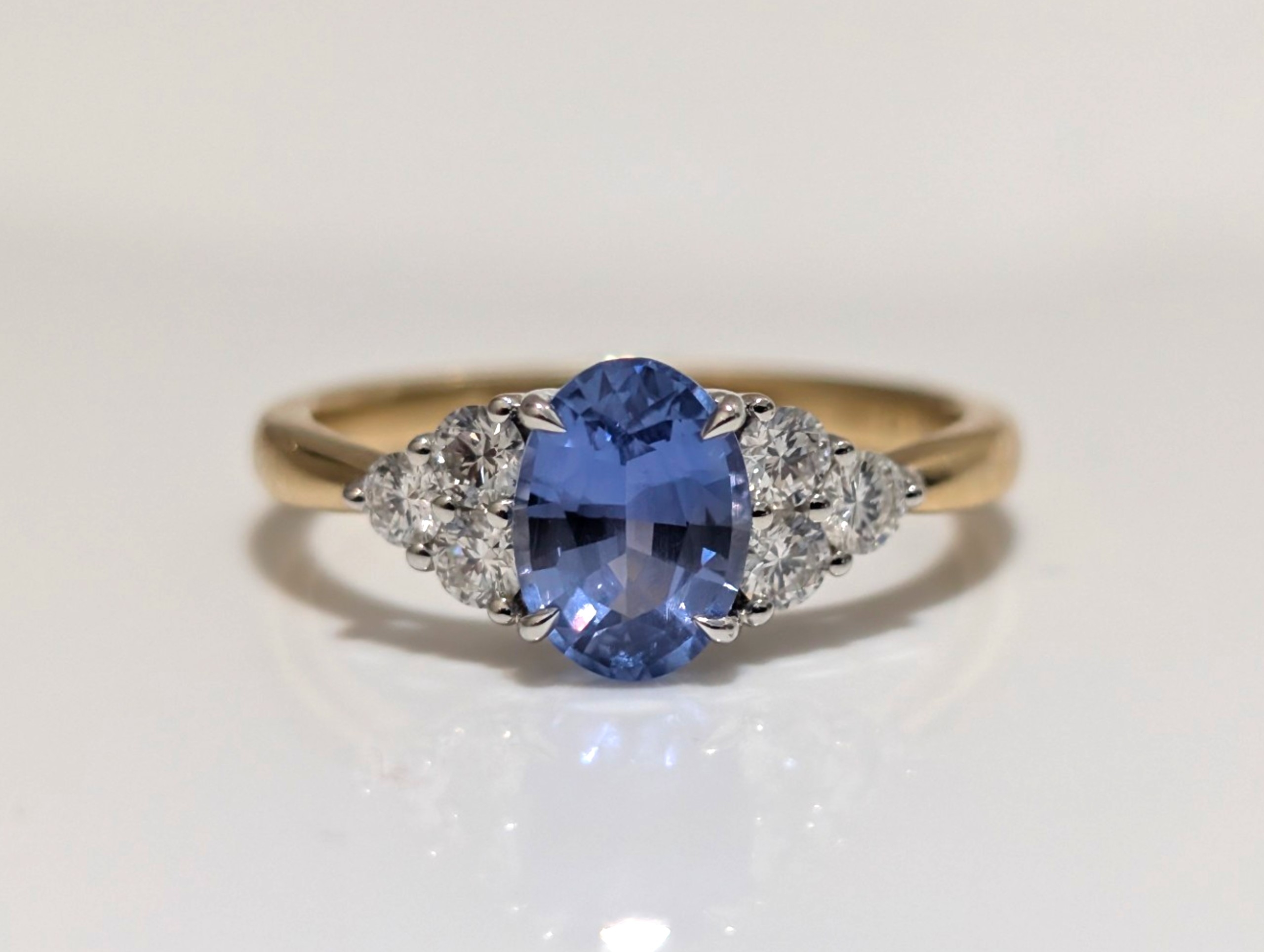 Finished Piece
 Sapphire & Diamond Ring
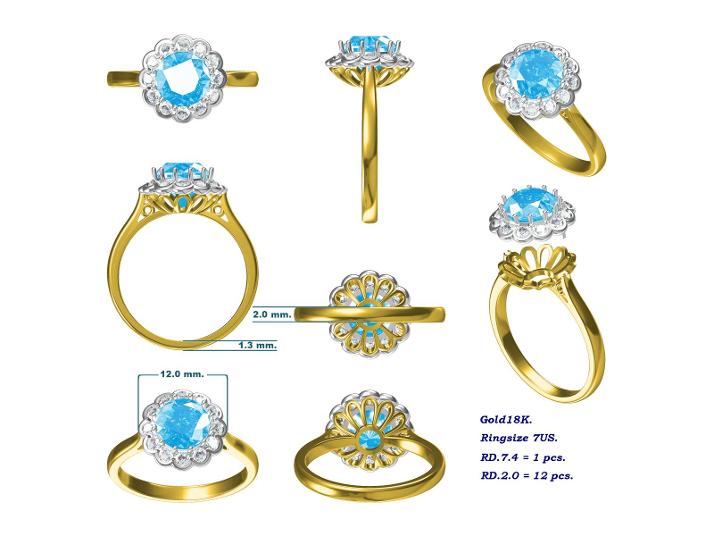 CAD Design
 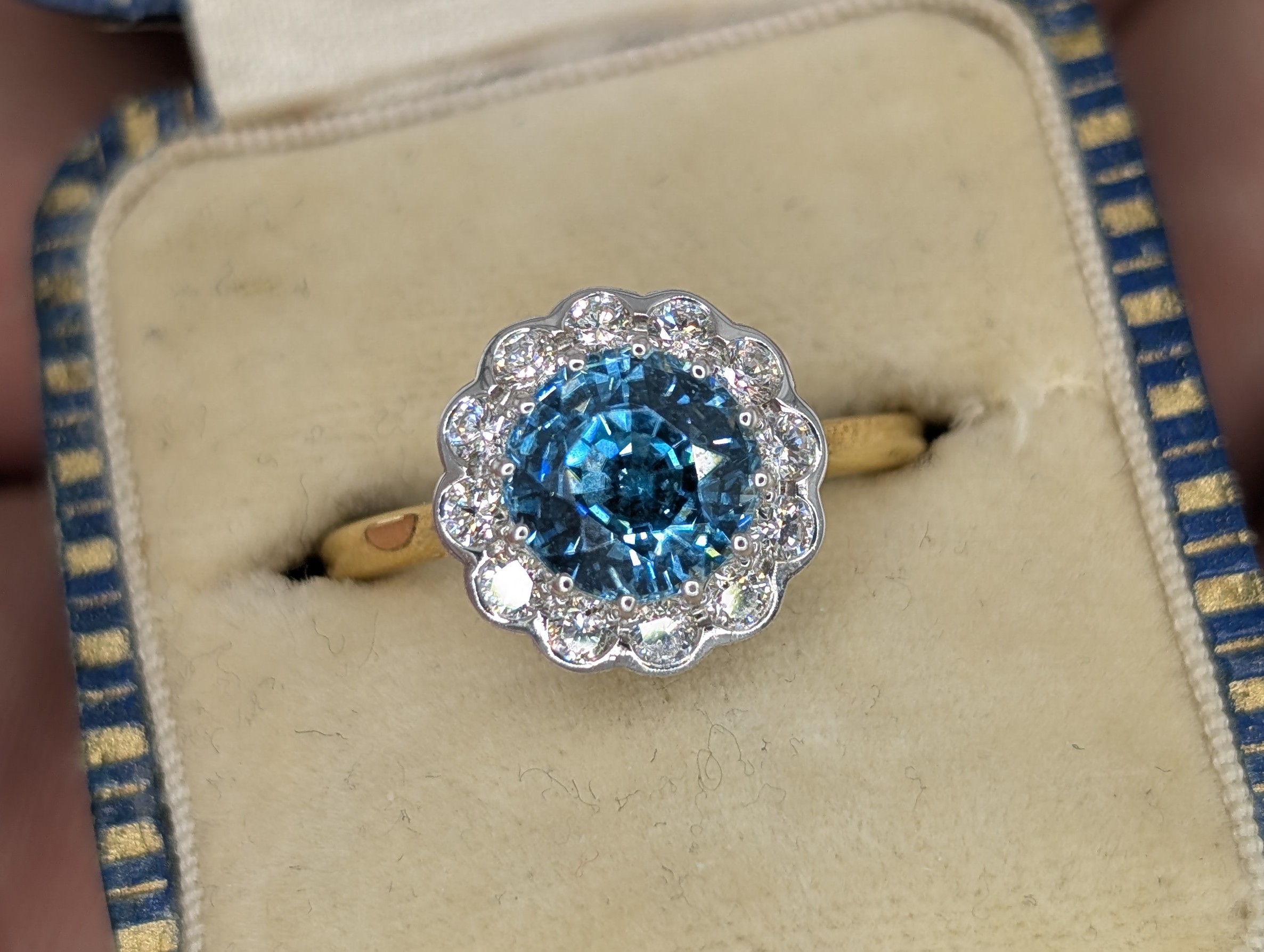 Finished Piece
 Blue Zircon & Diamond Ring
Tell Us About Your Custom Piece
Share your idea below and upload any useful inspiration. We will review your enquiry and contact you to discuss the design, materials, timescale and pricing.
Designing a Custom Sapphire Cluster Ring
A sapphire cluster ring places the coloured centre within a carefully proportioned arrangement of surrounding stones, most commonly diamonds. The cluster can be delicate and refined or broad and dramatic, but its success depends on how well the border relates to the actual sapphire.
What Is a Sapphire Cluster Ring?
A cluster ring uses multiple stones around or alongside a central gemstone to create one larger composition.
In a classic sapphire and diamond cluster, the sapphire forms the centre while smaller diamonds surround much or all of its outline.
This can create considerably more visual presence than a solitaire without requiring an exceptionally large sapphire.
A bespoke cluster also allows the outer shape to be changed deliberately. The finished ring may follow the centre sapphire closely or develop into an oval, cushion, floral, octagonal or more irregular period-inspired outline.
A good cluster should frame the sapphire rather than bury it. The centre stone needs enough colour, scale and visual separation to remain the obvious focus of the ring.
Start With the Sapphire
The centre stone determines almost every important proportion in a cluster ring.
Its length, width, shape and depth influence how many surrounding diamonds are required, what diameter those diamonds should be and how wide the finished ring will appear on the finger.
Carat weight alone is not enough. Two sapphires of similar weight can have noticeably different face-up dimensions.
For broader information about sapphire colour, treatments and gemstone selection, see our custom sapphire rings page.
Choosing Sapphire Colour
Blue sapphire is the traditional centre for this style, but the shade of blue can change the entire character of the finished cluster.
A vivid medium-blue sapphire can create very strong contrast against white diamonds. A deeper stone may produce a richer look, while lighter sapphires can feel softer and more delicate.
Extremely dark blue is not automatically preferable. The sapphire should retain attractive visible colour in ordinary lighting rather than becoming nearly black away from strong illumination.
Fancy Coloured Sapphire Cluster Rings
Sapphire clusters do not need to be blue.
Pink sapphire surrounded by diamonds can create a softer and more romantic ring, while yellow sapphire gives a warmer centre against white stones.
Green sapphires can create a less traditional result and work particularly well in antique-inspired or botanical designs.
The surrounding diamonds can be kept neutral so the sapphire remains the only strong colour in the composition.
Choosing the Centre Sapphire Shape
Oval Sapphire
One of the classic cluster-ring shapes and particularly effective with round diamonds forming a complete surrounding border.
Cushion Sapphire
Soft corners suit antique-inspired clusters and can create a broader, more substantial outline around the centre.
Round Sapphire
Naturally suited to symmetrical flower-like clusters, target designs and compact diamond surrounds.
Emerald-Cut Sapphire
Straight edges allow the cluster to become more geometric, particularly when baguettes or structured diamond borders are used.
Oval Sapphire and Diamond Cluster Rings
An oval sapphire surrounded by round diamonds is one of the most recognisable coloured-gemstone cluster designs.
The outline gives good finger coverage without becoming excessively wide, while the diamonds create an uninterrupted bright border around the blue centre.
The surrounding diamonds do not necessarily need to be identical in size. Slight graduation can change the outline and give a more antique-inspired appearance.
Cushion Sapphire Cluster Rings
Cushion-cut sapphires create a softer overall shape than a strict rectangle but can still support a substantial diamond border.
Round diamonds can produce a traditional cluster, while old-cut stones can create a less uniform antique appearance.
The outer shape may follow the cushion closely or become more oval, octagonal or softly rectangular depending on the intended design.
Round Sapphire Cluster Rings
A round sapphire can sit at the centre of a highly symmetrical diamond cluster.
This can produce a flower-like outline when larger individual surrounding diamonds are visible, or a finer halo effect when the diamonds are smaller and more closely spaced.
Round centres also work well in target-inspired designs where an additional geometric border is introduced outside the first row of stones.
Emerald-Cut Sapphire Cluster Rings
A rectangular sapphire allows the cluster to move away from the traditional floral outline.
Round diamonds can soften the centre's straight lines, while baguettes and other shaped diamonds can reinforce a more architectural look.
This is especially effective for Art Deco inspired rings where the outer silhouette may be rectangular or octagonal rather than simply following the sapphire's outline.
Diamond Cluster vs Diamond Halo
The terms are sometimes used loosely, but the visual effect can be quite different.
A fine halo usually uses relatively small diamonds that follow the edge of the sapphire closely.
A traditional cluster tends to give each surrounding diamond more visual presence, creating a broader and more recognisable ring outline.
If you want the centre sapphire to appear larger while keeping the overall design refined, a fine border may be enough. If you prefer a stronger antique or vintage look, a fuller cluster can be more effective.
Choosing the Size of the Surrounding Diamonds
The correct size depends on the centre sapphire rather than on a standard formula.
Large diamonds can create impressive finger coverage, but if the border becomes too dominant the sapphire may start to look secondary.
Very small diamonds have the opposite effect: they create a fine line of brilliance but may not establish the strong cluster appearance the customer wants.
CAD allows these proportions to be reviewed before the final diamond sizes are fixed.
Graduated Diamond Clusters
Surrounding diamonds do not need to be identical.
Larger diamonds may be positioned toward the top, bottom or sides, with smaller stones filling the transitions around the sapphire.
This can create a more individual outline and is particularly useful for antique-inspired designs where perfect modern uniformity is not the goal.
Old-Cut Diamond Sapphire Clusters
Genuine old-cut diamonds can give a new sapphire cluster a distinctly different character.
Their broader facets, individual outlines and variable proportions create a softer border than a perfectly matched row of modern round brilliants.
Old mine cuts and other antique stones can be particularly effective around cushion and oval sapphires.
Because genuine antique diamonds may differ in diameter and depth, the cluster should be designed around the actual stones rather than assuming calibrated measurements.
Modern Brilliant Diamond Clusters
Modern round brilliant diamonds create stronger uniformity and a more consistent surrounding sparkle.
They are particularly useful where the cluster needs to look symmetrical and closely matched from every direction.
The choice between modern and antique cuts is therefore about the character of the finished ring rather than one option automatically being better.
Antique Style Sapphire Cluster Rings
Sapphire clusters lend themselves naturally to antique-inspired jewellery.
Old-cut diamonds, milgrain, visible yellow gold, decorative shoulders and slightly less uniform stone arrangements can all be incorporated depending on the period being referenced.
For a wider range of historical influences, see our custom antique style rings page.
Victorian Sapphire Cluster Rings
Victorian-inspired sapphire clusters can have a richer and more substantial appearance.
Yellow gold works particularly well, with an oval or cushion sapphire surrounded by individually visible diamonds.
Old-cut stones and more generous metalwork can create a convincing nineteenth-century influence without simply reproducing an antique ring.
See our custom Victorian style rings page for more period-specific design ideas.
Edwardian Sapphire Cluster Rings
Edwardian influence creates a lighter version of the sapphire cluster.
Fine diamond work, platinum or white metal, delicate milgrain and more open construction can reduce visual heaviness around the centre.
The result can retain the full cluster outline while appearing considerably more refined than a heavier Victorian-inspired design.
See our custom Edwardian style rings page for further inspiration.
Art Deco Sapphire Cluster Rings
Art Deco design allows the cluster to become much more geometric.
An oval sapphire can be placed inside an octagonal diamond border, while a rectangular centre can sit inside stepped rows of round or shaped diamonds.
Baguettes, straight lines and pale metal can turn the surrounding cluster into an architectural frame rather than a traditional floral border.
For geometric designs, see our custom Art Deco style rings page.
Vintage Sapphire Cluster Rings
Later twentieth-century clusters can be much broader and more dramatic.
Large surrounding diamonds, double borders and ballerina-style arrangements can create significant finger coverage around the sapphire.
These designs can work exceptionally well as statement or cocktail rings, particularly where there is no requirement to sit closely beside a wedding band.
See our custom vintage style rings page for broader vintage inspiration.
Double Cluster Sapphire Rings
A second border can dramatically increase the overall size of a sapphire cluster.
The additional row might consist entirely of diamonds, or colour can be introduced through calibrated sapphires in a target-style layout.
The centre stone needs enough presence to survive the increased scale. A small sapphire surrounded by two very broad rows of diamonds can become visually lost.
Sapphire Target Rings
Target-style rings use one or more deliberate borders around the centre rather than a single conventional diamond cluster.
A sapphire can sit inside a diamond border, or a diamond centre can be surrounded by calibrated sapphires.
In a sapphire-centred design, additional diamond or coloured borders can create a strongly Art Deco inspired appearance.
Yellow Gold Sapphire Cluster Rings
Yellow gold creates a rich contrast with blue sapphire and works particularly well for Victorian and antique-inspired clusters.
The surrounding diamonds can also be set in yellow gold, or the upper setting can use white metal so the diamonds appear to sit within a lighter visual frame.
White Gold Sapphire Cluster Rings
White gold keeps the surrounding setting cool and allows the sapphire to become the dominant colour.
It is particularly effective in diamond-heavy clusters, where the metal is intended to recede visually between the stones.
Platinum Sapphire Cluster Rings
Platinum works naturally with fine diamond clusters, particularly Edwardian and Art Deco inspired designs.
The pale metal complements white diamonds and provides a neutral frame around the coloured centre.
Two-Tone Sapphire Cluster Rings
A yellow-gold shank can be combined with a white-metal cluster setting.
This allows the diamonds to remain within a cool pale surround while introducing warmth through the rest of the ring.
Two-tone construction can be especially effective when recreating the character of antique jewellery in a newly made bespoke piece.
Sapphire Cluster Engagement Rings
Sapphire is one of the stronger coloured gemstones for an engagement ring and cluster settings can create substantial presence without relying on one exceptionally large centre stone.
For regular wear, however, the overall width and height still matter. A very broad cluster may catch more easily than a compact lower-profile design.
Wedding-band fit should also be considered before the CAD is finalised, particularly if the surrounding diamonds extend low toward the finger.
For engagement-specific sapphire guidance, see our custom sapphire engagement rings page.
Can a Sapphire Cluster Sit Flush With a Wedding Band?
It depends on the construction of the cluster.
If the upper setting is raised enough, a straight wedding band may be able to sit close beneath it.
Lower clusters may project outward at finger level and require a shaped or contoured wedding band instead.
If flush fit matters, it should be planned during the design stage rather than after the engagement ring has already been made.
Low-Profile Sapphire Cluster Rings
A cluster does not need to sit high above the finger.
Depending on the depth of the sapphire, the setting can often be kept relatively compact while still providing enough space beneath the stone for secure construction.
Lower settings can feel more practical for frequent wear, although going too low may affect wedding-band clearance.
Choosing a Sapphire for Everyday Wear
Sapphire belongs to the corundum family and offers strong scratch resistance, making it well suited to rings intended for frequent wear.
Hardness does not make any gemstone indestructible, so exposed edges, thin girdles and the overall setting should still be considered.
The cluster also contains numerous smaller diamonds and settings, making periodic inspection sensible for jewellery worn heavily.
Heated and Unheated Sapphire
Heat treatment is commonly encountered in natural sapphire.
Attractive heated sapphires can make excellent centre stones for bespoke clusters, while fine unheated material may command a premium where its treatment status and quality are appropriately documented.
Treatment status should be considered alongside colour, cut and the actual beauty of the sapphire rather than as a quality measure on its own.
Does Sapphire Origin Matter?
Geographic origin may matter for some significant sapphires, but it cannot reliably be determined from colour alone.
Material from different producing regions can overlap substantially in appearance.
Where a specific origin forms an important part of the price or description, suitable laboratory evidence should support the claim.
Should a Sapphire Have a Laboratory Report?
Not every centre sapphire requires laboratory documentation, but it can be valuable for more significant stones.
Depending on the laboratory and testing service, a report may address natural identity, detected treatment and sometimes provide an opinion on geographic origin.
A report does not determine whether the colour or cut is beautiful. Those qualities still need to be judged from the actual gemstone.
Can You Use a Sapphire I Already Own?
Potentially, yes.
An existing loose sapphire can become the centre of a completely new cluster, with the surrounding diamonds designed around its exact dimensions.
If the sapphire has previously been mounted, its condition should be considered before resetting.
Using Existing Diamonds in a New Cluster
Existing diamonds may potentially be incorporated into a bespoke sapphire cluster.
A collection of inherited stones can sometimes be arranged around a new or existing sapphire, although the diamonds need to work together in size, shape and condition.
Perfect matching is not always essential in antique-inspired designs, but the finished border should still feel visually deliberate.
Remodelling an Heirloom Sapphire Cluster
A worn or dated sapphire cluster can often provide valuable gemstones for a completely new ring.
The original sapphire might be retained while the surrounding diamonds are reset into a finer cluster, geometric Art Deco border or a completely different arrangement.
This keeps the important stones while allowing the scale, metal and construction to suit the new wearer.
How Much Does a Custom Sapphire Cluster Ring Cost?
Cost depends on the centre sapphire, number and size of surrounding diamonds, precious metal and complexity of the setting.
A fine halo around a modest sapphire requires very different diamond content from a broad cluster containing large surrounding stones.
The centre sapphire can also account for a substantial proportion of the budget, particularly where size, strong colour, treatment status or documentation place it in a higher-value category.
Providing a target budget early allows the sapphire and diamond border to be balanced together rather than designing a cluster that becomes unnecessarily expensive.
Centre Sapphire vs Diamond Budget
One customer may prefer to invest heavily in the centre sapphire and use a relatively restrained surrounding border.
Another may choose a smaller sapphire and devote more of the budget to larger surrounding diamonds for greater finger coverage.
Neither approach is inherently better. The important point is that the proportions are considered together from the beginning.
Looking for Other Sapphire and Diamond Designs?
If you like the sapphire-and-diamond combination but are not committed to a surrounding cluster, our bespoke sapphire and diamond rings page explores trilogies, baguette side stones, clusters and other layouts.
Why CAD Is Especially Useful for Cluster Rings
A cluster contains several proportions that need to work simultaneously: the centre sapphire, surrounding diamond diameter, gaps between stones, outer width and setting height.
Changing the surrounding diamonds by even a small amount can noticeably alter the overall footprint of the ring.
CAD allows those dimensions to be reviewed before production, making it particularly valuable for custom clusters and non-standard sapphires.
The detailed 3D CAD carries a $25 non-refundable design fee. If the commission proceeds, the $25 is deducted from the final bill.
Approval and Production
You review the final CAD before production begins. Once the design is approved, a 40% deposit of the quoted price confirms your order.
Your sapphire cluster ring is then created by our workshop. Once complete, we show you the finished jewellery before the remaining 60% is paid and the ring is securely dispatched.
Can you source the sapphire and surrounding diamonds?
The stones can form part of the bespoke process. Tell us your preferred sapphire colour, shape, approximate size, cluster style and budget so the ring can be developed accordingly.
Can you make an oval sapphire and diamond cluster ring?
Yes. Oval sapphires work particularly well with round-diamond surrounds, graduated clusters and antique-inspired settings.
Can you make an antique style sapphire cluster?
Yes. Victorian, Edwardian, Art Deco and broader vintage influences can all be incorporated depending on the centre stone and proportions.
Can you use old-cut diamonds around the sapphire?
Potentially, yes. Genuine antique-cut diamonds can be incorporated into a cluster designed around their individual measurements and outlines.
Can I use my own sapphire?
Potentially, yes. Its exact length, width, depth and condition should be considered before the surrounding cluster is designed.
Can you reuse diamonds from an old ring?
Potentially, yes. Their measurements, condition and compatibility with the proposed cluster need to be assessed first.
Can a sapphire cluster ring be used as an engagement ring?
Yes. Sapphire is well suited to frequent ring wear, and the cluster can be designed with setting height, practicality and wedding-band fit considered from the outset.
What is the difference between a halo and a cluster?
A fine halo usually follows the centre closely with smaller diamonds, while a traditional cluster gives the surrounding stones more individual presence and generally creates a broader outline.
How much does the CAD design cost?
The detailed 3D CAD costs $25. The fee is non-refundable, but it is deducted from the final bill if the ring proceeds to production.
When do I pay for my sapphire cluster ring?
A 40% deposit is required after you approve the final CAD. The remaining 60% is paid after you have seen the finished jewellery and before dispatch.
Have a Sapphire Cluster Ring in Mind?
Tell us the sapphire colour and shape, the cluster proportions, precious metal and period style you prefer, or send inspiration images and we can begin developing your bespoke design.
Start Your Enquiry