
Custom Diamond Cluster Rings
Create a diamond cluster ring with the centre stone, surrounding diamonds and overall proportions developed together, from delicate antique-inspired settings to bold vintage and geometric designs.
How It Works
We refine the centre stone, surrounding diamonds and cluster outline before your ring moves into production.
Tell Us Your Idea
Share the cluster style, diamond shapes, precious metal, budget and any inspiration images you like.
Refine the Stones
We refine the centre diamond, surrounding stone sizes, cluster outline and overall proportions.
Receive Your Quote
Once the concept is agreed, we provide a clear quote based on the diamonds, precious metal and complexity of the design.
3D CAD Design
Proceed with a detailed CAD for a $25 non-refundable design fee, deducted from the final bill if the piece goes ahead.
Approve Your Ring
Review the final CAD before production. Once approved, a 40% deposit confirms your order.
Made & Delivered
We show you the finished ring before the remaining 60% is paid and your jewellery is dispatched.
Some of Our Bespoke Creations
Explore a selection of pieces created by us, from the production-ready CAD design through to the finished jewellery.
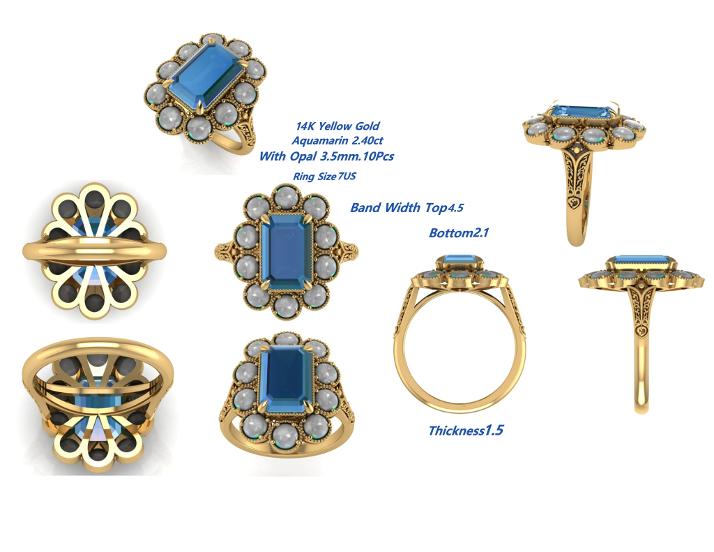 CAD Design
 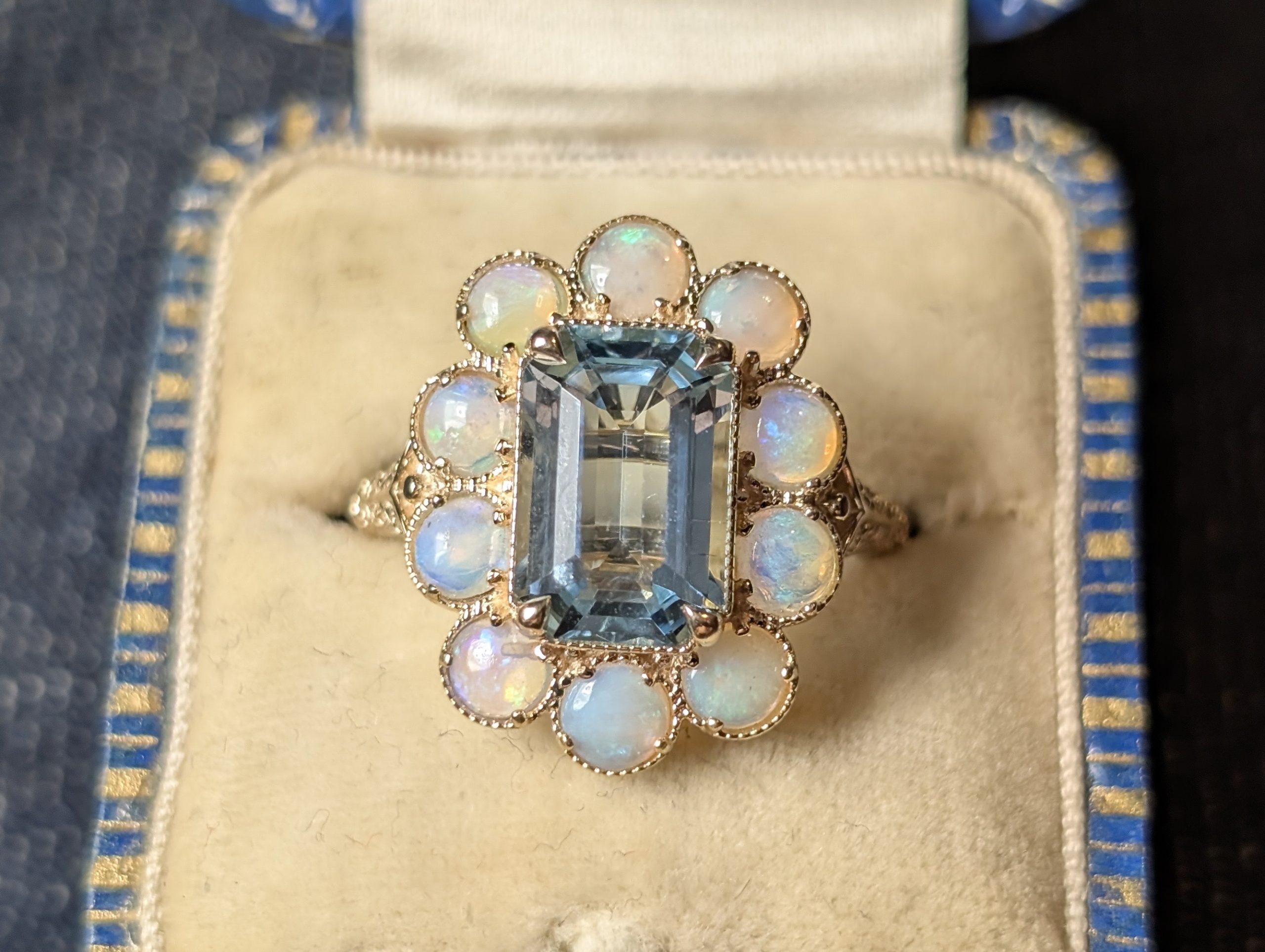 Finished Piece
 Aquamarine & Opal Ring
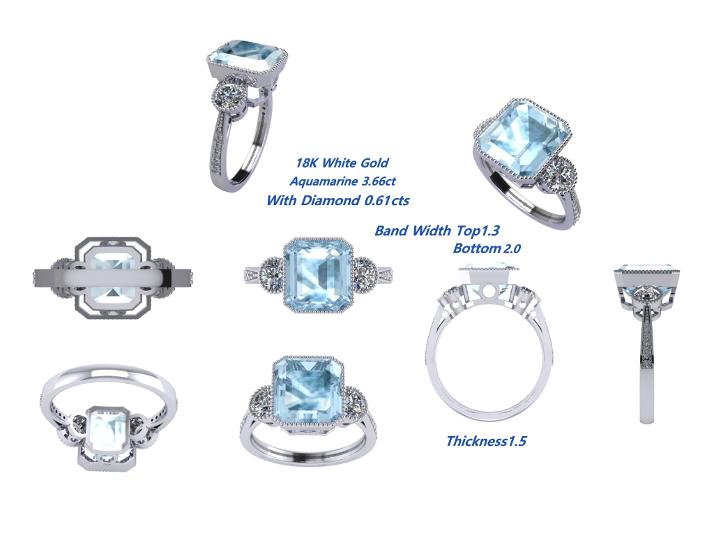 CAD Design
 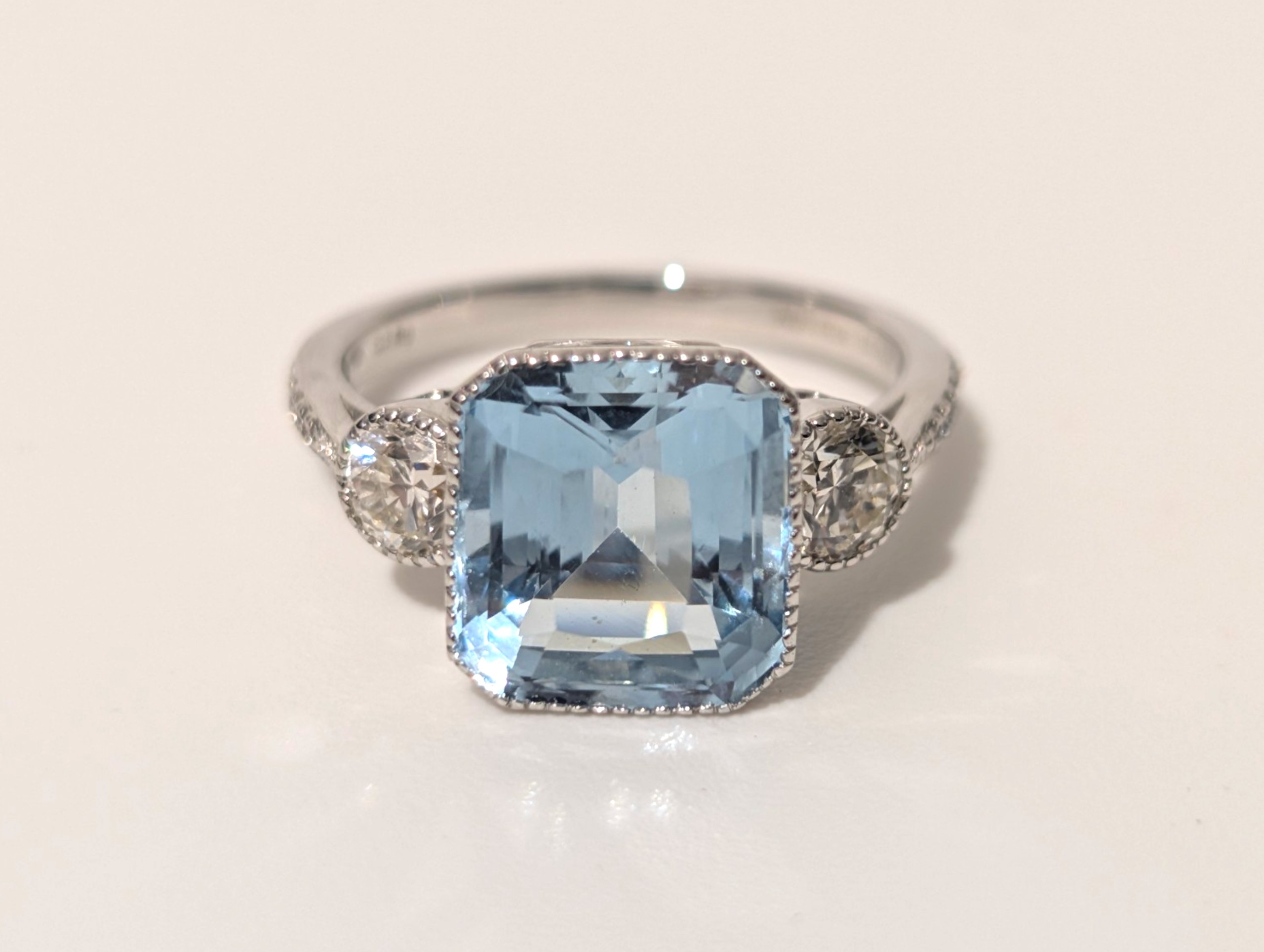 Finished Piece
 Aquamarine & Diamond Ring
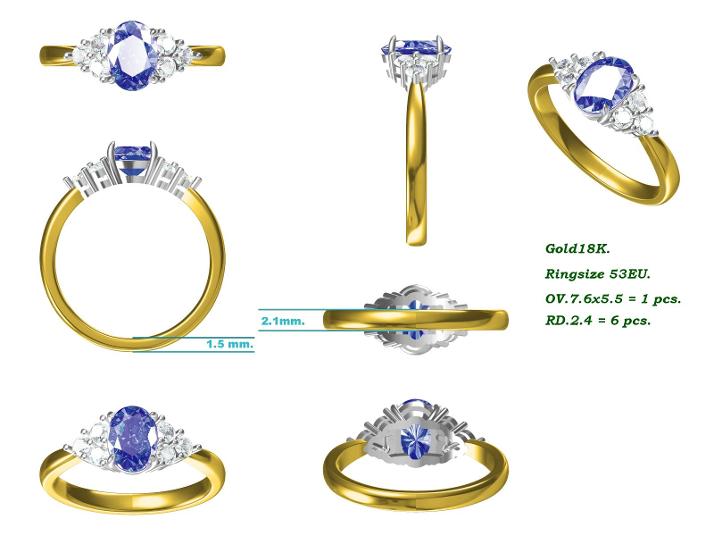 CAD Design
 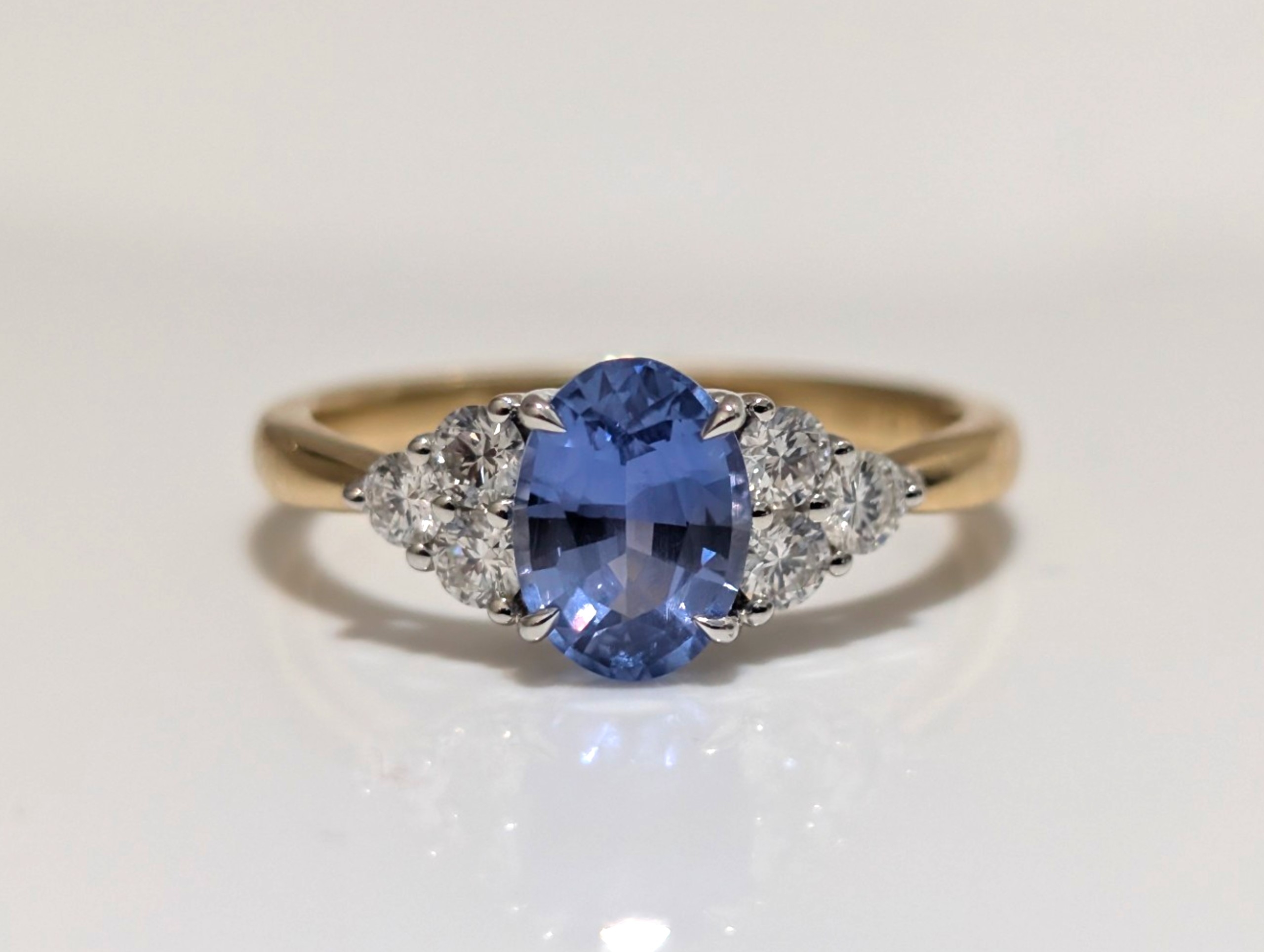 Finished Piece
 Sapphire & Diamond Ring
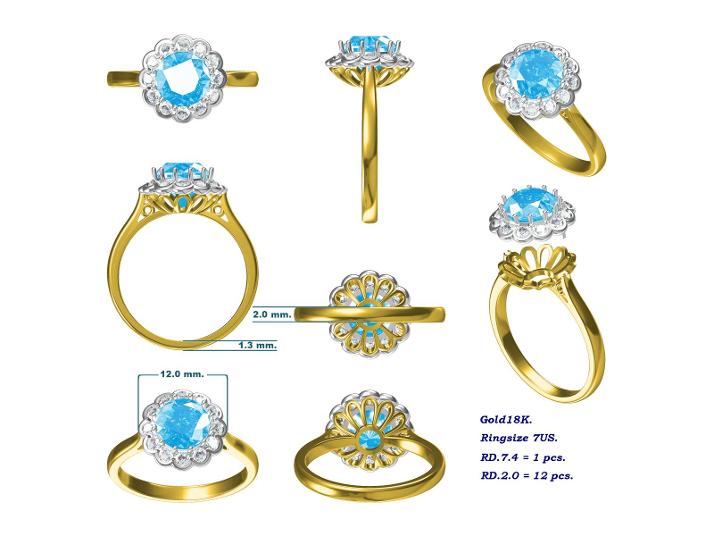 CAD Design
 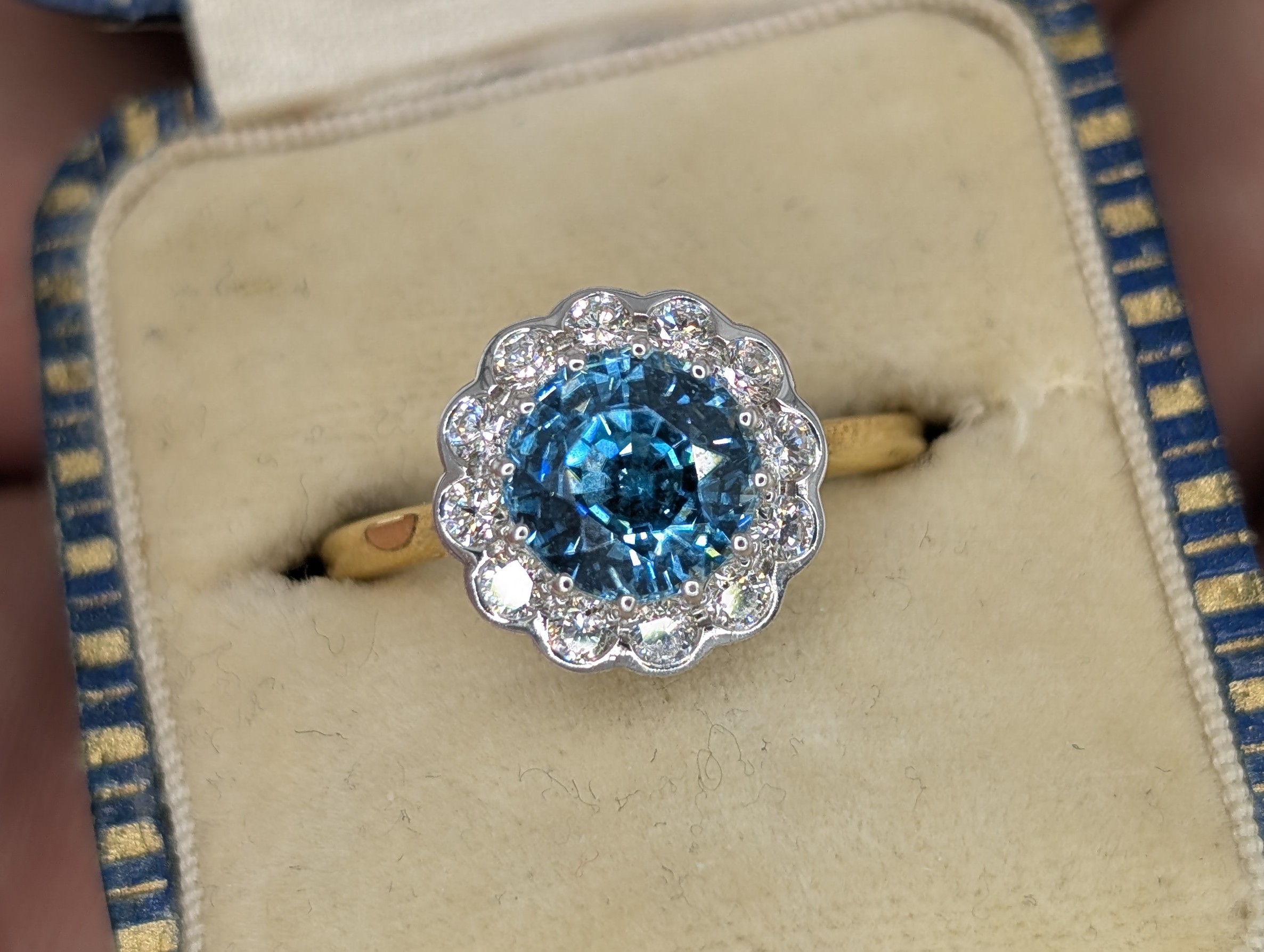 Finished Piece
 Blue Zircon & Diamond Ring
Tell Us About Your Custom Piece
Share your idea below and upload any useful inspiration. We will review your enquiry and contact you to discuss the design, materials, timescale and pricing.
Designing a Custom Diamond Cluster Ring
A diamond cluster ring uses several diamonds to create one complete composition around a centre stone. The result can be delicate and refined, broad and dramatic, or strongly period inspired depending on the cuts, proportions and setting used.
What Is a Diamond Cluster Ring?
A diamond cluster ring is built from multiple diamonds arranged closely enough to read as one larger design.
Some use a single larger centre diamond surrounded by smaller stones. Others use several similarly sized diamonds to create a floral, oval or geometric composition without one dominant centre.
The surrounding diamonds can follow the shape of the centre closely or create a completely different outer silhouette.
This makes cluster rings far more flexible than a conventional solitaire.
A cluster is not simply a way to add more diamonds. The shape, spacing and scale of every stone determine how the ring reads as a complete design on the hand.
Centre Diamond Cluster Rings
One of the most recognisable formats places a larger diamond in the centre with a complete border of smaller stones around it.
This increases the overall diameter of the ring and can make the centre appear more substantial without relying solely on a very large single diamond.
The surrounding stones can be fine and closely set, or large enough to remain individually visible.
Those two approaches create very different results: one closer to a modern halo, the other closer to a traditional cluster.
Cluster Rings Without One Dominant Centre
A cluster does not have to contain one large central diamond.
Several diamonds of similar size can be arranged into an oval, flower, lozenge or elongated panel.
This approach is particularly useful in antique-inspired jewellery, where several old-cut diamonds may be brought together to create a larger visual composition.
It can also be an excellent way to redesign inherited diamonds of different sizes.
Choosing the Cluster Shape
Round Cluster
Highly symmetrical and ideal for floral arrangements, round centre diamonds and traditional diamond borders.
Oval Cluster
Gives additional length on the finger and works beautifully with oval centres or several graduated diamonds.
Cushion Cluster
A softly squared outline can create a substantial antique-inspired appearance without becoming sharply geometric.
Geometric Cluster
Octagonal, rectangular and stepped outlines suit Art Deco inspired settings and combinations of round and shaped diamonds.
Round Diamond Cluster Rings
Round diamonds naturally suit symmetrical cluster layouts.
A larger round centre may be surrounded by smaller round stones, or several similar diamonds can be arranged into a floral design.
The outer diameter can be kept compact for regular wear or expanded into a broader cocktail-style ring.
Small changes in the size of the surrounding stones can make a surprisingly large difference to the finished footprint.
Oval Diamond Cluster Rings
Oval clusters create length along the finger and can appear elegant without becoming excessively wide.
An oval centre diamond can be surrounded by round stones, or several round and old-cut diamonds can be arranged together to create an oval outline without using an oval centre at all.
This style works particularly well for antique and vintage-inspired rings.
Cushion Diamond Cluster Rings
Cushion outlines sit between round and rectangular forms.
A cushion-cut centre can be surrounded by round diamonds, while old mine cuts can create a softer and more irregular antique cluster.
The outer corners may remain gently curved or be sharpened slightly to produce a more structured silhouette.
Marquise and Elongated Diamond Clusters
Longer clusters can create impressive finger coverage without requiring a wide setting across the whole hand.
Diamonds can be arranged into navette, marquise-like or elongated oval shapes.
These designs work particularly well where several smaller inherited diamonds need to be combined into one prominent ring.
Diamond Halo vs Diamond Cluster
A halo generally follows the centre stone closely with small, relatively uniform diamonds.
A traditional cluster often gives the surrounding stones more individual presence and may create a broader or more distinctive outer outline.
The difference is partly visual rather than purely technical.
If you prefer a very fine border, a halo-like cluster can work beautifully. If you want the surrounding stones to become an obvious part of the design, larger individual diamonds may be more appropriate.
Single Cluster vs Double Cluster
A second border can create substantial finger coverage.
Double clusters work especially well in vintage and statement-style rings, but the centre needs enough visual presence to avoid becoming lost.
A wide diamond border can look impressive in CAD, yet still become impractical if the finished ring extends too far across the finger.
Overall width should therefore be considered alongside total diamond weight.
Old-Cut Diamond Cluster Rings
Genuine old-cut diamonds are particularly well suited to cluster settings.
Old mine cuts, old European cuts and other antique stones often vary slightly in outline, depth and facet arrangement.
When grouped together, that individuality can create a softer, less mechanically uniform appearance than modern calibrated diamonds.
A bespoke setting can be designed around the actual collection of stones, allowing small differences to become part of the character of the ring.
Old Mine Cut Diamond Clusters
Old mine cuts often have cushion-like outlines, high crowns, deeper proportions and broad facets.
Several can be arranged into a flower or cushion-shaped cluster, or a larger centre stone can be framed by smaller antique diamonds.
Because their face-up shapes vary, a precisely symmetrical modern halo is often less appropriate than a setting developed around the real stones.
Old European Cut Diamond Clusters
Old European cuts tend to have rounder outlines than many old mine cuts while retaining broader antique facet patterns.
They can be particularly effective in Edwardian, early twentieth-century and transitional-style cluster rings.
A larger old European centre surrounded by smaller old cuts can create a very refined antique-inspired composition.
Modern Brilliant Diamond Clusters
Modern round brilliant diamonds give a more regular, bright and uniform appearance.
They work exceptionally well where symmetry is important and the surrounding stones need to match closely in diameter and brilliance.
A modern cluster can therefore feel cleaner and more precise than one made around genuinely old diamonds.
For broader bespoke diamond options, see our custom diamond rings page.
Natural and Lab-Grown Diamonds
Natural and laboratory-grown diamonds are both diamond, but they have different origins and different commercial markets.
Either can technically be incorporated into a bespoke cluster, depending on the customer's preference and the intended design.
The distinction should be made clearly when stones are being selected, particularly because a cluster may contain a considerable number of diamonds.
Antique Diamond Cluster Rings
Antique-inspired clusters often benefit from a little less uniformity.
Old-cut diamonds, visible metal, milgrain, hand-inspired detailing and graduated stone sizes can all create a more convincing historical character than a perfectly regular modern halo.
For broader historical inspiration, see our custom antique style rings page.
Victorian Diamond Cluster Rings
Victorian-inspired diamond clusters can be substantial and richly proportioned.
Yellow gold, old-cut diamonds and individually visible settings work particularly well.
Flower-like clusters, elongated arrangements and multi-stone rings can all take their influence from nineteenth-century jewellery.
See our custom Victorian style rings page for more.
Edwardian Diamond Cluster Rings
Edwardian-inspired clusters tend to feel lighter.
Platinum, fine milgrain, openwork and delicate diamond borders can create significant detail without excessive visual weight.
An old European cut centre surrounded by smaller diamonds is particularly effective in this style.
See our custom Edwardian style rings page for further inspiration.
Art Deco Diamond Cluster Rings
Art Deco allows the cluster to become much more architectural.
Round diamonds may sit inside octagonal borders, while baguettes and step-cut stones can create strong straight lines.
A centre diamond does not need to dictate the outer shape. A round stone can sit inside a rectangular or stepped composition, creating deliberate contrast between the centre and its surroundings.
For geometric period designs, see our custom Art Deco style rings page.
Vintage Diamond Cluster Rings
Later twentieth-century jewellery often takes the cluster in a much bolder direction.
Large outer diamonds, double surrounds and broad ballerina-style arrangements can create significant finger coverage.
These designs are especially effective for customers who want the ring to function as a statement piece rather than remain visually restrained.
See our custom vintage style rings page for wider inspiration.
Ballerina Diamond Cluster Rings
Ballerina settings use tapered baguettes or similar diamonds radiating outward around a centre stone.
The result is broader and more directional than a round-diamond cluster.
A centre diamond may be round, oval or rectangular, while the surrounding baguettes create movement and substantial width.
Because the design can become large, overall dimensions should be reviewed carefully before production.
Mixed-Cut Diamond Clusters
Combining different diamond shapes can create more structure within a cluster.
Round brilliant stones may provide sparkle, baguettes can establish straight lines and pear-shaped stones can taper the design toward the shoulders.
This is particularly effective in Art Deco and bespoke geometric settings.
Yellow Gold Diamond Cluster Rings
Yellow gold gives an all-diamond cluster warmth and visible contrast.
It can be particularly effective in Victorian and antique-inspired designs where the metal is intended to remain an obvious part of the ring.
Diamonds may be set directly into yellow gold, or a pale upper setting can be used to keep the immediate diamond surround white.
White Gold Diamond Cluster Rings
White gold allows the setting to recede visually between the diamonds.
This can make a modern brilliant cluster appear more continuous and keep attention firmly on the stones themselves.
Platinum Diamond Cluster Rings
Platinum works particularly well for fine diamond-intensive settings.
It is naturally suited to Edwardian and Art Deco inspired rings, as well as modern clusters where a cool white metal is preferred.
Two-Tone Diamond Cluster Rings
A yellow-gold shank can be combined with a white-metal diamond setting.
This creates warmth through the band while allowing the cluster itself to remain visually pale and bright.
Two-tone construction can be especially effective in antique-inspired designs.
Diamond Cluster Engagement Rings
A cluster can make a distinctive engagement ring, particularly for someone who prefers antique or vintage jewellery over a conventional solitaire.
The design can use a single centre diamond, several old cuts or a larger multi-stone composition.
Setting height, width and wedding-band fit should be planned from the outset, especially if the cluster extends significantly beyond the shank.
For broader engagement-ring guidance, see our bespoke engagement rings page.
Can a Diamond Cluster Sit Flush With a Wedding Band?
Some can and some cannot.
If the cluster is raised sufficiently above the finger, a straight wedding band may sit underneath the outer edge.
Lower antique-style clusters may project outward at finger level, making a contoured band a better solution.
If flush fit is important, this should be incorporated into the CAD before the engagement ring is manufactured.
Low-Profile Diamond Cluster Rings
A cluster does not need to be excessively high.
Low-profile settings can feel more practical and secure, particularly where the overall diameter of the cluster is already substantial.
The depth of the centre diamond will still influence how low the setting can realistically sit.
How Large Should a Diamond Cluster Be?
There is no ideal diameter for every hand.
Finger size, centre-stone dimensions, surrounding diamond size and whether the ring will be worn every day all influence the appropriate scale.
A cluster that looks beautifully proportioned on one finger may feel too wide or too delicate on another.
This is one of the main reasons millimetre measurements are more useful than total carat weight alone.
Carat Weight vs Visible Size
Carat measures weight, not face-up dimensions.
Two diamonds of the same carat weight can have different visible diameters depending on their proportions and cut.
In a cluster, millimetre size is especially important because each diamond has to fit into the overall arrangement.
A design should therefore be built around measurements rather than simply adding together total carat weight.
Diamond Colour in Cluster Rings
Diamonds within the same cluster generally need to look coherent when viewed together.
That does not necessarily mean every stone must carry an identical laboratory grade.
Face-up appearance, cut and matching can be more important visually than small differences on paper.
Antique-inspired clusters may also deliberately tolerate more individuality between old-cut diamonds than a modern symmetrical design.
Diamond Clarity in Cluster Rings
Clarity needs to be considered alongside stone size and placement.
Very small surrounding diamonds do not always require the same clarity priorities as a significant centre diamond.
The goal is for the stones to appear attractive in the finished ring rather than to chase unnecessarily high grades that make little visible difference.
Natural Diamond Centre Stones
If the cluster is being built around a significant natural diamond, independent grading documentation may be appropriate depending on the stone.
Cut, colour, clarity and carat weight can all affect value, but visible beauty and how the diamond works within the design remain important.
Can You Use a Diamond I Already Own?
Potentially, yes.
An existing centre diamond can become the starting point for a completely new cluster designed around its actual measurements.
This is particularly useful with antique diamonds, which may have non-standard outlines and depth proportions.
Using Several Existing Diamonds
A cluster is particularly well suited to remodelling inherited stones.
Several diamonds from different pieces of jewellery may be brought together into a new composition if their sizes, shapes and condition work with the design.
The stones do not always need to match perfectly. In an antique-inspired ring, carefully arranged differences can create character.
Remodelling an Heirloom Diamond Ring
An inherited diamond ring may contain excellent stones even if the setting no longer suits the wearer.
A solitaire diamond can become the centre of a new cluster, while smaller diamonds from an old three-stone or multi-stone ring can be incorporated around it.
Several family stones can also potentially be combined into one new piece.
This preserves the diamonds while allowing the style, proportions and precious metal to change completely.
Looking for Other Diamond Ring Styles?
If you are considering a diamond ring but are not committed to a cluster, our custom diamond rings page explores a broader range of bespoke diamond settings.
How Much Does a Custom Diamond Cluster Ring Cost?
The price depends on the number and size of diamonds, whether the stones are natural or laboratory-grown, their individual quality, precious metal and complexity of the setting.
A fine cluster using small surrounding diamonds has very different cost considerations from a large ring containing numerous substantial old cuts.
Shaped diamonds, matched pairs and unusual calibrated layouts can also influence cost.
Providing a realistic target budget from the beginning allows the centre and surrounding stones to be balanced before the design becomes unnecessarily complex.
One Large Centre or More Surrounding Diamonds?
This is one of the main decisions in a bespoke cluster.
Some customers prefer to put most of the budget into one strong centre diamond and use a restrained border.
Others prefer a smaller centre combined with a substantial cluster to create greater overall presence on the hand.
Neither approach is automatically better. The correct balance depends on the visual result you want.
Why CAD Is Especially Useful for Diamond Clusters
Cluster rings depend on precise relative dimensions.
The centre stone, surrounding diamond diameters, gaps, outer shape, setting height and overall width all affect one another.
CAD allows those measurements to be reviewed before production and makes it much easier to compare a fine cluster with a broader one.
It is especially valuable for mixed-cut, antique-stone and geometric cluster designs where standard settings are unsuitable.
The detailed 3D CAD carries a $25 non-refundable design fee. If the commission proceeds, the $25 is deducted from the final bill.
Approval and Production
You review the final CAD before production begins. Once the design is approved, a 40% deposit of the quoted price confirms your order.
Your diamond cluster ring is then created by our workshop. Once complete, we show you the finished jewellery before the remaining 60% is paid and the ring is securely dispatched.
Can you make a diamond cluster around my existing diamond?
Potentially, yes. The centre diamond's exact dimensions and condition should be considered before the surrounding cluster is designed.
Can you make an old-cut diamond cluster ring?
Yes. Genuine old mine, old European and other antique-cut diamonds can potentially be arranged into a new setting designed around their individual shapes and measurements.
Can you remake an antique diamond cluster?
Original antique rings can be used as visual inspiration, with the proportions and period details adapted into a newly made bespoke design.
Can you make an Art Deco diamond cluster ring?
Yes. Octagonal outlines, baguettes, stepped borders and mixed diamond cuts can all be used to create a geometric Art Deco inspired cluster.
Can several inherited diamonds be used in one ring?
Potentially, yes. A cluster setting can be particularly useful for bringing several diamonds together, provided their dimensions, condition and arrangement work as one design.
Can a diamond cluster ring be used as an engagement ring?
Yes. The cluster can be designed with everyday wear, setting height and future wedding-band fit considered from the outset.
What is the difference between a diamond halo and cluster?
A halo normally uses smaller stones that closely trace the centre, while a traditional cluster often gives the surrounding diamonds more individual presence and a broader outer shape.
Can you use both old-cut and modern diamonds?
Potentially, yes. Mixed-cut designs can work well when the different facet patterns are used deliberately and the stones remain visually balanced.
How much does the CAD design cost?
The detailed 3D CAD costs $25. The fee is non-refundable, but it is deducted from the final bill if the ring proceeds to production.
When do I pay for my diamond cluster ring?
A 40% deposit is required after you approve the final CAD. The remaining 60% is paid after you have seen the finished jewellery and before dispatch.
Have a Diamond Cluster Ring in Mind?
Tell us the diamond shapes, cluster proportions, precious metal and period style you prefer, or send inspiration images and we can begin developing your bespoke design.
Start Your Enquiry